How long does a squishy last?
There is no fixed number, and anyone who gives you one is guessing. A slow-rise foam squishy kept in a drawer, out of the sun, and squeezed gently can stay lively for years. The same squishy left on a hot, sunny windowsill for one summer can go stiff, yellow, and fast-rising before the season ends. Materials, light, heat, water, and how it is handled all move that number more than time on the calendar does.
That is the honest, if slightly unsatisfying, answer. We would rather tell you what actually shortens a squishy’s life than invent a number that sounds precise and means nothing.
What actually shortens a squishy’s life?
Four things do almost all the damage: sunlight, heat, water, and sharp edges.
Sunlight is the slowest and most permanent. Ultraviolet light breaks down polyurethane foam over weeks and months, turning it yellow or brown, stiffer, and less springy. A squishy that spends its life on a sunny desk ages years in a single summer, and none of that reverses.
Heat is temporary but adds up over time. A squishy left in a hot car or squeezed through a long warm afternoon gets softer and springier, so it recovers faster than usual. Cool it down and the slow rise mostly comes back. Repeated heat exposure over months does gradually soften foam the way a mattress softens with years of use.
Water is the fastest way to end a foam squishy early. Open-cell foam is a sponge: soak it, and water fills the cells, turns the squishy heavy and limp, and often leaves it musty even after it dries. Solid TPR and gel squishies tolerate a rinse far better, since there is no open foam structure for water to sit inside.
Sharp edges, fingernails, and pet claws split the outer skin. Once that happens, air moves through the gap instead of the material, and the squishy rises unevenly for the rest of its life.
Does the material change how long it lasts?
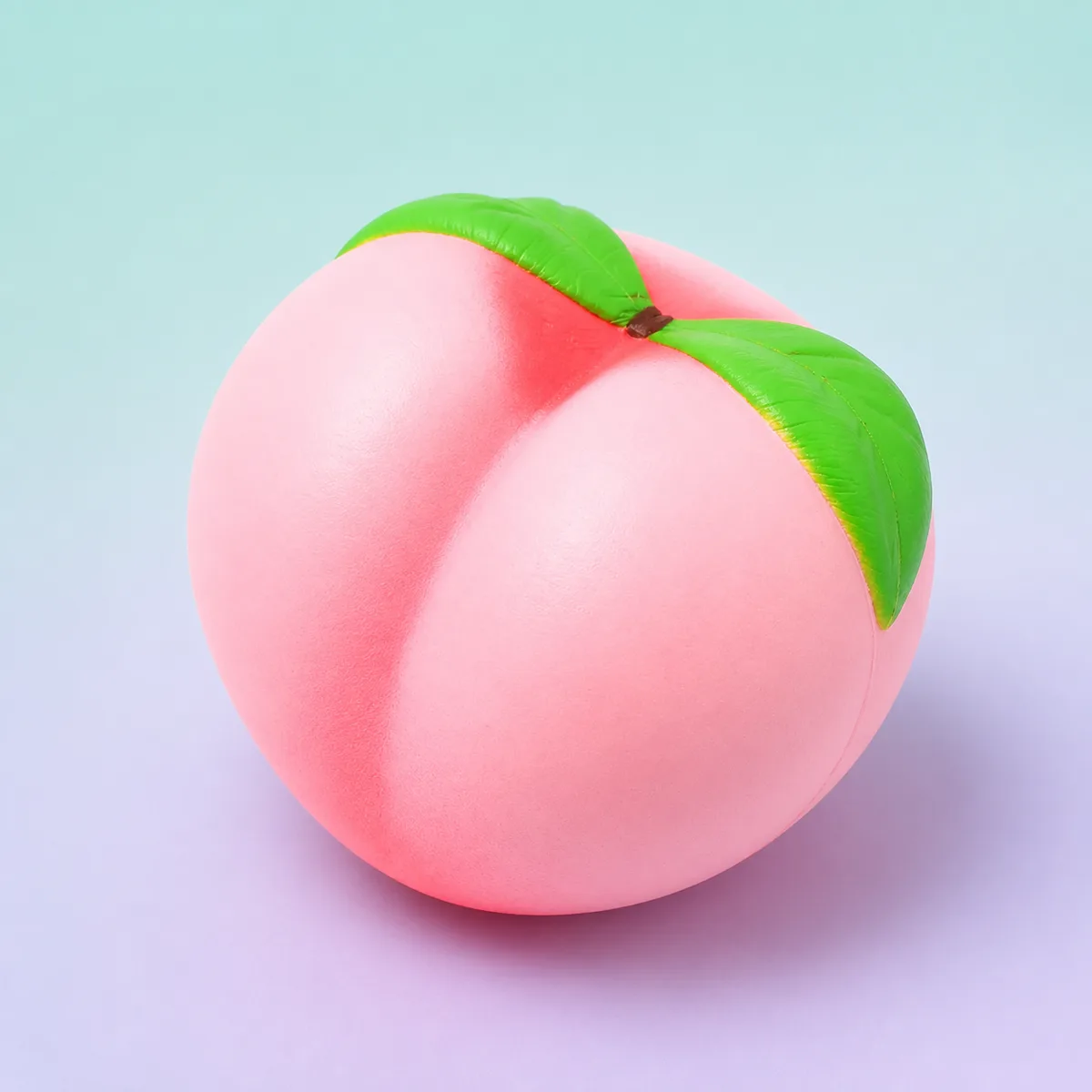
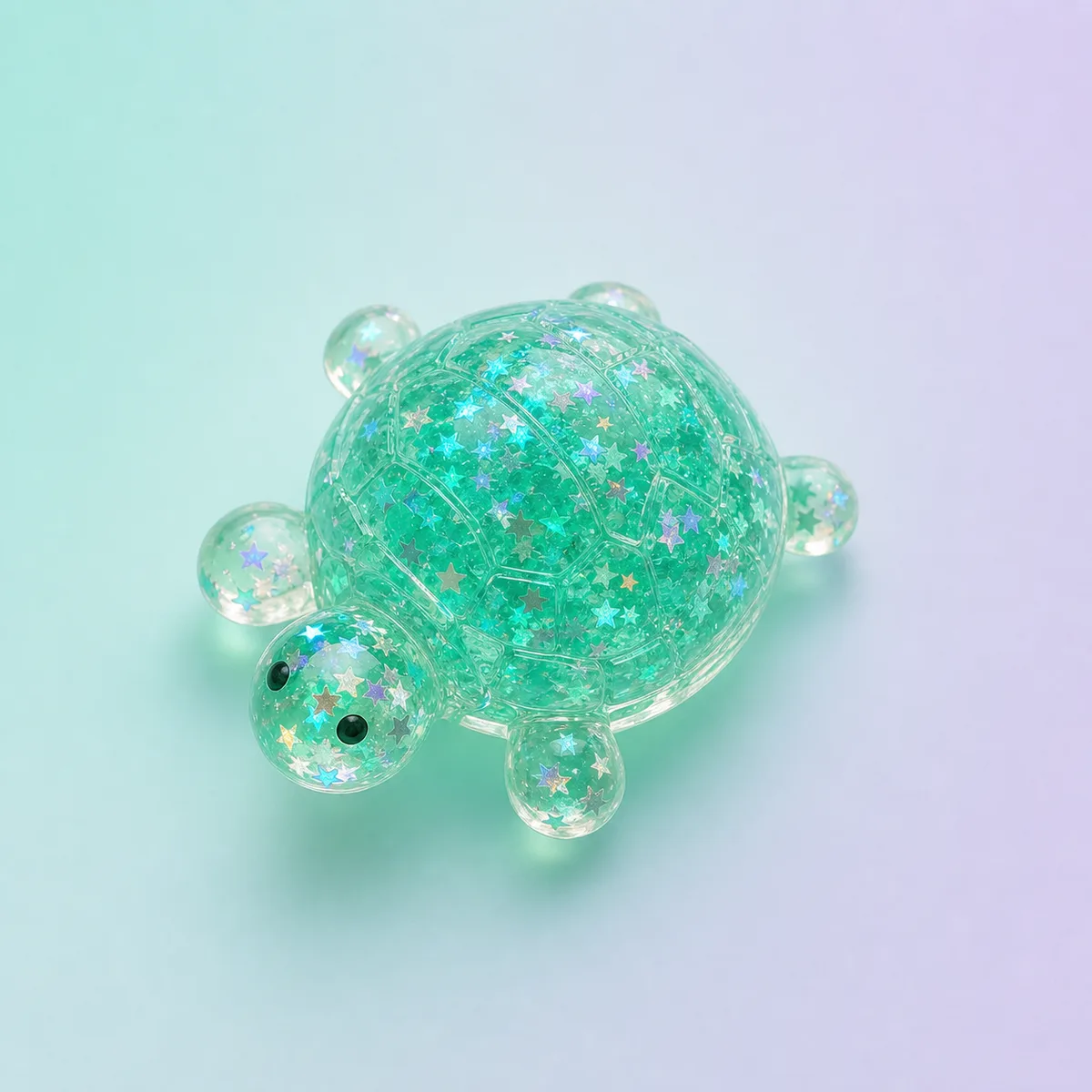
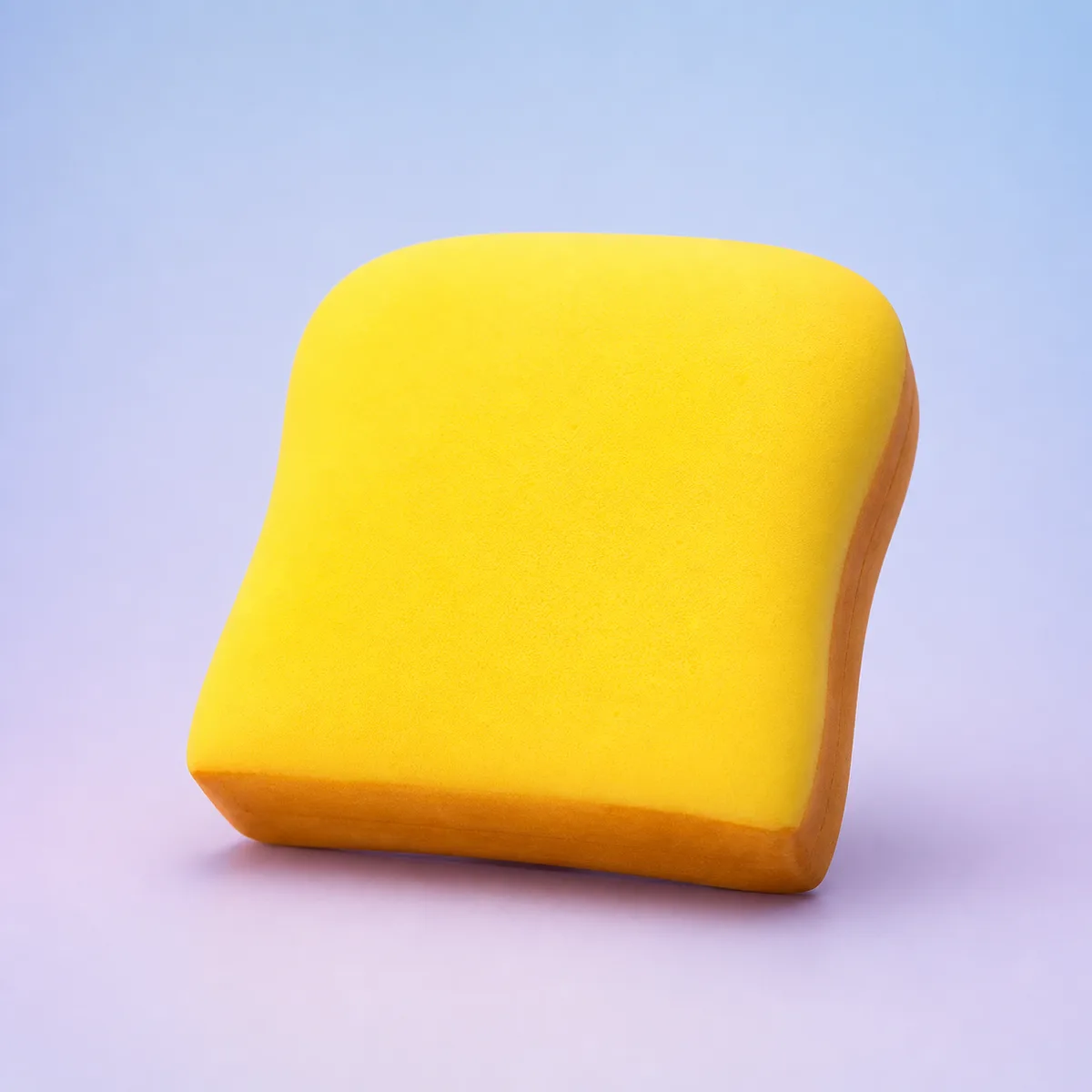
Yes, and it is worth checking before you assume your squishy is damaged. Foam squishies like Peachy Slow-Rise Squishy, Doughboy Dumpling Slow-Rise Squishy, and Bread Buddy Toast Slow-Rise Squishy are open-cell polyurethane: soft, light, and the most sensitive of the bunch to sun, heat, and water. TPR squishies, like Shelly Sea Turtle Gel Squishy, are a denser, more uniform rubber-like material with no open cells to fill with water or air, so they hold their shape and their squeeze more consistently over time.
Neither material wins across the board. Foam gives you the slow, watchable rise people buy a squishy for in the first place. TPR trades that slow rise for a squeeze that barely changes no matter how old the squishy gets. Knowing which one you own tells you what to expect from it a year from now.
What are the warning signs a squishy is near the end?
A few signs mean a squishy has more or less finished its job. A permanent yellow or brown tinge that will not fade. A surface that has gone hard, tacky, or started to flake, which is not something to keep handling, especially around young children or pets who might put a piece in their mouth. A rise that stays fast and uneven no matter how long the squishy rests in a cool, shaded spot. A musty smell that persists after days of air drying.
None of these mean you did anything wrong. Foam ages the way a pillow or a garden hose ages: slowly, then all at once, and mostly because of light and time rather than a defect.
How can you make one last longer?
Keep it simple: shade, room temperature, dry, and gentle hands.
| Factor | Shortens the life | Stretches the life |
|---|---|---|
| Light | Direct sun on a desk or car dash | A drawer, bag, or shelf out of direct light |
| Heat | Hot car, radiator, prolonged warm squeezing | Room temperature storage |
| Water | Soaking, submerging, a spill left to sit | Spot-clean with a barely damp cloth, then full air dry |
| Handling | Fingernails, keys, pet claws nearby | Press with the pads of your fingers |
| Material | Foam ages fastest under light and heat | TPR and gel squishies resist that aging pattern |
None of this takes much effort, and it is the same short list whether you own one squishy or a dozen. A squishy that lives in the shade and gets handled gently will simply outlast one that does not, foam or TPR alike.
Two squishies bought on the same day rarely age at the same pace, either. The one that rides in a bag through summer commutes picks up more heat and more handling than the one that sits on a nightstand, so do not be surprised if favorites from the same order need retiring years apart even though they started out identical.
Is a slower squishy still worth keeping?
Often, yes. A squishy that has gone a little faster or a little stiffer than it used to is still a working sensory toy, just one with a different rhythm than the day it arrived. The slow rise is a nice feature, not the entire point. Your hands are still getting a quiet, repeatable thing to press.
Retire it when the signs above show up, not before. A squishy that still squeezes and returns, even quickly, is doing its job. Give it shade, keep it dry, and it will keep doing that job for a good while yet. Calm in the palm of your hand, for as long as the foam holds.
Sources & further reading
We reference trusted organizations by name. This article is informational and not a substitute for professional medical advice.
- NASA: Viscoelastic memory foam, the material family inside slow-rising squishies, was originally developed under NASA-funded research to cushion aircraft seating.
- American Chemistry Council, Center for the Polyurethanes Industry: Publishes background on flexible polyurethane foam, the open-cell material used in slow-rising squishies, and on how foam products should be stored and handled.
- ASTM International: Publishes toy safety standards covering the plastics, silicone, and metals used in squishies and fidget toys.
Frequently asked questions
How long does a slow-rise squishy usually last?
There is no set number. A foam squishy kept out of direct sun, away from water, and handled gently can stay lively for years, while the same squishy left on a hot, sunny windowsill can visibly age within a single season. Light, heat, water, and handling matter far more than time on a calendar.
Do TPR and gel squishies last longer than foam squishies?
Often, yes, because TPR and gel squishies like Shelly Sea Turtle Gel Squishy are a solid, denser material with no open-cell structure for sunlight, heat, or water to break down the way they do in foam. They trade the slow, watchable rise for a squeeze that stays more consistent over time.
What shortens a squishy's life the most?
Direct sunlight causes the most permanent damage, since ultraviolet light breaks down polyurethane foam over weeks and months and the yellowing and stiffness never reverse. Water is close behind for foam squishies, because soaking fills the open cells and often leaves the foam musty. Heat is milder and usually reverses once the squishy cools down.
How do I know when a squishy needs to be retired?
Watch for a permanent yellow or brown tinge, a surface that has gone hard, tacky, or started to flake, or a musty smell that persists after days of drying. A flaking or crumbling squishy should not stay in reach of young children or pets. A squishy that still squeezes and returns, even quickly, is still doing its job.
Does squeezing a squishy a lot wear it out?
Heavy daily use does soften foam gradually, the way a pillow softens with years of use, but it is a slow, minor effect next to sun and water damage. Pressing with the pads of your fingers rather than your fingernails keeps the outer skin from splitting, which is the bigger risk from frequent handling.
Can you make a squishy last longer on purpose?
Yes. Keep it out of direct light, away from heat sources, dry, and handled with the pads of your fingers rather than your nails. None of that takes much effort, and it is the same short list whether you own one squishy or a dozen.