Why do I fidget?
You fidget because your body is looking for a small way to feel more comfortable. Fidgeting is a normal, extremely common way to self-regulate: tiny movements that help settle your level of alertness, burn off restless energy, and keep your hands busy while your mind works. It is not a flaw, a bad habit you failed to break, or a sign that something is wrong with you.
Almost everyone does it. You click a pen through a long meeting. You bounce a knee under the desk. You twist a ring, roll a hair tie, peel the label off a bottle without deciding to. These are not accidents. They are your nervous system quietly doing its job, reaching for a bit of input or an outlet when it needs one.
The rest of this guide is the honest version of why. There are a few good explanations, they overlap, and the science is still filling in the details. What we can say plainly: fidgeting is a feature of being human, not a malfunction.
Is fidgeting normal, or is something wrong with me?
It is normal. Fidgeting is a widespread, ordinary behavior seen across ages and cultures, and researchers generally treat it as a form of self-regulation rather than a problem. Most people fidget more when they are bored, stressed, concentrating hard, or sitting still longer than their body would like.
Here is the reassuring part. The urge to move is not a sign of weakness or a lack of discipline. Sitting perfectly still for hours is the unusual demand; a body that wants to shift and fiddle is behaving exactly as designed. Schools and offices often frame stillness as good behavior, so a lot of people grow up feeling faintly guilty about their restless hands. You can set that guilt down.
Fidgeting only becomes worth a closer look when it distresses you, hurts (like skin-picking or nail-biting that breaks skin), or gets in the way of daily life. We will come back to that honestly at the end. For the vast majority of restless hands, there is nothing to fix.
How does fidgeting regulate your alertness?
One leading idea is that fidgeting helps tune your level of alertness toward a comfortable middle. When your nervous system is under-stimulated (bored, drowsy, stuck in a dull task) or over-stimulated (anxious, overwhelmed, wired), a small repetitive movement can nudge it back toward a steadier place.
Psychologists sometimes call this arousal regulation or optimal stimulation. The short version: your brain has a preferred zone of alertness where you feel focused and okay, not flat and not frantic. Too little going on and your mind drifts; too much and it races. A quiet motion gives it a small, controllable dose of input to adjust with.
Think about the meeting that drags. Your attention starts to sink, so your foot starts tapping, almost on its own. The movement tops up your alertness just enough to keep you present. Now flip it. A tense phone call spikes your energy, and squeezing something soft gives the extra charge somewhere to go, taking the edge off. Same behavior, opposite direction, one underlying job: helping you find the middle.
This is also why the right fidget is so personal. A busy, clicky gadget might be perfect for topping up a bored brain and completely wrong for a frazzled one. When you are wound up, the calmest, quietest, most repetitive options tend to help most.
Does fidgeting really release nervous energy?
Yes, in the everyday sense that it gives restless or anxious energy somewhere to go. When you feel keyed up, that feeling is physical: a jittery readiness sitting in your body with nowhere to discharge. A repetitive movement offers a small, harmless outlet.
You already know this from the inside. Waiting for news, you pace. Before an interview, your leg will not stop bouncing. Nerves live in the body, and the body wants to move them along. Fidgeting is one of the gentlest ways to do that, far kinder than the tenser habits restless energy can slide into, like jaw-clenching or biting the inside of your cheek.
Giving your hands a defined task, rolling, pressing, sliding, can also make an anxious moment feel a little more manageable. It will not erase what you are worried about, and we would never pretend it could. What it can do is keep your hands occupied and your attention anchored to something simple while the hard feeling passes through.
Why do some fidgets become a habit?
Because they work, and your brain repeats what works. Once a small movement reliably makes you feel a touch better, more settled, more focused, less bored, it becomes automatic, something you reach for without noticing. That is ordinary habit formation, not a compulsion.
There is a comfort in the ritual itself. A familiar motion is predictable, and predictability is soothing, which we unpack in our guide to why repetitive motion feels soothing. The same click, roll, or squeeze, done the same way, becomes a tiny reliable thing you can return to on a chaotic day.
Habits are only worth interrupting when they turn against you: when the go-to fidget is your own skin, nails, or hair, or when it damages something. In that case the aim is usually not to stop moving but to swap in a kinder target for the same urge, which is a whole approach in itself.
Is fidgeting a neurodivergent thing?
Fidgeting is something everyone does, and for many neurodivergent people it is an especially important, first-class tool. If you are ADHD, autistic, or otherwise wired to need more movement or sensory input, fidgeting is not a bad habit to suppress. It is a real way to regulate, focus, and feel okay.
For a lot of ADHD folks, a background movement actually frees up attention rather than splitting it: the hands get a steady, low-demand job, so the mind can settle onto the task. Organizations like CHADD and ADDitude often describe fidgeting and movement as recognized, practical strategies for focus and restlessness. For many autistic people, repetitive movement (stimming) is a natural, valid form of self-regulation and comfort, not something that needs correcting.
We treat this as a first-class reason to fidget, never an afterthought. If your nervous system asks for input to feel steady, meeting that need is a sensible thing to do, not something to apologize for. You are allowed to be comfortable. The only real design question is finding a fidget that fits your life: quiet enough for the room you are in, and satisfying enough that your hands actually want it.
If I am going to fidget anyway, what should I fidget with?
Since the urge is going to show up regardless, the kind move is to give it somewhere good to go. Your hands will find something to do; a purpose-made fidget just makes that something quiet, satisfying, and not your cuticles. The best pick depends on why you tend to fidget and where.
Here is a simple way to match a tool to your reason and setting:
| If you fidget to… | Look for… | A gentle pick |
|---|---|---|
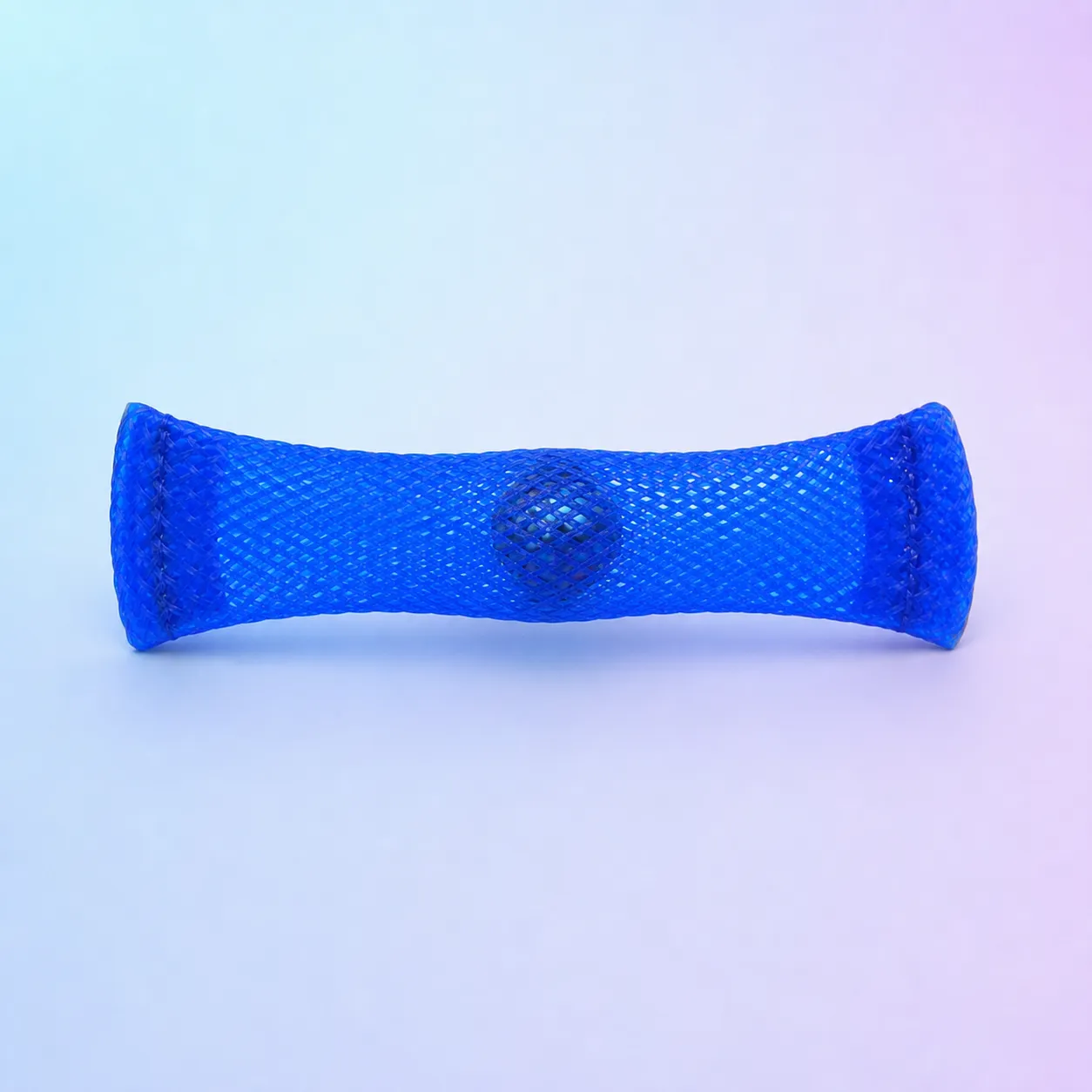
| Stay awake and focused in meetings or class | Silent, slim, repetitive motion | Roll & Squeeze Mesh Marble Fidget |
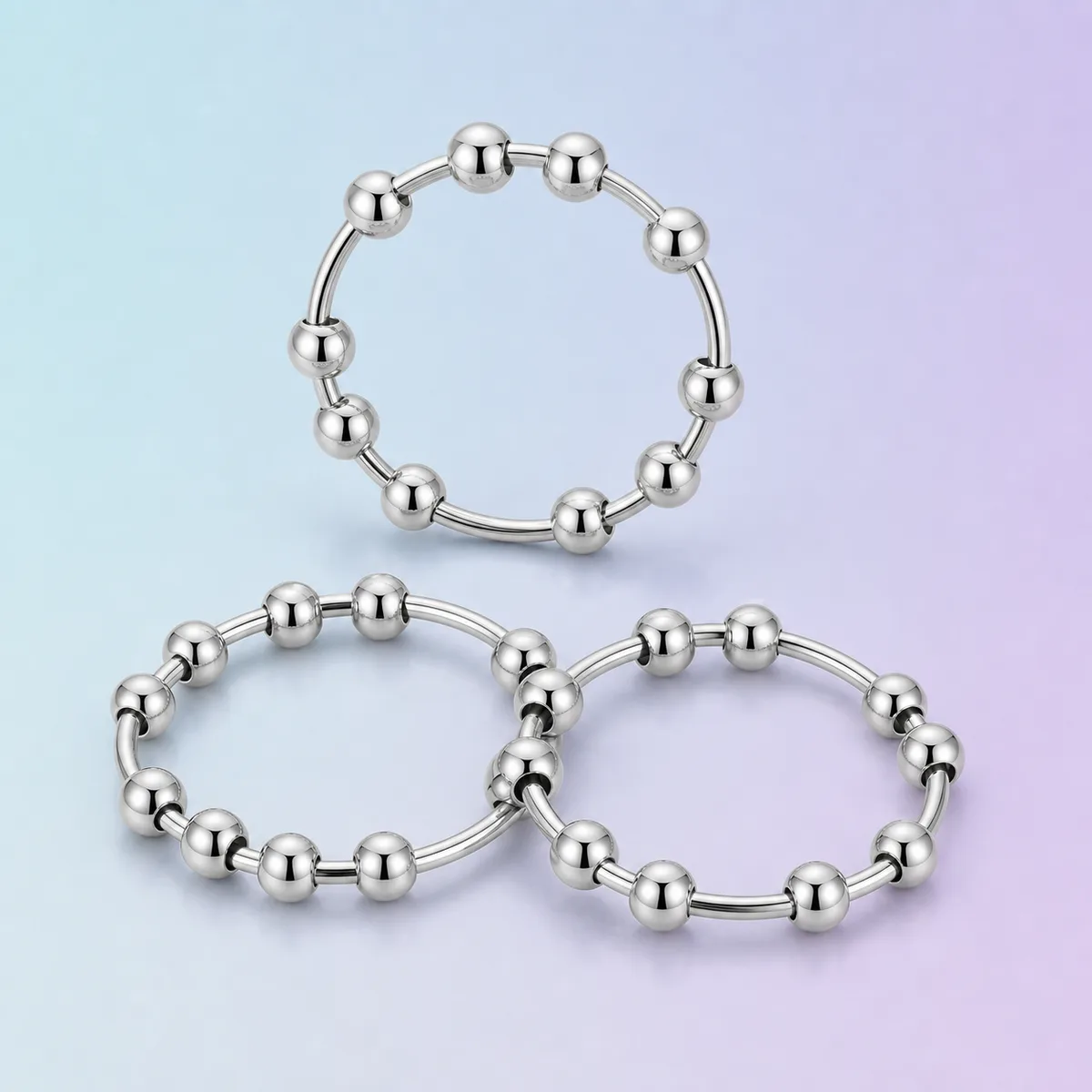
| Keep hands busy discreetly, anywhere | A wearable you can turn quietly | Quiet Spinner Sensory Ring Set |
| Settle anxious, keyed-up energy | Something slow and grounding to hold | Calm Worry Stone |
| Figure out which kind of fidget is yours | A small variety to explore | The Calm Starter Bundle |
A few honest notes on those. The Roll & Squeeze Mesh Marble Fidget is genuinely silent and pocket-slim, one glitter marble you push through a woven sleeve, so it disappears in a lecture or a long call. The Quiet Spinner Sensory Ring Set wears like plain jewelry and gives your thumb beads to slide; it is very quiet rather than perfectly silent, since metal beads make a faint sound when they touch, and we would rather tell you that than oversell it. If you have no idea which motion suits you, The Calm Starter Bundle gathers six different fidgets in one box so you can learn what your hands reach for, at a lower price than buying them one at a time.
None of these will change who you are, and they are not meant to. They simply channel a normal urge somewhere kind.
When is fidgeting worth mentioning to a professional?
Fidgeting itself almost never needs treating, so the honest answer is: rarely, and only when it stops being harmless. Consider talking to a doctor or therapist if the movement hurts you, if it is driven by anxiety that is taking over your days, or if restlessness is making it genuinely hard to function.
A few honest signposts:
- The fidget targets your body, like nail-biting, skin-picking, or hair-pulling that breaks skin or causes distress. These are known as body-focused repetitive behaviors, and real, effective support exists for them.
- The restlessness comes with anxiety that disrupts your sleep, work, relationships, or peace of mind.
- You suspect ADHD or another condition and want a proper assessment, which can genuinely help.
In those cases a fidget toy is a nice companion, not the answer. Trusted organizations like the American Psychological Association, CHADD, the Child Mind Institute, the Cleveland Clinic, and the TLC Foundation for BFRBs offer guidance and can point you toward real support. Reaching out is a strength.
For everyone else, which is most of us, there is nothing to solve. Your restless hands are just being hands. Give them something soft and quiet to hold, and let them do their small, steadying work. Calm in the palm of your hand.
Sources & further reading
We reference trusted organizations by name. This article is informational and not a substitute for professional medical advice.
- American Psychological Association: Publishes general, evidence-based information on stress, self-regulation, and everyday behavior.
- CHADD: Discusses fidgeting and movement as recognized self-regulation strategies for focus and restlessness, particularly for ADHD.
- ADDitude: Covers fidget tools and movement as practical focus and self-regulation strategies for neurodivergent people.
- American Occupational Therapy Association: Recognizes sensory and movement tools within the broader self-regulation approaches occupational therapists use.
- Child Mind Institute: Provides family-facing guidance on fidgeting, restlessness, self-regulation, and when to seek an assessment.
- Cleveland Clinic: Offers general public-health information on restlessness, anxiety, and knowing when to talk to a professional.
- TLC Foundation for BFRBs: Referenced as a resource on body-focused repetitive behaviors such as nail-biting, skin-picking, and hair-pulling, and the real support available.
Frequently asked questions
Why do I fidget so much?
Most likely because your body is self-regulating. Fidgeting helps top up your alertness when you are bored or tired, take the edge off when you are anxious or wired, and give restless energy a harmless outlet. It is a normal, common behavior, and doing it a lot usually just means your nervous system likes movement. It only warrants a closer look if it hurts you or disrupts daily life.
Is fidgeting a bad habit I should stop?
Usually not. Fidgeting is a normal form of self-regulation, not a character flaw, and for many people it supports focus and calm. There is no need to stop simply because you were taught that stillness looks better. The one exception is when the fidget targets your body, like nail-biting or skin-picking, where the goal is to redirect the urge to a kinder object, not to suppress movement altogether.
Does fidgeting mean I have ADHD or autism?
No, fidgeting alone does not mean you are neurodivergent. Almost everyone fidgets. That said, many ADHD and autistic people rely on fidgeting and stimming as genuine self-regulation and may do it more. If you also notice long-standing challenges with attention, restlessness, or sensory overwhelm and want clarity, a qualified professional can offer a proper assessment. A fidget habit on its own is just a normal human thing.
Does fidgeting help you focus, or is it a distraction?
For many people, especially those with ADHD, a small background movement supports focus rather than stealing it. The idea, called arousal regulation, is that keeping your hands lightly busy holds your alertness in a steadier zone so your mind can stay on task. It works best when the fidget is quiet and repetitive enough to fade into the background. A loud or absorbing gadget can tip into distraction, so match the tool to the setting.
What is the best thing to fidget with?
The best fidget is the one your hands keep reaching for, and that is personal. If you want it discreet, a spinner ring or a silent mesh marble works well in meetings and class. If you tend to fidget from anxiety, something slow and weighted like a worry stone suits better. If you are not sure, a small sampler like The Calm Starter Bundle lets you try several textures and motions and keep your favorite.