Why does repetitive motion feel soothing?
Repetitive motion feels soothing because it is safe, simple, and predictable. When you do the same small movement over and over, pressing, rolling, rocking, stroking, your body learns there is nothing here to guard against, your mind gets a steady rhythm to settle into, and your senses receive a reliable stream of gentle feedback. Together, those let your nervous system ease off.
It is one of the oldest comforts we have. Long before fidget toys, people rocked, paced, kneaded dough, worked prayer beads, and rubbed smooth stones between their fingers. A parent rocking a baby is not taught to do it; the rhythm just works, for the baby and often for the adult too. That deep familiarity is a clue that repetition is doing something real for us.
The rest of this guide breaks down the honest why, in three overlapping parts: rhythm, predictability, and sensory feedback. None of it is magic, and repetition is not a cure for anything. It is simply a gentle, reliable way to feel a little more settled.
What is it about rhythm that calms us?
Rhythm calms us because a steady, repeating beat gives the mind something simple to follow, which can loosen the grip of racing thoughts. Instead of spinning through worries, your attention rides a slow, even loop, and that alone can lower the sense of internal noise.
We are rhythmic creatures. Your heartbeat, your breath, your footsteps all have a cadence, and we tend to find external rhythms comforting because they echo the ones inside us. It is why rocking chairs exist, why people sway to settle a crying infant, why pacing while you think feels natural. A repeated motion sets a tempo, and a tempo is easier to rest in than chaos.
Self-soothing through rhythm shows up everywhere once you look. Stroking a pet. Tapping a slow beat. Rubbing a worry stone back and forth. The movement does not need meaning or a goal. Its whole value is that it repeats, so your mind can stop steering for a moment and simply follow along.
Why does predictability feel safe?
Predictability feels safe because your brain is constantly, quietly forecasting what happens next, and a movement whose outcome you already know asks almost nothing of it. There are no surprises to brace for, so a little of the low background tension can drain away.
Think about how much of daily stress is uncertainty: waiting on a result, not knowing how a conversation will go, bracing for the unexpected. A repetitive motion is the opposite of all that. Press the squishy and it always sinks, then always rises. Roll the marble and it always rolls back. You know exactly what you will get, every single time, and that tiny certainty is genuinely restful in a day full of unknowns.
This is also why a low-stakes motion beats a high-stakes one for calming down. There is no score, no way to fail, nothing to win or lose. The task is small enough to be effortless and predictable enough to be safe, so it can hold your hands and a sliver of your attention without adding one gram of pressure.
How does steady sensory feedback settle the body?
Steady sensory feedback settles the body by giving your attention a simple, physical anchor in the present. Each press, roll, or glide sends a clear, gentle signal through your fingertips, and that steady touch can pull you out of your head and back into the room.
Touch is direct. When your thoughts are scattered or spiky, a definite sensation, the slow give of foam, the cool weight of a stone, the stretch of soft putty, is something concrete to hold onto. Many people find that focusing on the exact feeling in their hands makes an anxious or overloaded moment a little more bearable. It is a close cousin of grounding techniques, where you deliberately notice physical sensations to come back to now.
The repetition matters here too. A single touch is a blip; the same touch repeated becomes a rhythm you can rest in, feedback you can predict and trust. Occupational therapists often describe steady tactile and pressure input as one part of how people self-regulate, which lines up with what restless hands have always known on their own.
Is stimming the same kind of thing?
Yes, in the sense that stimming is repetitive, self-soothing movement, and it works for the same honest reasons. Stimming (self-stimulatory behavior) means repeated motions like rocking, hand-flapping, finger-rolling, or fiddling with an object, and for many people, especially autistic and other neurodivergent people, it is a natural and valuable way to self-regulate.
We want to be clear and respectful about this, because stimming has too often been treated as something to eliminate. It is not a problem to be fixed. Stimming can help release tension, manage over- or under-stimulation, express feeling, and simply feel good. Suppressing it can be uncomfortable or even distressing, and it takes energy that could go elsewhere. Autistic self-advocates and many occupational therapists describe stimming as a valid form of regulation, not a behavior to shame.
For anyone who stims, the same principle applies as for any restless hands: if the movement is harmless, there is nothing to correct. If a specific stim causes injury, like biting or head-banging, that is worth support from a professional who can help find a safer motion that meets the same need, never just remove it. A purpose-made sensory object can sometimes offer a gentler target for the same urge.
Why does pressing a squishy or rolling putty over and over feel good?
Because they turn all three of those ingredients, rhythm, predictability, and steady feedback, into one small satisfying loop your hands can repeat as long as they like. The motion is easy, the result is certain, and the texture gives back a gentle, consistent sensation every time.
Take a slow-rising squishy. Press the Peachy Slow-Rise Squishy and the foam sinks under your thumb, then rounds back over a few seconds, slow enough to watch. That lag is the whole point: it stretches one press into an unhurried little ritual, press, wait, watch, repeat, that paces your hands and, often, your breathing. It is silent and mess-free, which is part of why it is a quiet favorite for winding down at a bedside.
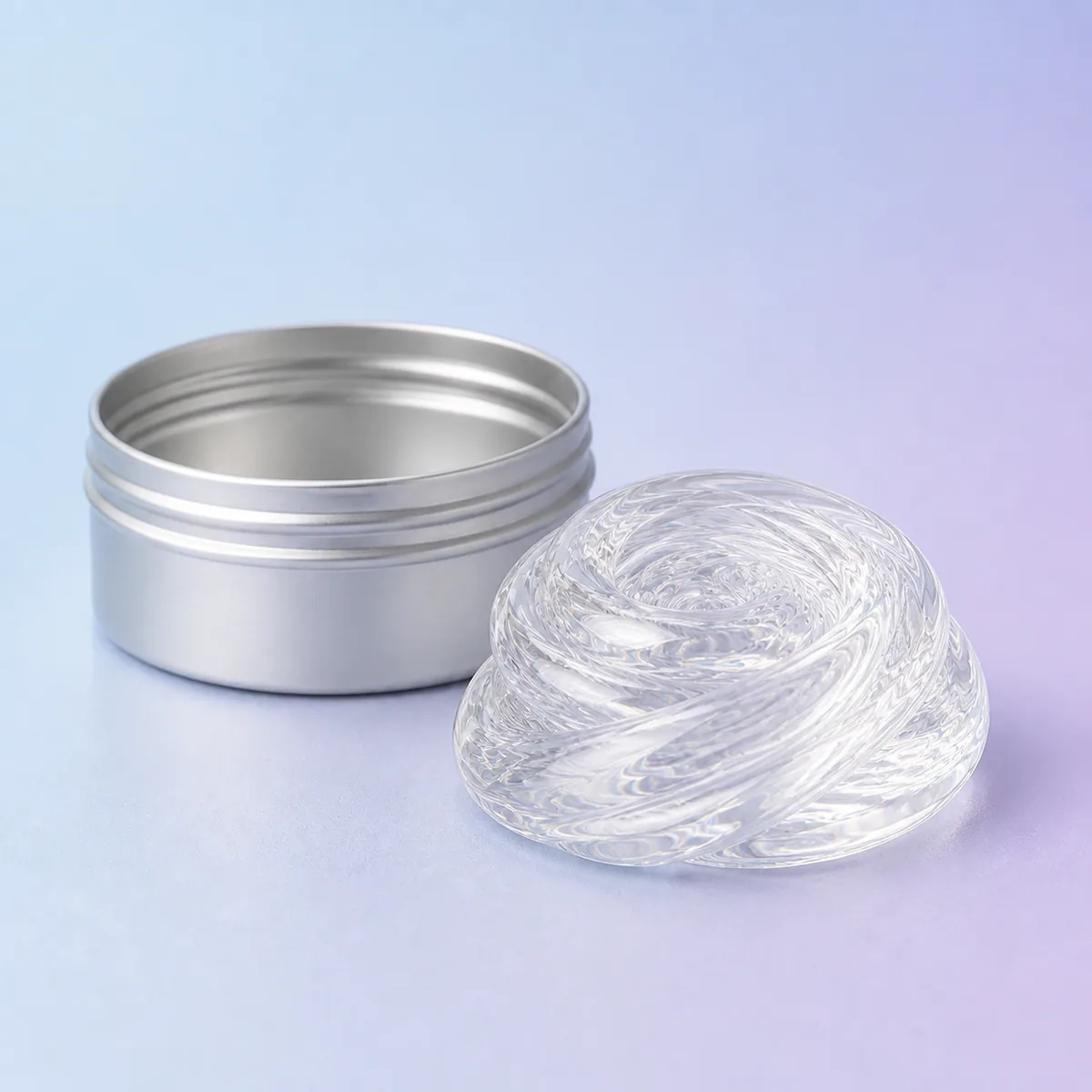
Putty works differently but soothes the same way. Calm Putty gives your hands no rules at all: pull it slow and it stretches like taffy, press it and it flattens, ball it up and start again. There is no wrong way to do it, so restless attention keeps inventing tiny variations while the rest of you focuses or unwinds. It stays in a little tin, does not dry out, and makes no noise.
And the oldest version still holds up. The Calm Worry Stone is a smooth, flat oval with a thumb-shaped hollow worn into the middle, so your thumb finds the dip and slides back and forth in a slow, grounding rhythm. No clicks, no pops, nothing for anyone to notice, just the cool-then-warm weight of it settling into your palm. It is about as pure as repetitive self-soothing gets: one motion, endlessly repeatable, quietly steadying.
Can repetitive motion help me wind down for sleep?
It can help as part of a calming pre-sleep routine, though it is a gentle aid, not a sleep treatment. A slow, repetitive, low-stakes motion can be a nice signal to your body that the day is ending, especially if the rest of your wind-down is consistent too.
Sleep specialists, including resources like the Sleep Foundation, tend to emphasize predictable, screen-light wind-down routines: the same soothing steps in the same order each night. A silent, repetitive fidget can slot into that easily. Pressing a soft squishy slowly in dim light, matching the motion to a longer exhale, gives your hands something calm to do instead of scrolling, which is why something like the Peachy Slow-Rise Squishy earns its keep on a nightstand.
Keep your expectations honest, though. A squishy will not solve insomnia, and if sleep is a real and ongoing struggle, that is worth raising with a professional. As one small, screen-free part of a wind-down ritual, a quiet repetitive motion is a lovely, low-effort thing to reach for. For a fuller picture of why your restless hands crave this in the first place, see our guide to why we fidget.
When should repetitive movement prompt a chat with a professional?
Almost never for ordinary self-soothing, so the honest answer is: only when a repetitive behavior causes harm or distress, or takes over. Rocking, fidgeting, and stimming are normal and healthy for countless people. The time to reach out is when the movement stops being kind to you.
Some honest signposts:
- The motion injures you, like head-banging, hard biting, or a repetitive habit that damages skin or hair.
- The behavior feels compulsive, driven by anxiety you cannot ease, or gets in the way of daily life.
- A child’s repetitive movements worry you, or come with other developmental questions you would like assessed.
In those situations, repetitive motion is not the enemy, and the goal is rarely to stop moving. A good professional helps you understand the need underneath and find a safer, kinder way to meet it. Trusted organizations like the American Psychological Association, the American Occupational Therapy Association, the Child Mind Institute, and the Cleveland Clinic offer guidance and can point you toward real support.
For most of us, though, there is nothing to treat and nothing to explain away. The pull toward rhythm is ancient and ordinary. If a slow, repeated motion helps you feel a little steadier, that counts, and you are allowed to reach for it. Calm in the palm of your hand.
Sources & further reading
We reference trusted organizations by name. This article is informational and not a substitute for professional medical advice.
- American Psychological Association: Publishes general, evidence-based information on stress, self-soothing, and self-regulation.
- American Occupational Therapy Association: Recognizes steady tactile and pressure input within the self-regulation approaches occupational therapists use.
- Child Mind Institute: Provides family-facing guidance on repetitive self-soothing behaviors, stimming, and development.
- Cleveland Clinic: Offers general public-health information on self-soothing behaviors and when a repetitive habit warrants professional support.
- Sleep Foundation: Referenced for general guidance on consistent, screen-light wind-down routines before sleep.
- ADDitude: Covers movement and repetitive fidgeting as practical focus and self-regulation supports for neurodivergent people.
Frequently asked questions
Why does repetitive motion feel so calming?
Because it is safe, simple, and predictable. Repeating the same small movement gives your mind a steady rhythm to follow, offers your senses reliable feedback, and asks almost nothing of you, so your nervous system can ease off. It is a normal, everyday form of self-soothing, the same reason rocking, pacing, and stroking a pet feel good. It is a gentle comfort rather than a cure for anything.
Why is rocking soothing?
Rocking works because it is rhythmic and predictable, and we are rhythmic creatures whose heartbeat, breath, and steps all have a cadence. A slow, repeating sway gives the mind something even to follow instead of racing, which many people find settling. It is why rocking chairs exist and why we instinctively rock a crying baby. The motion needs no goal; its value is simply that it repeats.
Is repetitive movement (stimming) a bad thing?
No. Stimming is repetitive, self-soothing movement, and for many people, especially autistic and other neurodivergent people, it is a valid and valuable way to self-regulate. It can release tension, manage over- or under-stimulation, and simply feel good, so it is not a behavior to shame or suppress. The only time to seek support is if a specific movement causes injury, where the goal is a safer motion that meets the same need, never just stopping.
Why does pressing a squishy or rolling putty over and over feel good?
Because it turns rhythm, predictability, and steady sensory feedback into one small, repeatable loop your hands enjoy. The motion is easy, the result is certain, and the texture gives back a consistent, gentle sensation every time. A slow-rising squishy stretches each press into an unhurried ritual as the foam rounds back, while putty invites endless open-ended stretching and squishing. There is no wrong way to do it, which is part of the comfort.
Can repetitive motion help with sleep?
It can help as one part of a calming pre-sleep routine, though it is a gentle aid, not a sleep treatment. A slow, silent, repetitive motion in dim light can signal to your body that the day is ending, especially paired with a consistent wind-down and less screen time. Pressing a soft squishy slowly, matched to a longer exhale, gives restless hands something calm to do instead of scrolling. If sleep is an ongoing struggle, that is worth raising with a professional.