What is a good fidget advent calendar filler?
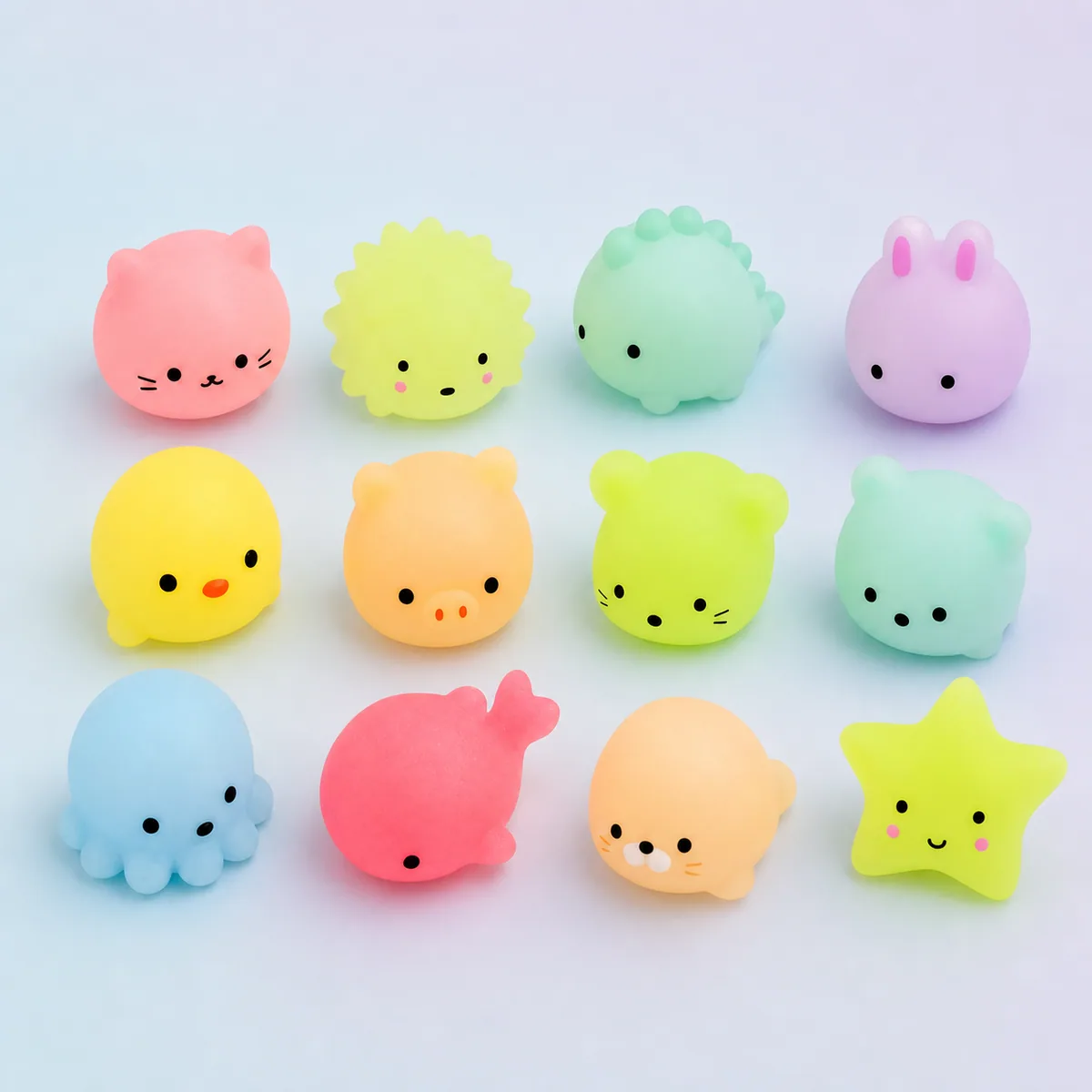
A good fidget advent calendar filler is small enough to fit behind a tiny door or inside a matchbox-sized drawer, and modest enough that day three does not have to compete with day twenty-four. A twelve-pack of tiny squishies covers most of the small, everyday doors on its own. Save a full-size squishy for the weekends, and hold back something bigger, like a full starter bundle, for the last day or the final week.
That is the whole shape of a good countdown: small and steady most days, with two or three days built up to feel a little different. It also keeps the whole thing affordable, since most of the calendar runs on one modest purchase rather than twenty-four separate ones.
Where does the daily countdown itself come from?
It is older, and more purpose-built, than most people assume. The earliest documented version was not a product at all: in 1839, Protestant theologian Johann Hinrich Wichern built a wagon-wheel frame of candles, large white ones for Sundays and smaller red ones for weekdays, for the children at the Rauhes Haus home he ran in Hamburg. He lit one a day specifically to answer the children’s repeated question of when Christmas would arrive, and to teach them to count along the way. The familiar printed calendar with small numbered doors came almost seventy years later, credited to German publisher Gerhard Lang, who began selling his version around 1908. A fidget calendar behind a door is a small, modern echo of a very old idea: give a child’s waiting a shape they can see and touch, one day at a time.
Why a fidget beats candy behind every door
December already runs on sugar. A tiny mochi squishy behind a door gives a kid something to open, hold, and actually keep, rather than one more small chocolate that is gone in five seconds and leaves a wrapper behind. It also means the toy is still around on December 26th, working the same way it did on December 1st, unlike whatever was eaten weeks ago.
The daily ritual matters more than any single item behind any single door. A fidget that takes thirty seconds to notice, squeeze, and set back down keeps a countdown feeling like a countdown rather than a chore, which is really the whole point of an advent calendar in the first place. There is a real, if indirect, research thread behind that instinct. A 2022 study in the Journal of Experimental Child Psychology watched 144 five-year-olds wait for a reward and found their fidgeting and talking sorted into recognizable patterns; children whose hands stayed busy at a level that matched how excited they actually were tended to wait longer than children whose fidgeting and anticipation were mismatched. The study was a lab waiting task, not a study of advent calendars themselves, but the underlying idea lines up with what a countdown asks of a child every single day: give restless hands and real anticipation somewhere to go together, rather than asking one to sit still while the other runs high.
Fidget countdowns beyond December
The same idea works for any countdown, not just Christmas. A countdown to a big trip, the first day of school, or a move to a new house can use the same small-daily, big-finale structure: a mini squishy for most days, something larger for the final week. An older kid counting down to a test week can lean the same way, pairing a squishy calendar with something quiet and pocket-sized, like a worry stone, for a countdown that doubles as an actual desk fidget once exams start.
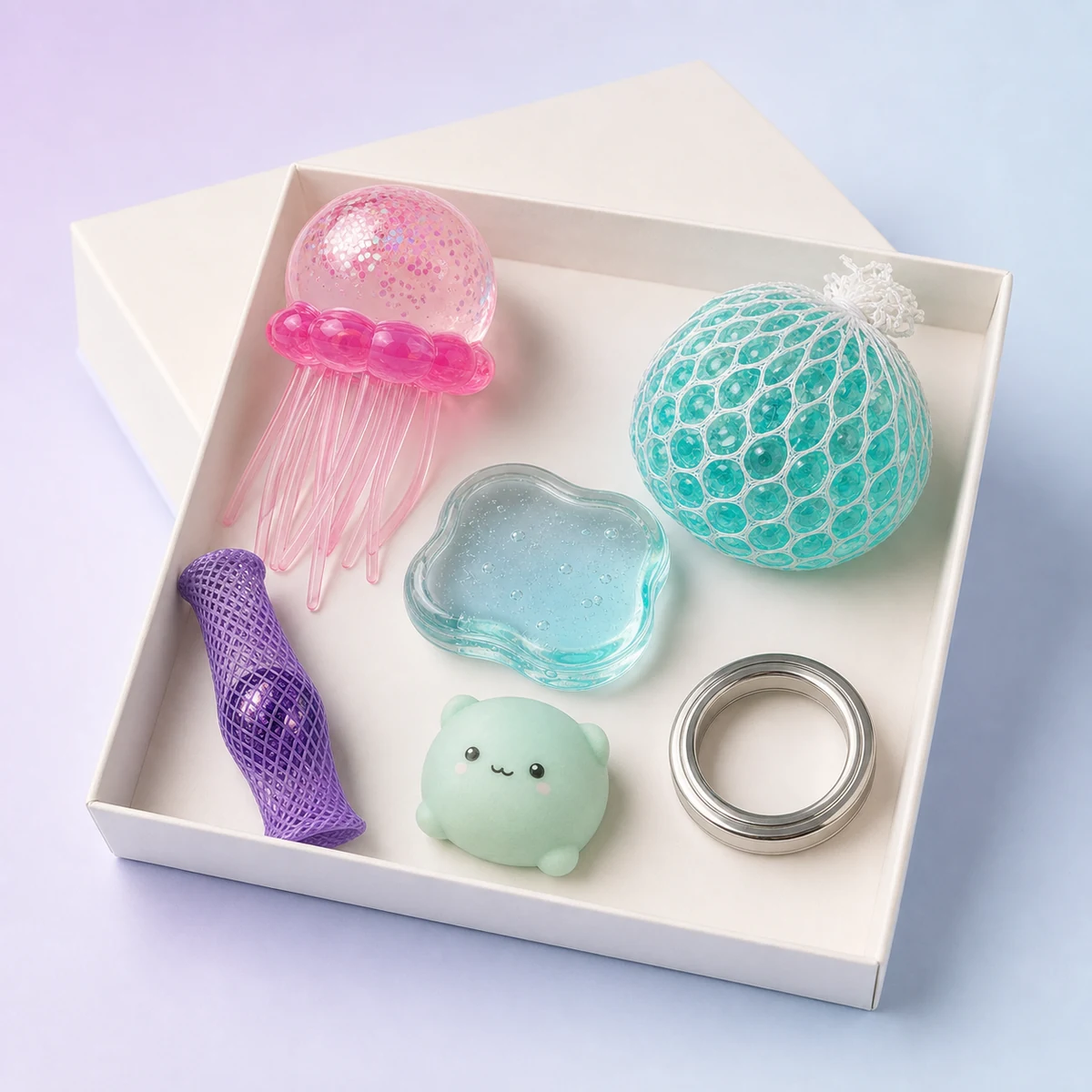
A family building a countdown together can also make the last few days progressively bigger rather than saving everything for one final reveal, opening the Calm Starter Bundle’s six pieces one at a time over the last week instead of all at once. It stretches the anticipation a little further and turns the final week into its own small countdown.
Sizing fidgets to fit a calendar door, and to the age behind it
Most advent calendar doors and drawers are small, which is exactly the strength of the Mini Mochi Animals Squishy Set: twelve tiny pieces, each one sized for a pocket-sized door, enough to cover half a month on their own. Two packs comfortably fill all twenty-four days if you want the whole calendar to be one consistent surprise.
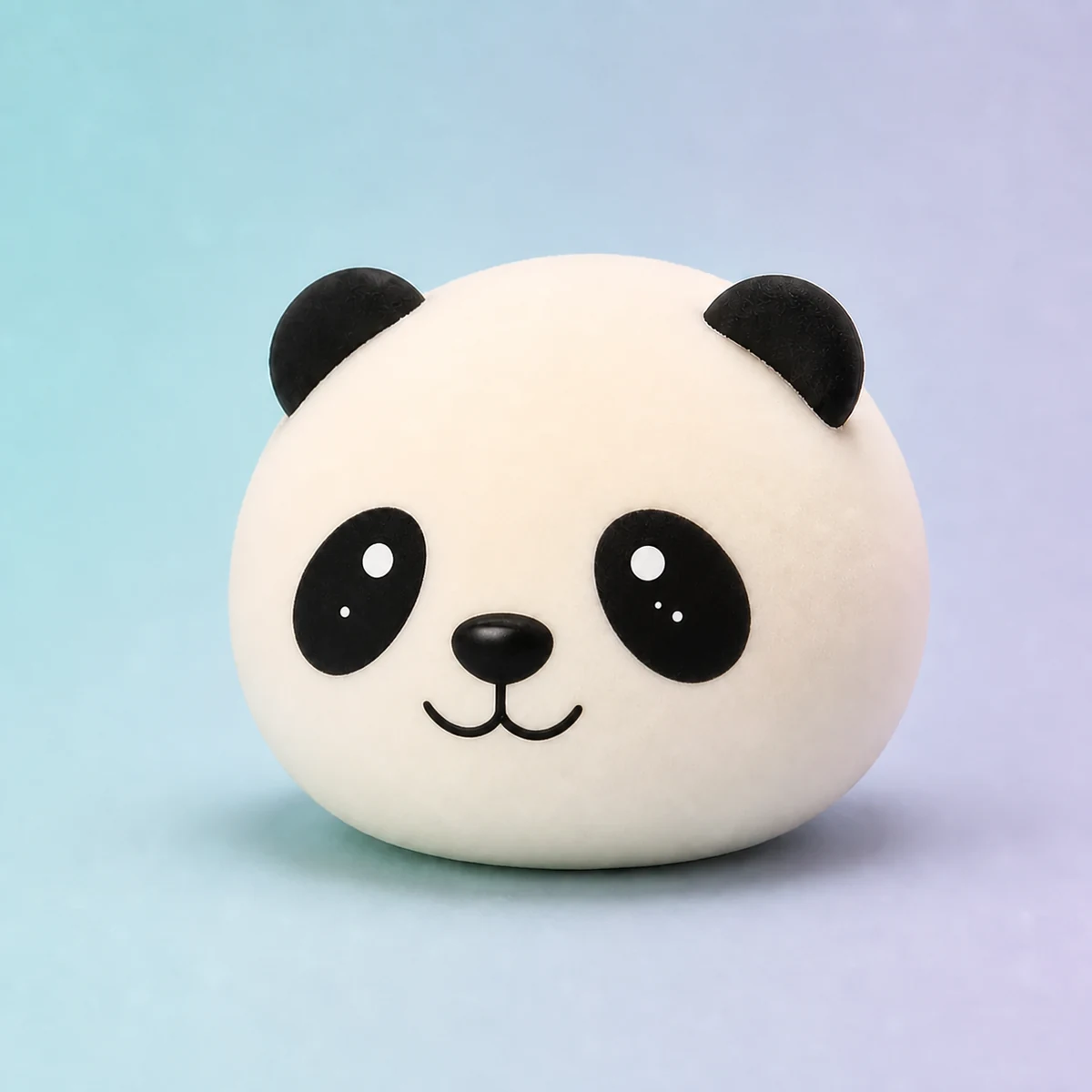
Size still matters for age here the same way it does for any small toy handed to a young child. Infants and toddlers explore new objects by mouth, which is why MedlinePlus, from the National Library of Medicine, recommends avoiding small-part toys for that age group and choosing larger items instead. For a very young child’s calendar, swap in a few full-size squishies, like the Bun Buddy Panda Slow-Rise Squishy or the Doughboy Dumpling Slow-Rise Squishy, on the days meant for the youngest hands, and save the mini pack for older siblings or a shared family calendar.
For a household with several ages of kids, two separate calendars solve the problem more cleanly than trying to sort one shared calendar door by door. It also means nobody has to remember, halfway through wrapping, which pieces were meant for which child.
Building a tiered countdown
A countdown feels better with a little structure to it: something small most days, something a bit bigger on weekends, and one genuinely good surprise at the end. Deciding this ahead of time, before the first door opens, also saves you from having to improvise a bigger reveal on a day you did not plan for one.
| Day type | Pick | Why |
|---|---|---|
| Most weekdays | Mini Mochi Animals Squishy Set | Twelve small pieces, one per door |
| Weekends or milestone days | Bun Buddy Panda or Doughboy Dumpling Squishy | Full-size, a bigger reveal than a mini piece |
| The final day or final week | The Calm Starter Bundle | Six kinds in one box, a proper end to the countdown |
| A shared family calendar | A mix of all three | Keeps every door a little different |
Splitting the calendar this way also answers the budget question before it comes up. Most of the twenty-four days can run on a single low-cost pack, with the bigger spend reserved for the two or three days meant to feel special.
What to skip
Skip anything with loose, separable pieces behind a door meant for a young child, for the same reason it matters in any small-toy gift: it should not be able to come apart into something that fits inside a choke-test cylinder. Skip anything that needs batteries or charging too. A dead battery behind door fourteen is a worse letdown than an empty door would have been, and it is one more thing to remember buying in the middle of a busy December. Simple wins here. Nobody has ever complained that a countdown was too easy to keep running, and a squishy never needs new batteries at eleven at night.
Fill the calendar, count down the days, and let the last door be the one worth waiting for. Calm in the palm of your hand, one day at a time.
Sources & further reading
We reference trusted organizations by name. This article is informational and not a substitute for professional medical advice.
- MedlinePlus (National Library of Medicine, NIH): Advises parents of infants to choose large, bright-colored toys with moving parts and to avoid toys with small parts, reflecting the hand-to-mouth exploration common at that age.
- U.S. Consumer Product Safety Commission: Its small parts regulation (16 CFR Part 1501) applies to toys and articles intended for children under 3 years (36 months) old, testing whether a piece fits entirely inside a choke-hazard cylinder.
- Journal of Experimental Child Psychology: Published a 2022 study of five-year-olds' self-control behavior during a waiting task, finding that fidgeting and vocalizing that matched a child's level of anticipation was linked to waiting longer.
- Hamburg Tourism: Documents the 1839 origin of the Advent wreath built by Johann Hinrich Wichern for the children in his care in Hamburg, the earliest documented Advent countdown device.
Frequently asked questions
What is a good non-candy advent calendar filler?
A small squishy works well, since it fits behind a tiny door and stays around long after it is opened, unlike candy. A twelve-piece set like the Mini Mochi Animals Squishy Set can cover most of the days on its own.
How many small toys do you need for a 24-day advent calendar?
Two twelve-piece sets comfortably cover all twenty-four days if you want the whole calendar to feel consistent. Many people mix it up instead, using small pieces on weekdays and saving a bigger squishy or bundle for weekends and the final day.
Are mini squishies safe for a young child's advent calendar?
Small pieces are better suited to an older child. For a very young child who still explores new objects by mouth, MedlinePlus recommends favoring larger toys over small ones, so swapping in a full-size squishy on that child's calendar is the safer choice.
What should be behind the last door of an advent calendar?
Something a little bigger than the rest works well as a finale, like a full sensory bundle rather than another small piece. The Calm Starter Bundle is built for exactly that kind of last-day reveal, six kinds of fidget in one box.
Do fidget advent calendars need to be expensive?
No. Filling most days with a single low-cost pack and saving a bigger item for just two or three special days keeps the cost down while still giving the countdown a sense of buildup.
What is a good countdown filler for an older kid or teen?
A wider variety works well for an older kid, since they are less likely to mouth small pieces and more likely to appreciate different textures across the month. Mixing squishies, a bundle piece, and something with more texture keeps each door a little different.