Why does squeezing something feel calming?
Squeezing feels calming because it gives the muscles and joints in your hands firm, steady feedback, an input your body reads as clear and predictable. That signal is called deep pressure, or proprioception, and many people find a steady dose of it organizing and grounding. It is a supportive sensation, not a treatment.
We want to be straight with you from the first line, because “why” questions deserve an honest answer with its seams showing. Part of the why is real physiology. Your hands are packed with sensors that report pressure and effort, and a firm squeeze lights them up in a way a light touch never does. Part of it is plainer still. Clenching and releasing a soft object discharges tension you were already holding, and it can slow your breath if you let it.
None of that makes squeezing magic, and we would never pretend it does. It makes squeezing a small, understandable thing that a lot of nervous systems happen to like. That counts.
What is proprioception, in plain language?
Proprioception is your body’s sense of where it is and how hard it is working, built from tiny receptors in your muscles, tendons, and joints. It is the reason you can touch your nose with your eyes closed, or walk downstairs without staring at your feet. When you squeeze, those receptors fire and stream steady feedback to your brain.
Here is the simple version. You have senses pointed at the outside world, like sight and hearing, and you have senses pointed inward. Proprioception is one of the inward ones. It runs quietly in the background, and you rarely notice it until it hands you something firm and clear to hold onto.
That is the part worth sitting with. A firm squeeze does not add noise to an already busy head. It adds a signal, a plain and repeating one, and for a lot of people a plain signal is exactly what a loud moment is missing.
What is deep-pressure input, and where did the idea come from?
Deep-pressure input, sometimes called deep-touch pressure, is firm, broad, even pressure on the body: the feeling of a snug hug, a weighted blanket, or a hard squeeze. Occupational therapists have used it for decades as one part of sensory-integration approaches, and the idea has a well-known origin story.
Temple Grandin, the animal scientist and autism advocate, built a “squeeze machine,” also called a hug machine, in the 1960s. She found firm, even pressure calming at times when ordinary touch felt like too much, and her account did a lot to popularize deep pressure as a sensory idea. The concept sits alongside the sensory-integration work of the occupational therapist A. Jean Ayres, and groups like the American Occupational Therapy Association and the STAR Institute for Sensory Processing still describe proprioceptive and deep-pressure input as strategies some people use to feel organized.
Here is the honest caveat. A memorable origin story and long clinical use are not the same as settled proof. They tell you the idea is taken seriously and has helped real people. They do not tell you it works for everyone, or that it treats anything.
What does the research actually say about deep pressure and calm?
The honest answer is that the evidence is limited and mixed. A lot of clinical, real-world experience and some small studies point to deep-pressure input helping some people feel calmer or more settled. Other studies find weak or inconsistent effects, and much of the closest research is hard to generalize from.
Take weighted blankets, the most-studied cousin of a good squeeze. Some people report better calm and easier sleep under one, and yet controlled studies come out mixed, often small, and far from unanimous. That is the shape of this whole area: promising and popular, not proven.
So we will hold both truths at once. Occupational therapists and sensory practitioners frequently describe deep-pressure and proprioceptive input as useful for self-regulation, and that real-world support is meaningful. It is also fair, and more honest, to say the science is still catching up to the experience. Worth trying, not a treatment. Both are true.
Does squeezing do anything besides deep pressure?
Yes, and these two mechanics are the ones people forget. First, squeezing releases physical tension. When you are stressed, your hands and forearms quietly clench, and a slow squeeze-and-release gives that held tension somewhere to go, a little like rolling a knot out of a tight shoulder.
Second, squeezing can pace your breath. If you match a slow squeeze to a slow inhale and an easy release to the exhale, the toy becomes a quiet metronome for your breathing. Slower breathing is one of the simplest ways to settle the body, and organizations like the American Psychological Association and Mayo Clinic point to slow, deliberate breathing as an everyday way to ease stress.
Neither of these needs a grand theory of the nervous system to work. Loosen your hands, slow your breath, and the rest of you often follows. Sometimes the plainest explanation is the true one.
What kind of squeeze toy gives the best deep-pressure feedback?
The best squeeze toy for deep-pressure feedback is the one whose resistance matches what your hands want that day. Firmer fills push back and give your muscles more to work against. Softer, moldable fills wrap around your fingers and reward a slow, sinking press. Neither is better; they are different feelings for different moments.
| If your hands want… | Reach for… | A gentle pick |
|---|---|---|
| Firm push-back with a quick rebound | A springy gel ball | Steady Hand Squeeze Stress Ball |
| A grainy, moldable squeeze that shifts under the skin | A water-bead fill | Calm Orb Water-Bead Squeeze Ball, Bubble Grapes Squeeze Ball |
| A soft, bouncy jiggle that springs right back | A jelly-like squish | Sweet Bear Jelly Squish |
| To press one small bump at a time | A bubbled or clustered surface | Bubble Grapes Squeeze Ball, Steady Hand Squeeze Stress Ball |
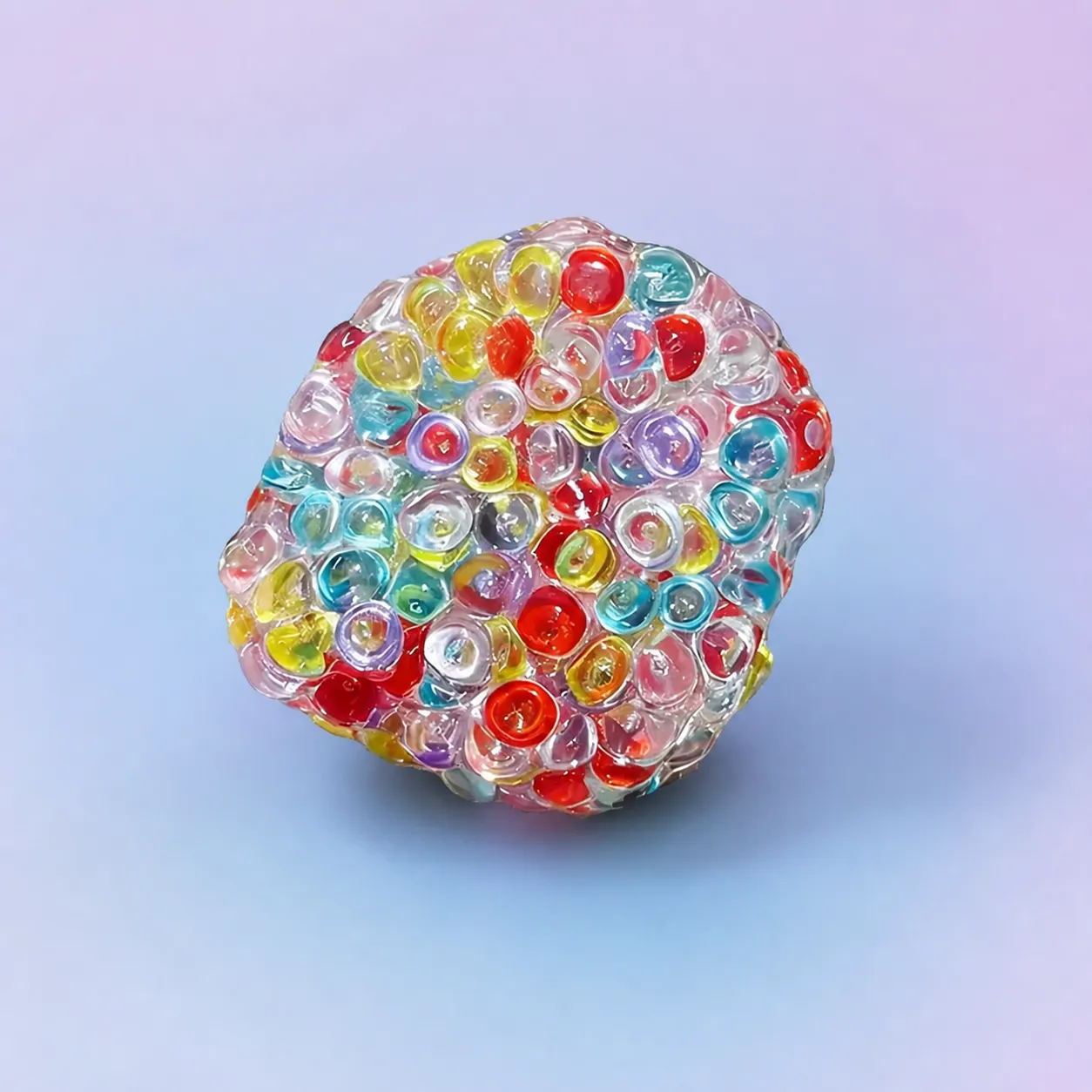
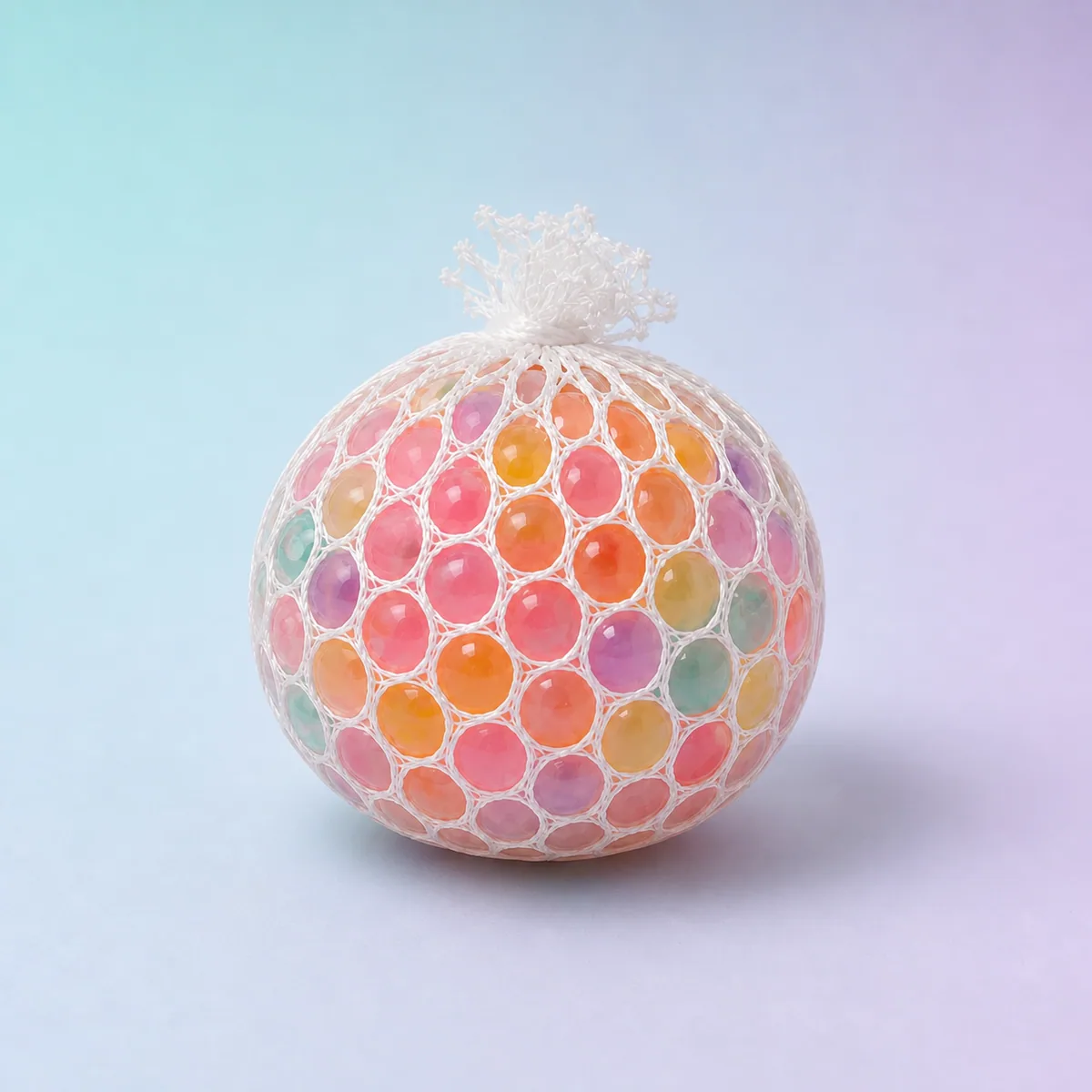
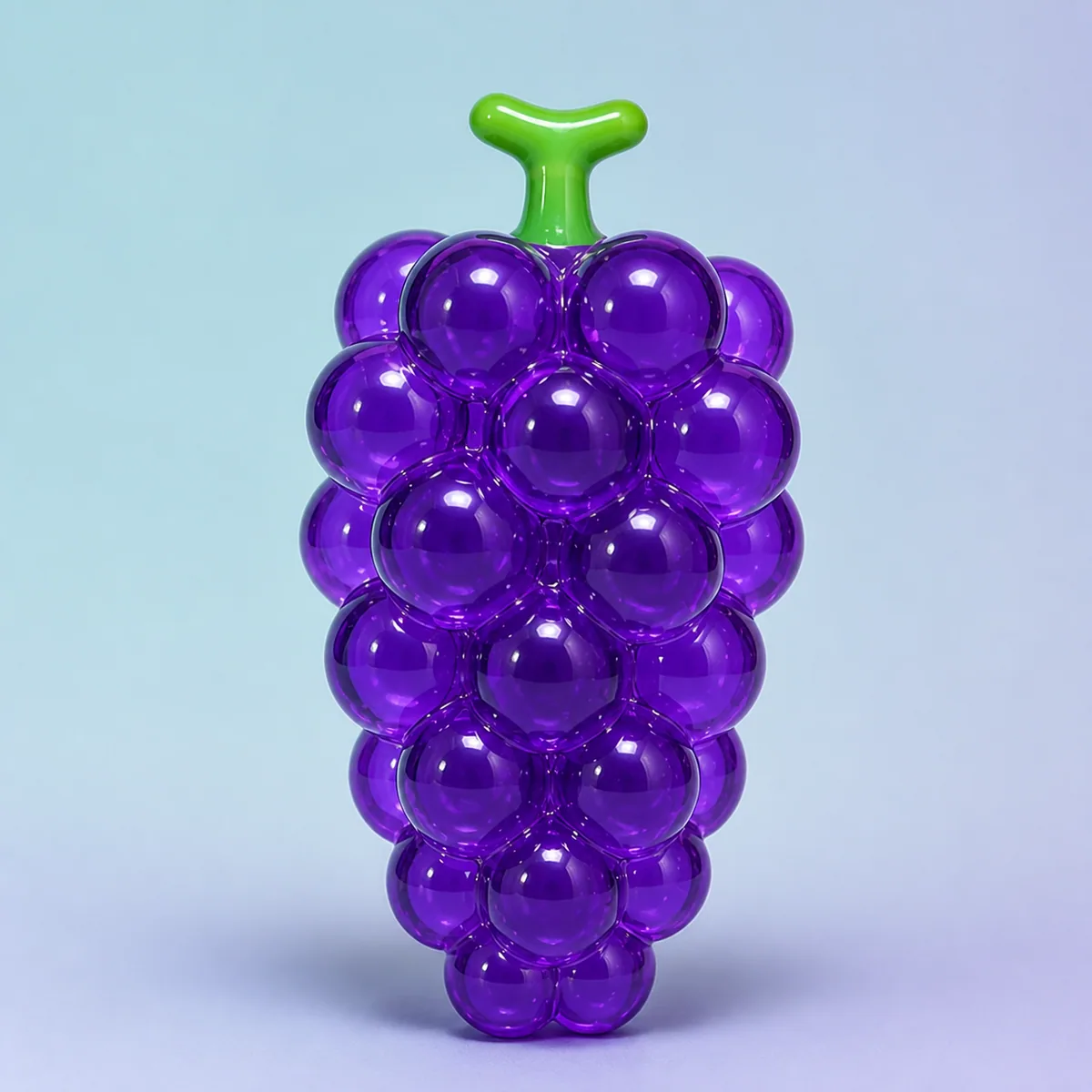
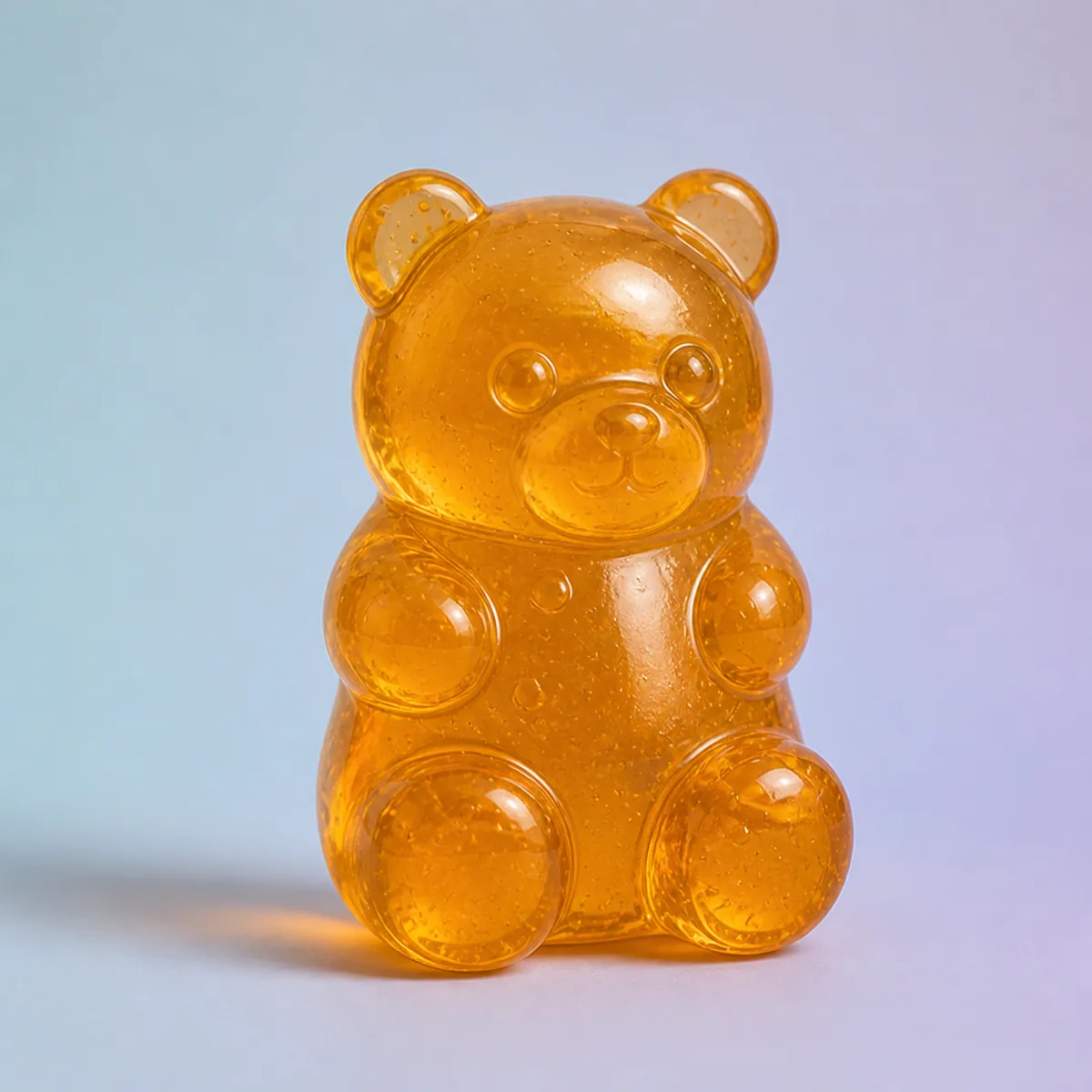
If your hands like resistance, the Steady Hand Squeeze Stress Ball is a palm-sized translucent gel ball, about 6.3 cm across, with a rounded bubble texture that springs back fast under a full-hand squeeze. If you would rather sink into a grainy, moving fill, the Calm Orb Water-Bead Squeeze Ball packs water-gel beads that bulge between your fingers and settle back, and the Bubble Grapes Squeeze Ball turns that into a little cluster you can press bump by bump. And if you want a springy jiggle instead of steady pressure, the Sweet Bear Jelly Squish wobbles and rebounds like an oversized gummy. Most people, honestly, end up with more than one, because different days ask different things of your hands.
How do I use a squeeze toy to calm down in the moment?
Keep it simple and keep it close. Hold your toy and match the motion to your breath: squeeze slowly on the inhale, hold for a beat, and release on the exhale. Let the rhythm slow over a minute or two, and let your shoulders drop while you are at it.
A few low-effort ways to get more from it:
- Pair it with your breath. The squeeze is a metronome. Let it stretch your exhale a little longer than your inhale.
- Use it early. Reaching for it before a hard call often helps more than waiting for the peak. A steady companion beats an emergency brake.
- Keep one where tension lives. A desk, a bag, a coat pocket, the car door. The easiest tool to use is the one already in reach.
- Let it be quiet. You do not have to do it “right.” Some days a few slow squeezes is the whole practice.
Be patient with yourself. Some days the input helps a lot, some days a little. Both are fine, and neither means you are doing it wrong.
When should I talk to a professional instead?
A squeeze toy is a comfort, not a cure, so reach out for professional support when stress or anxiety is persistent, intense, or getting in the way of daily life. If worry is disrupting your sleep, work, or relationships, please talk to a doctor or therapist. A toy can sit beside real care; it should never stand in for it.
We say that with warmth, because we mean it. Deep-pressure input is lovely for everyday tension, restless hands, and taking the edge off a hard moment. It is not designed to treat an anxiety disorder, autism, or anything that feels bigger than a passing wave. For sensory-seeking and neurodivergent folks, finding firm pressure comfortable is a completely valid reason to reach for a squeeze, no diagnosis required.
Trusted organizations like the Child Mind Institute, the American Occupational Therapy Association, and the STAR Institute for Sensory Processing offer honest guidance on sensory tools and when to seek more support. There is real strength in asking. A squeeze toy can be a small, steady friend in the meantime, calm in the palm of your hand, while the deeper help comes from people trained to give it.
Sources & further reading
We reference trusted organizations by name. This article is informational and not a substitute for professional medical advice.
- American Occupational Therapy Association: Recognizes proprioceptive and deep-pressure input within the sensory-integration approaches used by occupational therapists, while noting that responses vary by individual.
- STAR Institute for Sensory Processing: Describes deep-pressure and proprioceptive input as sensory strategies some people use to feel organized and calm.
- Cleveland Clinic: Explains proprioception, the body's sense of position and movement, in plain, general-audience terms.
- Mayo Clinic: Offers general guidance on relaxation and slow breathing as everyday ways to ease physical tension and stress.
- American Psychological Association: Provides general public information on stress and evidence-based relaxation techniques.
- Child Mind Institute: Frames sensory tools as supportive aids and points to professionals for diagnosable concerns.
Frequently asked questions
Why does squeezing a stress ball feel so good?
A firm squeeze gives the muscles and joints in your hand deep-pressure and proprioceptive feedback, a steady signal many people find grounding, and it releases the physical tension you were already holding. Some of the effect may be expectation, and a calmer pair of hands is still a calmer pair of hands. It is a supportive sensation, not a treatment.
What is proprioception in simple terms?
Proprioception is your body's sense of where it is and how much effort it is making, built from tiny receptors in your muscles, tendons, and joints. It is what lets you touch your nose with your eyes shut. When you squeeze something firm, those receptors send your brain a clear, steady stream of feedback.
Is deep pressure scientifically proven to reduce stress?
No. The evidence is limited and mixed. Occupational therapists have used deep-pressure input for decades and many people report feeling calmer, but studies, including those on weighted blankets, are often small or inconsistent. It is reasonable to try, and more honest to call it unproven than certain.
Does Temple Grandin's squeeze machine mean squeezing treats autism?
No. Temple Grandin built her squeeze machine because she personally found deep pressure calming, and her story helped popularize the idea in sensory work. That is a personal account and a design inspiration, not evidence that a squeeze toy treats autism, anxiety, or any condition. Autistic and sensory-seeking people may simply find the input comfortable, which is a valid reason on its own.
How do I use a squeeze toy to calm down in the moment?
Hold it and match the motion to your breath: squeeze slowly on the inhale, hold for a beat, and release on the exhale. Let the rhythm slow down over a minute or two. Using it early, before tension peaks, tends to help more than waiting for the hardest moment.