Why does a new squishy smell?
New squishy smell is two things layered together: fragrance added on purpose during manufacture, and genuine residual chemistry left over from making the material itself, both of which fade as the product airs out. Neither one is a secret, and neither is something you should assume away. A government survey and a peer-reviewed lab study have both looked closely at exactly this smell, and it is worth knowing what they actually found before you decide how much to worry.
We are not going to tell you the smell is just fragrance. It is fragrance plus process, and both parts are real.
What is actually in that smell, for a foam squishy?
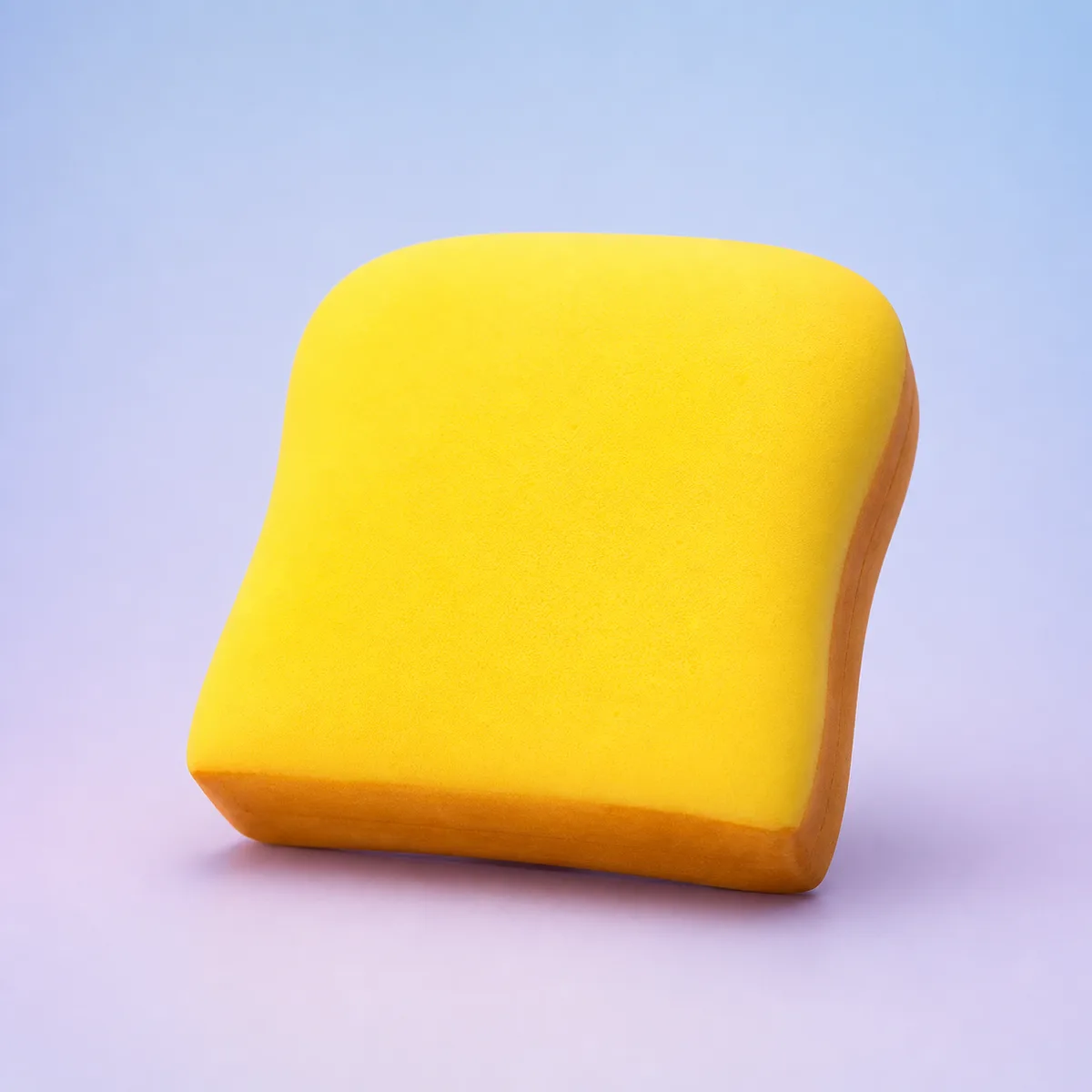
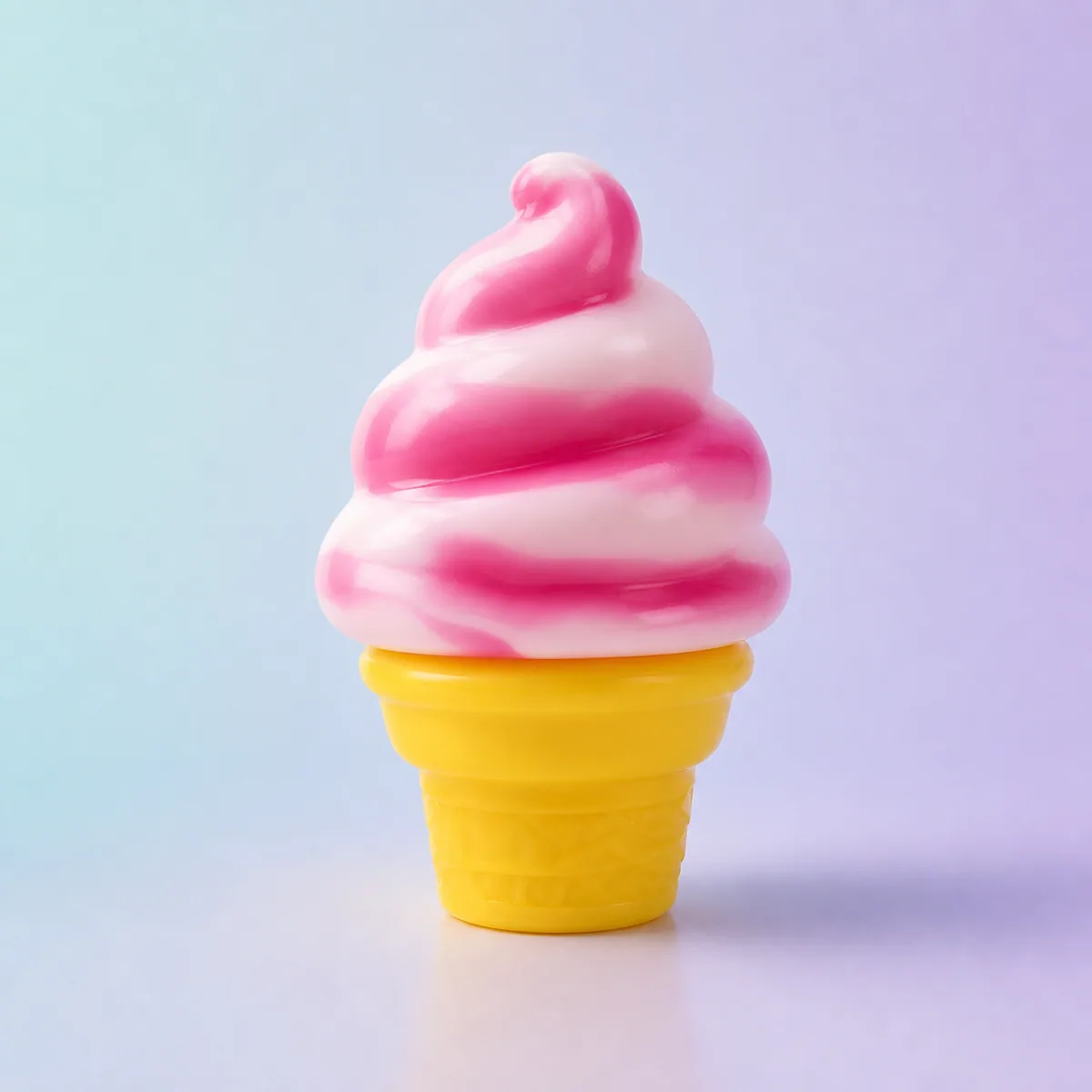
For a slow-rise foam squishy like the Bread Buddy Toast Slow-Rise Squishy or the Soft-Serve Ice Cream Slow-Rise Squishy, the odor compounds are mostly amine catalysts and aldehydes left over from the polyurethane-forming reaction. The amine catalysts, used to help the foam cure, evaporate out of the material over time in a process foam chemists call off-gassing, and a related effect called fogging can leave a faint film nearby while that happens. Aldehydes form separately, from impurities in the raw polyol.
There is no fixed timeline for this. Foam composition varies by product and by batch, so how long a given squishy keeps smelling, and how strong that smell is, depends on the specific foam, not a universal countdown you can rely on.
What did the 2018 Danish study find?
Denmark’s environmental agency tested 12 squishy toys in 2018 and found all 12 emitting high levels of several substances, including dimethylformamide, styrene, and toluene, chemicals that reporting on the findings linked to fertility impairment, liver damage, and mucous-membrane irritation at sufficient exposure. The findings were treated as a breach of the EU Toy Safety Directive, and Denmark’s environment minister called on distributors to pull squishies from shelves until they could show the products were not emitting harmful chemicals.
That is a real finding, and we are not going to soften it. It is also a specific sample from 2018, 12 products, not a verdict on every squishy made today under current testing and regulation. The results were shared with other EU member states through the European Commission, which is how a national test in Denmark became a bloc-wide compliance question rather than a local recall. Read the finding as a reason sourcing matters, not as proof that any given squishy on a shelf right now is dangerous.
What does the peer-reviewed research add?
A 2018 chamber study of fresh flexible polyurethane foam identified six compounds with no pre-existing safety benchmarks at the time, including trimethylsilanol and propanal, and the researcher derived tentative guidance values for several of them: about 0.05 ppm for 1-chloro-2-propanol, roughly 300 micrograms per cubic meter for propanal, and about 38 micrograms per cubic meter for triethylenediamine. Those numbers are one scientist’s derived estimates, not codified legal limits, and the study itself flags some of the underlying toxicity data as incomplete for a few of the six compounds. The same study confirmed what foam chemists already expected: emission rates decline as the foam ages. Fresh foam smells the most; older foam smells less, on a timeline the study does not pin down for squishy toys specifically.
Is added fragrance itself something to worry about?
Fragrance is a standard, deliberate additive in a squishy’s ingredient list, not an afterthought, and the Danish study’s own title names fragrances specifically as part of what it examined. Scent alone is not evidence of a problem. What the lab work actually did was look past the smell to identify the compounds riding along with it, which is a more useful question than whether something smells strong or faint.
Does TPR smell for the same reason?
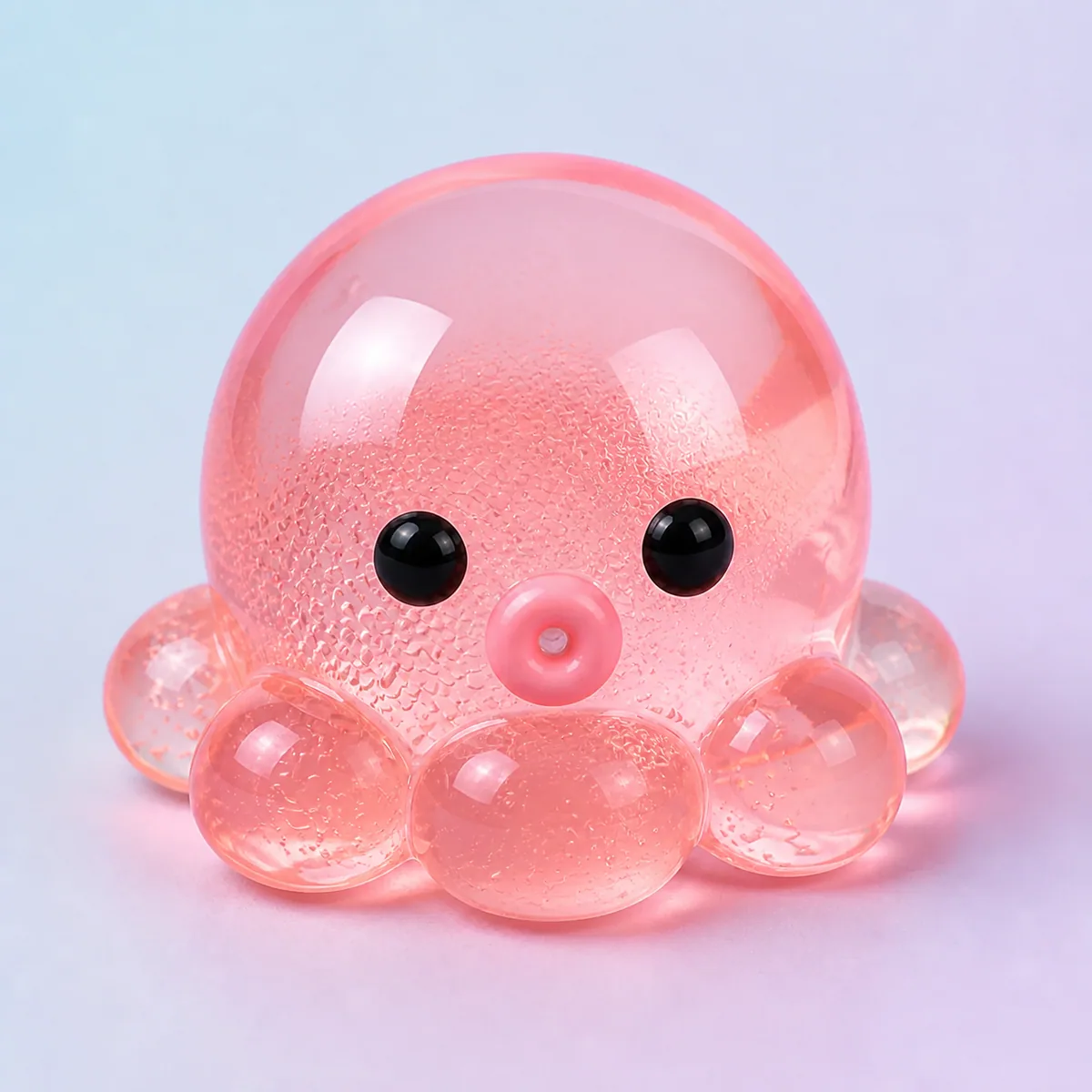
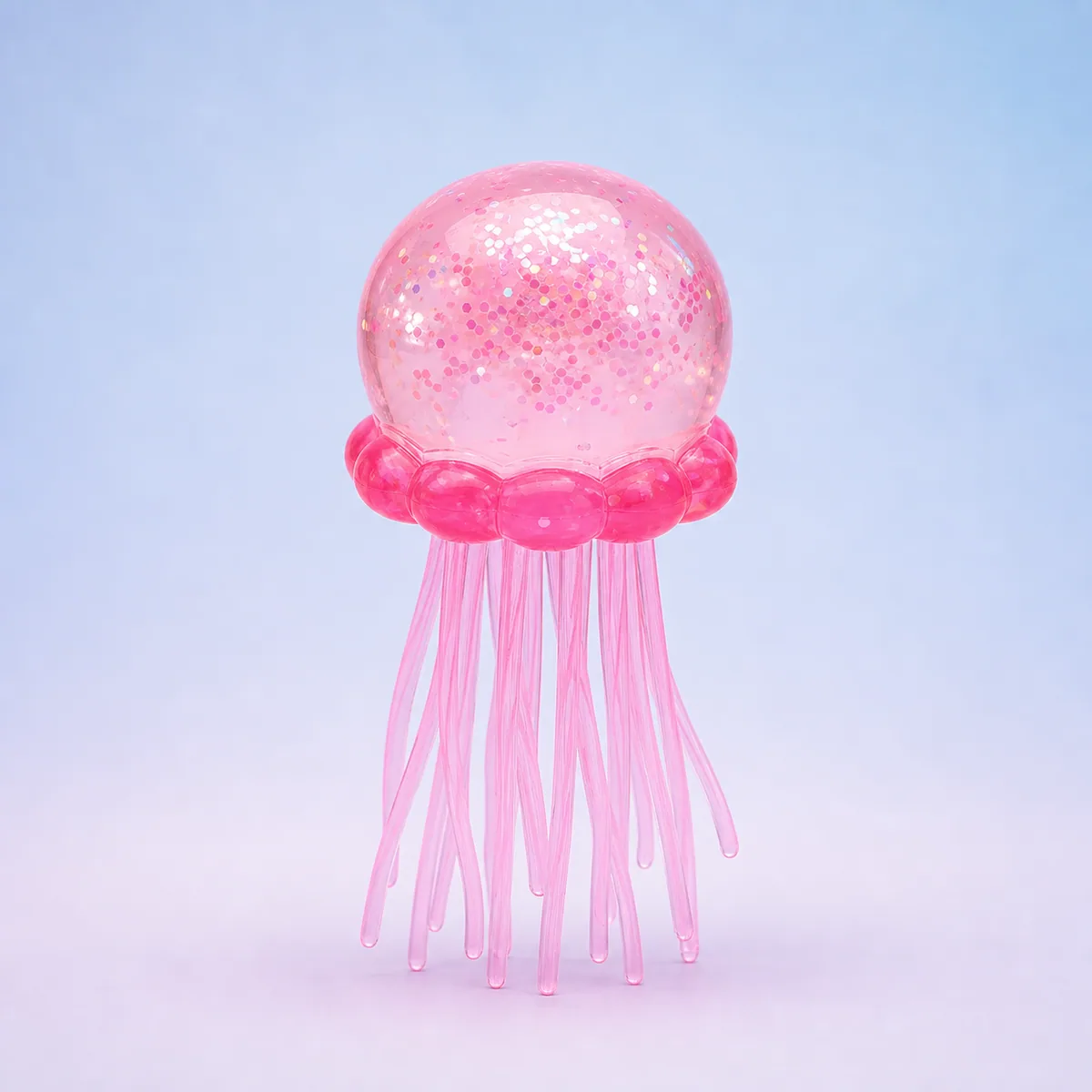
Some of our squishies, like the Mochi Octopus Gel Squishy and the Drift Jellyfish Glitter Squishy, are TPR rather than foam. TPR is a thermoplastic block copolymer, remeltable and reprocessable, built through different chemistry than polyurethane’s reacted, non-remeltable foam network, and its manufacturing residues are not the amine catalysts and aldehydes described above. We have not found a TPR-specific off-gassing study to point you to the way we can for foam, and we would rather say that plainly than guess at a mechanism. What we can tell you is that fragrance is added deliberately across both materials, and both benefit from the same airing-out habit.
How should you handle a new squishy’s smell?
Unwrap it as soon as it arrives rather than leaving it sealed in a bag, and air it out in an open room for a day or two before letting a young child sleep with it or keep it close to their face for long stretches. No source gives a specific “safe after X days” number for squishy toys, so treat airing out as a sensible precaution, not a guarantee that the smell, or what causes it, is fully gone by any set date. A quick hand wash after a long handling session is a reasonable habit too, especially for a small child who mouths things.
| If the squishy is | The likely source of the smell | What helps |
|---|---|---|
| PU foam (Bread Buddy, Soft-Serve Ice Cream) | Amine catalysts and aldehydes from the foam reaction | Air it out in an open room; off-gassing tapers with time |
| TPR (Mochi Octopus, Drift Jellyfish) | Manufacturing residues plus added fragrance, chemistry not separately studied here | Same airing-out habit, on general principle |
| Either material | Added fragrance | Fades fastest, usually within the first days of use |
A smell that is strong, chemical, and does not fade after airing out for a week or two is a reasonable reason to contact us rather than keep using the product. Calm in the palm of your hand, once the newness has aired out of it.
Sources & further reading
We reference trusted organizations by name. This article is informational and not a substitute for professional medical advice.
- Danish Environmental Protection Agency (Miljostyrelsen): Tested 12 squishy toys in 2018 and found all 12 emitting high levels of substances including dimethylformamide, styrene, and toluene, a finding that led to a market withdrawal and was treated as a breach of the EU Toy Safety Directive.
- Polyurethane Foam Association: The polyurethane foam industry's own trade association describes the amine-catalyst and aldehyde chemistry behind new-foam odor, and states there is no fixed timeline for how long off-gassing lasts, since it depends on a foam's specific composition.
- EXCLI Journal: Published a 2018 peer-reviewed chamber study that measured several volatile compounds in fresh flexible polyurethane foam without prior safety benchmarks, derived tentative guidance values, and confirmed that emission rates decline as foam ages.
Frequently asked questions
Why does a new squishy smell?
Because of two things layered together: fragrance added on purpose during manufacture, and real residual chemistry left over from making the material, mainly amine catalysts and aldehydes in polyurethane foam. A 2018 Danish government test found squishy toys emitting several solvents at meaningful levels, and a separate peer-reviewed study measured real compounds in fresh foam. Neither cause is imaginary, and neither has a fixed fade-out date.
Is the smell in a new squishy dangerous?
The 2018 Danish test found all 12 squishy toys it examined emitting high levels of several substances, a real and specific finding worth taking seriously. It described a 2018 sample of 12 products, not a verdict on every squishy manufactured and tested under current rules today. We would rather you know the finding exists than pretend it does not.
How long does new squishy smell last?
No source gives a fixed, squishy-specific number of days, since foam composition varies by product and batch. What research on fresh polyurethane foam does confirm is that emission rates decline as the material ages, so a squishy that has been out of its packaging and airing for a while should smell noticeably less than one fresh from the box.
What causes the smell in a foam squishy specifically?
Mostly amine catalysts used to help the foam cure, which evaporate out of the material over time, plus aldehydes that can form from impurities in the raw polyol. Both are a normal part of how flexible polyurethane foam is made, not a sign of a defective product. Airing the squishy out in an open room helps both fade faster.
Do TPR squishies smell for the same reason as foam ones?
Fragrance is added to both deliberately, but TPR's manufacturing residues are chemically different from polyurethane's amine catalysts and aldehydes, and we have not found a TPR-specific study to point you to. The honest answer is that we know the foam chemistry well and the TPR chemistry less precisely, so we recommend the same airing-out habit for both rather than assuming one is automatically cleaner.
Should I return a squishy if the smell does not go away?
If a squishy still smells strongly and chemically after airing out in an open room for a week or two, that is a reasonable reason to stop using it and contact the seller. A faint, sweet fragrance that fades gradually is normal; a smell that stays sharp or gets on your hands is not something to just live with.