Why are squishies slow rising?
Squishies are slow rising because the foam inside them is viscoelastic, the same kind of memory foam used in mattresses. It remembers its shape and returns to it slowly, because it resists sudden change. Press it and it gives way; let go and it eases back rather than snapping at you.
That word, viscoelastic, is doing all the work here, so let us unpack it in plain language. A slow-rising squishy is not failing to be fast. It is built to be slow on purpose, and the slowness is the whole appeal. You flatten it, and instead of springing back, it takes a breath and fills out again over several seconds. Our foam squishies recover over roughly 4 to 6 seconds, which is just long enough to be worth watching, and just slow enough to pull your own pace down with it.
What does viscoelastic actually mean?
Viscoelastic means a material behaves partly like a liquid and partly like a rubber band at once. The elastic part remembers the original shape and wants to return to it. The viscous part resists sudden movement, the way honey resists a fast stir, so the return happens slowly instead of all at once.
Picture two everyday things. A rubber band is purely elastic: stretch it and it snaps straight back. Honey is mostly viscous: stir it quickly and it drags, tip the jar and it oozes. Memory foam, and the foam inside a slow-rising squishy, sits right between those two. It has the memory of the rubber band and the unhurried pace of the honey. So when you press it flat, it remembers the shape it is supposed to be, but it refuses to rush there. It oozes back into place.
This is not a new or mysterious material, either. Viscoelastic foam, better known as memory foam, was originally developed under NASA-funded research in the 1960s to cushion aircraft seating and soften impacts. It found its way into mattresses, pillows, and eventually the small, squeezable toys we make. The same property that lets a mattress hold the print of your hand for a moment is what lets a squishy hold your thumbprint and then slowly let it go.
Why does the foam rise back slowly instead of snapping?
The foam rises slowly because it is full of tiny connected air pockets, and the air can only move in and out a little at a time. When you press the squishy, air is squeezed out of those cells gradually. When you release, the foam draws the air back in just as gradually, so it re-inflates in slow motion.
Two things are happening together. First, that air-cell effect: open-cell foam is essentially a sponge full of microscopic rooms, and air takes its time flowing between them. Second, the polymer itself is viscoelastic, so it is naturally slow to spring back. Put the two together and you get the signature move, a slow, smooth, watchable recovery instead of a fast bounce. No batteries, no clever mechanism, no app. Just physics you can hold in the palm of your hand.
Why is a slow rebound so satisfying to press again and again?
A slow rebound is satisfying because it is slow, predictable, and watchable, and our minds tend to find that gentle predictability soothing. You press, you wait, you watch the shape return, and then you get to do it all over again. That small, repeating loop gives restless hands a job and gives your eyes something calm to follow.
Here is what seems to make it click for so many people. The pace is unhurried, so it quietly invites you to slow down with it. The outcome is certain, since the squishy always rises back, and certainty is reassuring when your head is busy. And it rewards repetition without ever asking for it: press it once or a hundred times, and it makes no demand of you either way. A lot of people describe that as grounding, a way to put nervous energy somewhere gentle.
We want to be honest about the wellbeing side of this. A slow-rising squishy is a supportive sensory tool, not a treatment or a cure for anxiety, and the research on fidget toys is still mixed. What we can fairly say is that occupational therapists often describe fidget and sensory tools as one useful part of a self-regulation toolkit, and that many people simply find the slow squeeze calming. If you are navigating something diagnosable, a qualified professional is the right person to guide you. The squishy is just the small, steady thing for your hands while you do.
How is a slow-rising squishy different from a stress ball?
The core difference is the rebound. A slow-rising squishy is viscoelastic and eases back over several seconds, while a stress ball is elastic and snaps back almost instantly. One is built for watching and winding down, the other for squeezing and releasing.
They scratch different itches. A stress ball stores the energy of your squeeze and hands it straight back, so it is all quick feedback: clench, resist, release, repeat. That fast loop is wonderful when you are holding tension and need somewhere to put it. A slow-rising squishy does the opposite. It absorbs the squeeze and gives it back slowly, so instead of feedback you get a pause. If a stress ball is a fast exhale, a slow-rising squishy is a long one.
| Slow-rising squishy | Stress ball | |
|---|---|---|
| Material behavior | Viscoelastic (memory foam) | Elastic (springy) |
| Rebound | Slow, several seconds | Fast, near-instant |
| The feeling | A watchable pause, winding down | Quick squeeze-and-release feedback |
| Best moment | Slowing down, sleep, sensory calm | Discharging tension, restless hands |
Neither one wins. If you want the full side-by-side across squishies, stress balls, and gel fidgets, that comparison is worth its own read. For here, the one-line version is this: reach for a squishy when you want to slow down, and a stress ball when you want to let off steam.
What makes a squishy rise faster or slower?
A few real things change the speed of the rise: temperature, density, size, and age. Warm foam rises faster and cold foam rises slower, denser foam takes longer to recover, and a bigger squishy has more air to move, so it tends to rise more slowly than a small one.
Temperature is the one you will notice most. Viscoelastic foam softens with warmth and stiffens in the cold, so the same squishy springs back a little quicker in a warm room or a warm hand, and drags its feet on a cold windowsill. Firmness matters too: a denser, firmer squishy resists the squeeze more and returns more slowly, while a very soft one recovers sooner. And squishies do change over a long life of squeezing. The foam can soften and the rise can quicken with heavy use, which is ordinary wear, not a fault. Pressing gently and keeping it out of heat and sunlight keeps that slow rise slow for longer.
Which slow-rising squishies have the most satisfying rise?
The most satisfying rise tends to come from a soft, dense foam with a rebound slow enough to watch, in a shape your thumb wants to press. Across our range, the slow-rise foods hit that sweet spot, with a recovery of about 4 to 6 seconds.
A few our customers reach for again and again:
- Peachy Slow-Rise Squishy: a rounded peach with a deep center cleft that gives your thumb a natural place to press, then watch it round back out.
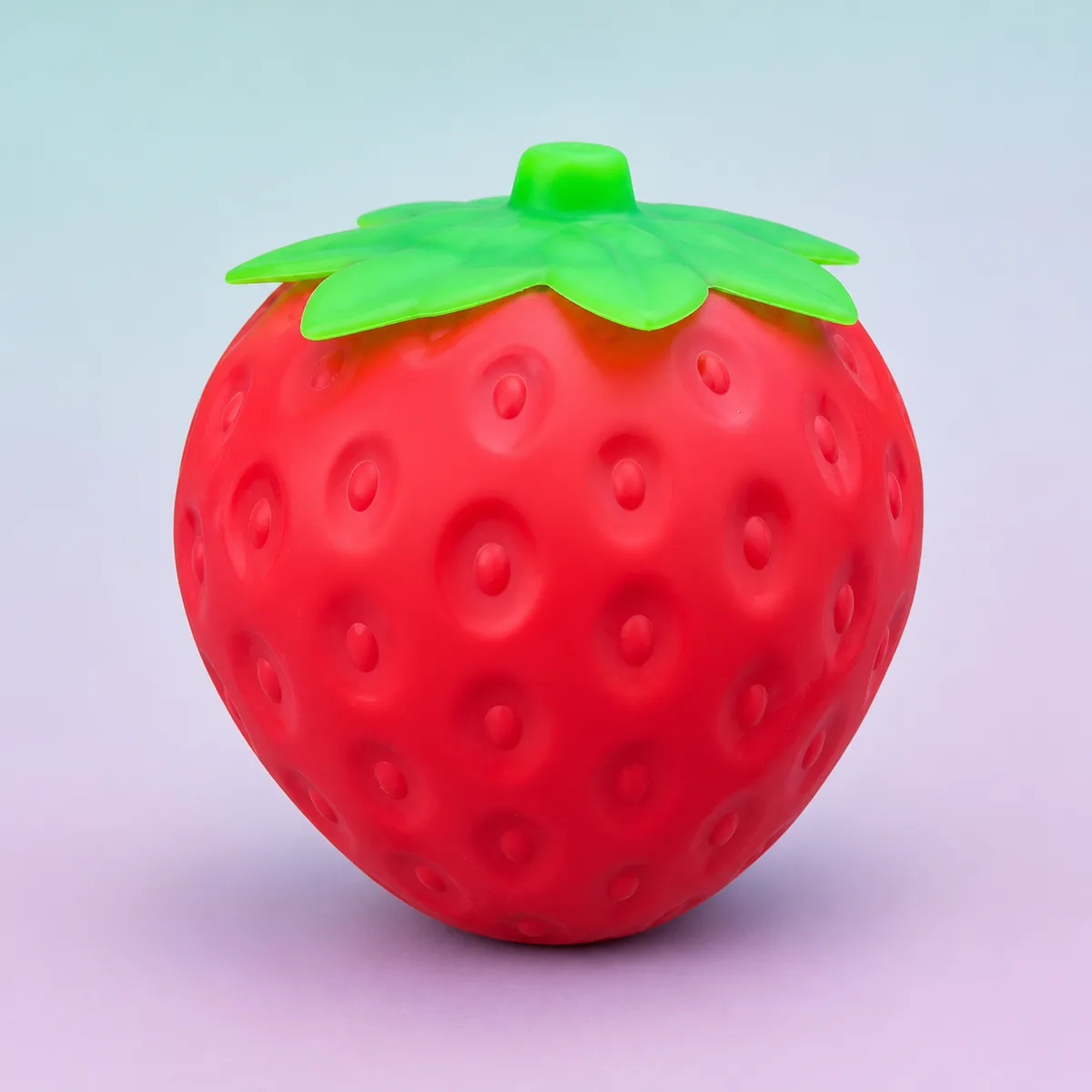
- Berry Slow-Rise Squishy: a chunky strawberry covered in molded seed dimples, so there is texture under your fingers as it slowly recovers.
- Doughboy Dumpling Slow-Rise Squishy: a plump, glossy bun dome that presses down and eases back like real dough, and one of our bestsellers for exactly that reason.
- Soft-Serve Ice Cream Slow-Rise Squishy: a tall swirl seated in a little cup, with plenty of height to flatten and watch rise again.
Every one of these is silent, foam, and battery-free, made for the same quiet ritual: press, watch, breathe, repeat.
The slowness is not a flaw or a gimmick. It is the whole point, engineered into the foam itself, a material that remembers its shape and takes its sweet time getting back to it. That unhurried rise is what turns a small foam toy into something you can press again and again while your shoulders come down from around your ears. Slow by design, calm in the palm of your hand.
Sources & further reading
We reference trusted organizations by name. This article is informational and not a substitute for professional medical advice.
- NASA: Viscoelastic memory foam was originally developed under NASA-funded research in the 1960s to cushion aircraft seating and absorb impact, later spreading to mattresses and cushions.
- American Occupational Therapy Association: Occupational therapists describe sensory and fidget tools as possible supports for self-regulation, with effects that vary from person to person.
- Child Mind Institute: Frames sensory and fidget tools as supportive aids and points to professional support for anything diagnosable.
- CHADD: Describes fidget tools as one possible part of a broader self-regulation toolkit rather than a standalone fix.
- Sleep Foundation: Offers guidance on calming wind-down routines and habits that help the body prepare for sleep.
- Anxiety and Depression Association of America: Provides resources on stress, grounding techniques, and knowing when to seek professional help.
Frequently asked questions
Why are squishies slow rising?
Because they are made of viscoelastic foam, the same family as memory foam. It remembers its original shape but resists sudden movement, so after you press it, it eases back over several seconds instead of snapping. The tiny air pockets inside the foam, which refill slowly, add to the effect.
What does viscoelastic mean in simple terms?
It means a material acts partly like a spring and partly like a thick liquid at the same time. The elastic side remembers its shape, and the viscous side slows the return down, the way honey resists a fast stir. Memory foam and slow-rising squishies both sit right in that middle.
Why do slow-rising squishies feel so satisfying?
The rise is slow, predictable, and watchable, and that gentle repetition is what many people find soothing. You press, wait, watch it recover, and repeat, which gives restless hands a job and your eyes something calm to follow. They are supportive sensory tools, not a treatment, but plenty of people find the slow squeeze genuinely calming.
What is the difference between a slow-rising squishy and a stress ball?
A squishy is viscoelastic and eases back slowly, made for winding down and watching it recover. A stress ball is elastic and snaps back fast, made for quick squeeze-and-release tension relief. One is a long exhale, the other is a fast one.
Why does my squishy rise faster or slower on different days?
Mostly temperature. Viscoelastic foam softens in warmth and stiffens in the cold, so your squishy springs back quicker in a warm hand or room and slower somewhere cold. Density, size, and normal wear over time also change the pace.
Do slow-rising squishies wear out?
With heavy use over a long time, the foam can soften and the rise can speed up a little, which is normal wear rather than a defect. Squeezing with your finger pads instead of your nails, and keeping it away from heat and direct sun, keeps that slow rise slow for longer.