What do toy safety marks actually certify?
By default, a CE or UKCA mark on a toy means the manufacturer has declared, in its own paperwork, that the product meets the relevant safety rules, not that an independent lab checked it first. That is a real, legal declaration with consequences if it turns out to be false, but it is not the same claim as third-party testing. A toy sold in the US works under a different system entirely: a Children’s Product Certificate is required, and it can only be issued after an accredited outside lab actually tests the product. Knowing which claim a mark is making, self-declared or lab-verified, changes how much weight you should put on it.
What does a CE mark on a toy actually mean?
Every toy sold in the EU must carry a CE mark, and under the EU Toy Safety Directive, that mark is the manufacturer’s own declaration that the toy meets the essential safety requirements. It is not, on its own, evidence of independent verification. The framework allows a manufacturer to seek out third-party verification through what are called notified bodies, but nothing requires it for most toys. The technical detail behind the requirement lives in the harmonized EN 71 standard series: Part 1 covers mechanical and physical properties, Part 2 covers flammability, and Part 3 covers migration of certain elements, meaning how much of a given chemical can leach out of the material. A new EU regulation, adopted in late 2025, replaces the current directive, comes into force January 1, 2026, and reaches full application by August 1, 2030, adding stricter chemical protections and a digital product passport requirement along the way.
What does UKCA mean, and is it any different?
Much the same, with one meaningful exception. The UKCA mark similarly demonstrates that a manufacturer believes its product meets the relevant requirements, self-declaration by default. But for toys specifically, self-declaration falls short when no adequate designated standard exists or has been applied, or when a designated standard carries a restriction; in those narrower cases, the toy has to go through third-party conformity assessment by a UK Approved Body instead. So UKCA sits closer to CE than to the US system in the ordinary case, but it is not purely self-declared across the board the way CE is.
Why does a self-declared mark still matter?
A self-declared mark is not meaningless just because it is not the same as independent testing. Declaring compliance falsely under EU or UK product law carries real legal consequences for a manufacturer, and market surveillance authorities in both regions can and do pull products found to be mismarked after the fact. The distinction that actually matters is procedural: was the compliance checked before the mark went on the box, or only after something went wrong and someone complained.
What does it actually take to sell a toy in the US?
More than a mark. A Children’s Product Certificate is required under federal law, and it is issued only after a CPSC-accredited third-party laboratory tests the product for flammability, hazardous substances like lead and phthalates, ASTM F963 compliance, material cleanliness, and battery safety where relevant, with testing completed before the product ships. ASTM F963-23 itself, mandatory since April 20, 2024, covers any object designed, manufactured, or marketed as a plaything for children under 14. That certificate documents which specific, tested parameters passed. It does not promise an open-ended guarantee beyond what was actually tested, and no mark from any country makes that claim honestly.
How do the marks actually compare?
| Mark | Region | Default path | What it actually means |
|---|---|---|---|
| CE | European Union | Self-declaration by the manufacturer | Compliance with EU toy safety law, tested against EN 71; independent testing is optional unless the maker chooses it |
| UKCA | United Kingdom | Self-declaration by default | Same as CE in most cases; third-party Approved Body testing required only where no adequate standard exists or applies |
| Children’s Product Certificate | United States | Mandatory third-party lab testing | Compliance with ASTM F963 and CPSIA rules, verified by an accredited lab before the product ships |
Does any of this mean a toy is completely safe?
No, and that is true of every mark on the table above, not a knock on any one of them. Each certifies compliance with that specific standard’s tested criteria, mechanical safety, flammability, chemical migration, phthalate limits, whichever apply, and none of them is an open promise against every conceivable hazard. A CE mark and a US Children’s Product Certificate are not interchangeable proof of the same thing, since one is typically self-declared and the other is typically lab-verified, and neither substitutes for the age labeling, small-parts awareness, and product-condition checks that matter for something like a squeezable squishy or a bead-filled ball.
If a specific mark matters to your purchase, buying for a US classroom or shipping a gift to family in the UK, the honest move is to ask the seller directly what they can document rather than assume a logo on the packaging answers the question for you. A seller who can name the actual standard and the actual test, not just point at a symbol, is the one worth trusting with it.
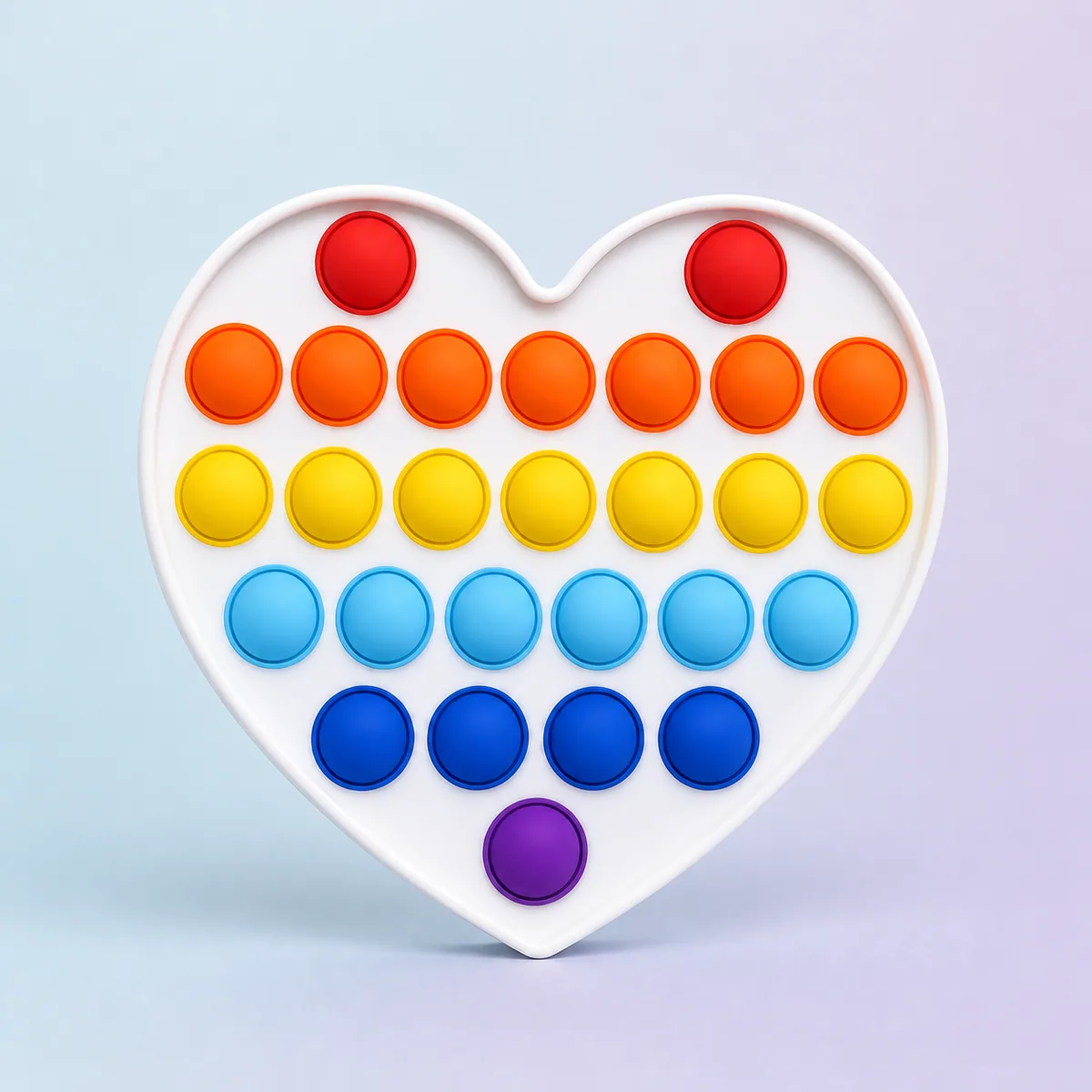
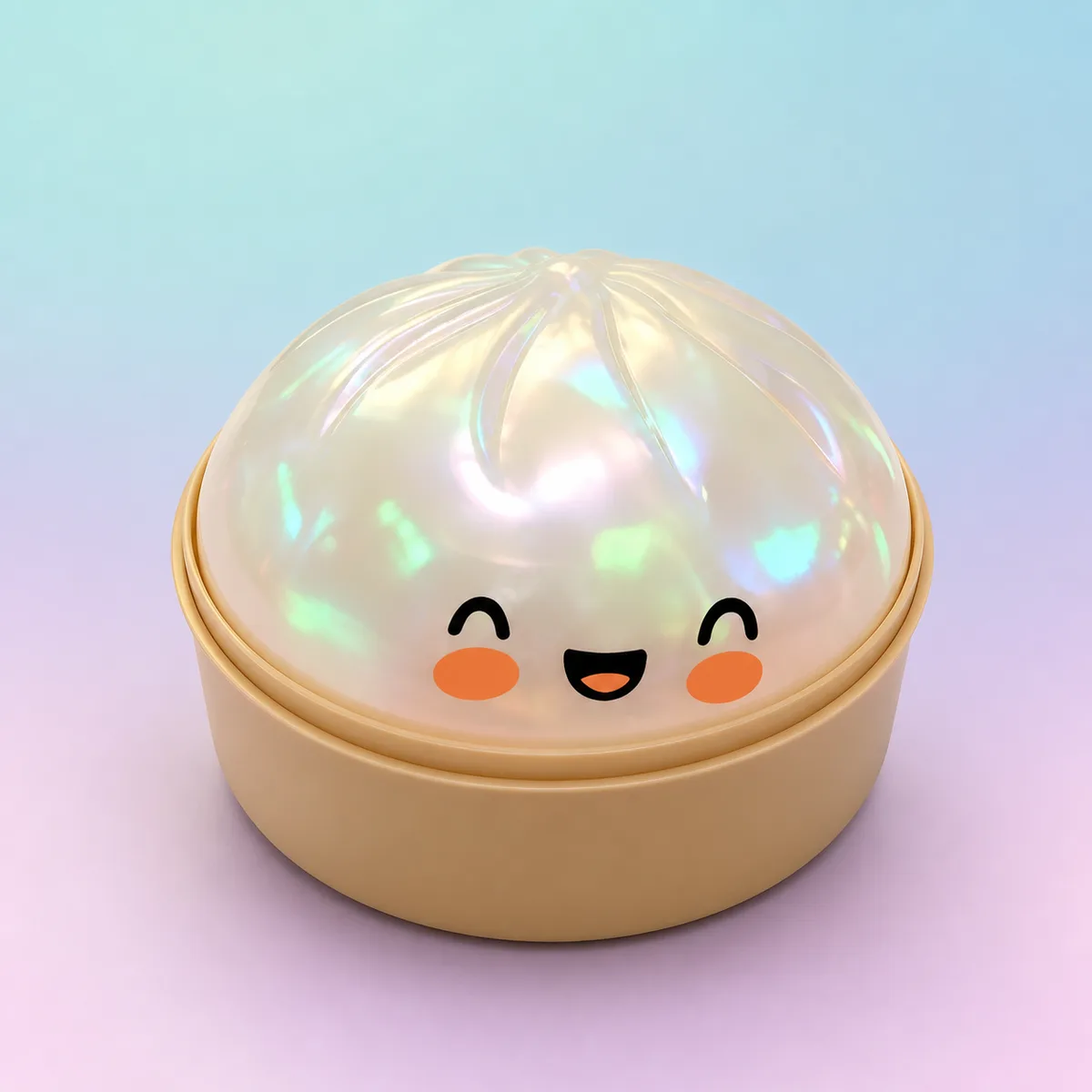
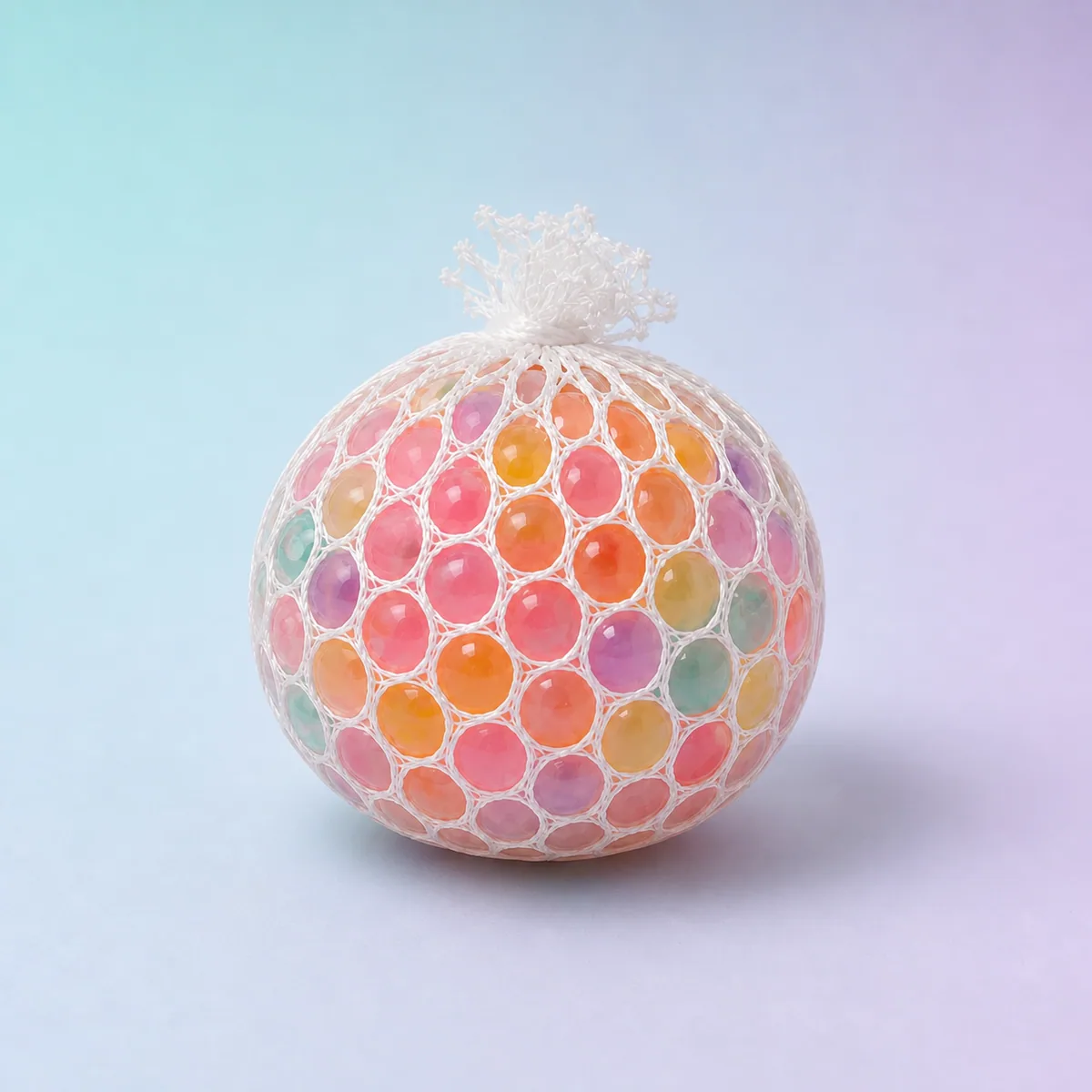
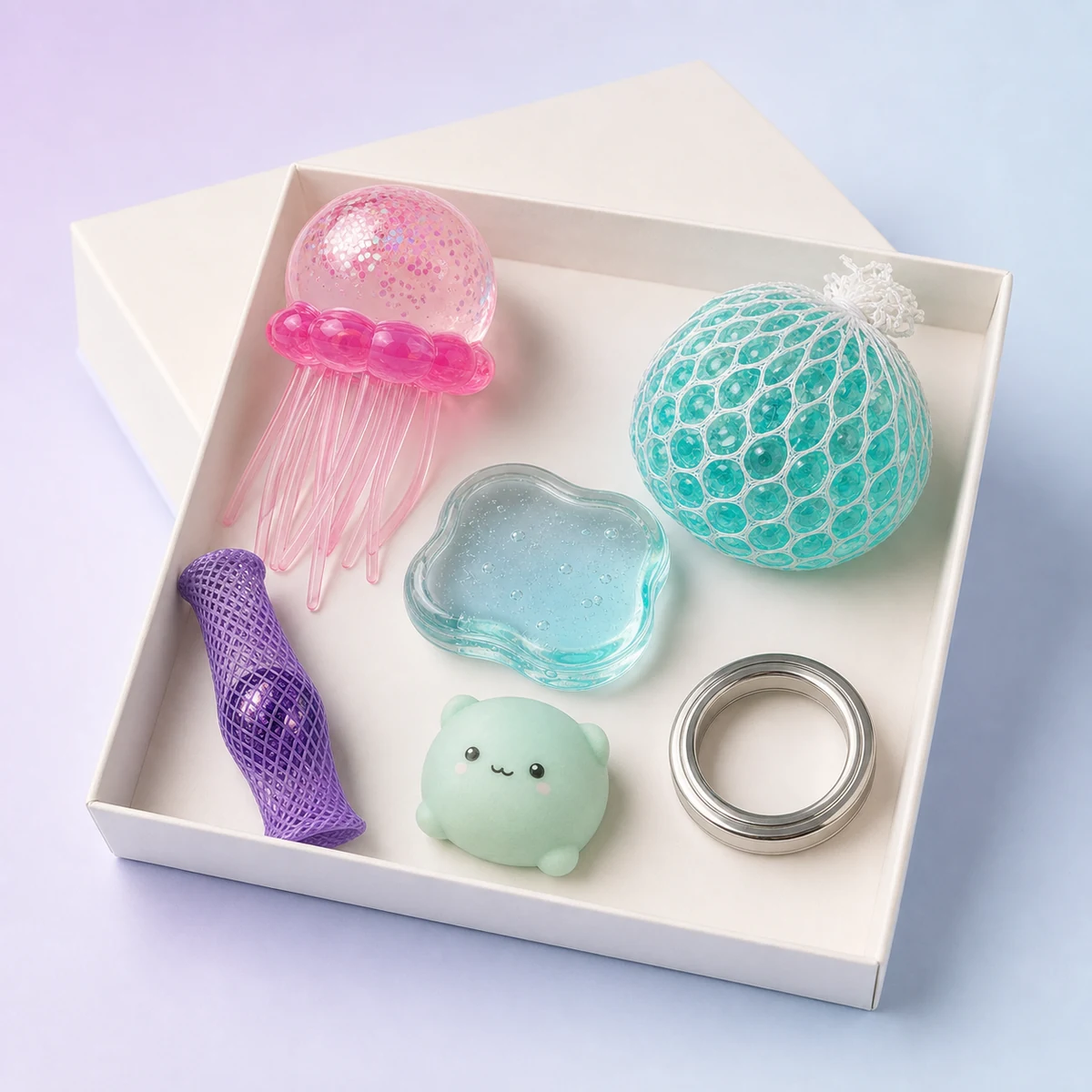
We are not going to tell you that a Hush Pop Push-Pop Sensory Board, a Doughboy Dumpling Slow-Rise Squishy, a Calm Orb Water-Bead Squeeze Ball, or the Calm Starter Bundle carries a specific mark or certificate unless we can back that up. We would rather say plainly what a mark means than let a logo do the reassuring for us. Calm in the palm of your hand, and honest about what the paperwork actually says.
Sources & further reading
We reference trusted organizations by name. This article is informational and not a substitute for professional medical advice.
- European Commission: Administers the EU Toy Safety Directive, under which every toy sold in the EU must carry a CE mark as the manufacturer's own declaration of compliance, filled in technically by the EN 71 standard series, with a new regulation entering into force January 1, 2026.
- GOV.UK: Explains that the UKCA mark demonstrates a manufacturer's own belief that a product meets UK requirements by default, except for toy categories without an adequate designated standard, which require third-party Approved Body assessment instead.
- HQTS: A CPSC-accredited third-party testing provider explains that a Children's Product Certificate is issued only after such a lab tests a toy against ASTM F963 and CPSIA rules, documenting compliance with tested parameters rather than guaranteeing safety beyond them.
- QIMA: A product-testing and compliance firm confirms that ASTM F963-23 has been mandatory for US toy sales since April 20, 2024, and applies to any object designed, manufactured, or marketed as a plaything for children under 14.
Frequently asked questions
What do toy safety marks actually certify?
By default, a CE or UKCA mark means the manufacturer has declared its own product compliant with the relevant safety rules, not that an independent lab verified it. A US toy works differently: a Children's Product Certificate is required, and it can only be issued after an accredited outside lab actually tests the product. Each mark certifies compliance with a specific standard's tested criteria, not blanket safety.
Is a CE mark independently tested?
Not by default. The CE mark is the manufacturer's own declaration that a toy meets EU safety requirements, built on the harmonized EN 71 standard series. A manufacturer can choose to seek third-party verification through a notified body, but nothing requires it for most toys, so the mark alone does not tell you whether that happened.
Is UKCA the same as CE?
Mostly, with one real exception. Both are self-declared by default, but UK rules require third-party conformity assessment by an Approved Body for toys where no adequate designated standard exists or has been applied. In the ordinary case, though, UKCA works the same way CE does, as the manufacturer's own declaration.
What does it take to legally sell a toy in the US?
A Children's Product Certificate, issued only after a CPSC-accredited third-party laboratory tests the product for flammability, hazardous substances, ASTM F963 compliance, material cleanliness, and battery safety where relevant. Testing has to be completed before the product ships, not after. ASTM F963-23 itself has been mandatory for US toy sales since April 20, 2024.
Does a safety mark mean a toy has no risk at all?
No. Every mark, CE, UKCA, or a US Children's Product Certificate, certifies compliance with that specific standard's tested criteria, mechanical safety, flammability, or chemical migration, whichever applies, not an open-ended guarantee against every possible hazard. Age labeling, small-parts awareness, and checking a product's condition over time still matter regardless of which mark it carries.
Do The Calm Toy's products carry CE, UKCA, or a Children's Product Certificate?
We are not going to claim a mark or certificate we cannot back up, and we would rather tell you plainly what each one actually means than let a logo do the reassuring. If you need documentation for a specific product, reach out and ask, and we will tell you honestly what we can confirm.