What is inside a squishy?
A squishy is almost always one of two plastics: open-cell polyurethane (PU) foam, the material behind that slow, cushioned rise, or TPR, the clearer, springier plastic used in “jelly” style squishies. Both start as a liquid or a pellet and get molded into the shape your hands end up pressing. Pigment goes in for color, and in most squishies, added fragrance goes in too, which is why a fresh one out of the packaging almost always smells like something specific: strawberry, vanilla, fresh dough.
None of that is hidden or unusual. It is standard manufacturing practice across the whole category. What is worth doing is naming the two base plastics plainly, checking a real material listing before making any claim, and being straight about a 2018 test that raised genuine questions. That is the honest version of this answer, and it is the one below.
We sell squishies, so we have a reason to make all of this sound tidier than it is. We would rather walk through the actual chemistry, name a real study by name, and let you decide what it means for your own shelf.
What is PU foam, and why does it rise so slowly?
PU foam is a polymer made by reacting polyols with isocyanates, a chemistry the Polyurethane Foam Association traces back to 1937. The open-cell structure traps tiny pockets of air, and an ordinary, resilient foam would spring back from a press almost instantly. Squishy foam is formulated differently: it is a low-resilience, viscoelastic version of that same base chemistry, which is why it eases back over several seconds instead of snapping.
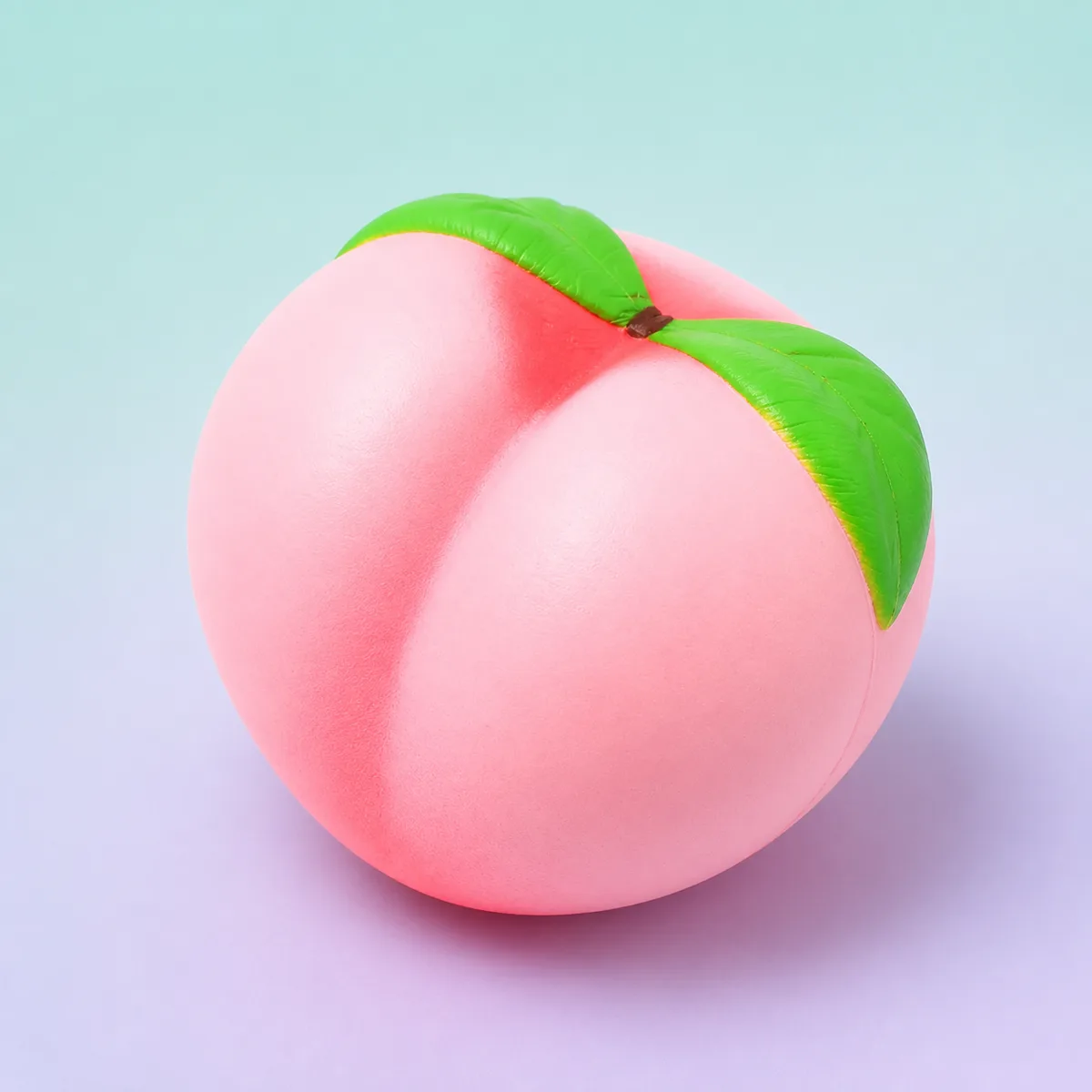
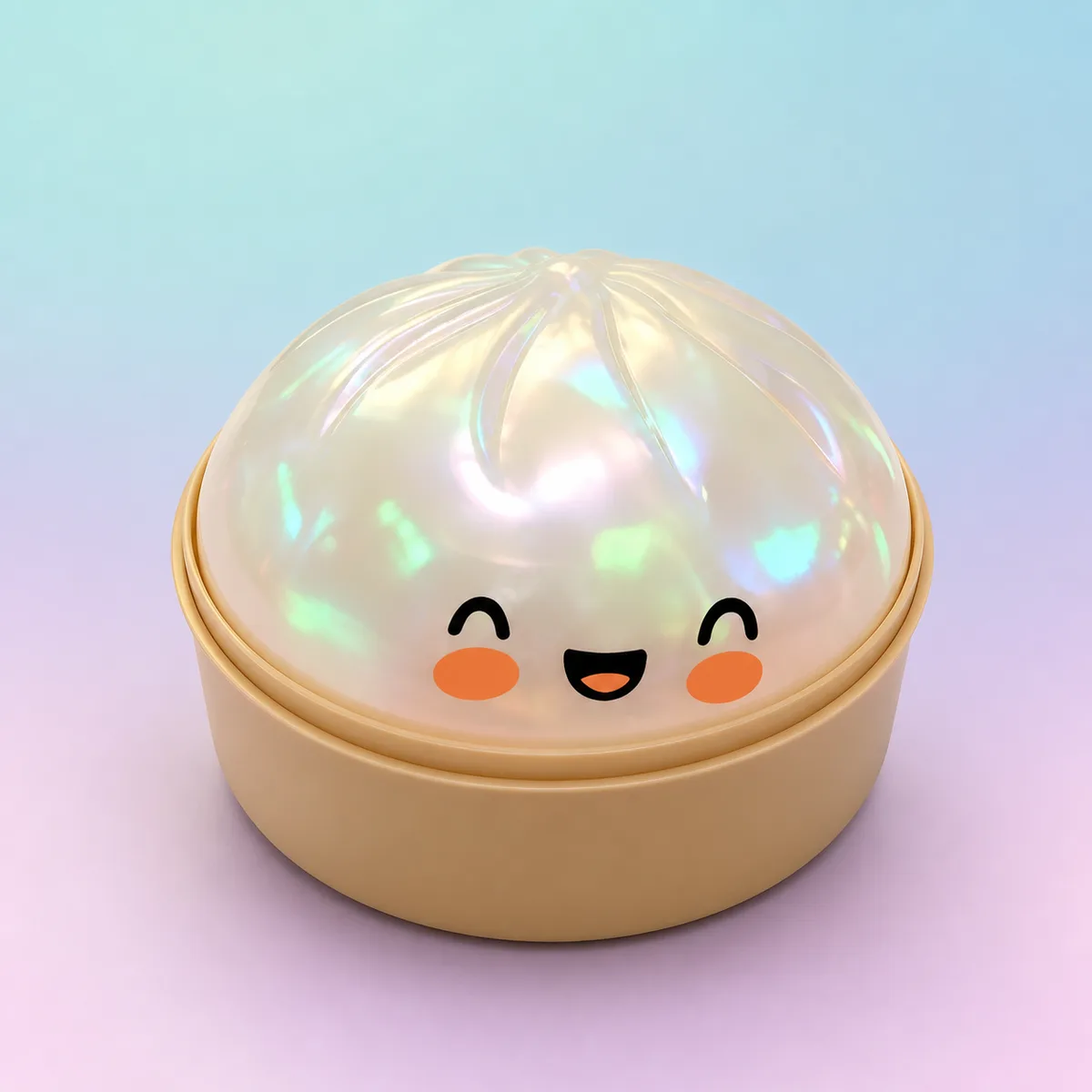
The slow rise is a mechanical choice built into the formulation, not a separate ingredient and not a stand-in for any kind of certification. Peachy Slow-Rise Squishy and Doughboy Dumpling Slow-Rise Squishy both use this viscoelastic PU foam, which is why pressing either one gives you that same unhurried return rather than a quick bounce.
What is a “jelly” squishy actually made of?
The clear, jiggly kind is TPR: a blend of a rigid plastic phase and a rubbery phase that gets melted and molded rather than chemically cross-linked the way true rubber is. That is also why TPR can be remelted and reprocessed, unlike vulcanized rubber, which cannot go back to a liquid state once it sets.
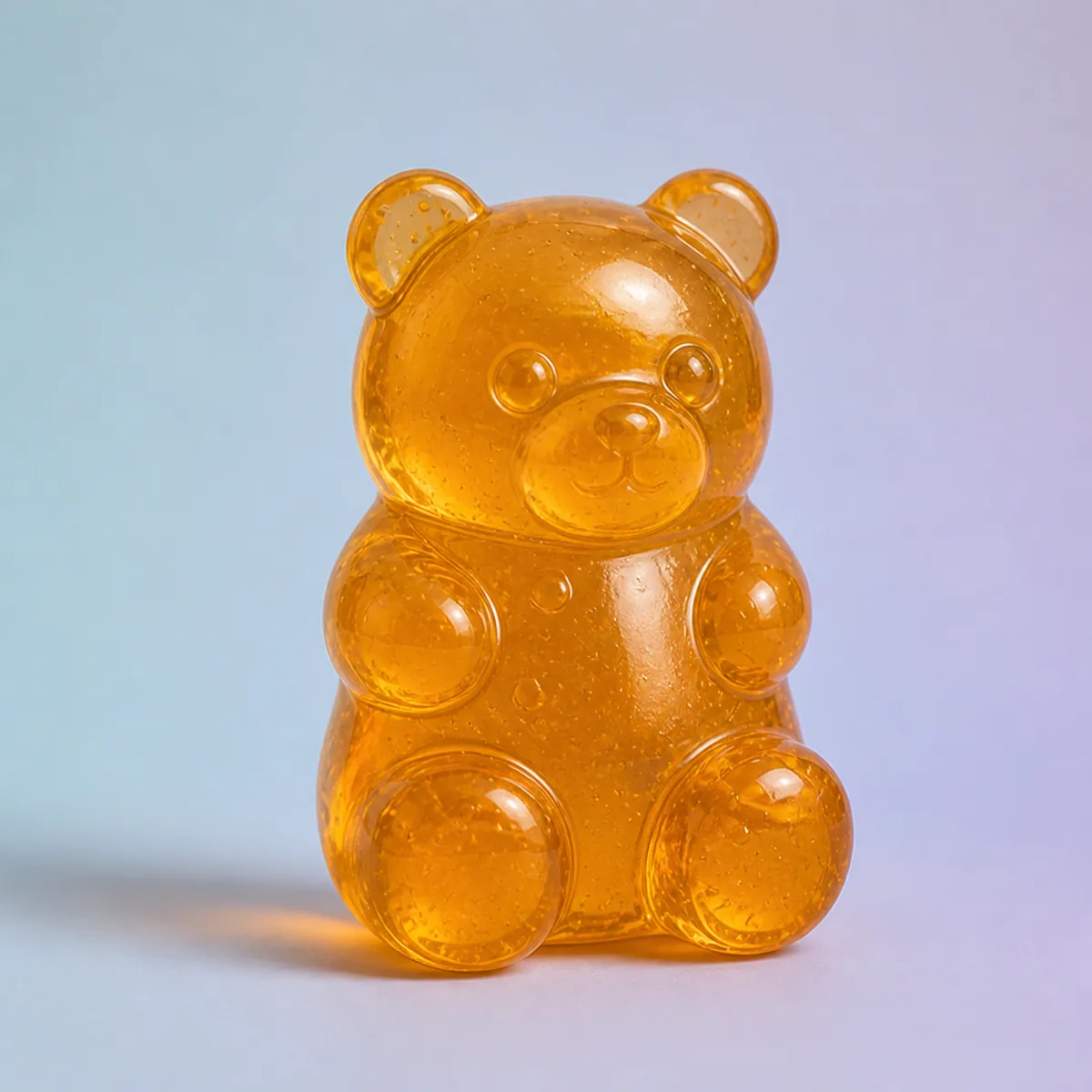
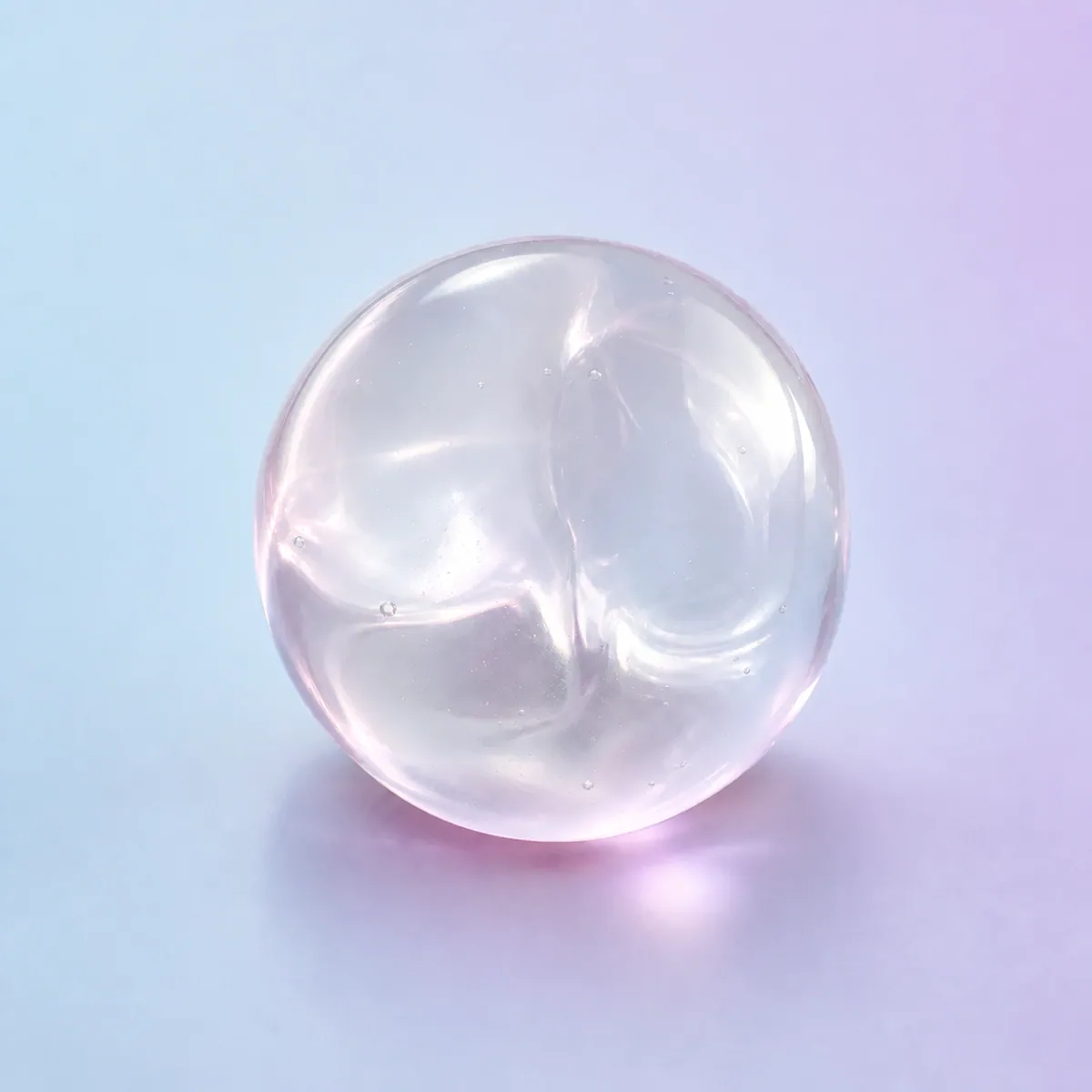
Here is where product names get confusing. Several squishies use the word “gel” even though their real material is TPR, not gel: Axo Gel Squishy, Mochi Octopus Gel Squishy, and Shelly Sea Turtle Gel Squishy are all TPR. Sweet Bear Jelly Squish is TPR too, made to stretch and jelly-wobble like a gummy candy. Jelly Blob Transparent Gel Fidget is the one product in this lineup that is genuinely silicone gel, a different polymer family again, with a backbone built from silicon and oxygen rather than carbon, which is why it oozes and slumps in a way TPR squishies simply do not. Check a product’s actual material listing before trusting the name on the label; the name is marketing, and the materials field is the fact.
Why did a 2018 study raise concerns about squishy toys?
A 2018 survey by the Danish Environmental Protection Agency tested twelve squishy toys and found every single one emitting high levels of chemicals, including dimethylformamide, styrene, and toluene, substances reporting on the findings tied to fertility, liver, and irritation concerns. Denmark’s environment minister called on distributors to pull squishies from shelves until they could show the products were not emitting harmful chemicals, and the results were shared with other EU member states through the European Commission as a possible breach of the EU Toy Safety Directive.
That is a real finding worth knowing, and it is also a specific one: twelve products, tested in 2018, not a verdict on the entire category as it is made and regulated today. Fragrance and “other organic substances” were the survey’s actual subject, which lines up with what is described above: scent is a standard, deliberate additive in squishy manufacture, and the 2018 results are the clearest evidence on record that quality control on that additive matters.
Does a slow rise or a strong scent tell you anything about safety?
No. Rise speed is a mechanical property of the foam’s formulation, and a strong scent is just fragrance loaded in during manufacture. Neither one is a stand-in for a chemical safety test. The Polyurethane Foam Association describes viscoelastic foam’s low-resilience recovery purely as a performance trait, unrelated to what solvents or residual chemicals a given batch might still be carrying.
A squishy that rises fast, slow, or barely smells at all has not been tested any more or less than one that oozes back over ten seconds and hits you with strawberry the moment you open the box. Judge the feel on its own terms, and look elsewhere for anything resembling a safety signal. If a squishy is brand new and the smell feels stronger than usual, airing it out in an open room for a day or two before heavy handling is a reasonable precaution, even though no source ties that step to a guaranteed outcome.
Which material should guide what you buy?
Here is the honest map of a squishy shelf, side by side.
| Material | Feel | Recovery | Example |
|---|---|---|---|
| PU foam | Soft, matte, cushioned | Slow, over several seconds | Peachy Slow-Rise Squishy, Doughboy Dumpling Slow-Rise Squishy |
| TPR | Clear or glossy, springy | Fast snap-back | Sweet Bear Jelly Squish |
| Silicone gel | See-through, oozes and slumps | Slow, but by flow, not foam recovery | Jelly Blob Transparent Gel Fidget |
So the plain version is this: soft matte foam eases back slowly, clear rubbery TPR springs back fast, and one true silicone gel oozes and slumps rather than rising at all. None of that alone tells you a product is automatically safe or automatically a problem. It tells you what your hands are actually pressing, which is the plainest, most useful place to start before anything else. Calm in the palm of your hand, whichever material gets you there.
Sources & further reading
We reference trusted organizations by name. This article is informational and not a substitute for professional medical advice.
- Polyurethane Foam Association: Publishes technical background on flexible polyurethane foam chemistry, including how low-resilience, viscoelastic formulations create a slow recovery after compression.
- Danish Environmental Protection Agency: Published a 2018 survey that tested twelve squishy toys and found every one emitting high levels of fragrance and solvent chemicals, prompting a market withdrawal in Denmark.
- European Commission: Oversees the EU Toy Safety Directive; the 2018 Danish test results were shared with other EU member states through the Commission as a possible breach of that directive.
Frequently asked questions
What is inside a squishy toy?
Most squishies are either open-cell polyurethane foam, the material behind the slow rise, or TPR, a clearer thermoplastic rubber used for jelly-style squishies. Pigment for color and added fragrance are standard ingredients in both. One product in our line, Jelly Blob Transparent Gel Fidget, is a true silicone gel instead of either of those.
Is gel in a squishy's name always the real material?
No. Axo Gel Squishy, Mochi Octopus Gel Squishy, and Shelly Sea Turtle Gel Squishy all have gel in their name but are actually made of TPR. Jelly Blob Transparent Gel Fidget is the one product that is genuinely silicone gel, so the name alone is not a reliable guide to the material.
What did the 2018 Danish study find about squishy toys?
The Danish Environmental Protection Agency tested twelve squishy toys in 2018 and found every one emitting high levels of chemicals, including dimethylformamide, styrene, and toluene. The findings led to a market withdrawal in Denmark and were shared with other EU member states as a possible breach of the EU Toy Safety Directive. It described a specific sample tested at a specific time, not an ongoing verdict on the whole category.
Does a slow-rising squishy mean it is made of safer materials?
No. The slow rise is a mechanical property of how the polyurethane foam is formulated, a low-resilience or viscoelastic version of ordinary foam, and it has nothing to do with what chemicals a given batch may still be carrying. A fast-springing TPR squishy and a slow-rising foam one are held to the same tests, when testing happens at all.
Why do new squishies smell so strong?
Because fragrance is added on purpose during manufacture, alongside pigment for color. That is standard practice across the category, not a defect, though scent and other organic additives were exactly what the 2018 Danish survey set out to examine.
Is TPR the same thing as rubber?
Not exactly. TPR behaves like rubber but is a thermoplastic, meaning it is melted and molded and can be remelted again, unlike vulcanized rubber, which is chemically cross-linked and permanent. That is why a TPR squishy can be produced on the same kind of equipment used for other moldable plastics.