What is a worry stone?
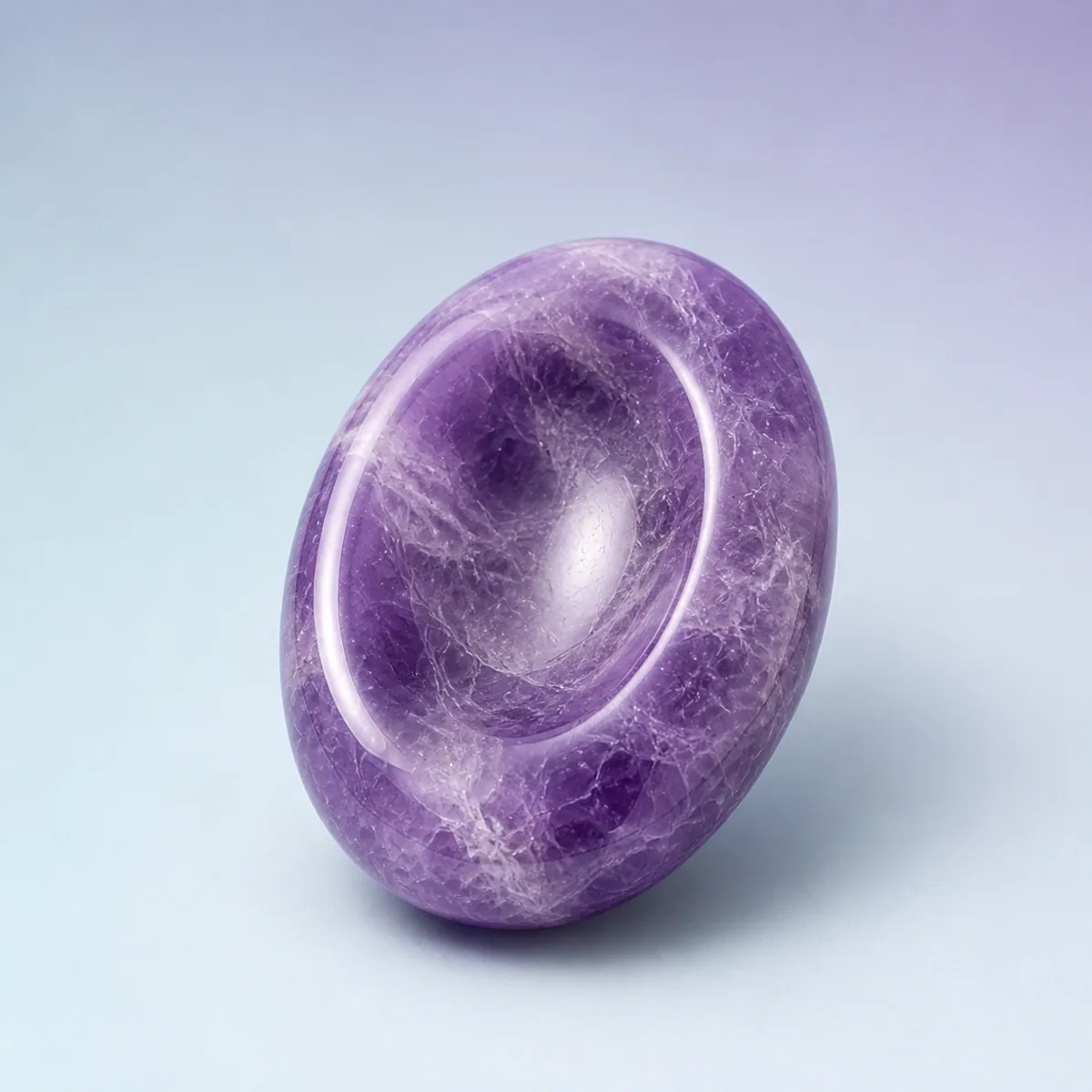
A worry stone is a smooth, polished stone, usually flat and oval and small enough to tuck into your palm, with a shallow thumb-shaped hollow worn into the middle. You hold it between your thumb and finger, rest your thumb in the dip, and slide it slowly back and forth. That quiet, repeating motion is the whole idea. You might also see it called a palm stone or a thumb stone, and the names all point at the same simple thing: something smooth to rub when your mind will not settle.
There is nothing high-tech about it, and that is rather the point. A worry stone has no moving parts, no sound, and nothing to charge. It just sits in a pocket, cool at first, then warm from your hand, waiting for the moment you need something steady to hold.
Where do worry stones come from?
The honest answer is that no one can name a single inventor, because the habit of rubbing a smooth stone for comfort is ancient and turns up all over the world. When you hold a warm, smooth pebble and run your thumb across it, you are doing something people have almost certainly done for as long as there have been people and stones. That makes tidy origin stories a little suspect.
You will often see worry stones traced to ancient Greece, where smooth touchstones were handled to pass anxious time. Other accounts point to Tibetan, Irish, or Native American traditions of carrying a smoothed stone. Several of these may be true at once, because the idea is so simple it did not need to travel to be reinvented. The name “worry stone” is fairly modern, even though the gesture behind it is not. What we can say plainly is that the polished oval with a deliberate thumb groove that is sold today grew out of this very old, very human urge to soothe yourself through your hands.
How is a worry stone related to worry beads and prayer beads?
A worry stone belongs to a large family of objects made to be handled, and its closest cousins are worry beads and prayer beads. The shared thread is simple: the fingers repeat a small motion while the mind steadies.
The best-known example is the Greek komboloi, a loop of beads that people slide, flip, and click through their fingers to relax and pass the time. Unlike prayer beads, the komboloi is not religious; it is a secular, everyday comfort object. There is nothing to count and nothing to recite, so the beads exist purely to keep the hands busy and the nerves a little quieter. It is woven so deeply into Greek culture that there is a museum devoted to it in Nafplio. Its form was likely shaped by the Muslim prayer beads, the tasbih or misbaha, that Greeks encountered under Ottoman rule, which shows how easily these habits cross borders.
Prayer beads themselves circle the globe: the Catholic rosary, the Islamic misbaha, the Hindu and Buddhist mala of 108 beads. The devotions differ, but the mechanics rhyme. A bead passes under the thumb, then another, and the counting hand quietly anchors a wandering mind. A worry stone is the single-stone version of that same instinct, stripped down to one smooth surface and one slow motion.
How do you use a worry stone?
Using a worry stone takes about ten seconds to learn. Hold it between your thumb and index finger, with the pad of your thumb resting in the hollow, and slide your thumb slowly back and forth across the dip. Let the pace be unhurried. There is no counting and no technique to get right, just the smooth, repeating glide.
The one small upgrade worth trying is to pair the motion with your breath. Here is the whole practice:
- Settle the stone in your hand. Notice its weight and temperature, cool at first, then warming as you hold it.
- Rub on the exhale. Slide your thumb slowly across the hollow as you breathe out, then ease back as you breathe in. Let the stone set an unhurried rhythm for your breathing.
- Name what you feel. If your mind is racing, add a quiet grounding check: the smoothness under your thumb, the sounds in the room, the floor under your feet.
- Keep it where the worry lives. A pocket, a bag, a desk drawer, a nightstand. The stone you can reach in two seconds is the one you will actually use.
Reach for it before a hard moment rather than only during one. A worry stone tends to work best as a small, steady habit, the thing you pull out in the waiting room or on the walk into something stressful, not only once things have already boiled over.
Why does rubbing a worry stone feel calming?
Rubbing a worry stone can feel grounding for a few plain, believable reasons, none of them magic. Touch is a fast route to the present moment, so a smooth surface under your thumb gives your attention something real to hold instead of the worry looping in your head. Grounding techniques that use the senses this way, like the 5-4-3-2-1 method, are widely taught by clinicians for exactly this reason, and a worry stone is a portable, pocket-sized way to do it.
The slow motion helps too, because it naturally paces your breathing, and slow, steady breathing is one of the most reliable relaxation techniques there is. Health bodies like Mayo Clinic and the NHS recommend paced breathing for everyday stress, and a worry stone gives your hands a rhythm to hang that breathing on. There is also the quiet power of ritual. When you rub the same stone in the same way often enough, the object itself becomes a cue that tells your body it is time to settle, a little like how a few familiar notes can shift your mood before you have named the song.
Here is the honest part. Worry stones themselves have barely been studied, so we are not going to wave a chart at you. The mechanisms underneath, grounding, paced breathing, and calming rituals, are well supported as coping tools, and plenty of people find the stone genuinely soothing. It will not land for everyone, and the effect is usually gentle and steadying rather than dramatic. On a hard day, gentle and steadying is still worth a great deal. That is a fair and honest reason to keep one in your pocket.
Is a worry stone a cure for anxiety?
No, and anyone who tells you otherwise is overselling a rock. A worry stone is a comfort and a coping tool, not a treatment, and it cannot fix anxiety any more than a single deep breath can. What it can do is take the edge off a tense moment, give restless hands a job, and offer a small, reliable ritual you carry with you. That is a real and worthwhile thing. It is also not the same as care.
If anxiety shows up most days, disrupts your sleep, work, or relationships, or feels bigger than you can manage on your own, please treat the stone as a companion and not a substitute. Talk to a doctor or therapist. Trusted organizations like the NHS, the American Psychological Association, and the Anxiety and Depression Association of America offer honest guidance on when to reach out and what help can look like. Asking is a strength, and a smooth stone can ride along in your pocket the whole way.
How do you choose and care for a worry stone?
Choose a worry stone by feel first and looks second. You want one that is genuinely smooth, sits comfortably in your palm, and has a hollow your thumb finds without hunting for it. Weight matters more than you would think; a stone with a little heft feels reassuring, while a flimsy one gets forgotten in a drawer.
Our own Calm Worry Stone ($9.49) is built around exactly that brief. It is a smooth, flat oval, about 4.5 cm across and pleasingly weighted at roughly 40 grams, with a thumb-shaped hollow your thumb slides straight into. It is the quietest thing we make, with no clicks and no pops, and it comes in polished finishes from Amethyst to Sea Glass to Tiger Eye, some of them natural stone. Caring for it is as simple as it gets: wipe it with a soft cloth, keep it from hard drops onto tile, and let it live in a pocket or pouch so the polish stays smooth. Treated kindly, a worry stone is the rare calming tool you can carry for years, calm in the palm of your hand.
Sources & further reading
We reference trusted organizations by name. This article is informational and not a substitute for professional medical advice.
- Cleveland Clinic: Describes grounding techniques, including sensory and 5-4-3-2-1 methods, for coming back to the present during anxious moments.
- Mayo Clinic: Explains relaxation techniques such as slow, paced breathing for easing everyday stress.
- American Psychological Association: Provides guidance on stress, relaxation, and healthy ways to cope.
- NHS: Offers public breathing and relaxation exercises for stress and anxiety, plus guidance on when to seek help.
- Anxiety and Depression Association of America: Shares coping resources and guidance on when everyday tools should be paired with professional care.
- The Komboloi Museum: A museum in Nafplio, Greece documenting the history of the komboloi (Greek worry beads) and related bead objects.
Frequently asked questions
What is a worry stone?
A worry stone is a smooth, polished stone, usually flat and oval and small enough to hold in your palm, with a shallow thumb-shaped dip in the middle. You rub your thumb back and forth across the hollow, and the slow, repetitive motion is what makes it soothing. It is also called a palm stone or a thumb stone.
How do you use a worry stone?
Hold it between your thumb and index finger with your thumb resting in the hollow, then slide your thumb slowly back and forth. Many people pair the motion with their breath, rubbing outward on a slow exhale. Keep it in a pocket so it is there for waiting rooms, hard conversations, or the walk before something stressful.
Where did worry stones come from?
The simple habit of rubbing a smooth stone for comfort is ancient and shows up across many cultures, so no single origin is certain. Worry stones are often traced to ancient Greece, and they sit in the same family as Greek worry beads (the komboloi) and prayer beads, all of which use repetitive touch to steady the mind.
Do worry stones actually work?
Many people find real comfort in the ritual, and that counts, though worry stones themselves are barely studied. The likely reasons they help, grounding your attention in touch, pacing your breath, and repeating a familiar ritual, are recognized coping ideas. A worry stone is a supportive tool, not a treatment or a cure.
What is the difference between a worry stone and worry beads?
A worry stone is a single smooth stone you rub with your thumb, while worry beads, like the Greek komboloi, are a loop of beads you flip, slide, and click through your fingers. Both are tactile comfort objects that give restless hands a repetitive motion. The stone is silent and pocket-sized; the beads add sound and movement.
When should I see a professional instead?
A worry stone is a small comfort for everyday stress, not a fix for anxiety that lasts most days or disrupts your sleep, work, or relationships. If that sounds familiar, please talk to a doctor or therapist. Trusted groups like the NHS and the Anxiety and Depression Association of America offer guidance on when and how to seek help.