Squishy vs. mochi vs. slow-rising: what is the difference?
Squishy is the general word for the whole category. Mochi describes a small, rounded shape and a springy TPR feel, not a promise about the return. Slow-rising describes one specific material behavior: soft PU foam that eases back over several seconds rather than snapping. Shoppers use all three words as if they were interchangeable, and that habit is exactly where the wrong squishy ends up in a cart, because a squishy sold as “mochi” is often built to spring back fast, and a name that sounds slow does not always mean foam.
The difference matters because the motion is the entire point of a squishy. Want the long, watchable press-and-return people use to wind down at night? You need real slow-rise foam. Want a quick, bouncy squeeze with fast feedback? A mochi-style piece does that job better, and a true foam squishy will feel sluggish by comparison.
What actually makes a squishy slow rising?
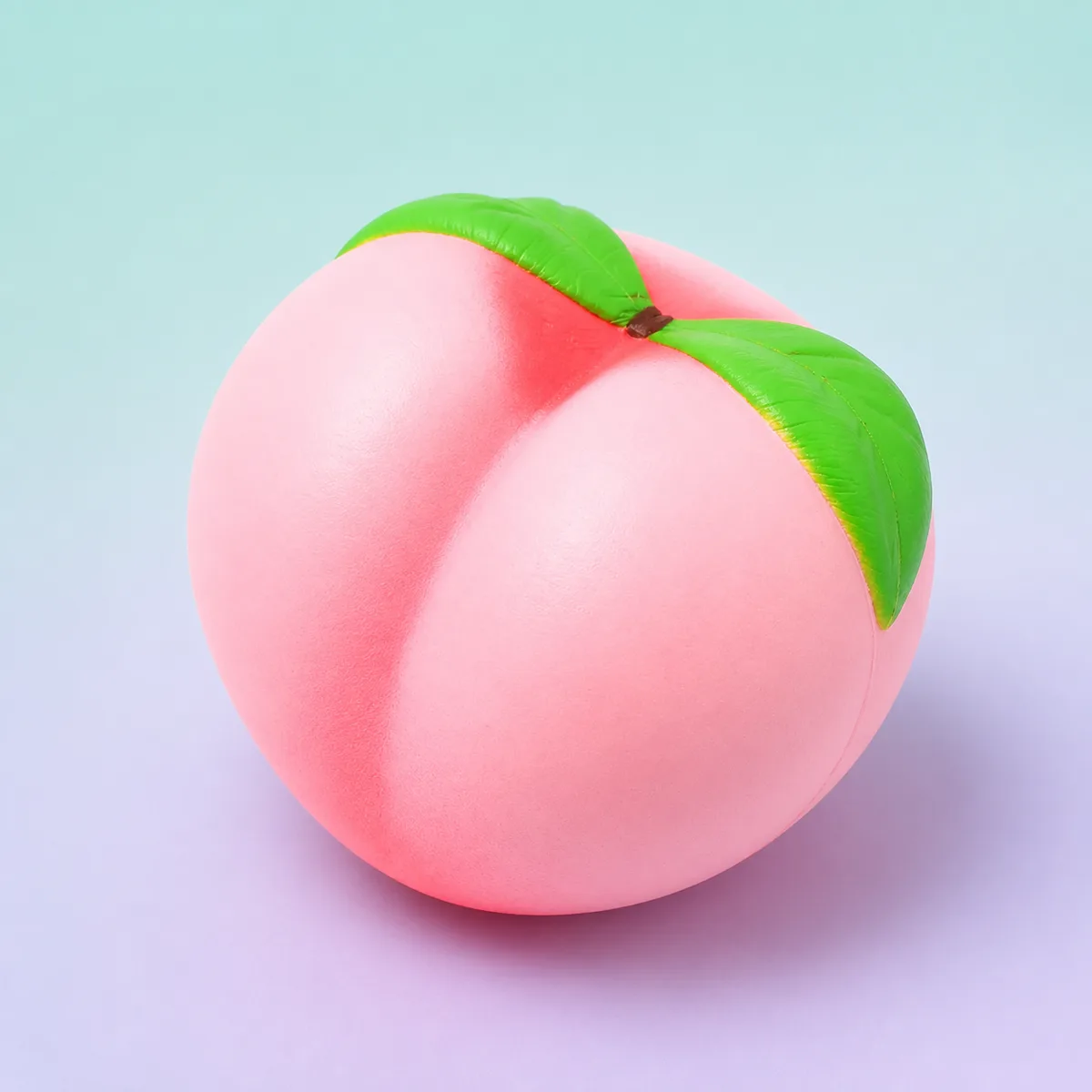
A squishy is slow rising when it is made of PU foam, a soft, open-cell foam in the same broad family as memory foam, built to hold a gentle press and take several seconds to fill back in rather than snapping straight up. Peachy Slow-Rise Squishy is built this way: press the peach and the dent holds for a beat before it starts to rise, then keeps easing back for several more seconds. That lag is not a flaw. It is the entire feel people are buying, a rhythm of press, wait, watch, repeat, with nothing to catch or click along the way.
Tiny air pockets inside the foam add to that unhurried timing, filling and emptying slowly as the shape recovers, which is part of why a good slow-rise squishy still feels soft and warm in the hand rather than stiff. TPR does not have that same open structure, which is the real, physical reason a mochi or jelly piece cannot do the same slow trick no matter how it is shaped or named.
What is a mochi squishy, and does mochi mean slow rising?
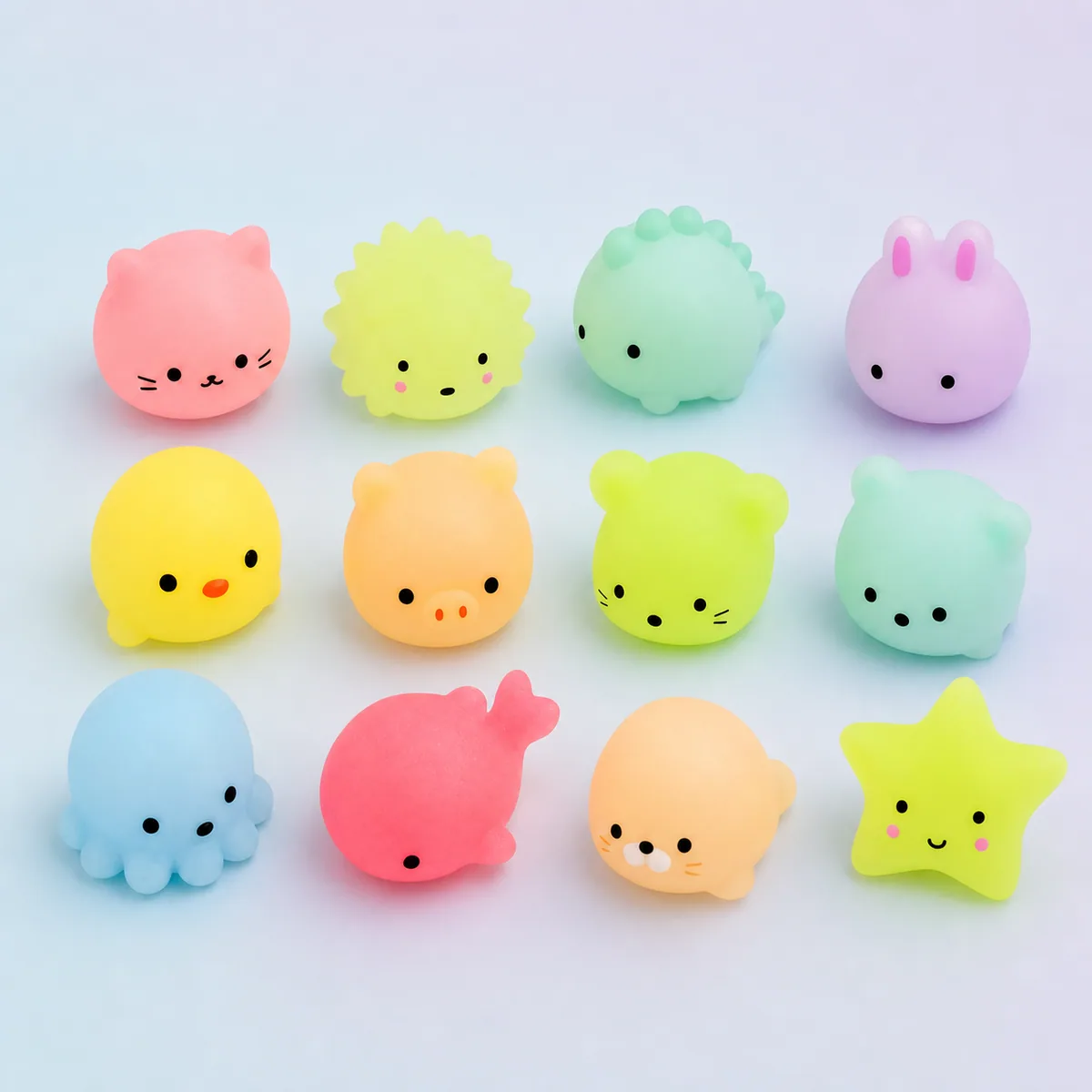
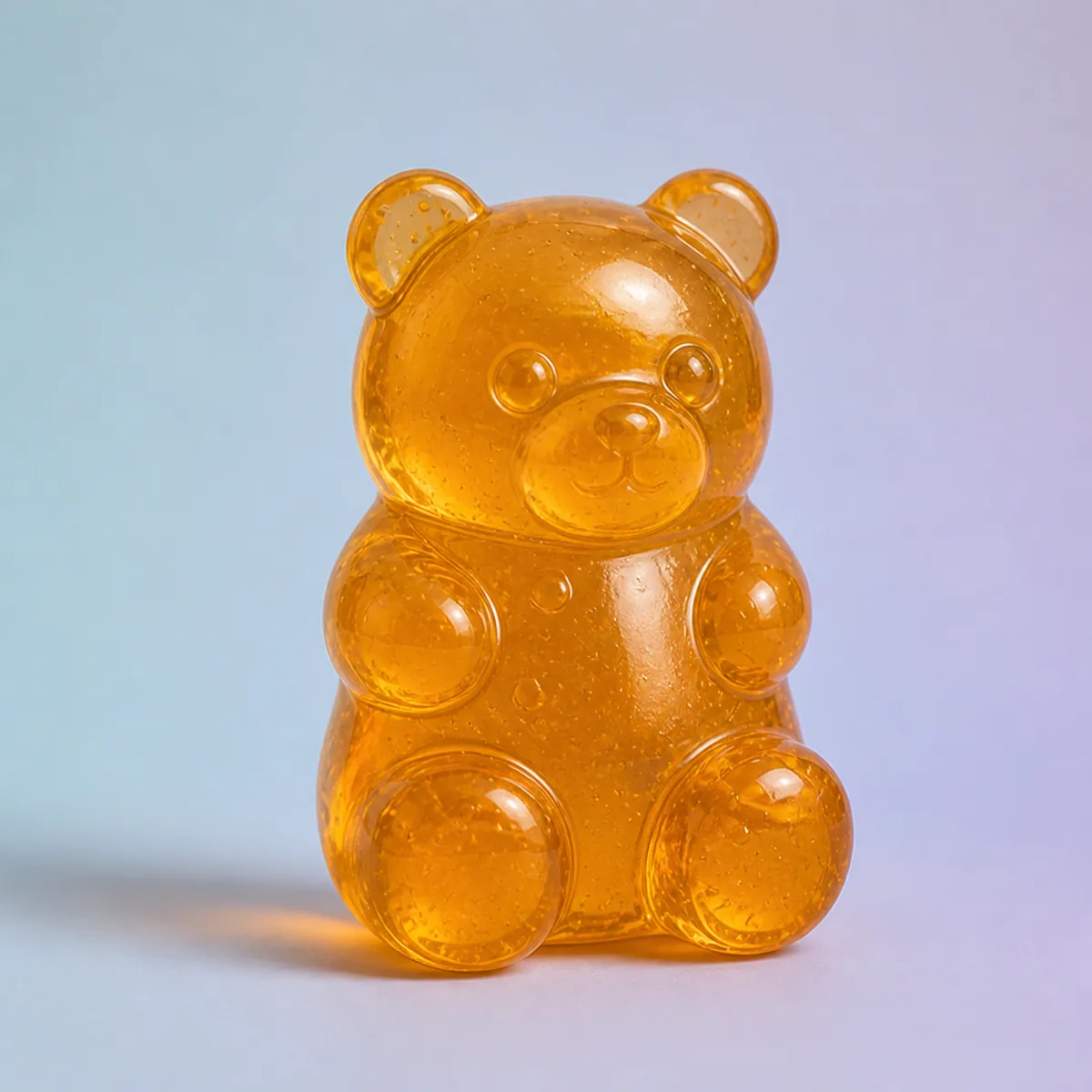
Mochi describes a shape and a texture, usually small, rounded, and animal-shaped, and on its own it says nothing about the material or the recovery speed. Mini Mochi Animals Squishy Set is TPR, a stretchy, rubber-like material, not foam, and it behaves accordingly: press one of the twelve tiny animals and it springs back in under a second instead of rising slowly. Sweet Bear Jelly Squish tells the same story in a bigger, jellier shape, also TPR, built to stretch, squeeze, and jelly-wobble rather than hold a slow dent. Shop by the word mochi expecting a slow rise and you will likely be disappointed; check the material line, not the shape, before you buy.
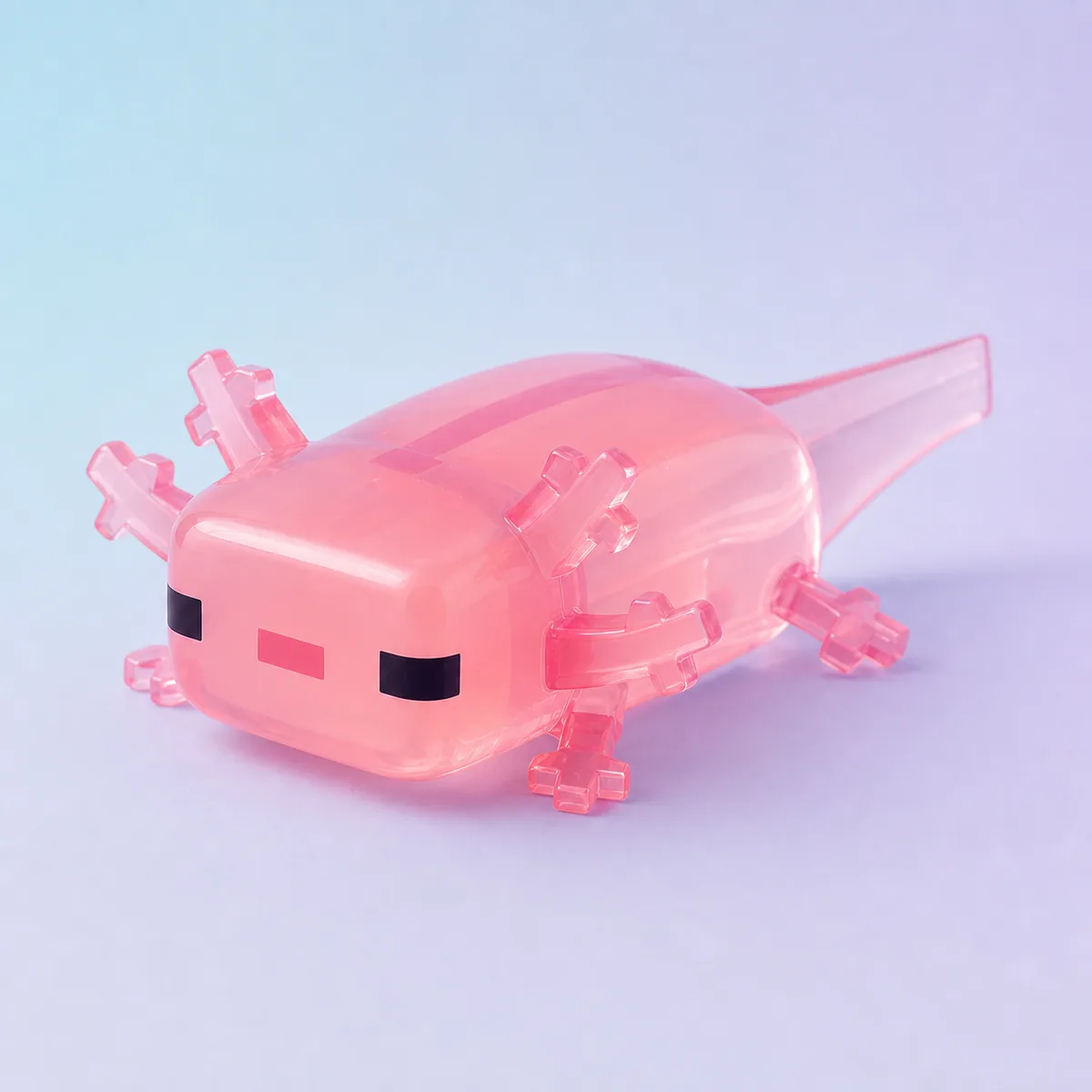
Even a name with “gel” in it is not a guarantee. Axo Gel Squishy is TPR, the same stretchy family as the mochi pieces, not true gel, and its feel leans closer to a quick squeeze-and-spring than a slow foam rise. A genuine slow rise lives in foam. A genuine gel feel lives in an actual gel fidget. The name on the label is marketing, not a materials spec.
Squishy types, compared
| Squishy type | Material | How it recovers | Noise | Example |
|---|---|---|---|---|
| Foam slow-rise squishy | PU foam | Eases back over several seconds | Silent | Peachy Slow-Rise Squishy |
| Mochi-style squishy | TPR | Springs back in under a second | Silent | Mini Mochi Animals Squishy Set |
| Jelly squishy | TPR | Stretches and springs back fast | Silent | Sweet Bear Jelly Squish |
| “Gel”-named squishy | TPR, not true gel | Squeezes and springs back at a middle pace | Silent | Axo Gel Squishy |
Which fits winding down, and which fits restless energy?
Foam slow-rise squishies suit winding down because the long return gives your eyes and hands one unhurried task at a time. Mochi and jelly squishies suit restless energy because the fast snap-back gives quicker, more frequent feedback. Reach for Peachy Slow-Rise Squishy before bed or during a long, tense wait, the kind where you want the press to last rather than finish. Reach for Mini Mochi Animals Squishy Set or Sweet Bear Jelly Squish when you want to fidget often and fast, at a desk or in a meeting, where a dozen quick presses beat one slow one. Neither style is the better squishy across the board. They are built for different rhythms, and picking by name alone gets that rhythm wrong about as often as it gets it right.
A mixed collection solves the mismatch instead of forcing a choice. Keep a foam squishy on the nightstand and a mochi animal or two in a bag or a desk drawer, and each one stays suited to the moment it actually gets used in.
Is a mochi squishy set right for a young child?
It can be, but check the age rating and the piece count before it goes in a stocking or a party bag, because a twelve-piece set changes the choking picture compared to one big squishy. Federal toy-safety testing, 16 CFR Part 1501, applies to toys intended for children under 3 years (36 months) and exists to answer exactly this question: is a piece small enough to be a hazard. A set of twelve small mochi animals deserves a closer look on that count than a single peach-sized squishy. The fine motor control that makes a tiny piece safe to hold and mouth on purpose also takes time to build. Pediatric guidance describes steady gains in grip and finger control across early childhood, so a small mochi piece generally suits an older, steadier hand better than the youngest kids in the house. None of this means skip the set. It means read the label the same way you would for any toy with more than one small part.
Buy for the motion your hands actually want, not the word on the package. Calm in the palm of your hand, however fast or slow it gets there.
Sources & further reading
We reference trusted organizations by name. This article is informational and not a substitute for professional medical advice.
- U.S. Government Publishing Office: Publishes the federal small-parts toy safety rule (16 CFR Part 1501), which applies to toys intended for children under 3 years (36 months) of age.
- American Academy of Pediatrics: Describes typical fine motor milestones in early childhood, including how grip and finger control develop and steady over the first few years.
- MedlinePlus: The National Library of Medicine's consumer health resource, which advises choosing toys without small parts for infants who explore objects hand to mouth.
Frequently asked questions
What is the difference between a squishy and a mochi squishy?
Squishy is the umbrella word for the whole product category, while mochi describes a specific small, rounded shape and texture, usually made of TPR. A mochi squishy springs back quickly rather than rising slowly, so the two words answer different questions: what it is, versus what shape and material it happens to be.
Are mochi squishies slow rising?
Not usually. Mini Mochi Animals Squishy Set is TPR, a stretchy material that snaps back in under a second, which is the opposite motion from a true slow-rise foam squishy. If a slow, watchable return is what you want, look for PU foam rather than the word mochi.
Is Axo Gel Squishy actually made of gel?
No. Despite the name, Axo Gel Squishy is TPR, the same stretchy material family as the mochi and jelly squishies, not true gel. It squeezes, stretches, and springs back at a middle pace, closer to a mochi feel than the slow foam rise of a true slow-rising squishy.
Which squishy is best for falling asleep?
A foam slow-rise squishy like Peachy Slow-Rise Squishy tends to suit bedtime best, because the press holds and eases back slowly and silently, giving your hands and eyes one unhurried task. A fast-springing mochi or jelly squishy is built for quicker, more frequent fidgeting, a better match for a desk than a pillow.
Are mochi squishy sets safe for toddlers?
Check the age rating before buying one for a child under 3. A twelve-piece set like the Mini Mochi Animals Squishy Set has more small parts than a single squishy, and federal toy-safety testing (16 CFR Part 1501) exists specifically to flag pieces that could be a hazard for that age group.
Why does a squishy's name not always match how it feels?
Names describe a look or a mood, not a materials spec. 'Gel' and 'slow rising' both appear in squishy names attached to TPR products that do not actually rise slowly or contain gel, so the reliable way to predict the feel is to check the material listed on the product, not the name on the label.