What is the small parts and choking risk with fidget toys?
Choking is a leading cause of death for infants and children, and most of those deaths happen well before a birthday cake says “5” on it, so the small-parts rules stamped on every toy package exist for a real, well-documented reason. The Consumer Product Safety Commission’s small-parts cylinder is the tool that turns that risk into an actual pass-or-fail test on the manufacturing line, and a squeezable toy like a squishy carries its own version of the concern even when it passes that test intact.
How common is choking, and who is most at risk?
Most children who die from choking are under age 5, and two-thirds of those deaths are babies under a year old, according to the American Academy of Pediatrics. The Academy names specific categories responsible for most choking deaths: balloons, balls, marbles, pieces of toys, and small round foods. “Pieces of toys” is its own category, separate from an intact small part, and it is the one that matters most for anything that can tear.
One number gets repeated often and deserves a caveat: a child dies roughly every 5 days in the United States from choking, a figure tied specifically to food, not toys. Do not let that statistic drift into a toy claim it was never meant to support; the real toy-specific risk lives in the small-parts and “pieces of toys” categories above, not in a food-choking rate.
What does the CPSC’s small-parts rule actually test?
The test itself is a physical cylinder, 2.25 inches long by 1.25 inches wide, built to approximate a young child’s fully expanded throat. Anything that fits entirely inside it, in any orientation, without being squeezed, counts as a small part. For a product intended for children under 3, small parts are banned outright under federal law; there is no warning label that can fix that, the part has to be removed or the product redesigned. For toys meant for children 3 to 6 that do contain small parts, federal rules require an exact label: “WARNING: CHOKING HAZARD - Small parts. Not for children under 3 yrs.” Balls, marbles, and latex balloons get their own wider band, up to under age 8, because CPSC treats those three categories as elevated risk even for slightly older kids.
Federal compliance goes further than the small-parts rule alone. ASTM F963-23, mandatory since April 20, 2024, applies to any object designed, manufactured, or marketed as a plaything for children under 14, folding choking hazards into a broader mechanical and physical safety standard. CPSC’s own age-grading framework, the 2020 Age Determination Guidelines, grades a product by matching its characteristics to a child’s skills, play behaviors, and interests within an age band, not by choking risk alone, which is why an age label reads as a rounder judgment than a single pass-fail test.
Why do squishies carry a squeeze-specific version of this risk?
The AAP’s toy-selection guidance names a mechanism, not just a size: avoid “toys that can be squeezed to fit entirely into a child’s mouth,” which describes a squishy by design. That is a documented category the AAP specifically flags, separate from whether a product’s overall dimensions pass the small-parts cylinder as manufactured, and it does not mean every squishy on a shelf is dangerous.
There is a second pathway worth knowing: what happens if the outer material tears. Stanford Children’s Health warns against letting a child play with bean bag chairs containing small foam pellets, because a torn chair releases pellets a child can inhale. No source we found documents this exact incident with a squishy, but the underlying mechanism, a foam or TPR product releasing small pieces when its outer surface fails, is the same physical hazard category. A squishy that has torn or is coming apart deserves the same caution as a genuinely small part, intact test result or not.
What should parents and schools actually check?
Read the age label first, since it reflects a real safety determination, not a marketing choice, and it accounts for both choking hazard and a child’s physical abilities at that age. For anything given to a child under 6, a consumer small-parts tester, the kind sold cheaply alongside baby-proofing supplies, takes the guesswork out of judging a borderline piece by eye. And check for damage regularly, not just once at unboxing; a toy that passed the test as manufactured can still fail it later if it tears. For a classroom or a shared bin, the standard should be the youngest child with access, not the average age in the room, since a set of squishies shared across ages inherits the risk profile of its youngest user.
| Product | Design consideration | What to check |
|---|---|---|
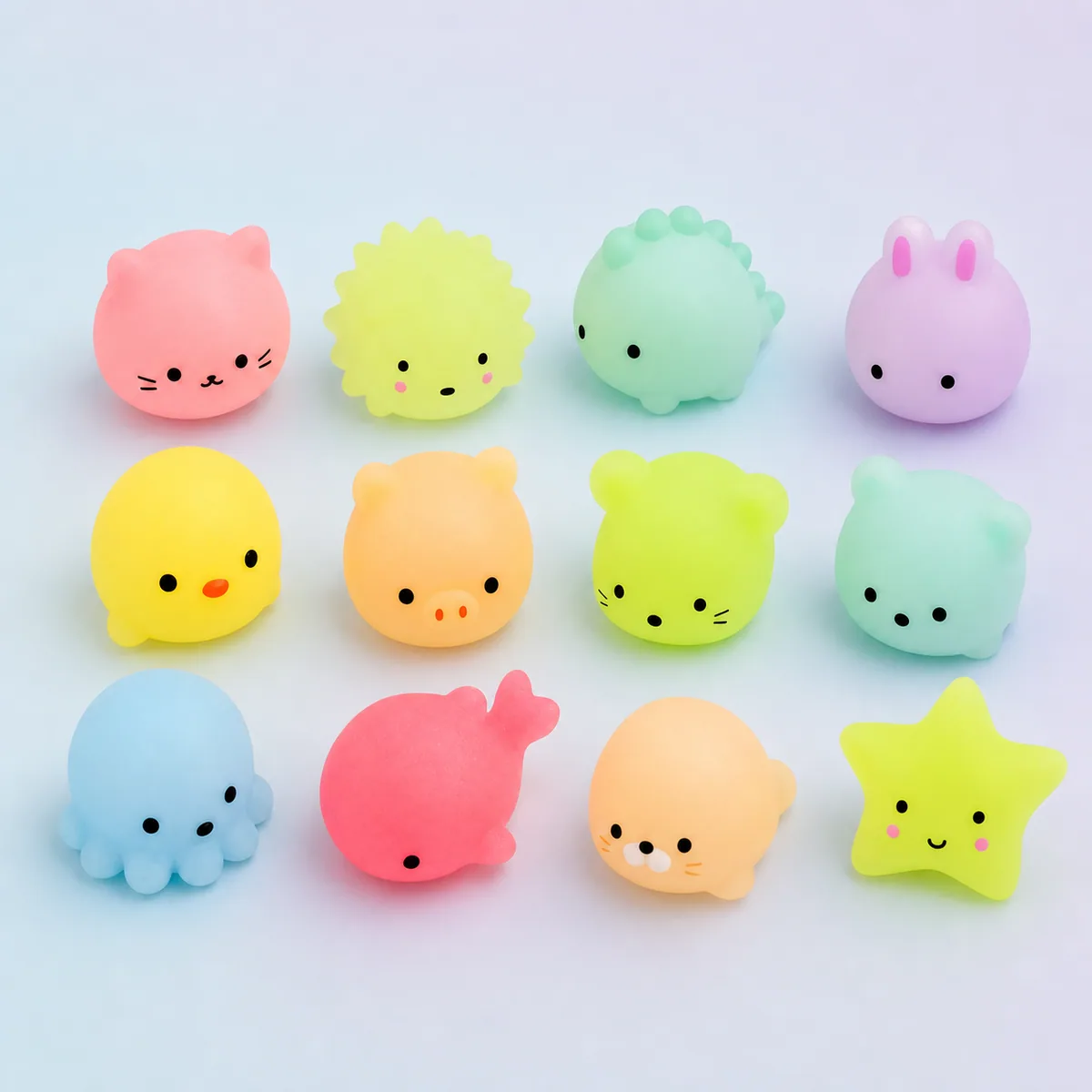
| Mini Mochi Animals Squishy Set | Twelve small squishies in one pack | Confirm the age rating fits the youngest child who will have access to the set |
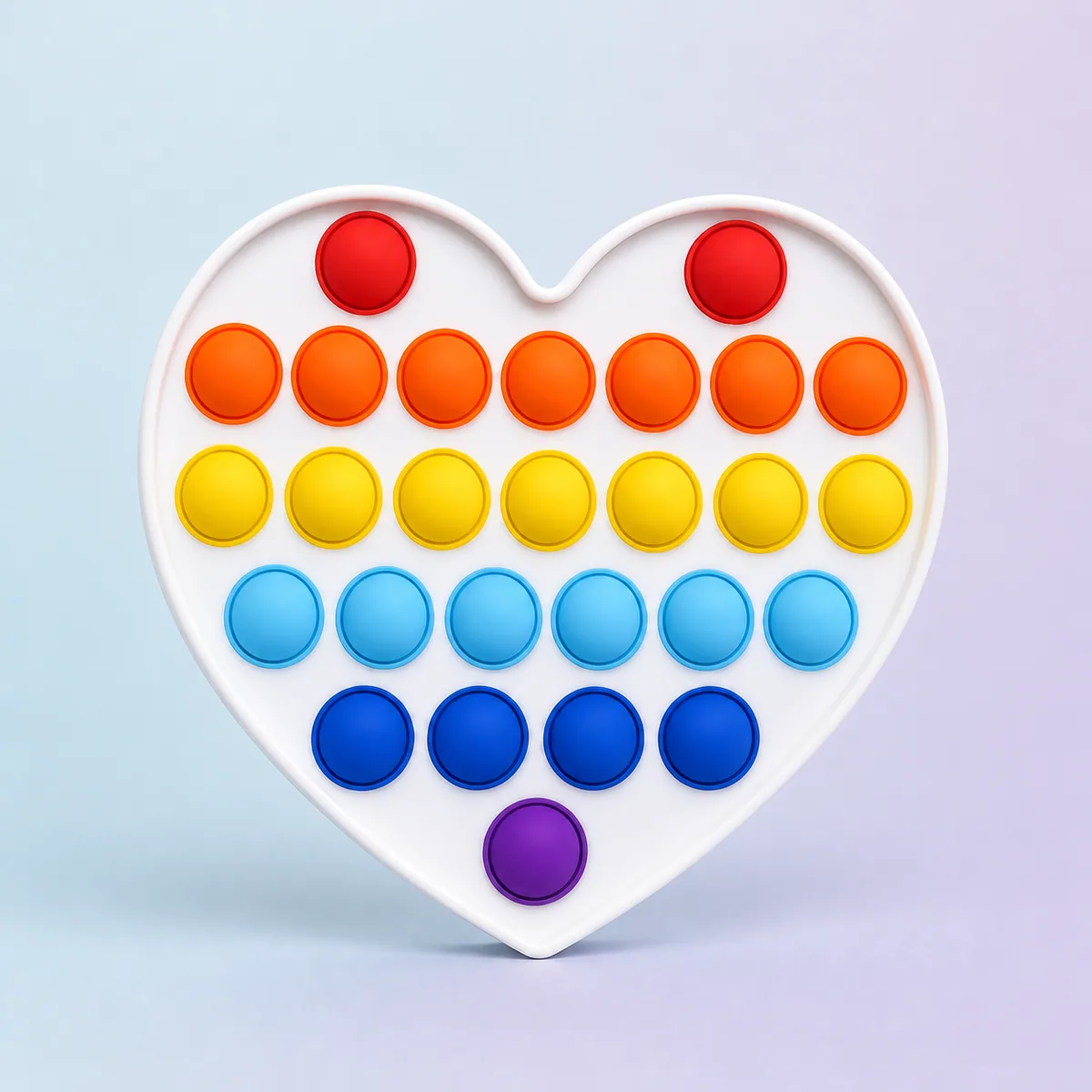
| Hush Pop Push-Pop Sensory Board | A single molded silicone board, no loose pieces | Inspect the bubbles for tears after heavy use |
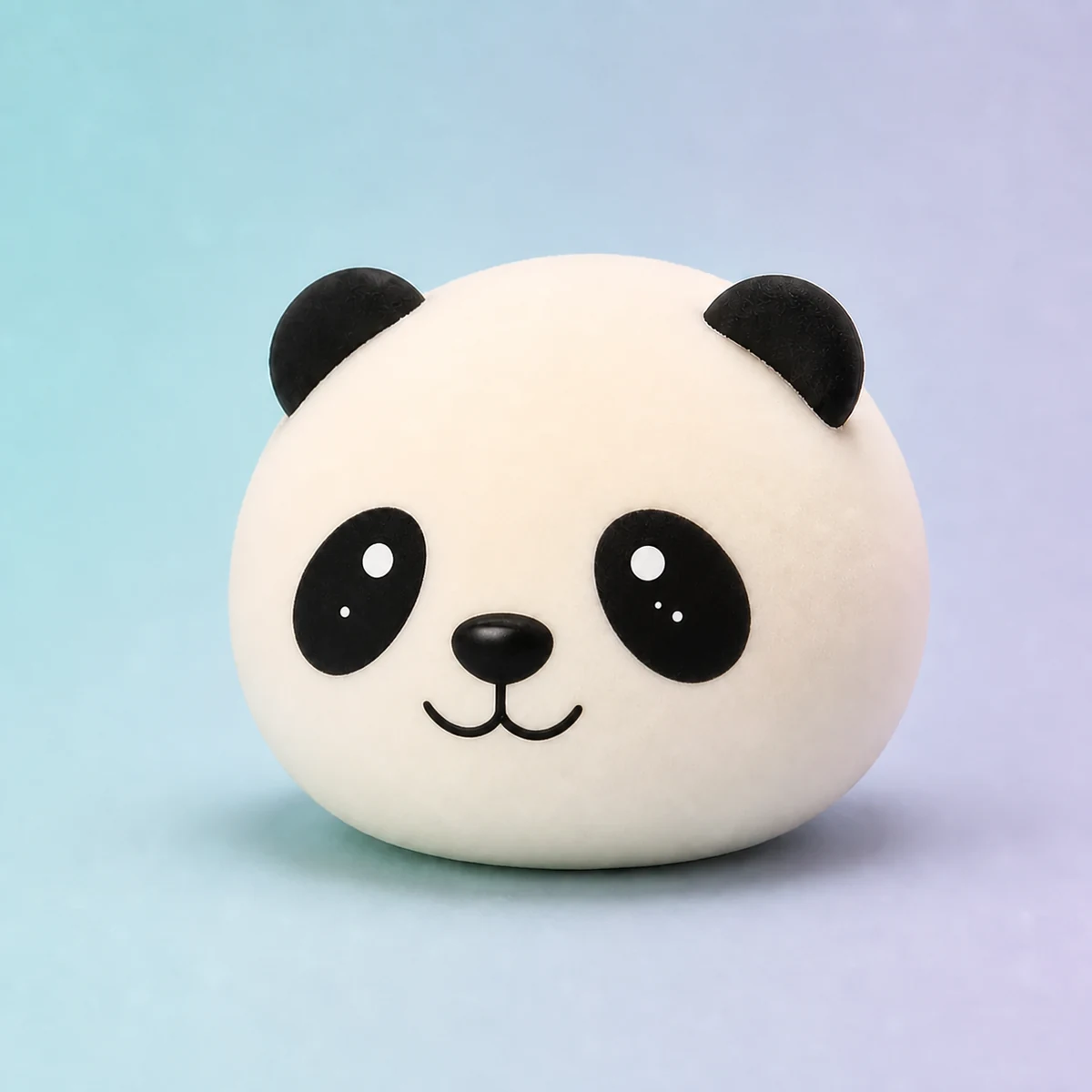
| Bun Buddy Panda Slow-Rise Squishy | One larger PU foam squishy | Watch for tearing or crumbling as foam ages, which can shed small fragments |
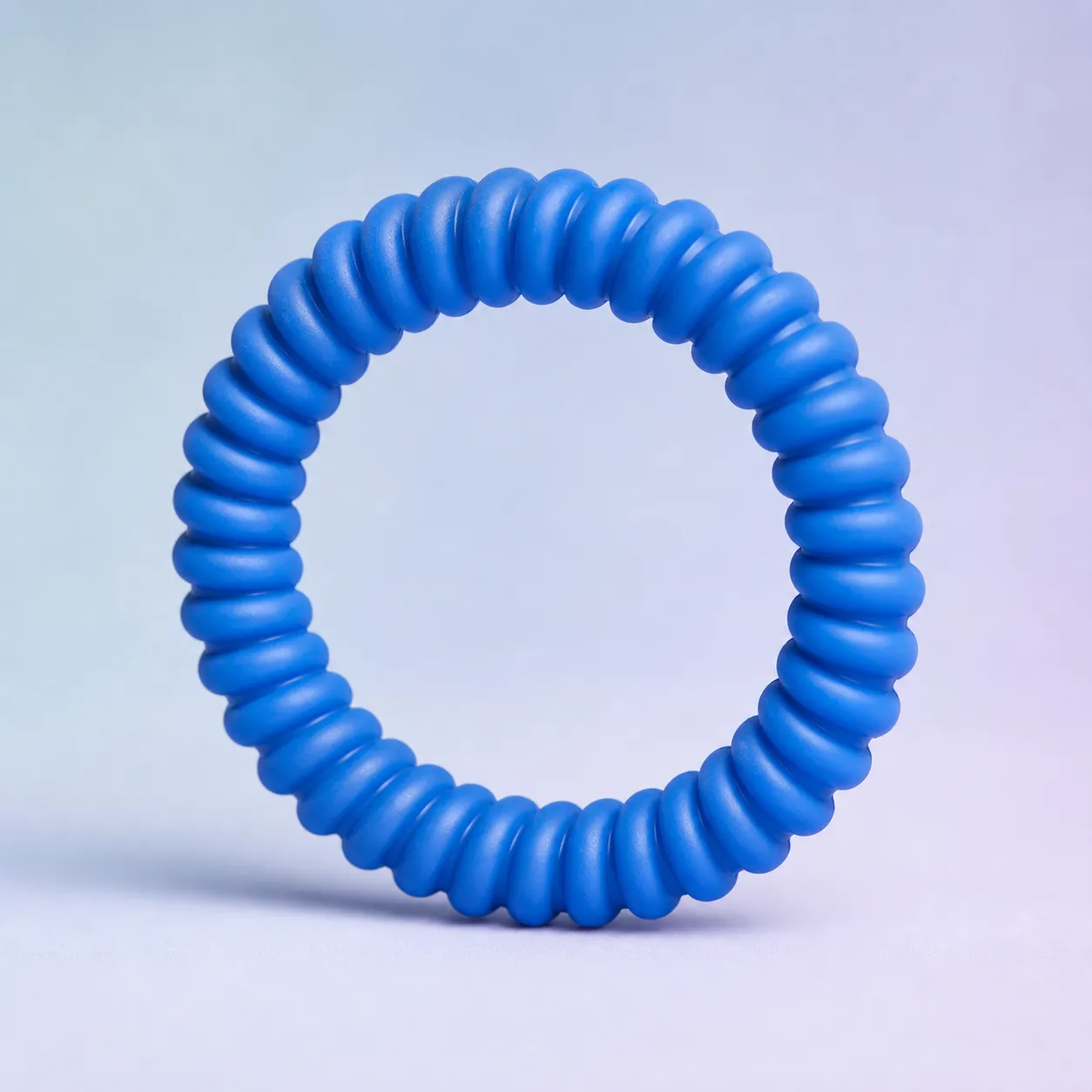
| Always-On Fidget Bracelet | A worn wearable, not a handheld squeeze toy | Check the band for cracking rather than a squeeze-into-mouth risk |
The habit that matters more than the label
A label tells you what a product was rated for on the day it was made. It does not follow the product into a toy box for the next two years, through drops, bites, and washes. The Consumer Product Safety Commission and the American Academy of Pediatrics both point to the same backstop: supervise young children with any squeezable toy, keep small-parts products away from anyone under the labeled age, and retire anything that tears rather than hoping it holds together for one more use.
Calm in the palm of your hand, checked before it goes in anyone else’s.
Sources & further reading
We reference trusted organizations by name. This article is informational and not a substitute for professional medical advice.
- American Academy of Pediatrics: Names balloons, balls, marbles, pieces of toys, and small round foods as the categories responsible for most choking deaths, and specifically warns against toys that can be squeezed to fit entirely into a child's mouth.
- U.S. Consumer Product Safety Commission: Sets the small-parts cylinder test (2.25 by 1.25 inches) behind toy age labels, banning small parts outright for products intended for children under 3 and requiring a specific warning label for the 3 to 6 age band.
- Stanford Medicine Children's Health: Warns that a torn foam-filled product can release small pieces a child could inhale, and recommends supervising young children closely and using a small-parts tester to check toys before handing them over.
- Nationwide Children's Hospital: Reported the American Academy of Pediatrics' 2010 policy statement on choking prevention, including the recommendation to read toy warning labels and use a small-parts test device before giving a toy to a young child.
Frequently asked questions
What is the choking risk with squishies and fidget toys?
Choking is a leading cause of death for young children, and the American Academy of Pediatrics names 'pieces of toys' and toys squeezed to fit entirely into a child's mouth as specific risk categories. A squishy is squeezable by design, which is why the age rating and the product's physical condition both matter, not just its size as manufactured. Supervision for young children and regular inspection for tears are the practical backstop.
What does the CPSC's small-parts test actually measure?
It uses a physical cylinder, 2.25 inches long by 1.25 inches wide, built to approximate a young child's fully expanded throat. Anything that fits entirely inside it in any orientation counts as a small part, and for products intended for children under 3, small parts are banned outright, with no warning label able to fix that. For the 3 to 6 age band, a specific federal warning label is required instead.
Is a child dying every 5 days from choking on toys?
No, that figure is specific to food-related choking, not toys, and should not be quoted as a toy statistic. The toy-specific risk categories the American Academy of Pediatrics names separately are balloons, balls, marbles, and pieces of toys. Both are real risks worth taking seriously, but they are not the same number.
Can a squishy become a choking risk after you buy it, even if it passed testing?
Yes. A product passing the small-parts cylinder test as manufactured is not a permanent guarantee, since a torn or degraded product can behave differently than the intact one that was tested. Stanford Children's Health describes an analogous mechanism in torn bean-bag chairs, which release small foam pellets a child can inhale. Retire a squishy that is tearing or coming apart rather than continuing to use it.
How do I check if a toy is a small-parts risk for my child?
Read the age label first, since it reflects a specific safety test, not a marketing choice. A consumer small-parts tester, sold alongside baby-proofing supplies, lets you check a borderline piece yourself in seconds. And supervise closely for anything given to a child under the labeled age, since a label describes the product, not the moment.
Are all 12 pieces in a squishy set a choking concern?
A multi-piece set puts more small items within reach at once, so checking the age rating against the youngest child who will have access to it matters more than with a single toy. Store a multi-piece set the way you would any small-parts product, out of reach of a toddler between uses. The age label on the box, not the number of pieces alone, is what determines whether it is appropriate.