Push-pop vs. simple dimple: what’s the real difference?
A push-pop board and a simple dimple toy are close cousins, not competitors. Both are soft-silicone panels of bumps you press through one by one, then flip over and press again. The real difference is size and job. A push-pop board is a full panel meant to sit on a desk or a nightstand, built for a longer session where you work your way across every row. A simple dimple is a small, one-to-few-bump version sized to live in a pocket or a closed fist, built for a quick press between other things. Same mechanism, different scale, different life.
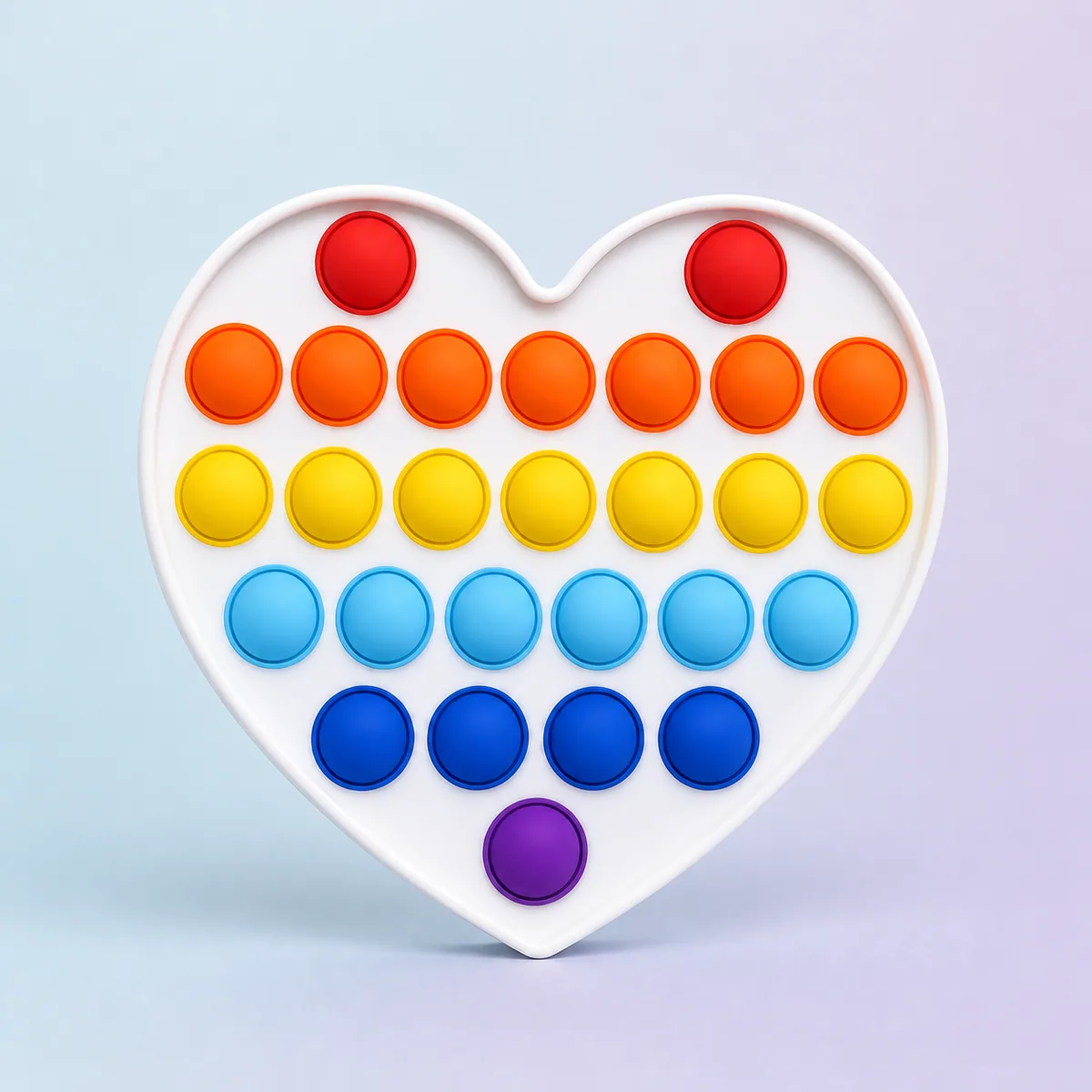
Our Hush Pop Push-Pop Sensory Board is the desk-size version: rows of bumps across a soft-silicone board that give your thumb a real route to travel. We do not carry a dedicated single-bubble dimple right now, so think of this as an honest comparison of the two toy types rather than a pitch for both.
Where did the pop toy come from?
Push-pop toys trace back further than the 2020 boom that made them famous. The concept began with Theo and Ora Coster, an Israeli husband-and-wife design team working as Theora Design, who sketched the idea in the 1970s. Their sons, Boaz and Gideon, later licensed it to FoxMind, a Canadian toy company, which brought it to market as GoPop. FoxMind sold roughly 700,000 GoPop units in 2019. Over the following eighteen months, as a viral video of a monkey named Gaitlyn playing with one spread on TikTok, that number jumped to roughly seven million units, a tenfold increase, and pop-it content on the platform has since collected more than 12 billion views.
The name simple dimple is newer, and here is the honest part: we could not find a separately documented inventor or origin date for it. It reads like a later name for a smaller, one-bubble version of the same idea, one of many that rode the same wave rather than a toy with its own invention story. If a listing tells you otherwise, ask where that history comes from.
How do they feel different in the hand?
Size changes the feel more than material does. A push-pop board rewards a slower, more absorbed press: your thumb travels row by row, and a full board takes a minute or two to clear before you flip it and start the other side. A simple dimple is a single motion, in and out, over and over, the kind of press that fits between typing a sentence and reading the reply. Neither is louder than the other. Both make the same soft pop, just fewer times per press on the smaller toy.
There is also a grip difference worth naming. A board sits flat on a table and takes two hands or one steady one, so it is better suited to a moment when you can actually set something down. A simple dimple travels with the hand: close your fist around it, work the single bump with your thumb, and keep typing, reading, or walking with the other hand free. If your restless moment usually happens standing up, in a line, or on a call where your hands need to stay mobile, that one detail decides more than anything else on this page.
Which one is more discreet?
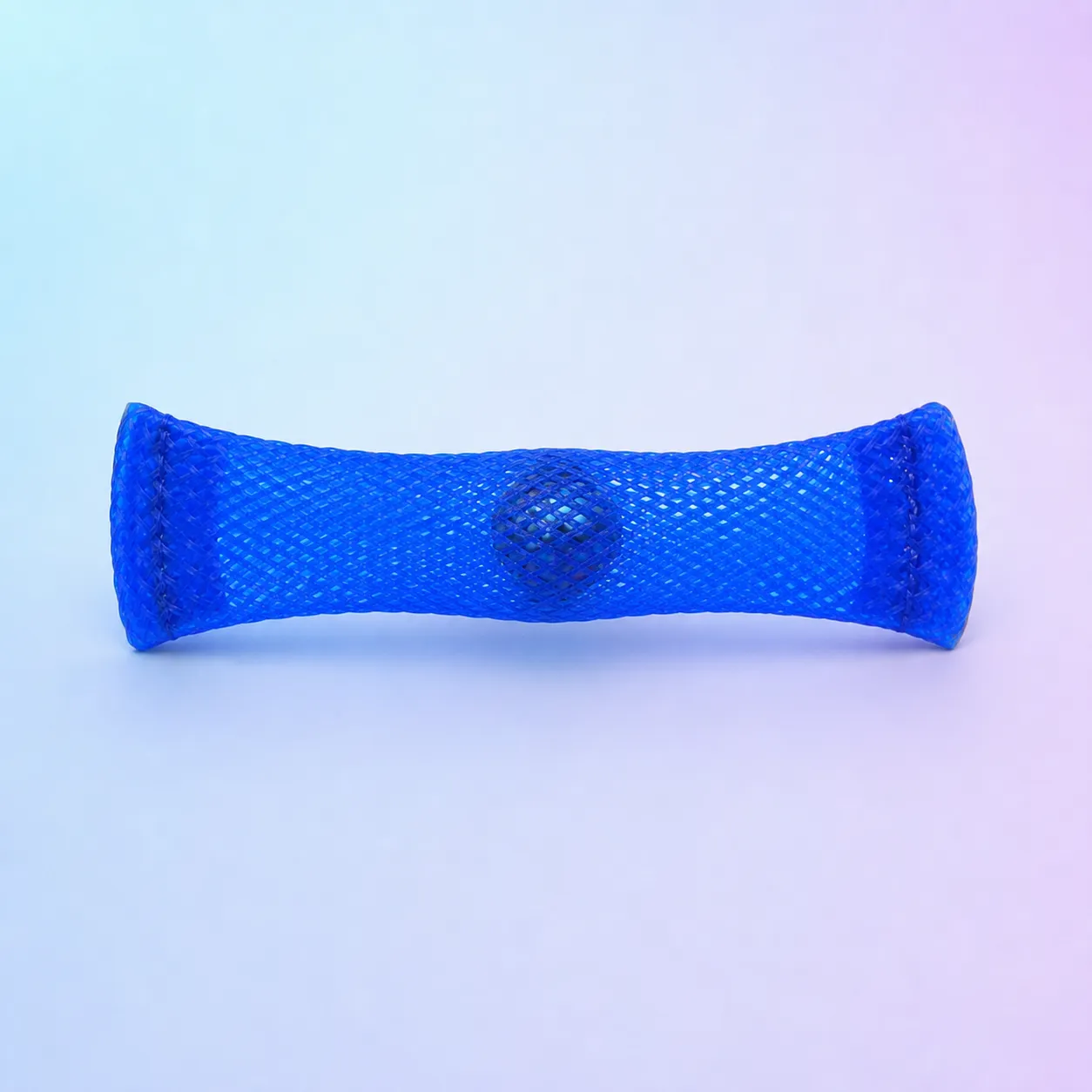
Size decides discretion too. A simple dimple, small enough to close a fist around, disappears into a coat pocket and comes out for ten seconds under a desk without anyone noticing. A push-pop board is harder to hide: it wants a flat surface and a few inches of space, which makes it better for a desk at home, a nightstand, or a waiting room chair than a jacket pocket. For a meeting or a classroom where the goal is staying unnoticed, the Roll & Squeeze Mesh Marble Fidget or the Always-On Fidget Bracelet beat either pop toy on quiet.
The quick comparison
| Push-pop board | Simple dimple | |
|---|---|---|
| Size | Desk-size panel, multiple rows | Pocket-size, one to a few bumps |
| Motion | Row by row, several presses per side | One press, over and over |
| Best for | A longer, absorbed session | A quick press between tasks |
| Discretion | Needs a flat surface | Closes inside a fist |
| Noise | Same soft pop, more of it per session | Same soft pop, less of it per session |
What if the bubbles wear out?
Silicone keeps its snap for a long time, but heavy daily pressing eventually softens the pop on any bubble toy, push-pop or dimple. The fix is the same for both: give it a day or two of rest and the silicone usually recovers most of its bounce, the way a rubber band rests better than one stretched constantly. If a side stays soft after a rest, that part of its life is done, though the rest of the panel usually still works fine. A click cube or a mesh marble, both built around mechanical parts rather than stretched silicone, do not have this problem at all, which is worth knowing if you want something that feels the same on day one thousand as it did on day one.
Neither toy is fragile in normal use, and here is the one honest tradeoff worth admitting up front: a push-pop board has more bumps taking the hits across a whole session, so somewhere on a big board is likely to soften first, just by odds. A simple dimple puts all that pressing into one small spot, so that spot works harder but the rest of the toy does not exist to wear out. Neither pattern is a defect. It is just what happens when soft silicone meets a few thousand presses, on any toy shaped this way.
So which should you choose?
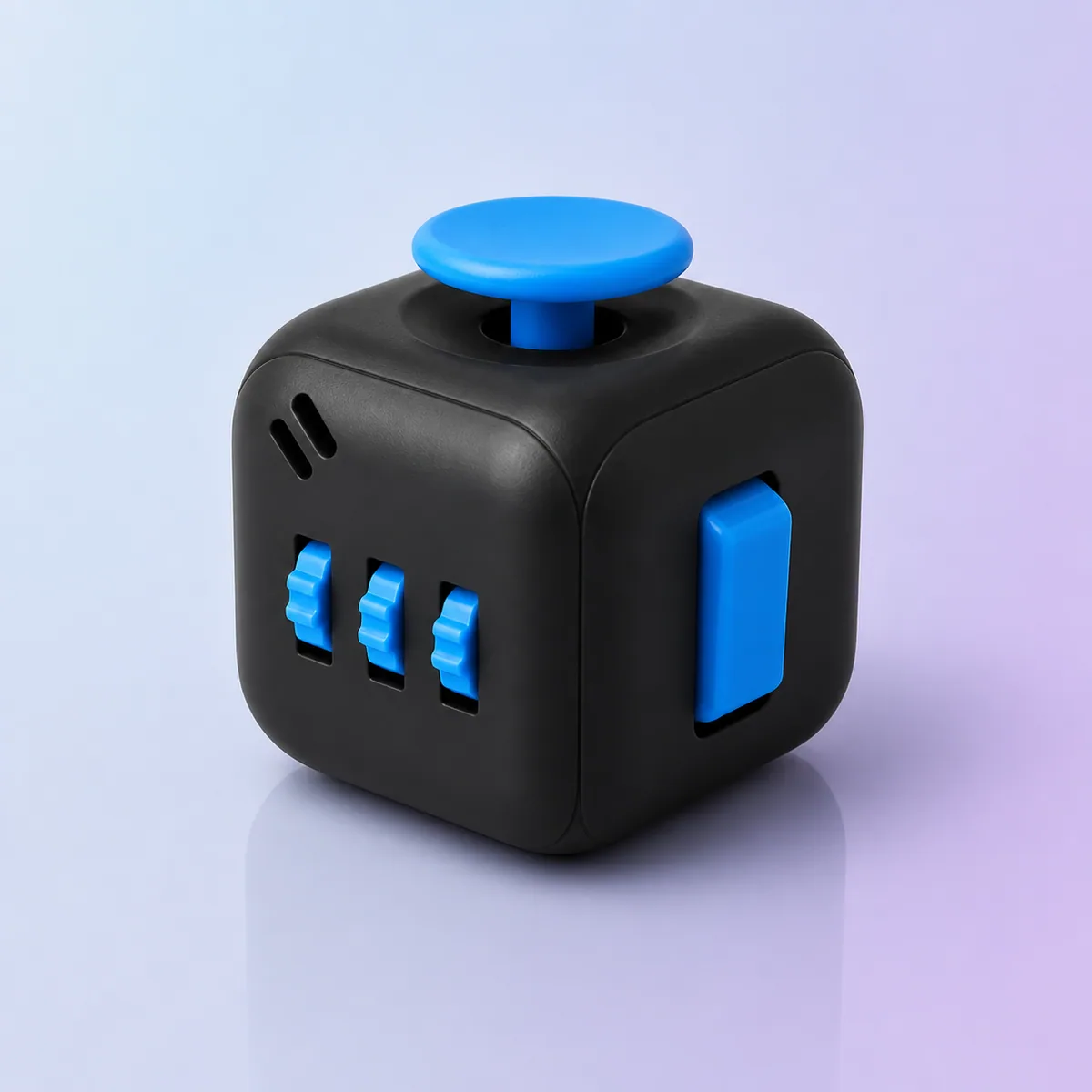
If you want a longer fidget session with a clear finish line, the Hush Pop board is the better buy: full rows to work through, and a satisfying blank sheet when you are done. If you want the smallest possible pop toy for a pocket, a simple dimple is the shape to look for, and a Click-Cube Focus Fidget on our shelf covers the same pocket-size need with a different motion if you strike out on the dimple. Either way, a fidget only works if you would actually reach for it, so buy the size that matches where you will really carry it. Calm in the palm of your hand, one pop at a time.
Sources & further reading
We reference trusted organizations by name. This article is informational and not a substitute for professional medical advice.
- Jewish Telegraphic Agency: A news wire whose reporting traced the pop-it concept to designers Theo and Ora Coster and documented FoxMind's licensed GoPop relaunch, including its sales jump during the 2020-2021 boom.
- Times of Israel: Corroborated the Coster family's account of the pop-it toy's 1970s design origin and its later commercial licensing to FoxMind.
- U.S. Government Publishing Office: Publishes the federal small-parts safety rule (16 CFR Part 1501), which governs toy safety testing for items intended for children under three.
Frequently asked questions
What is the difference between a push-pop and a simple dimple?
Size and purpose, not mechanism. A push-pop board is a full panel of bumps meant for a longer session at a desk, while a simple dimple is a pocket-size version with just one or a few bumps for a quick press. Both use the same soft silicone pop.
Who invented the pop-it fidget toy?
The concept traces to Theo and Ora Coster, an Israeli design team working as Theora Design, who sketched it in the 1970s. Their sons later licensed the idea to the Canadian company FoxMind, which released it as GoPop and saw demand jump roughly tenfold during the 2020-2021 boom. Simple dimple, the smaller variant, does not have a separately documented inventor that we could verify.
Is a push-pop board or a simple dimple better for a classroom?
A simple dimple is the more discreet choice, since it closes inside a fist and makes almost no visible motion. A push-pop board needs a flat surface and more room, which suits a desk better than a pocket. Both make a soft popping sound, so check with the teacher either way.
Why did my push-pop stop popping as loudly?
Heavy daily pressing can soften the pop on any silicone bubble toy over time, the same way a rubber band loses some snap after being stretched constantly. A day or two of rest usually lets the silicone recover most of its bounce. If one side stays soft after a rest, the rest of the board typically still works fine.
Are push-pop and simple dimple toys safe for young children?
Both are soft silicone with no small parts that detach under normal use, which is close to the line federal toy rules draw for children under three. Always check the specific product's age rating before buying, since sizes and part counts vary by listing. Supervise hard biting or chewing, since repeated force can eventually wear a thin spot in silicone.
Which is the better first fidget to buy?
Choose the push-pop board if you want a longer, more absorbed session, or look for a simple dimple if you want the smallest possible fidget for a pocket. Either way, a fidget only earns its keep if you actually reach for it, so match the size to where you will really carry it.