What should you put in a party bag or class set of fidgets?
The safest party bag or class set of fidgets is built from simple, single-piece items with nothing that detaches, sized for the youngest child who might reasonably end up holding one. A party bag rarely goes to a room of same-age, same-stage kids: a birthday party pulls in siblings, cousins, and the occasional toddler who was not on the invite list but is absolutely going to get into the loot bags anyway. Pick for the youngest hand in the room, not the average one, and the rest sorts itself out.
The one safety rule that actually matters
For any gift meant for a child under 3, the U.S. Consumer Product Safety Commission’s small parts rule is the one number worth knowing. Toys and articles intended for children under 3 years old (36 months) have to pass a specific choke-hazard test: does the item, and any piece that comes off it under normal handling, fit entirely inside a small test cylinder, 2.25 inches long by 1.25 inches wide, sized to approximate a young child’s fully expanded throat. If it fits, it counts as a choking risk for that age group and is not meant to be given to them at all. For a child between 3 and 6, the rule works differently: a small part is not banned outright, but federal law requires the package to carry a specific choking-hazard warning label. That gap, banned under 3 versus labeled for 3 to 6, is exactly why “my child is almost 3” is worth taking seriously rather than rounding up.
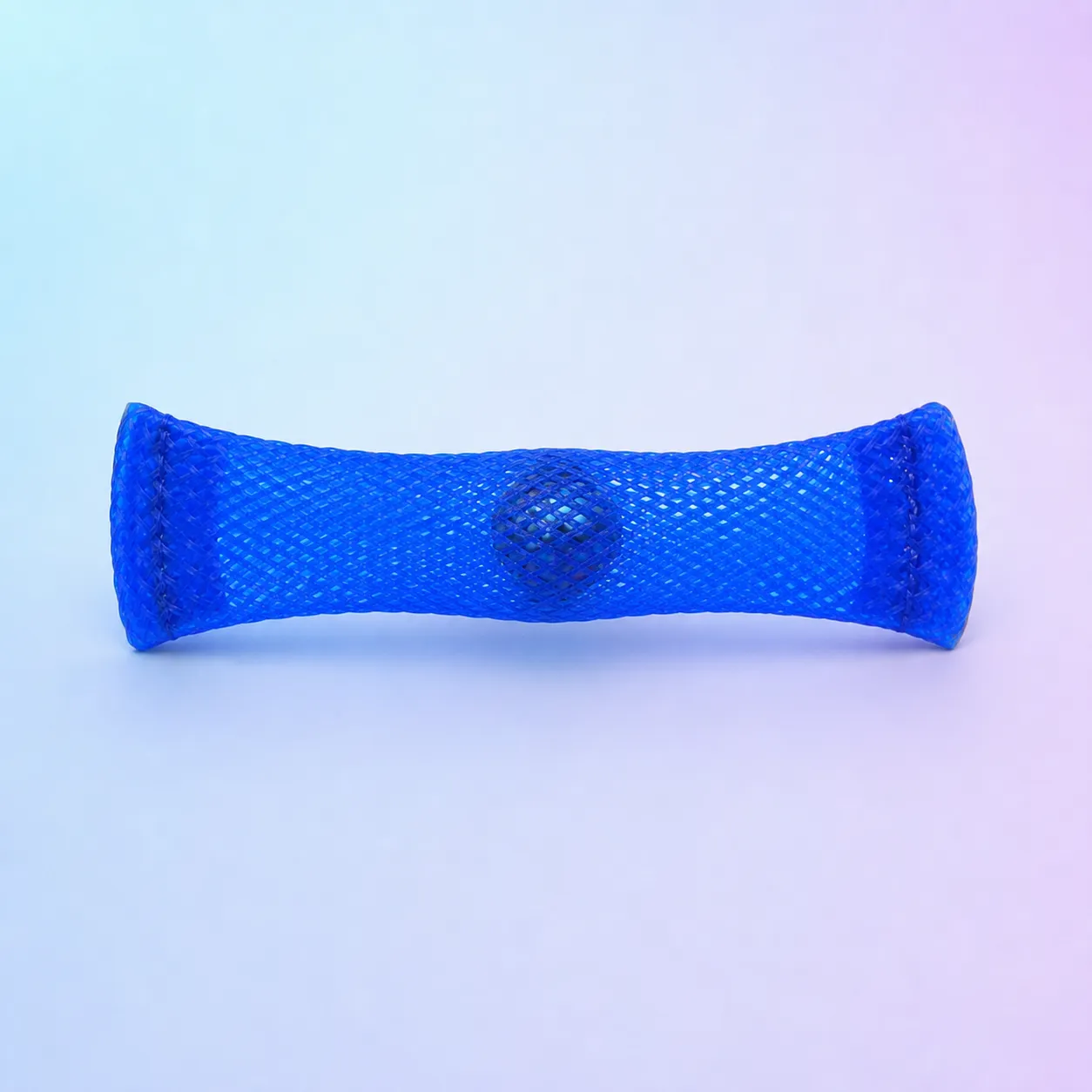
A party bag rarely comes with an age filter attached, so treat the rule as a practical guide rather than a legal one: if a toddler could plausibly get into the bag, skip anything with loose, separable, or very small pieces. Our Roll & Squeeze Mesh Marble Fidget, for instance, is a single glittery marble sealed inside a mesh pouch. It is not built as a loose small part, and most kids will never get it out, but it is still the kind of item we would keep out of a bag that toddlers can reach. Save it for an older elementary class set instead.
There is a second wrinkle worth naming: a party bag usually gets opened at home, not in front of you. You do not get to supervise that moment, which is exactly why the item itself has to be the safeguard rather than a rule you explain at pickup. If you are handing bags to families you do not know well, that alone is reason enough to default to the simplest, most single-piece option in the bunch.
Matching fidgets to a mixed-age room
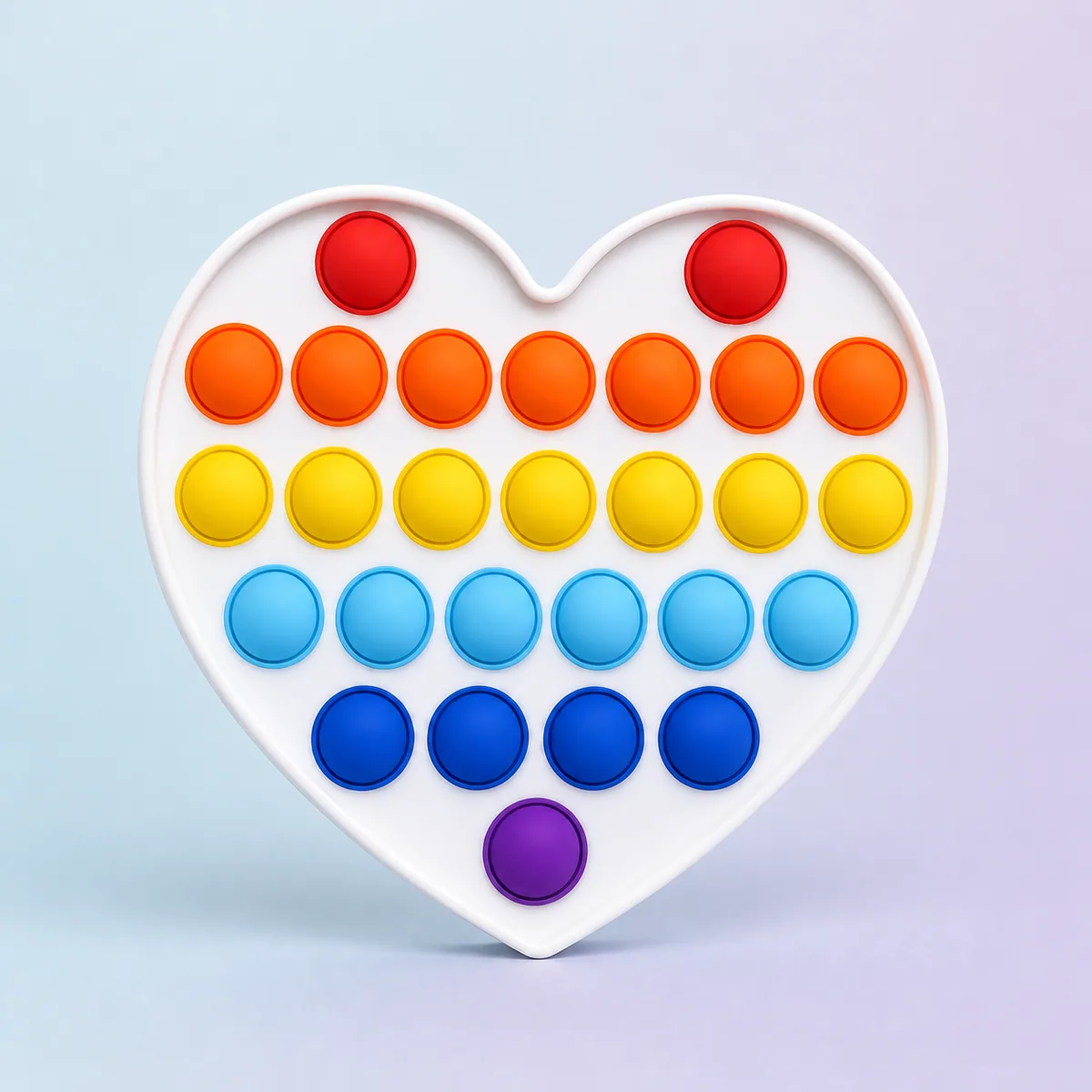
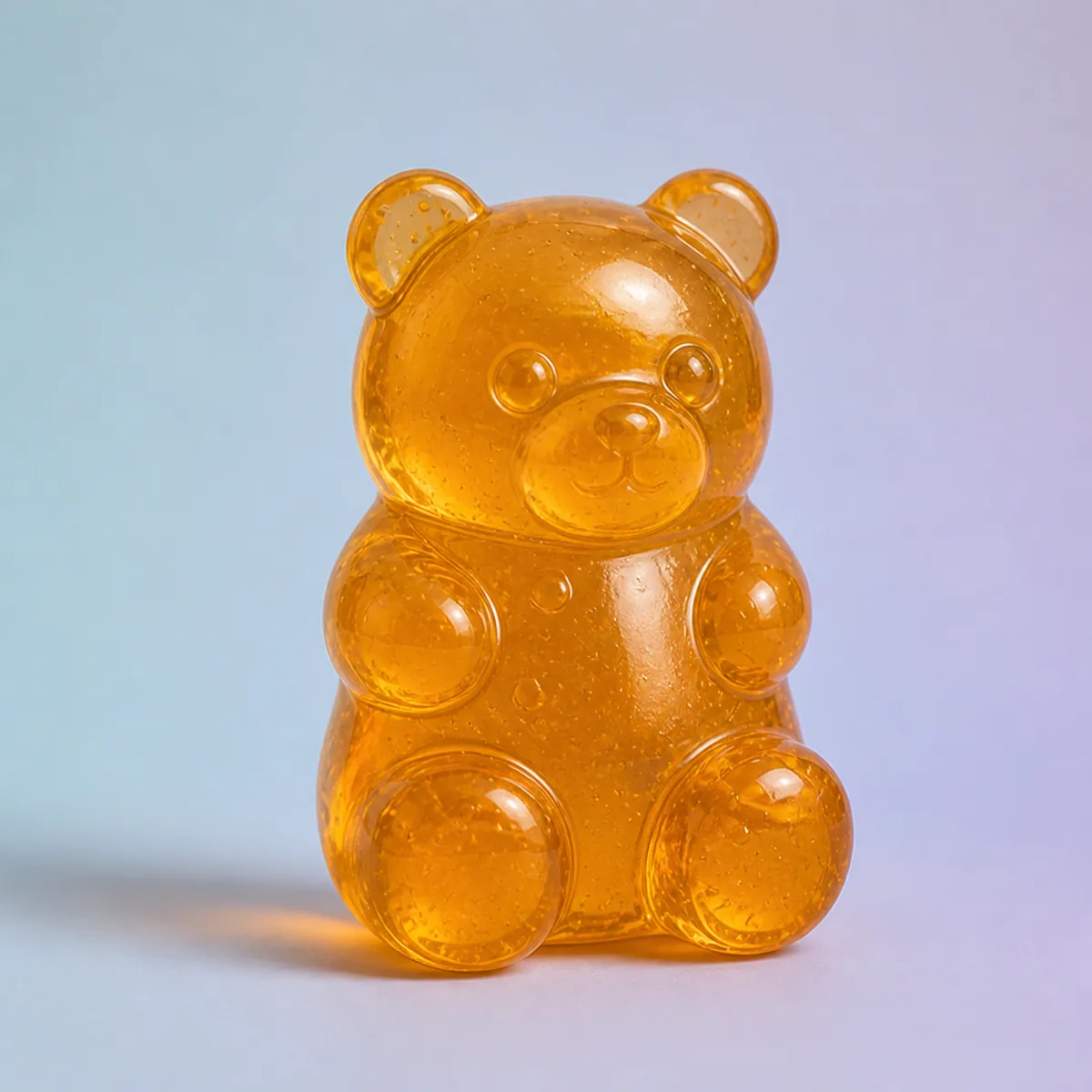
A preschool or kindergarten party bag does best with something soft, single-piece, and impossible to take apart, which is exactly what a squishy or a silicone push-pop offers. Our Sweet Bear Jelly Squish is one molded piece with nothing to detach, and the Hush Pop Push-Pop Sensory Board’s bubbles are built into one solid board rather than loose pieces, so both hold up in a room where a four-year-old and a seven-year-old are opening bags side by side.
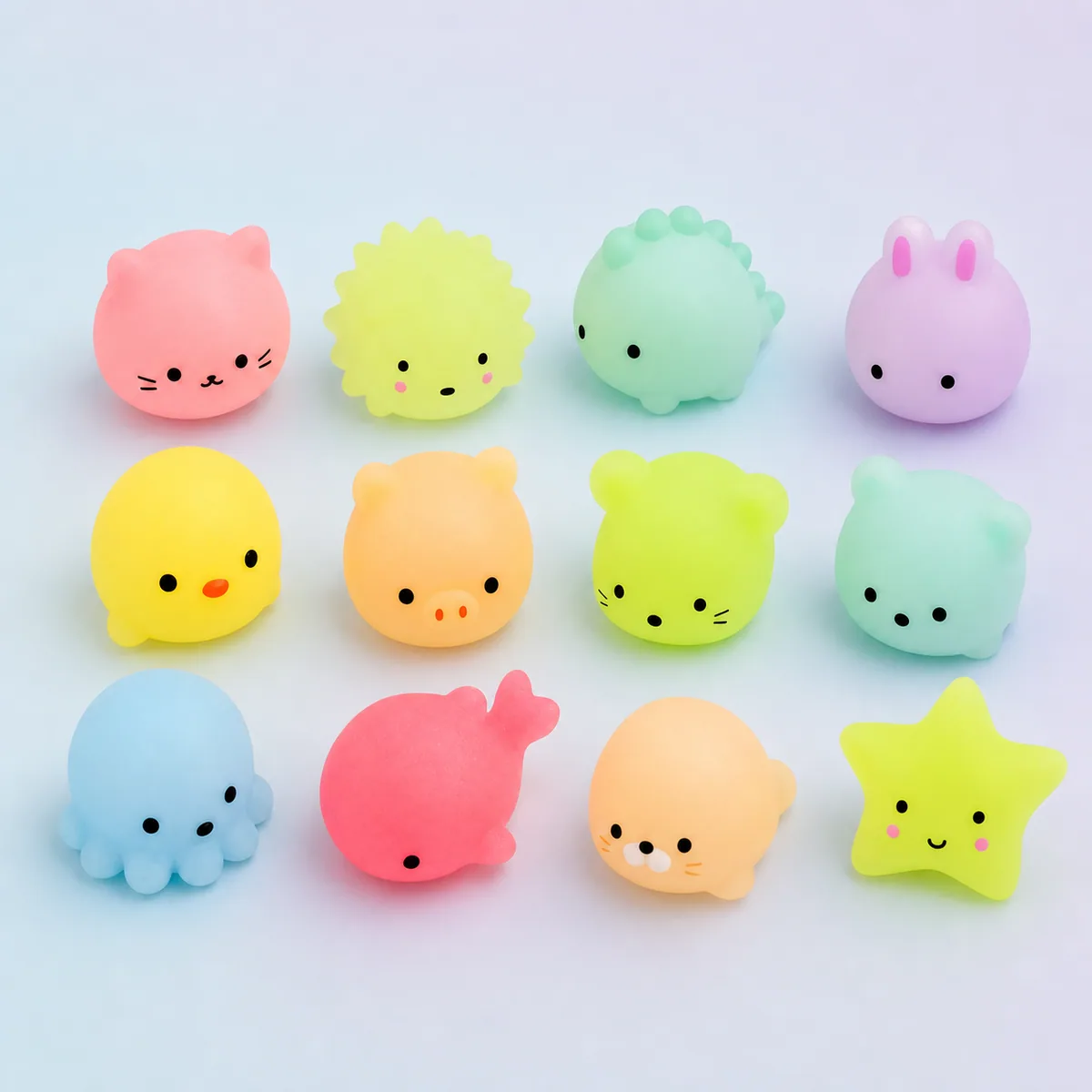
An upper-elementary class set has more room to play with, since the small parts rule is written for children under 3, not for a room of eight- and nine-year-olds. A set like the Mini Mochi Animals Squishy Set works well here: twelve tiny squishies, one per student, cheap enough to hand out without a second thought, and simple enough that a teacher does not need to explain how to use them.
If you do know the rough ages in advance, a simple two-tier system saves some guesswork: one style for guests under six, a slightly more varied style for the older kids and any adults picking up siblings. It takes an extra few minutes at the packing table and avoids handing the wrong bag to the wrong hand.
The quick picks, by group
| Group | Pick | Why |
|---|---|---|
| Preschool or mixed toddlers in the room | Sweet Bear Jelly Squish | One molded piece, nothing to detach |
| A shared bin for any age | Hush Pop Push-Pop Sensory Board | Solid silicone board, wipes clean |
| A whole class, one per student | Mini Mochi Animals Squishy Set | Twelve pieces, low cost per student |
| Older elementary only, no toddlers around | Roll & Squeeze Mesh Marble Fidget | Small marble inside sealed mesh; skip for under 3s |
If you are filling bags for a party where you genuinely do not know who might open one, default to the top row of this table. It is the option that works for the widest range of ages with the least to worry about.
What to skip
Skip anything with loose beads, magnets, or pieces meant to be pulled apart and put back together, since those are the items most likely to end up somewhere they should not, at an age where that matters most. Skip water-bead products entirely for any bag or bin that might reach a child under 3; they are not appropriate for that age group under any circumstance. If a party bag is also getting a balloon alongside the fidget, skip latex and reach for Mylar or foil instead; latex made by a dipping process, which is how balloons are made, holds more residual allergen than molded rubber, and it is the item most associated with triggering a latex allergy at a kids’ event. When the budget is tight, it is better to hand out fewer, safer items than to stretch it with something that was not built with a mixed-age room in mind. Read the age recommendation printed on the packaging too, even for something as simple looking as a squishy, since it is there for exactly this kind of hand-me-down situation.
The budget math for a class set
A class set does not have to mean a big spend. A twelve-pack like the Mini Mochi Animals Squishy Set works out to a low cost per student, and buying one style in bulk beats assembling a dozen different loot bags by hand. It also fits how classrooms already approach incentives: the Alliance for a Healthier Generation’s USDA-approved wellness guidance recommends non-food items, stickers, pencils, small trinkets, as the standard classroom reward, which is exactly the category a small squishy or fidget falls into. Keep one style consistent across the class too. It saves an argument about who got the better one before the fidgets have even left the bag, and it means fewer decisions to make at the store while you are also juggling invitations, cake, and everything else the same party needs.
Fill the bags, hand them out, and let the rest take care of itself. Calm in the palm of a small hand, safely.
Sources & further reading
We reference trusted organizations by name. This article is informational and not a substitute for professional medical advice.
- U.S. Consumer Product Safety Commission: Its small parts regulation (16 CFR Part 1501) applies to toys and articles intended for children under 3 years (36 months) old, testing whether a piece fits entirely inside a choke-hazard cylinder, and it enforces the mandatory ASTM F963 toy-safety standard.
- American Latex Allergy Association: Publishes guidance on latex allergy, noting that dipped latex products, including balloons, carry more residual allergen than molded rubber, which is why Mylar or foil balloons are the standard substitute at events with allergic children.
- Alliance for a Healthier Generation: Publishes a USDA-approved Model Wellness Policy recommending non-food rewards, such as small trinket-style items, as standard practice for classroom incentives.
Frequently asked questions
What fidgets are safe for a party bag with mixed ages?
Single-piece items with nothing that detaches are the safest choice, like a soft squishy or a solid silicone push-pop board. Pick for the youngest child who might plausibly open the bag, since a birthday party rarely stays within one age group.
What is the small parts rule for children's toys?
The U.S. Consumer Product Safety Commission's small parts rule applies to toys and articles intended for children under 3 years (36 months) old, and tests whether any piece fits entirely inside a 2.25 by 1.25 inch choke-hazard cylinder. For children 3 to 6, the same size part is not banned but requires a choking-hazard warning label on the package, so it is worth checking that label whenever a younger child might get into a bag meant for older kids.
Is a mesh marble fidget safe for a class set?
It is sealed rather than loose, so it holds up well for an older elementary classroom. We would still keep it out of a bag that might reach a toddler, since the marble inside is small enough to be a concern if the mesh ever tears.
How much should a class set of fidgets cost per student?
A twelve-pack style item, like a squishy set, keeps the cost per student low while giving each child their own. Buying one consistent style in bulk is usually cheaper and simpler than assembling a different loot bag for every child.
Are water beads safe for a kids' party bag?
No, not for any bag or bin that a child under 3 could reach. Water-bead products are never appropriate for that age group, so they are worth skipping entirely for a mixed-age party or a bag headed home with siblings.
What is the safest single fidget for a party bag if you are not sure of the ages?
A soft, single-molded squishy is the safest default, since it has nothing to detach and works across a wide age range. When in doubt, choose the option built for the youngest hand, not the oldest, and the rest of the room will be fine with it too.