Is there a best material for a stress ball?
There is no single best material for a stress ball. The right one depends on the resistance and feel your hands want, not on any fill being objectively better than the others. Foam squeezes light and springy, gel and TPR give a soft slow press, water-bead is grainy and moldable, dough holds its shape, and firmer rubber pushes back hardest.
We would love to hand you one tidy answer, but that would not be honest, and honesty is the point of a good buying guide. The truth is that “best” is a question about your hands. Do you want to sink slowly into a squeeze, or feel a quick springy rebound? Do you want something that molds and stays, or something that fights back a little? Once you know the feeling you are after, the material mostly picks itself.
So let us make the feelings concrete, then match each one to a fill.
Which stress ball material is right for you?
The fastest way to choose is to name the feeling you want in your hand, then read across to the fill that delivers it. The table below lays the common materials side by side, with an honest note on how each one holds up over time.
| Material | How it feels | Best for | Durability, honestly |
|---|---|---|---|
| Foam | Light, springy, quick rebound | Fast squeeze-and-release, a featherlight desk ball | Can compress, crumble, or tear over time; the surface picks up grime |
| Gel / TPR | Soft, smooth, slow give, cool to the touch | A satisfying slow squeeze and sensory comfort | Tough unless you pierce the skin; a torn skin can leak |
| Water-bead | Grainy and moldable, beads shift under the skin | Grounding, busy-hand fidgeting, redirecting restless habits | Long-lasting if you never puncture the mesh or membrane |
| Flour / dough | Dense and moldable, holds the dent you press | A slow, grounding squeeze that stays where you put it | Sturdy unless pierced; heavier, and it will not bounce |
| Firmer rubber | Dense, high-resistance, minimal give | Hand strength and a big, satisfying tension release | Usually the most rugged; can be hard on sore joints |
Read across the row that matters most to you. If you work somewhere quiet, know that every fill here is essentially silent, since there is nothing inside to click or rattle. If you are shopping for tired, achy hands, start at the resistance you can squeeze comfortably, not the firmest one on the shelf.
What does a foam stress ball feel like?
A classic foam stress ball feels light, dry, and springy, with a fast rebound that snaps back the instant you let go. This is the material most people picture when they hear “stress ball,” usually a molded polyurethane foam printed with a logo at a company event.
Foam is genuinely good at one thing: quick, repeatable squeeze-and-release. It is featherlight, easy to palm, and it asks nothing of you. The tradeoff is durability. Foam is the fill most likely to wear down, dent permanently, or split at the surface after months of hard squeezing, and its open surface tends to pick up grime and hold it. Our own range leans away from plain foam toward gel, water-bead, and dough fills, because they tend to feel more interesting in the hand and last longer with regular use. That is a preference, stated plainly, not a knock on a material that has calmed plenty of hands.
What do gel and TPR stress balls feel like?
Gel and TPR stress balls feel soft, smooth, and cool, with a slow, forgiving give that sinks under your fingers before easing back. TPR is thermoplastic rubber, a soft, stretchy, skin-safe material used for the outer skin, often wrapped around a gel core. It is the buttery end of the squeeze spectrum.
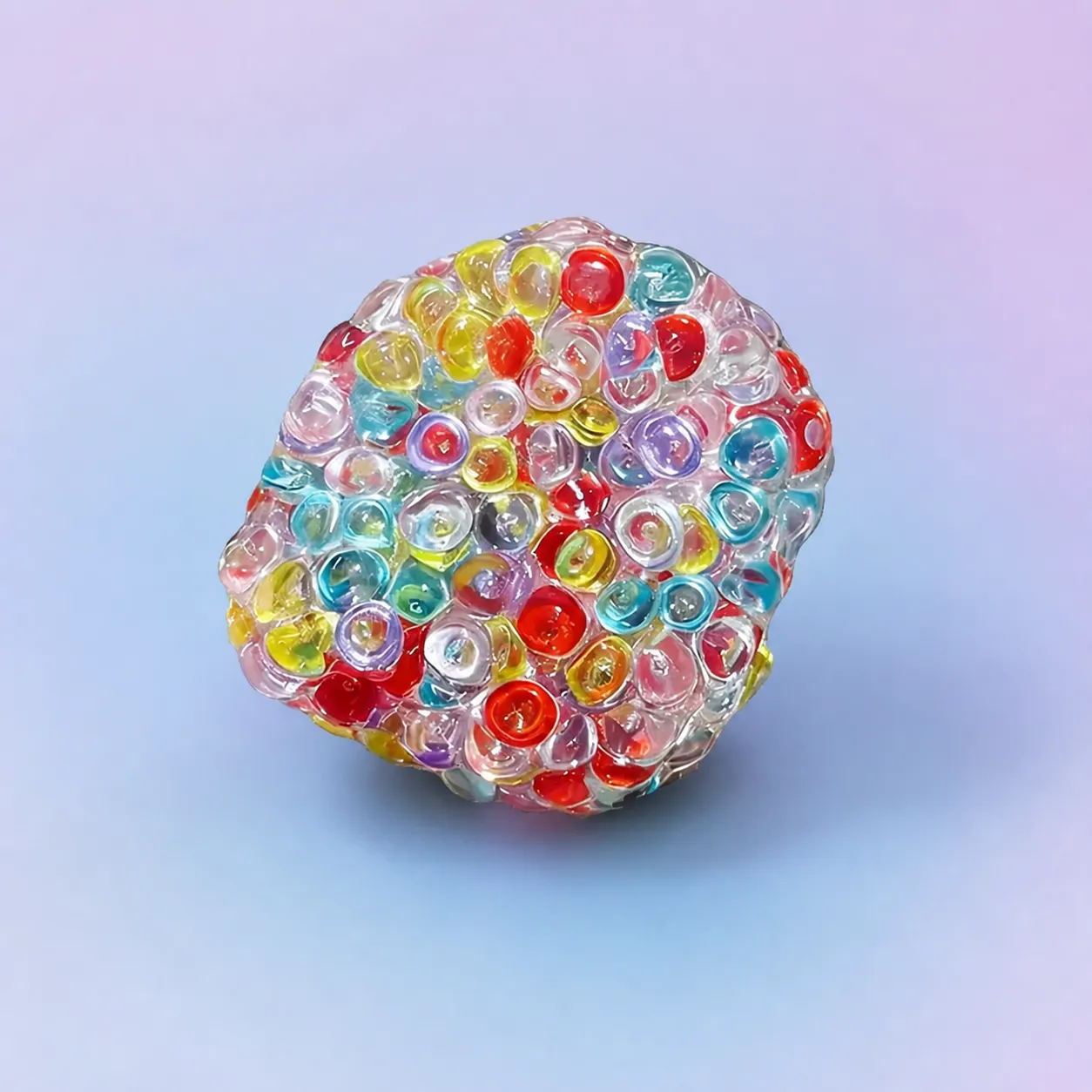
This is a favorite for sensory comfort, because the surface is pleasant to hold even before you squeeze. The Steady Hand Squeeze Stress Ball is a good plain example: a palm-sized translucent gel ball, around 6.3 cm across, with a rounded bubble texture and a springy return, and it lands under ten dollars at $8.99. If you want the soft, jiggly version of gel, the Sweet Bear Jelly Squish wobbles like an oversized gummy and springs right back. And for the softest, slowest end, the Jelly Blob Transparent Gel Fidget behaves somewhere between a liquid and a solid, oozing and slumping through your fingers rather than bouncing. The honest tradeoff for gel and TPR: the skin is durable until it is pierced, so keep it away from sharp nails and points, because a torn skin can leak.
What does a water-bead stress ball feel like?
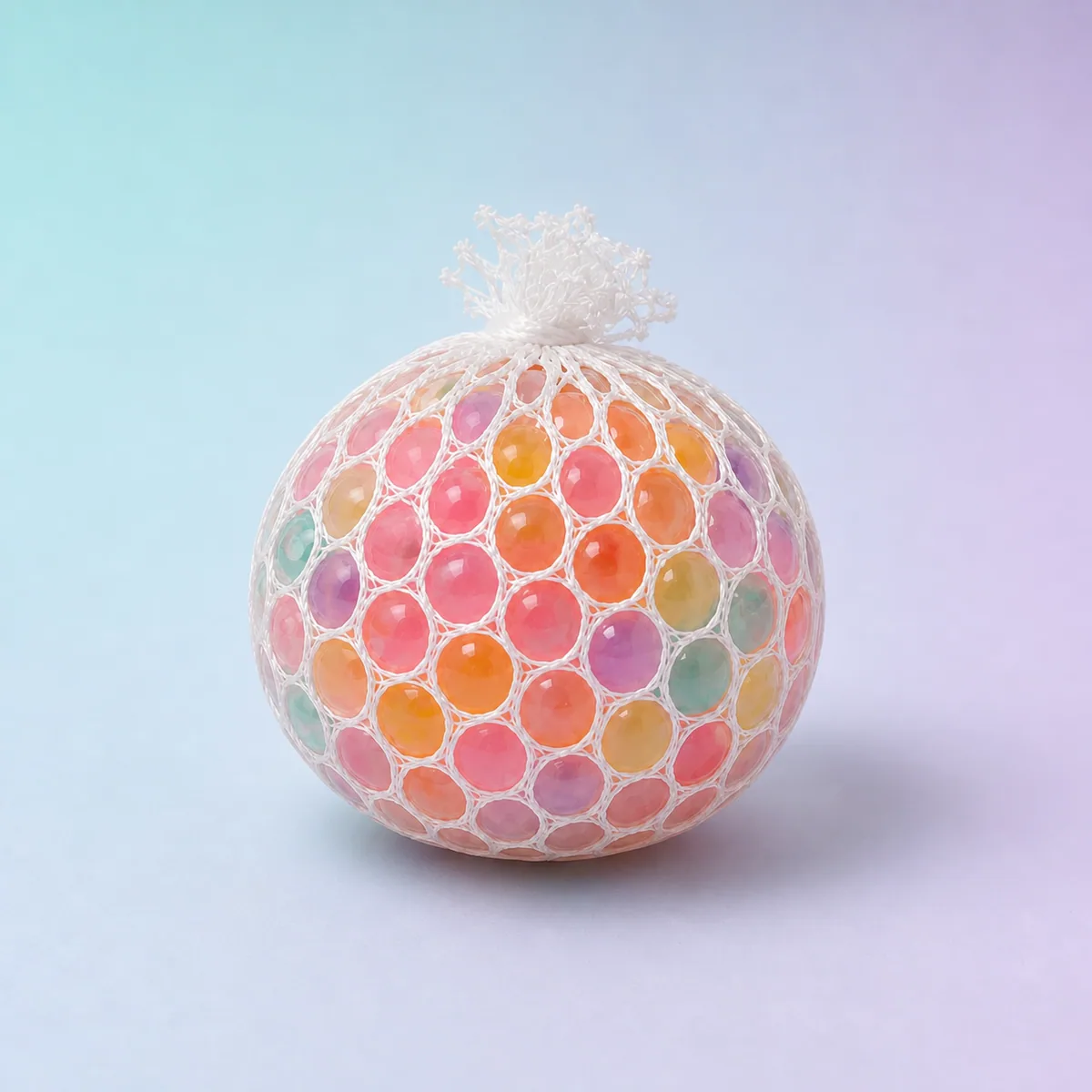
A water-bead stress ball feels grainy, squishy, and moldable, with lots of little beads that bulge and migrate between your fingers before settling back. There is usually a soft membrane or bubble filled with water-absorbent gel beads, held inside a stretchy mesh net, so the surface shifts and reshapes as you squeeze.
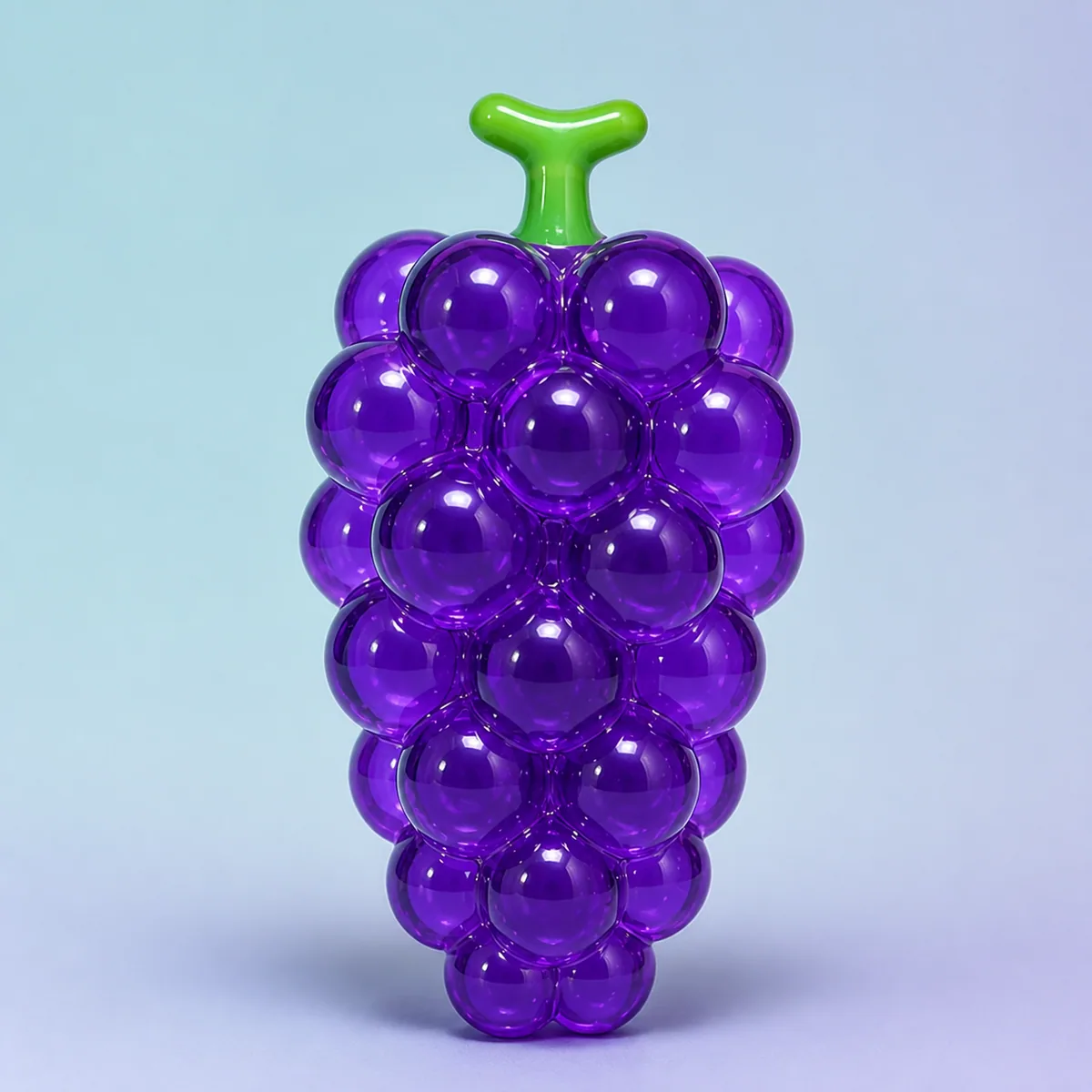
That moving, gravelly texture is the appeal. It gives your fingers a second layer of sensory input beyond plain pressure, which a lot of people find grounding for busy hands and for gently redirecting habits like nail-biting. The Calm Orb Water-Bead Squeeze Ball is our bestselling take, about 6 cm across at $9.99, with beads that bulge through the mesh and settle when you let go. The Bubble Grapes Squeeze Ball turns the same idea into a little cluster of grape-like bubbles you can press one at a time, at $10.99. The honest note here matches the gel balls: do not puncture the mesh or the membrane, and the beads inside are not edible, so keep them away from small children and pets.
What does a flour or dough stress ball feel like?
A flour or dough stress ball feels dense and moldable, and unlike a springy ball it holds the dent or shape you press into it for a moment before you smooth it out again. Instead of bouncing back, it stays, which makes for a slower, heavier, more grounding kind of squeeze.
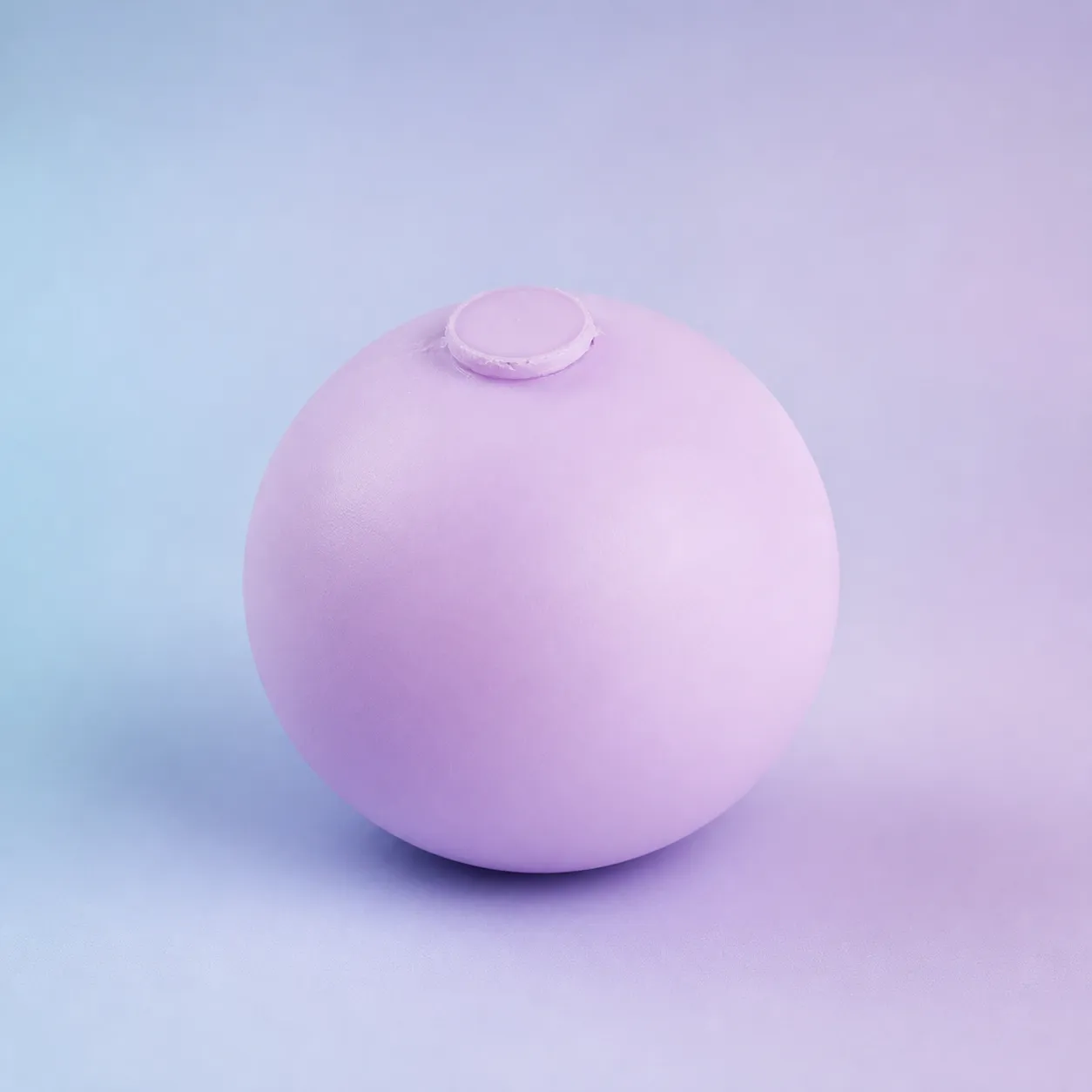
If a springy ball is about quick feedback, a dough ball is about the slow reshape. The Mold & Hold Dough Stress Ball is our version, a soft TPR skin around a flour-style fill, about 6.5 cm and a little weightier at roughly 85 grams, priced at $9.49. That extra density is the point: it pushes back gently and keeps the shape your hand gives it, which many people find calmer than a ball that fights to spring back. The tradeoff is honest and simple. A dough fill will not bounce, it is heavier in a pocket, and, like any skinned ball, it should never be pierced, because the fill is meant to stay inside.
What about firmer rubber, and which material lasts longest?
Firmer solid rubber balls push back the hardest and give the least, which makes them the pick for hand strength and a big, forceful tension release. If you like to really clench and feel resistance, a dense rubber or hand-therapy ball delivers that in a way a soft gel never will. Our own lineup leans soft and quiet instead, so we will point you toward that firmer category honestly rather than pretend a squishy is something it is not.
On durability, here is the plain ranking, with the usual honest caveat. Firmer rubber and solid balls are typically the most rugged. A good gel or TPR skin lasts a long time as long as you never pierce it. Water-bead and dough balls hold up well unless the skin or mesh is punctured. Foam tends to wear or crumble soonest. That said, the fill matters less than your fingernails. The fastest way to end any stress ball is to dig into it with your nails or overstretch it, so squeeze with the pads of your fingers, and keep it away from anything sharp and away from children under three. For what it is worth, every squeeze toy we carry is EN71 tested and made BPA- and phthalate-free, because body-safe materials are the floor, not a feature.
So, which stress ball material should you choose?
Choose by the feeling you want, not by a spec sheet. Reach for foam or firmer rubber if you like a quick, springy squeeze or want a little hand strengthening. Reach for gel or TPR if you want a soft, smooth, slow give. Reach for water-bead if you love a grainy, shifting texture, and for dough if you want a slow squeeze that holds its shape.
And if you are not sure, trust your hands over any table. If a texture sounds appealing just reading about it, that is a real signal worth following. A stress ball is a supportive tool for tense, restless hands, not a treatment, so if stress is regularly getting in the way of your days, let a squeeze sit alongside support from a doctor or therapist rather than in place of it. Otherwise, pick the fill that makes your hands want to reach for it again, and let it be that simple. Calm in the palm of your hand.
Sources & further reading
We reference trusted organizations by name. This article is informational and not a substitute for professional medical advice.
- ASTM International: Publishes the F963 toy-safety standard used to test materials, small parts, and chemical limits in stress and fidget toys.
- European Committee for Standardization (EN 71): Maintains the EN 71 European toy-safety standard covering toy materials, small parts, and chemical limits; our squeeze balls are EN71 tested.
- U.S. Consumer Product Safety Commission: Sets and enforces US toy-safety and phthalate rules for children's products, including squeezable toys.
- American Occupational Therapy Association: Describes sensory and fidget tools as supportive self-regulation aids that should be matched to the individual.
- Child Mind Institute: Frames sensory tools as supportive aids and emphasizes professional support for anything diagnosable.
Frequently asked questions
What is the best material for a stress ball?
There isn't one best material. The right fill depends on the resistance and feel your hands prefer: a soft, slow squeeze points you toward gel, water-bead, or dough, while quick, springy feedback or hand strength points you toward foam or firmer rubber. Match the material to your hands and the moment, not to a spec sheet.
What are stress balls filled with?
Common fills include polyurethane foam, soft gel with a stretchy TPR skin, water-absorbent gel beads inside a mesh, a flour-style dough, and solid or firmer rubber. Each gives a different resistance and texture, from featherlight foam to dense, push-back rubber.
Which stress ball material is the most durable?
Firmer rubber and solid balls are usually the most rugged, and a good gel or TPR skin lasts a long time if you never pierce it. Foam tends to wear or crumble soonest. Honestly, durability depends more on your fingernails than on the fill: squeeze with the pads of your fingers, not your nails.
What is TPR, and is it safe?
TPR is thermoplastic rubber, a soft, stretchy, skin-safe material used for the outer skin of many squeeze balls. Our squeeze toys are EN71 tested and made BPA- and phthalate-free. As with any small toy, keep it away from mouths and children under three.
Which stress ball material is quietest for an office?
Gel, TPR, water-bead, and dough fills are essentially silent, since there is nothing inside to click or rattle. Our squeeze balls, like the Calm Orb Water-Bead Squeeze Ball and the Mold & Hold Dough Stress Ball, are silent and easy to use one-handed at a desk.