Infinity cube vs. click cube: what is the difference?
An infinity cube gives you one continuous folding motion, blocks flipping end over end forever, while a click cube gives you several separate, discrete inputs: buttons, a dial, a switch, each with its own small click. The two toys get lumped together as “cube fidgets” because they are both palm-sized cubes, but the motion inside them is close to opposite: one loop that never stops, against several small stops you choose between.
That difference decides more than it sounds like it would. A continuous fold suits a hand that wants one repeatable motion to settle into. A set of separate buttons suits a hand that wants variety, or that specifically likes the sound and feel of a click. Neither shape is better on its own; the right one depends on whether your hand wants to repeat the same small action or move between a few different ones without putting the toy down.
How does an infinity cube actually move?
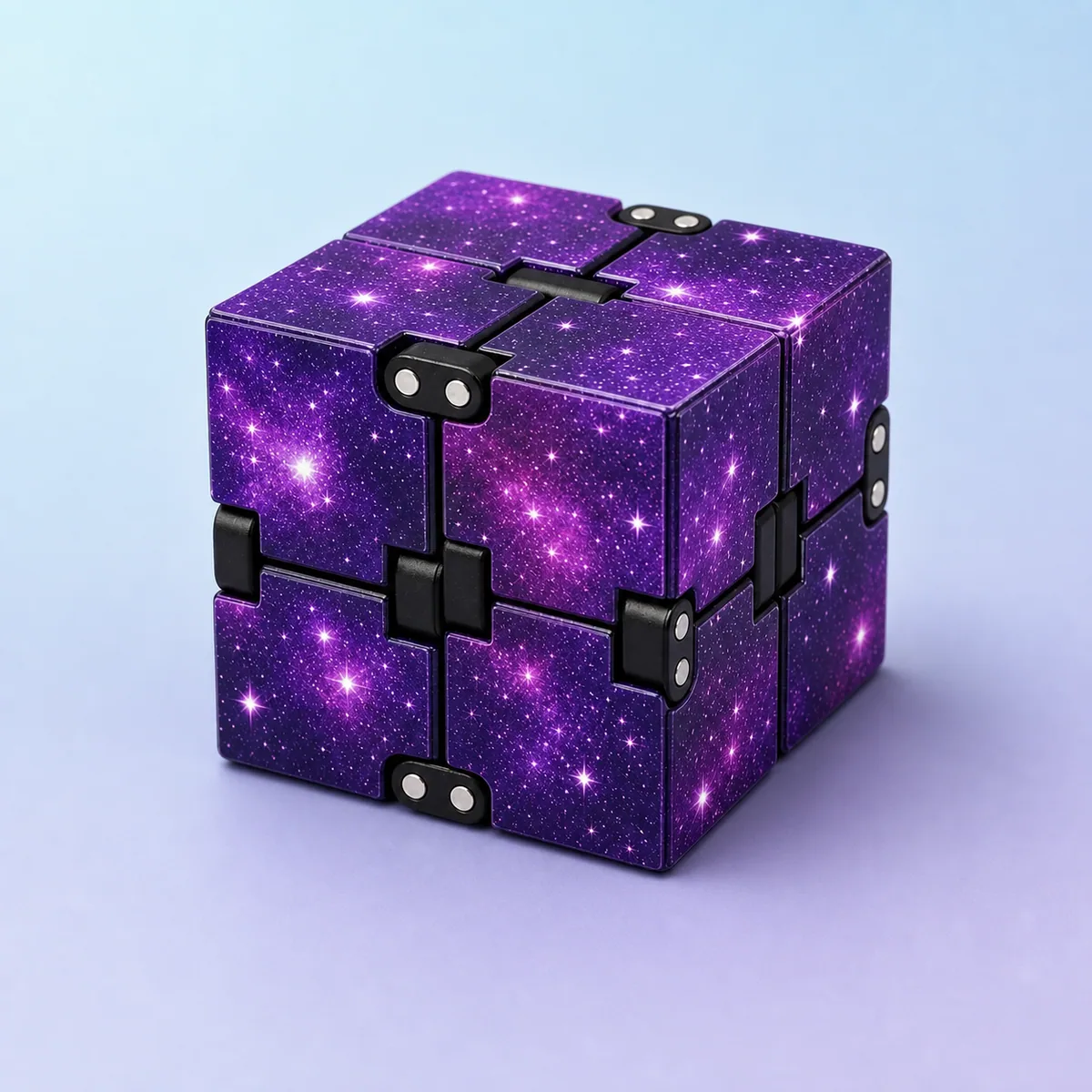
Infinity Flip Cube is eight small ABS blocks joined by fabric-tape hinges, arranged so that folding it in one direction opens a new fold in the next, which is why it can flip end over end without ever reaching a stop. There is a soft, papery sound to each fold, more of a flip than a click, and the motion itself takes almost no attention once your fingers learn the fold line. That is a large part of why people use it while thinking about something else entirely: a call, a lecture, a long line.
The blocks themselves are firm rather than squeezable, so the feel is closer to handling a small mechanical puzzle than to squishing something soft. That firmness is useful information if you were expecting a squishy-style give; an infinity cube is a folding motion, not a squeeze, and the two feel nothing alike in the hand.
How does a click cube compare, and is it louder?
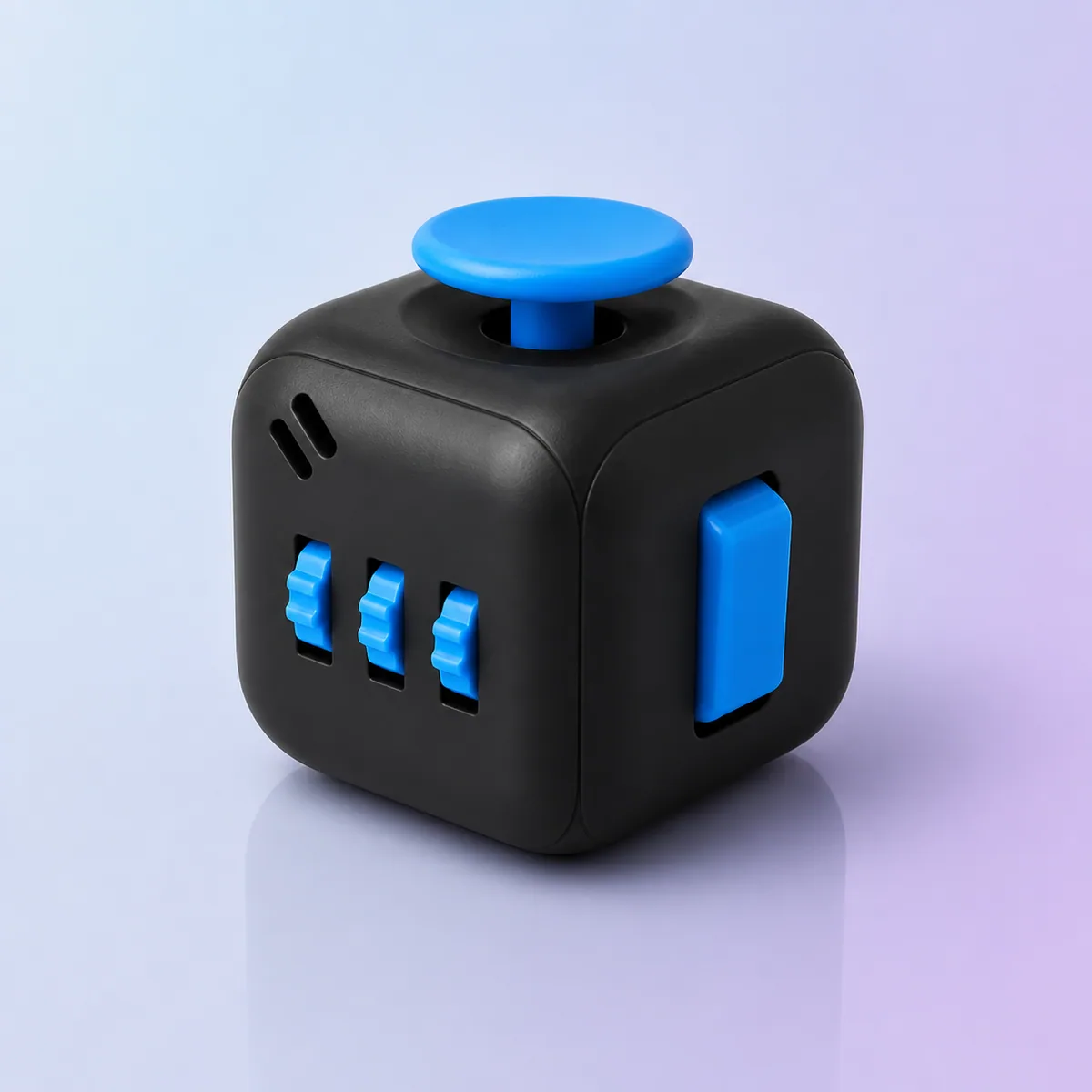
Yes, noticeably. Click-Cube Focus Fidget packs six sides of separate inputs, buttons, a smooth dial, and a glide switch, into one ABS-and-silicone cube, and each button gives a real, audible click when it presses. That click is the entire appeal for some hands: a repetitive, tap-like input is a common way people seek out sound and feel on purpose, not unlike drumming fingers or tapping a pen without meaning to. For other hands, in other rooms, that same click is the reason a click cube stays in a bag instead of coming out.
The six sides are not identical either, which is part of the design. A button gives a short, decisive press. The dial gives a slower, rolling turn under the thumb. The glide switch gives a small back-and-forth slide. Having three different actions on one cube means restless fingers can move from one to another instead of wearing out a single motion, which is a real advantage over a toy with only one thing to do.
Where do the keyboard fidget and the mesh marble fit in?
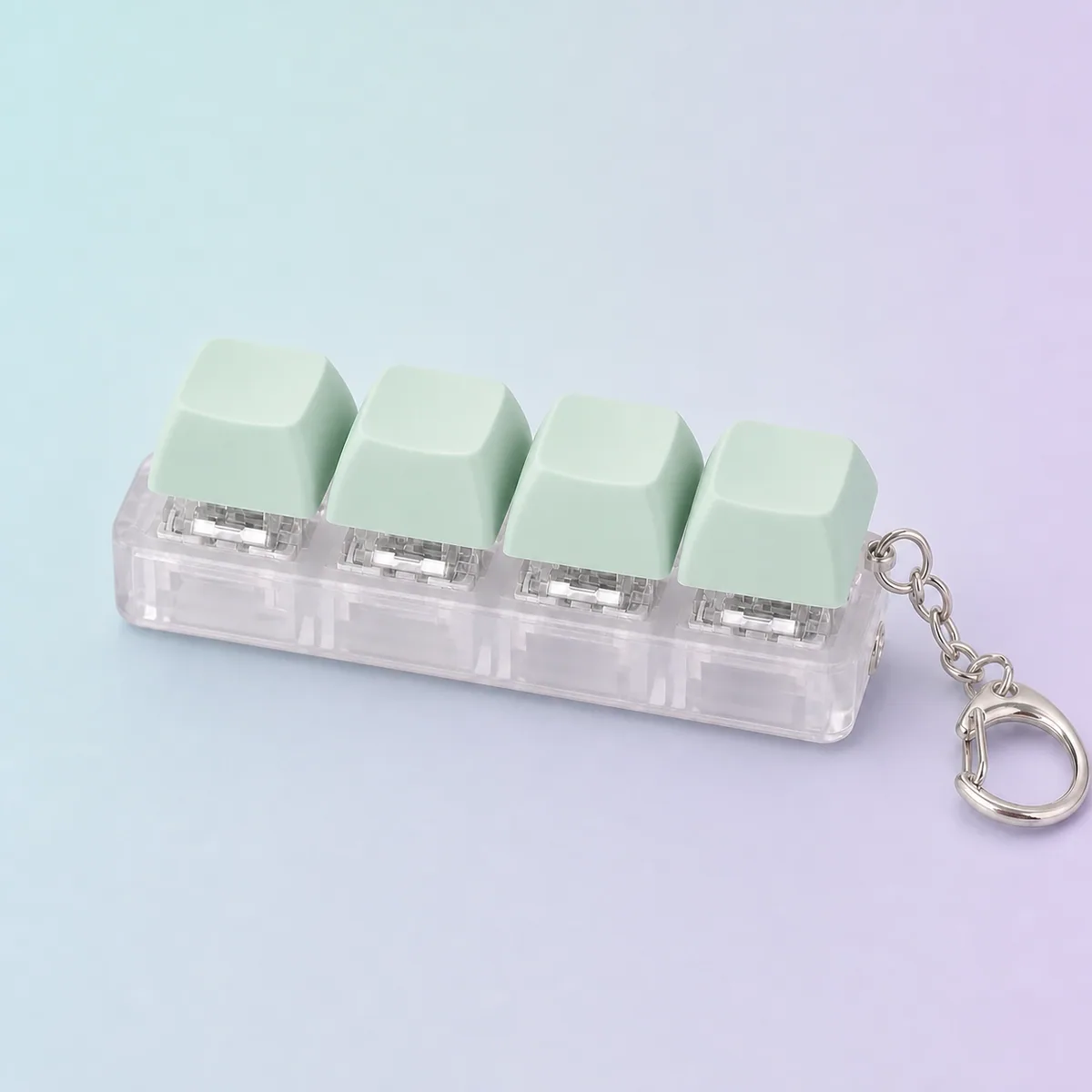
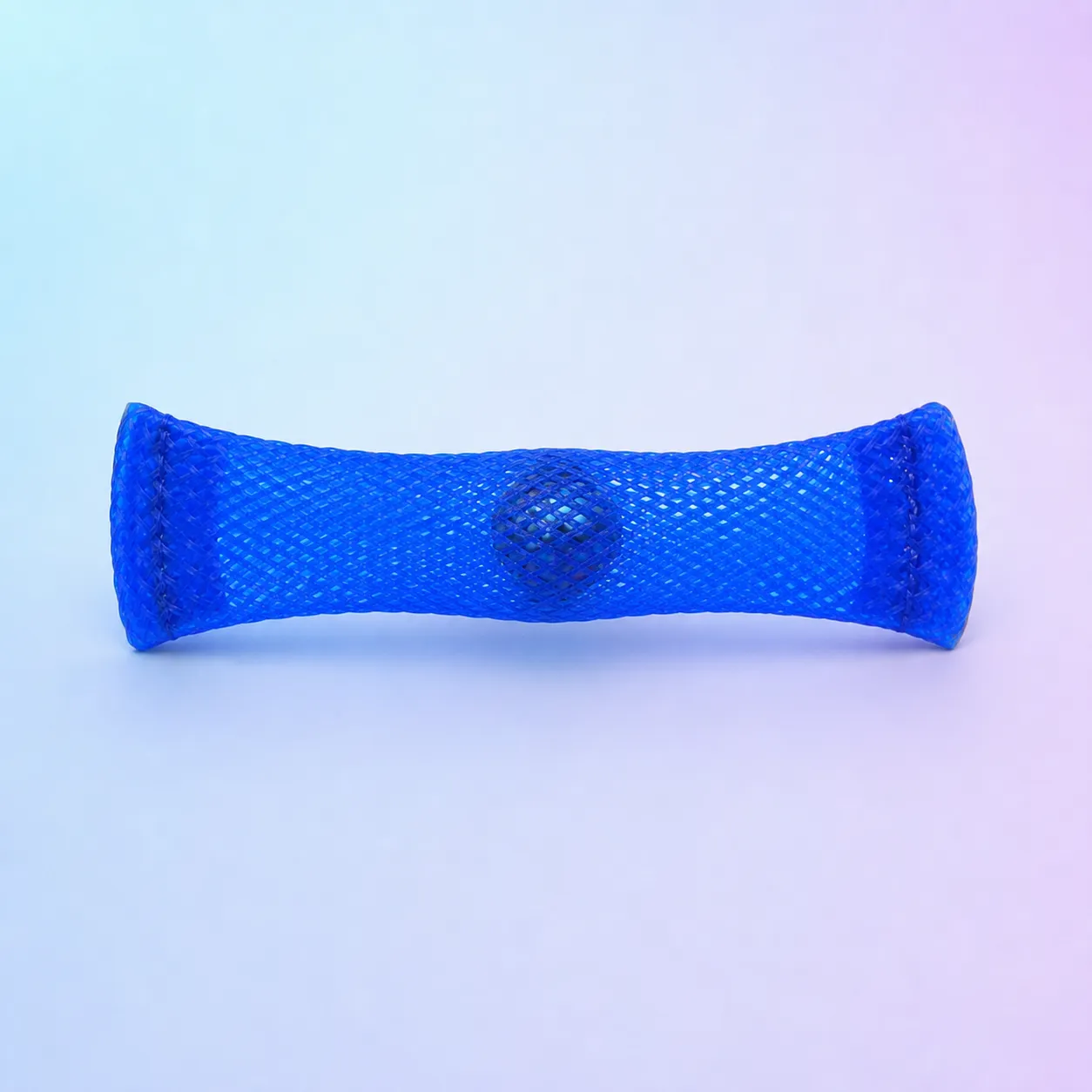
They sit at the two far ends of the noise scale. Clicky Keys Keyboard Fidget uses four real mechanical keyboard switches under ABS keycaps, so it produces the loudest, crispest click of the four, built for hands that specifically miss that keyboard feel and do not mind being heard. Roll & Squeeze Mesh Marble Fidget is the quiet opposite: one glass or acrylic marble inside stretchy nylon mesh, pushed, rolled, and squeezed rather than clicked, with no moving parts to make noise at all. The mesh gives just enough resistance that the marble stays put between squeezes instead of rolling away, so the motion is a slow, contained roll under one or two fingers rather than a full-hand grip.
Cube and pocket fidgets, compared
| Fidget | Motion | Noise | Best for |
|---|---|---|---|
| Infinity Flip Cube | Continuous folding loop | Soft flip, no click | A steady, repeatable motion in any room |
| Click-Cube Focus Fidget | Several separate button, dial, and switch inputs | Audible click | Hands that want variety and like the click |
| Clicky Keys Keyboard Fidget | Four mechanical keyswitch presses | Loudest, crisp click | A keyboard-style click, away from quiet rooms |
| Roll & Squeeze Mesh Marble Fidget | Roll, push, and squeeze | Silent | Silent rooms, meetings, and shared spaces |
Which one is wrong for a quiet room, or for a hand that wants more input?
Click-Cube Focus Fidget and Clicky Keys Keyboard Fidget are the wrong pick for a silent exam hall, a library, or a shared bedroom. Both are built around a real, audible click, and that click carries further than people using them tend to expect. Roll & Squeeze Mesh Marble Fidget or Infinity Flip Cube are the safer choice in those rooms, since neither one clicks. Flip the question around and the answer flips too: a hand that specifically wants more auditory or tactile input, the kind of hand that already taps pens and drums on a desk without meaning to, is often the one that finds the quiet infinity cube or mesh marble too subtle to hold its attention, and does better with the click cube or the keyboard fidget instead.
Fine motor control matters here too, more for the buttons than the fold. Pressing a small button precisely, rather than just mashing it, takes more finger control than folding a larger block, and that kind of precise finger coordination keeps developing through early childhood. For a younger child’s hands, the bigger, simpler fold of an infinity cube or the broad squeeze of a mesh marble is usually the easier place to start, with the click cube and the keyboard fidget better saved for older hands that already want the extra sound.
Pick the motion that matches the room and the hand, not just the shape of the cube. Calm in the palm of your hand, click or no click.
Sources & further reading
We reference trusted organizations by name. This article is informational and not a substitute for professional medical advice.
- National Autistic Society: Describes how some autistic people actively seek out intense sensory input, such as tapping or banging objects for auditory feedback, as part of a broader hyper- or hypo-sensitivity pattern.
- Autistic Self Advocacy Network: An advocacy organization run by autistic people that describes stimming, including rocking, playing with the hands, or humming, as a way of regulating the senses.
- American Academy of Pediatrics: Describes typical fine motor milestones in early childhood, including how the precise finger control needed for small, deliberate presses develops over time.
Frequently asked questions
What is the difference between an infinity cube and a click cube?
An infinity cube folds end over end in one continuous loop with a soft flip sound, while a click cube offers several separate buttons, a dial, and a switch, each with its own audible click. One is a single repeating motion, the other is a handful of small, distinct inputs to choose between.
Which pocket fidget is the quietest?
Roll & Squeeze Mesh Marble Fidget is silent, since it works by rolling and squeezing a marble inside mesh rather than clicking anything. Infinity Flip Cube is close behind, with only a soft flipping sound and no click at all.
Is a click cube too loud for a classroom or an exam?
It can be. Click-Cube Focus Fidget and Clicky Keys Keyboard Fidget both make a real, audible click that carries further than most people using them expect, so a silent exam hall or a quiet classroom usually calls for the infinity cube or the mesh marble instead.
Why would someone want a louder fidget on purpose?
Some hands specifically look for that kind of tapping, clicking input, the same instinct behind drumming fingers or clicking a pen without meaning to. For those hands, a quiet infinity cube or mesh marble can feel too subtle to hold attention, and a click cube or keyboard fidget gives more to work with.
What is Clicky Keys Keyboard Fidget, and how is it different from a click cube?
Clicky Keys Keyboard Fidget uses four real mechanical keyboard switches under keycaps, built to recreate the specific crisp click of typing rather than a general button press. It is louder and more textured than Click-Cube Focus Fidget's buttons, dial, and switch, and it suits someone who misses that exact keyboard feel.
Are cube fidgets hard for a young child to use?
The fold of an infinity cube is a large, simple motion that most hands pick up quickly. Pressing a small button precisely, rather than mashing it, takes more fine finger control, which keeps developing through early childhood, so a younger child's hands often find the fold or the mesh marble's squeeze easier than the buttons.