How do you introduce a fidget toy to a classroom?
Start with a short, plain conversation, not a surprise object pulled out of a backpack mid-lesson. Tell the child, and the teacher, what the object is for in one sentence: it is something for the hands so the rest of the brain can listen. Pick something quiet enough that the kid at the next desk would not notice it. Agree on where it lives when it is not in use, a pencil case, a desk corner, a pocket, so it does not become one more thing to lose or fight over.
That is the whole plan. Most of what follows is detail on getting each piece right.
Why the object you choose matters
CHADD, the national ADHD nonprofit, draws a distinction worth borrowing wholesale: a fidget tool is discreet and regulatory, something the hands do quietly while attention stays on the lesson, while a fidget toy is entertaining and built to be noticed, more likely to become a small performance for whoever is sitting nearby. The same physical object can be either, depending on how it gets used and how much sound it makes. A worry stone rubbed under a desk is a tool. A fidget spinner held up and set spinning on the desktop is a toy, and a classroom of thirty has room for very few toys.
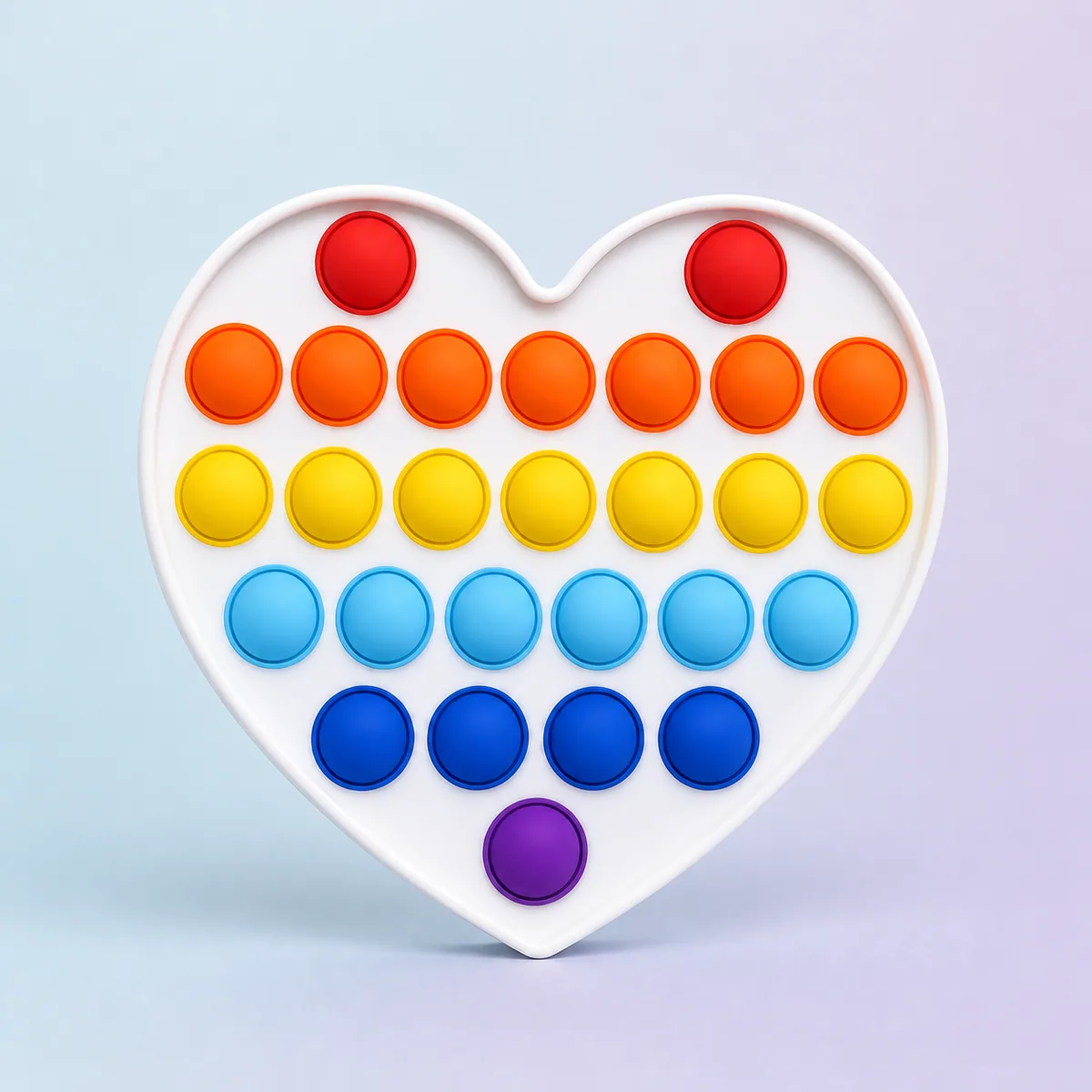
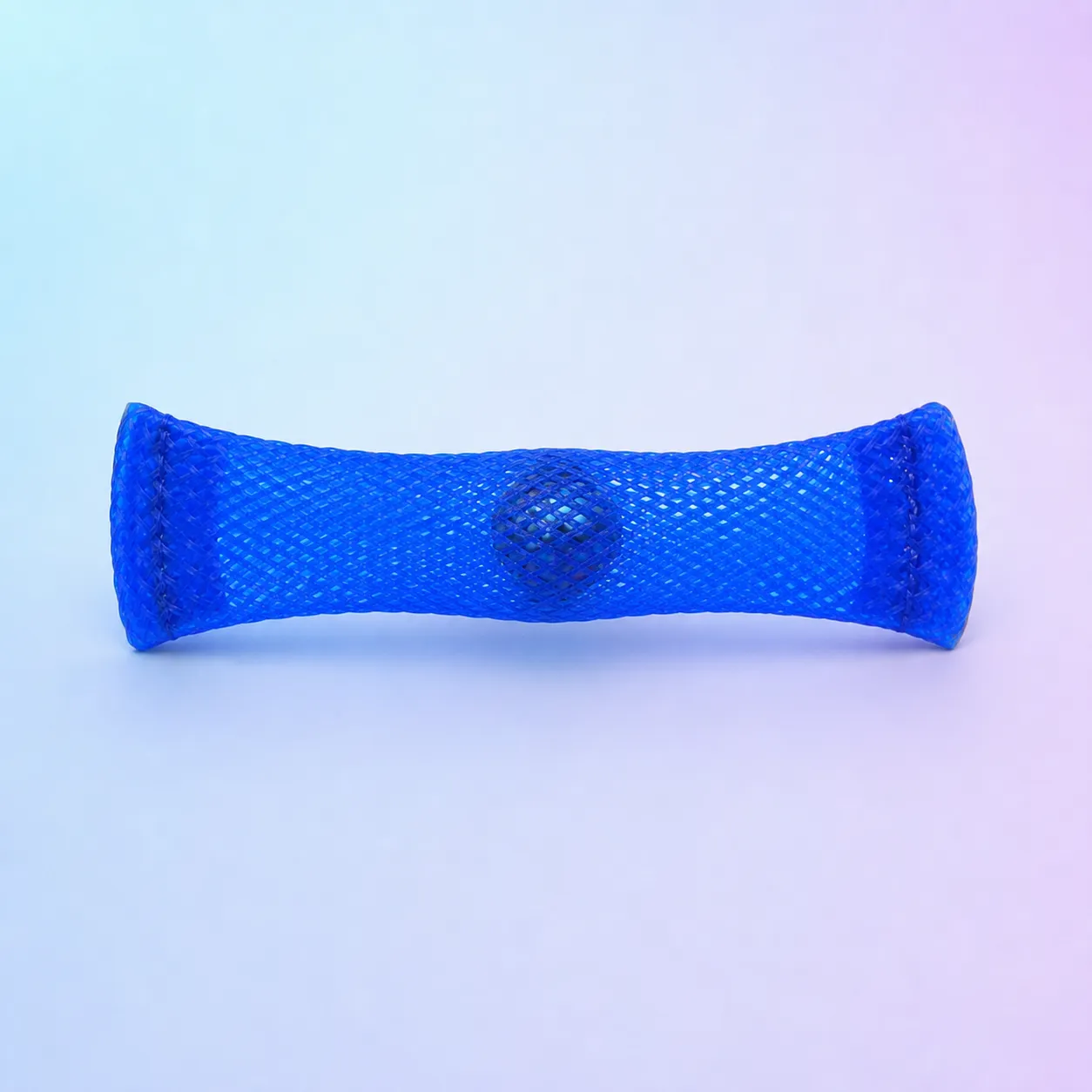
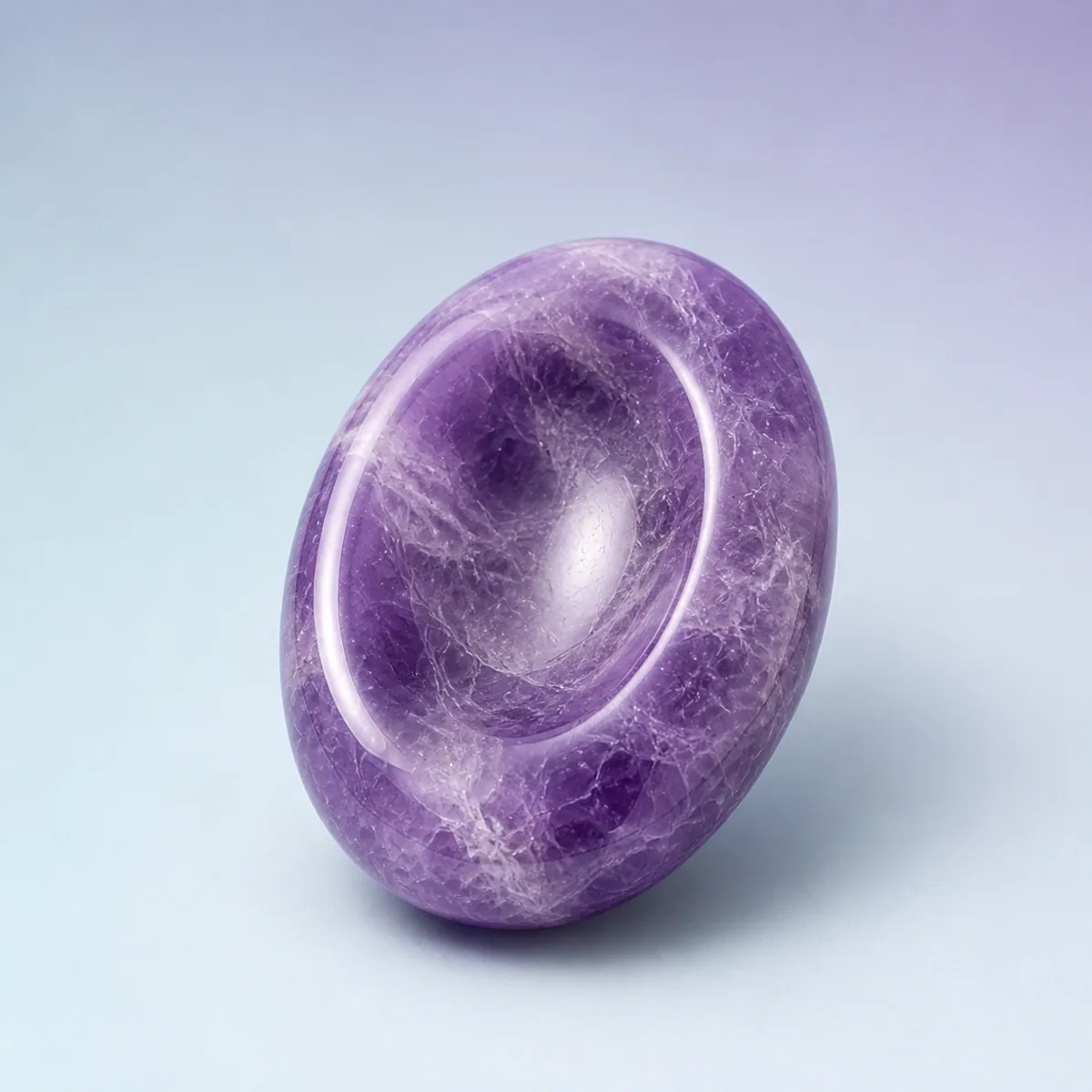
For a first fidget, lean toward the quiet end on purpose, and skip spinners entirely: we do not sell them, and the research below is a large part of why. The Calm Worry Stone asks for nothing but a thumb and a pocket, silent by design. The Roll & Squeeze Mesh Marble Fidget rolls and squeezes without a sound that carries past an arm’s length. The Hush Pop Push-Pop Sensory Board makes a soft, muted press rather than a sharp click, closer to a page turning than a toy going off. Understood.org, a nonprofit that publishes classroom-accommodation guidance, lists offering “a self-regulation tool, like a fidget or sensory object” as one teacher strategy, typically formalized through a student’s IEP or 504 plan, though teachers can also offer one informally.
How do you talk to a class about it?
One honest sentence does most of the work: this is a tool for busy hands, not a toy, and it stays quiet and out of sight unless a teacher says otherwise. Kids pick up on framing fast. Introduce a fidget as a secret weapon or a reward and it becomes a spectacle. Introduce it the way you would introduce reading glasses, a plain, practical thing some people use, and it mostly disappears into the routine.
Loop the teacher in before the first day it shows up, not after a note comes home. A two-line email does most of the work: your child uses a quiet hand fidget for focus, here is what it looks like, here is what you have agreed the rule will be if it stops helping. Most teachers already have their own version of this conversation on file, since fidget tools are common enough now that a plain, upfront heads-up rarely comes as a surprise.
What does the research say about kids and fidgeting?
Thinner than most classroom fidget guides let on, and worth being honest about. A 2023 review in Intervention in School and Clinic, by Kriescher, Hulac, Ryan and King, weighed the existing literature against sensory-processing and cognitive-load theory and concluded there is not yet sufficient evidence to support fidget toys as a classroom intervention. That is the fair starting point: not proof they help, not proof they hurt, a genuine open question.
The one classroom-based study that comes closest to testing the idea directly is a small, dated pilot: Stalvey and Brasell (2006) gave stress balls to 29 sixth-graders in a rural Georgia language-arts class, observed for three weeks beforehand and seven weeks during use. Distraction incidents fell during direct instruction and independent practice, and writing-paragraph scores improved overall, but the study had no control group, and students often could not squeeze the ball and write at the same time, so use dropped off during independent writing specifically. It is encouraging and narrow at once, not the randomized proof a busy parent or teacher might hope for.
Where the evidence turns genuinely negative is fidget spinners specifically. Graziano, Garcia and Landis gave spinners to 60 young children with ADHD during an intensive behavioral program and found spinner use tied to poorer attention throughout the study, not better, even within interventions already built on evidence-based strategies. A separate 2015 study in the Journal of Abnormal Child Psychology, by Sarver and colleagues, found boys aged 8 to 12 with ADHD showed better, though not normalized, working-memory performance with more movement, while the same restlessness predicted somewhat worse performance in typically developing boys, with no change in attention for either group. Put together, the honest summary is: the review board calls the general evidence insufficient, the one classroom trial is small and mixed, and spinners specifically underperform. That is exactly why this store does not carry them, and why the safer bet is small, quiet, low-visual objects instead.
Setting the classroom rules
A few plain rules keep a fidget from turning into a classroom management problem before it has had a fair try.
- Silent or near-silent only. Save anything with a click, a pop, or a spin for home.
- One object, one home. A pencil case or desk corner it always returns to, so it is not being dug for or dropped.
- Under the desk, not on it. Hands can do the work without eyes needing to follow.
- Not for sharing or trading. A fidget that circulates the room stops being a quiet tool and starts being a distraction for everyone.
- A teacher can ask for a pause. If it is genuinely pulling focus in a specific moment, it goes away for that moment, no argument.
Which fidget fits which classroom moment?
| Moment | Good pick | Why |
|---|---|---|
| Independent reading or a test | Calm Worry Stone | Silent, one motion, nothing to watch |
| Listening to a lecture or discussion | Roll & Squeeze Mesh Marble Fidget | Quiet rolling motion, keeps eyes forward |
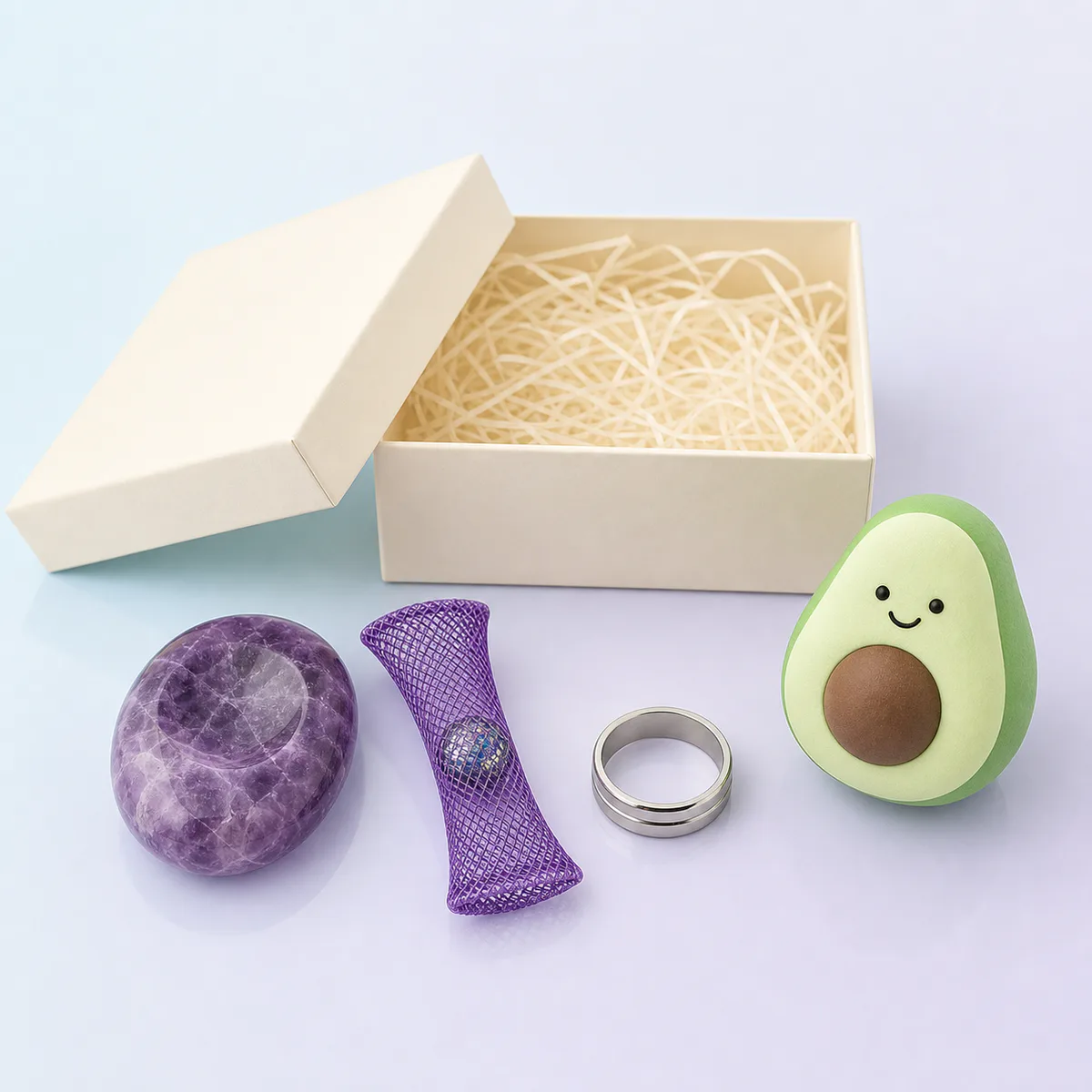
| A long study block at home | The Exam Calm Kit | Four near-silent tools to find what actually helps |
| Transitions between subjects | Hush Pop Push-Pop Sensory Board | A soft, muted press, good for a short reset |
If it stops helping
Sometimes a fidget that worked in September stops working by November, and that is not a failure. It is useful information. If a teacher notices it drawing looks from other kids, or a child seems more focused on the object than the lesson, that is the moment to switch to something quieter or smaller, not to give up on the idea. A starter kit like the Exam Calm Kit exists for exactly that kind of trial and error, since the right object varies from one kid, and one classroom, to the next. If focus or behavior concerns run deeper than any object can fix, a teacher, the school’s support staff, or a pediatrician is the better next step, not another fidget.
Whatever you land on, the goal stays modest: a quiet, repeatable thing for the hands, so the rest of a kid gets to pay attention to the room. Calm in the palm of your hand, small enough to disappear under a desk.
Sources & further reading
We reference trusted organizations by name. This article is informational and not a substitute for professional medical advice.
- CHADD: Draws a practical distinction between a fidget tool (discreet, regulatory) and a fidget toy (entertaining, distracting), advising that only the former suits focus-heavy settings like a classroom, and notes that spinners and cubes have become classroom management problems in practice.
- Understood.org: Nonprofit publishing parent and educator guidance on ADHD and learning-difference classroom accommodations, including offering a fidget or sensory object, typically formalized through an IEP or 504 plan.
- Journal of At-Risk Issues: Published Stalvey and Brasell's 2006 pilot study of 29 sixth-graders using stress balls during instruction, a small single-class study with no control group.
- Journal of Attention Disorders: Published Graziano, Garcia and Landis's study of 60 young children with ADHD in which fidget spinner use was associated with poorer attention throughout the study period.
- Intervention in School and Clinic: Published Kriescher, Hulac, Ryan and King's 2023 review concluding there is not yet sufficient evidence to support fidget toys as a classroom intervention.
- Journal of Abnormal Child Psychology: Published Sarver and colleagues' 2015 study of boys aged 8 to 12 finding that higher activity levels predicted better, though not normalized, working-memory performance in boys with ADHD, while the same movement predicted somewhat lower performance in typically developing boys.
Frequently asked questions
How do you introduce a fidget toy to a classroom?
With a short, plain conversation rather than a surprise object: explain in one sentence that it is a tool for busy hands, choose something quiet, and agree on where it lives when it is not in use. Loop the teacher in ahead of time so the first time they see it is not a surprise either.
What fidget toy works best for a classroom?
Something silent or nearly silent that does not need to be watched, since that is what keeps it a tool rather than a toy. The Calm Worry Stone and the Roll & Squeeze Mesh Marble Fidget are both good starting points because neither makes a sound that travels past the desk.
Should teachers allow fidget toys in class?
Many already do, especially for a quiet, discreet object with an agreed set of rules. CHADD frames these as fidget tools when they are used this way, distinct from fidget toys, which are entertaining and more likely to distract the user or their neighbors.
Do fidget toys actually help kids focus in school?
The evidence is mixed and depends heavily on the child and the object. One study found movement predicted better working-memory performance specifically in boys with ADHD, while another found fidget spinners tied to worse attention in young children with ADHD, so the honest answer is that it varies and is worth trying rather than assuming.
What rules should a classroom set for fidget toys?
Keep it silent or nearly silent, give it one home like a pencil case or desk corner, keep it under the desk rather than on top of it, and do not let it circulate between kids. A teacher should also be able to ask for a pause if it becomes distracting in a specific moment.
What if a fidget toy becomes a distraction instead of a help?
That is common and not a sign the idea failed. Switch to something quieter or smaller, since the goal is a tool the hands can use without pulling the eyes, or the rest of the class, along with it.