How do you flip an infinity cube one-handed?
Rest the cube in your palm with a hinge line across the middle, push the top half over with your thumb, let the halves settle flat, and push again in the same direction. That is the whole technique. The fingers catch and steady; the thumb folds. After a day or two of idle practice the motion runs on its own, and you stop looking at it, which is when an infinity cube becomes useful rather than merely interesting.
Most people start with two hands and a lot of attention, turning the cube like a puzzle. There is nothing to solve and nowhere to finish, and the one-handed version is what makes it a fidget: something the hand can do while the rest of you reads, listens, or waits.
What is an infinity cube, exactly?
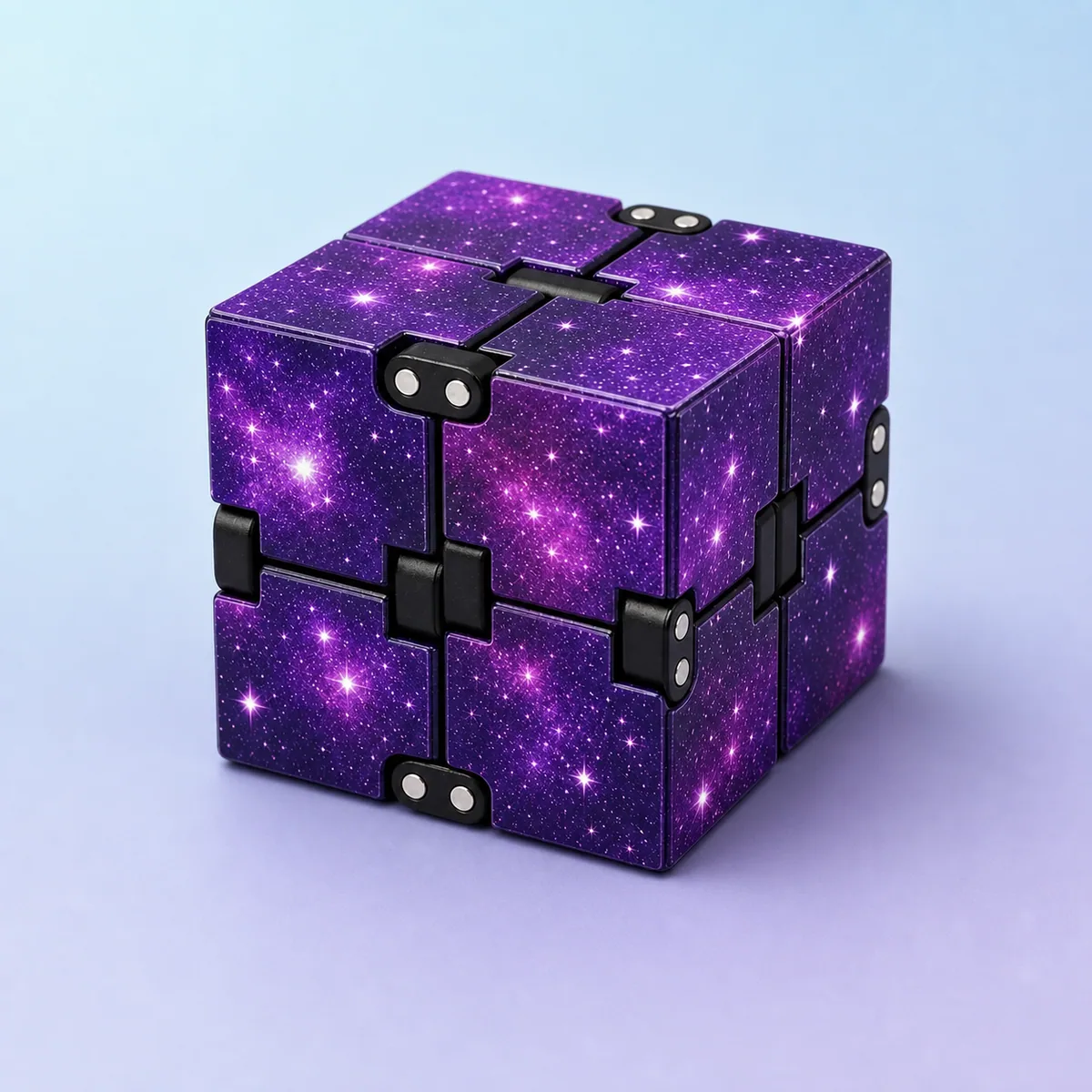
An infinity cube is eight small blocks joined by hinges into a ring, so that the cube folds end over end without ever reaching a final position. Fold it and a new pair of faces comes to the top; fold again and another hinge is ready. Forward forever, or back the way you came. Ours is eight ABS blocks on fabric-tape hinges, about four centimeters folded, light enough to forget in a pocket.
The appeal is the loop. A stress ball gives you squeeze and release; a spinner ring gives you a roll; an infinity cube gives you a fold that feeds into the next fold, smooth and low-effort, with no decision to make. People who like it tend to like it a lot, because the motion has a rhythm you can settle into.
The one-handed technique, step by step
- Find the hinge line. Hold the cube loosely in your palm and turn it until you can see a seam running straight across the middle, splitting it into two halves of four blocks. That seam is the hinge you will fold on.
- Thumb on top, fingers underneath. Rest the bottom half against your curled fingers and lay your thumb across the top half. Hold it loosely; a tight grip stops the blocks moving.
- Push, don’t lift. Press the top half away from you with your thumb. It will tip over the hinge and fold down onto the far side of the bottom half. Let it fall into place; do not try to place it.
- Let it settle. For a beat the cube is a flat slab of two halves. Your fingers catch it and square it up. This is the moment beginners rush.
- Push again, same direction. A new hinge line is now across the top. Push the new top half over with your thumb. Repeat. That is the loop.
- Reverse when you like. Push toward you instead of away and the cube folds back the other way. Either direction runs forever.
The first afternoon you will look at it constantly. By the second or third day the thumb knows where the hinge is before your eyes do, and that is the point: a fidget you have to watch is a distraction, and a fidget your hand runs by itself is company.
How loud is it, honestly?
Quiet, with a soft click. Each fold ends with a low click as the faces meet, and the sound of a steady loop is a gentle tick, tick, tick. In an office, a lecture hall, a waiting room, or on a train, nobody will notice. In a silent exam hall, a library reading room, or next to a sleeping partner, they will.
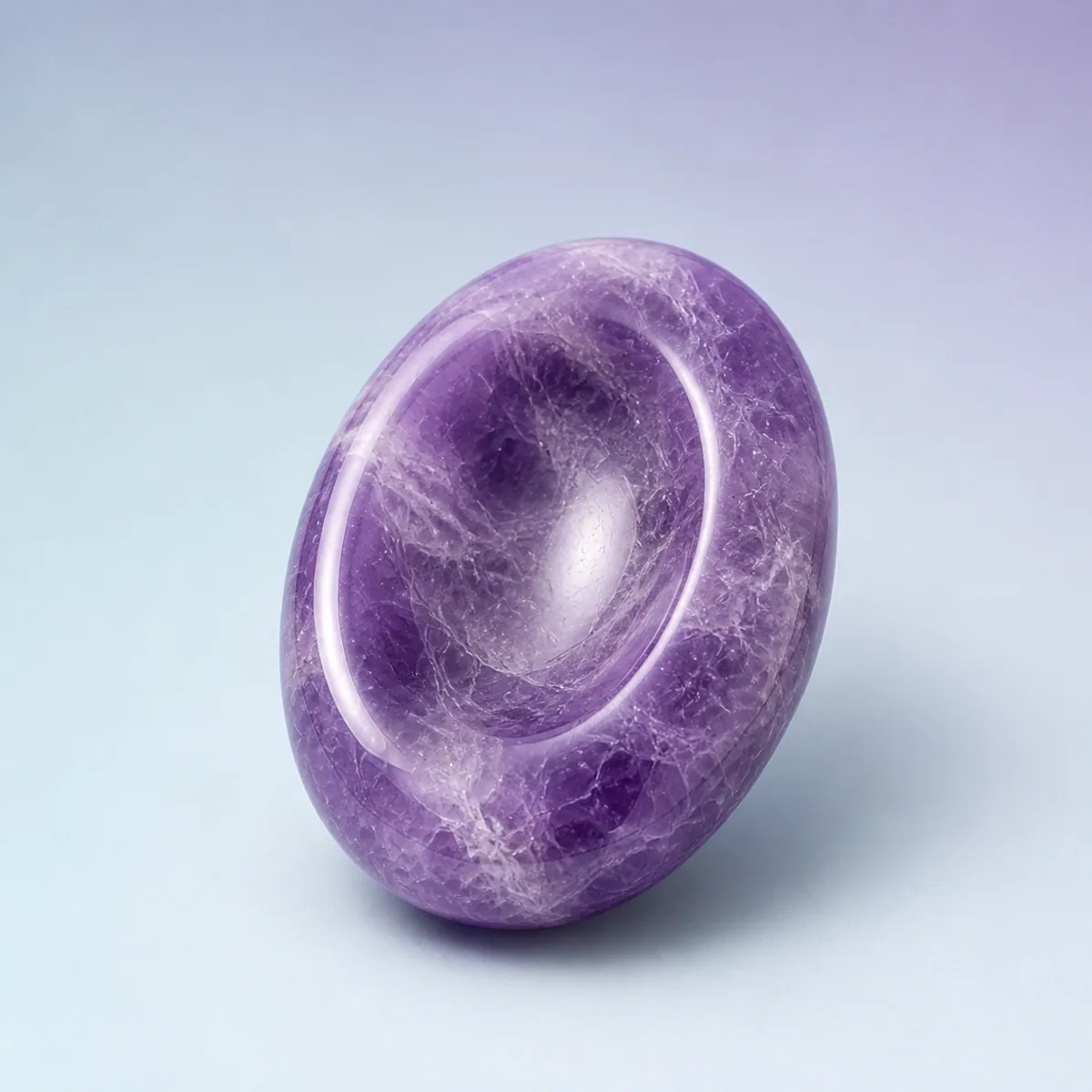
We say this on the product page too, because it is the one real tradeoff. If your fidget has to make no sound at all, choose a foam squishy or a worry stone; both are genuinely silent. If a soft click is acceptable where you use it, the infinity cube gives a smoother, more continuous motion than either.
Is an infinity cube good for focus?
For many people, yes, in the everyday sense that a smooth, repeating task for the hands makes it easier to stay with a long call or a dense page. The fold asks for almost no attention once you have learned it, so it runs in the background while your ears and eyes stay on the work. That is what people report, and that counts.
We will also be straight about the limits. An infinity cube is a supportive focus tool, not a treatment for ADHD or anything else, and the research on fidget tools is mixed. Occupational therapists often describe fidgets as one possible part of a self-regulation toolkit, and that is the honest frame. Try it for a week of meetings and see whether you come out the other side having heard more. Your hands will tell you.
How do you look after one?
Keep water away from the hinges. The blocks are tough; the fabric-tape hinges are the part that wears, and water and grit are what wear them. Wipe the cube with a slightly damp cloth and dry it, and if a hinge feels stiff, work it gently back and forth rather than forcing it. The thing that ends an infinity cube is a drop onto a tile floor, which can split a block or tear a hinge, so keep it in a pocket rather than on the edge of a desk.
Infinity cube, click cube, or chain fidget?
| Infinity Flip Cube | Click-Cube Focus Fidget | Roll & Flip Chain Fidget | |
|---|---|---|---|
| The motion | One endless fold | Buttons, a dial, a glide switch | Roll and flip around a bearing |
| Hands | One | One | One |
| Noise | Soft, low click | Mostly quiet, soft click | Low mechanical sound |
| Best for | Losing yourself in one loop | Hands that like variety | A small, repeatable flip in the pocket |
| Silent option | No | No | No |
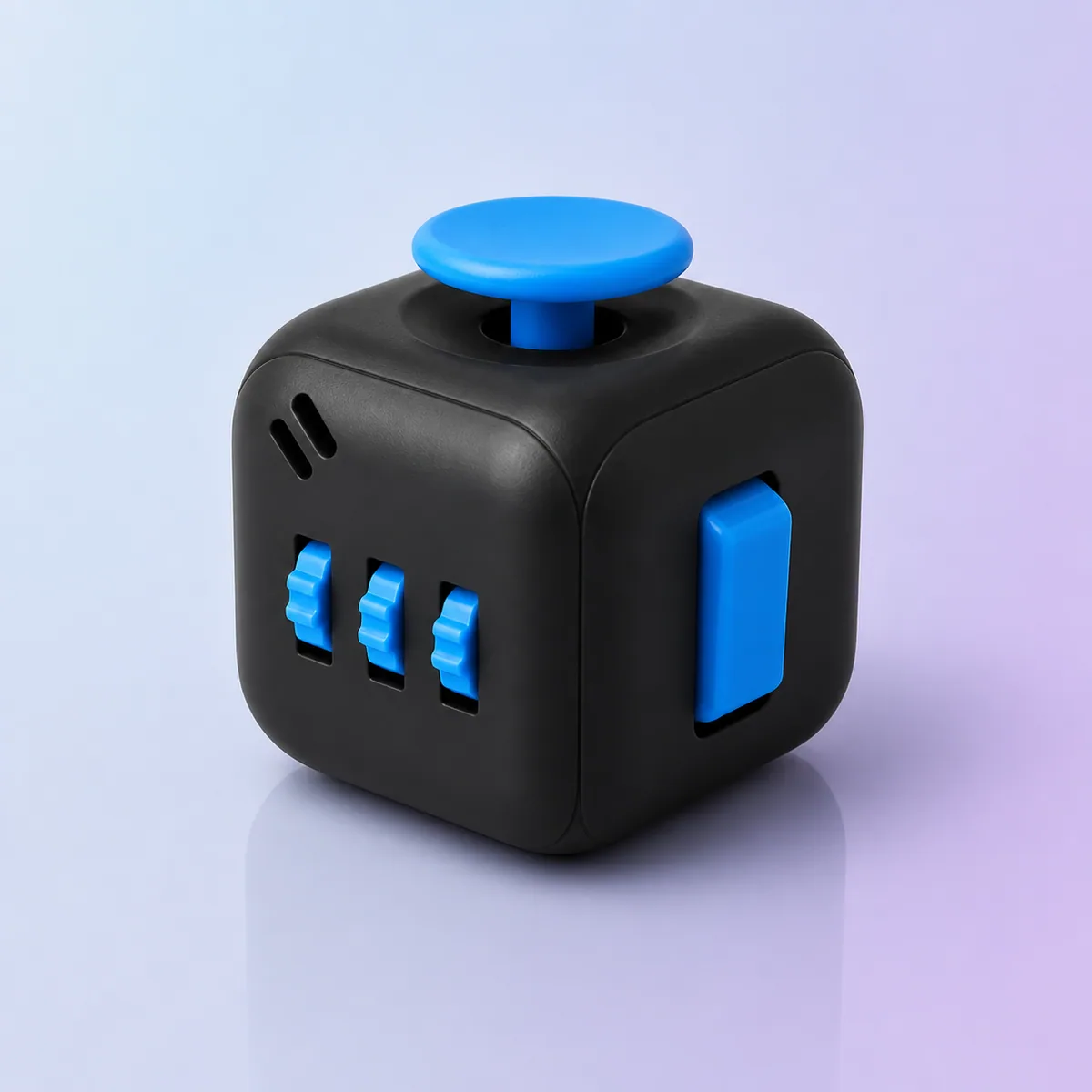
If one smooth loop sounds like your kind of calm, start with the infinity cube and give it three days. If your fingers get bored of a single motion, the click cube offers six. If you want something smaller and more discreet, the chain fidget rolls in a closed fist. None of them is silent, so keep a squishy for the exam hall. Calm in the palm of your hand, one fold at a time.
Sources & further reading
We reference trusted organizations by name. This article is informational and not a substitute for professional medical advice.
- American Occupational Therapy Association: Occupational therapists describe sensory and fidget tools as possible supports for self-regulation and attention, with effects that vary from person to person.
- CHADD: Describes fidget tools as one possible part of a broader self-regulation toolkit rather than a standalone fix.
- Child Mind Institute: Frames sensory and fidget tools as supportive aids and points to professional support for anything diagnosable.
Frequently asked questions
How do you use an infinity cube with one hand?
Rest it in your palm with a hinge line running across the middle. Push the top half over with your thumb so it folds onto the bottom half, let the two settle flat, then push again in the same direction. Your fingers only catch and steady the cube; the thumb does the folding. After a day or two it runs without looking.
Why does an infinity cube never end?
Because the eight blocks are hinged in a ring. Every fold brings a new pair of faces to the top and leaves another hinge ready to fold, so there is no final position. You can fold it forward forever, or reverse and fold it back.
Is an infinity cube quiet?
Quiet, with a soft click. Each fold ends with a low click as faces meet, which is fine for an office, a lecture, or a waiting room and too much for a silent exam hall or a sleeping household. If you need no sound at all, a foam squishy or a worry stone is the better choice.
Is an infinity cube good for focus?
Many people find it is, in the everyday sense: the smooth, repeating fold gives restless hands a job that does not pull attention away from the thing you are listening to or reading. It is a supportive tool, not a treatment for ADHD or anything else, and the research on fidget tools is mixed. Try it for a week and notice whether your attention lasts longer with it.
Why does my infinity cube feel stiff or stuck?
Usually a hinge that has been forced the wrong way or has picked up grit. Work it gently back and forth without forcing it, and wipe the hinge line with a slightly damp cloth, keeping water out of the fabric tape. A drop onto a hard floor is the most common reason a hinge fails for good.
Infinity cube vs fidget cube: what is the difference?
An infinity cube is one motion, the endless fold. A fidget cube, like our Click-Cube, is a box of different small inputs: buttons, a dial, a switch. Choose the infinity cube if you want one smooth loop to lose yourself in, and the click cube if your hands like variety.