What fidget toys work best for older or arthritic hands?
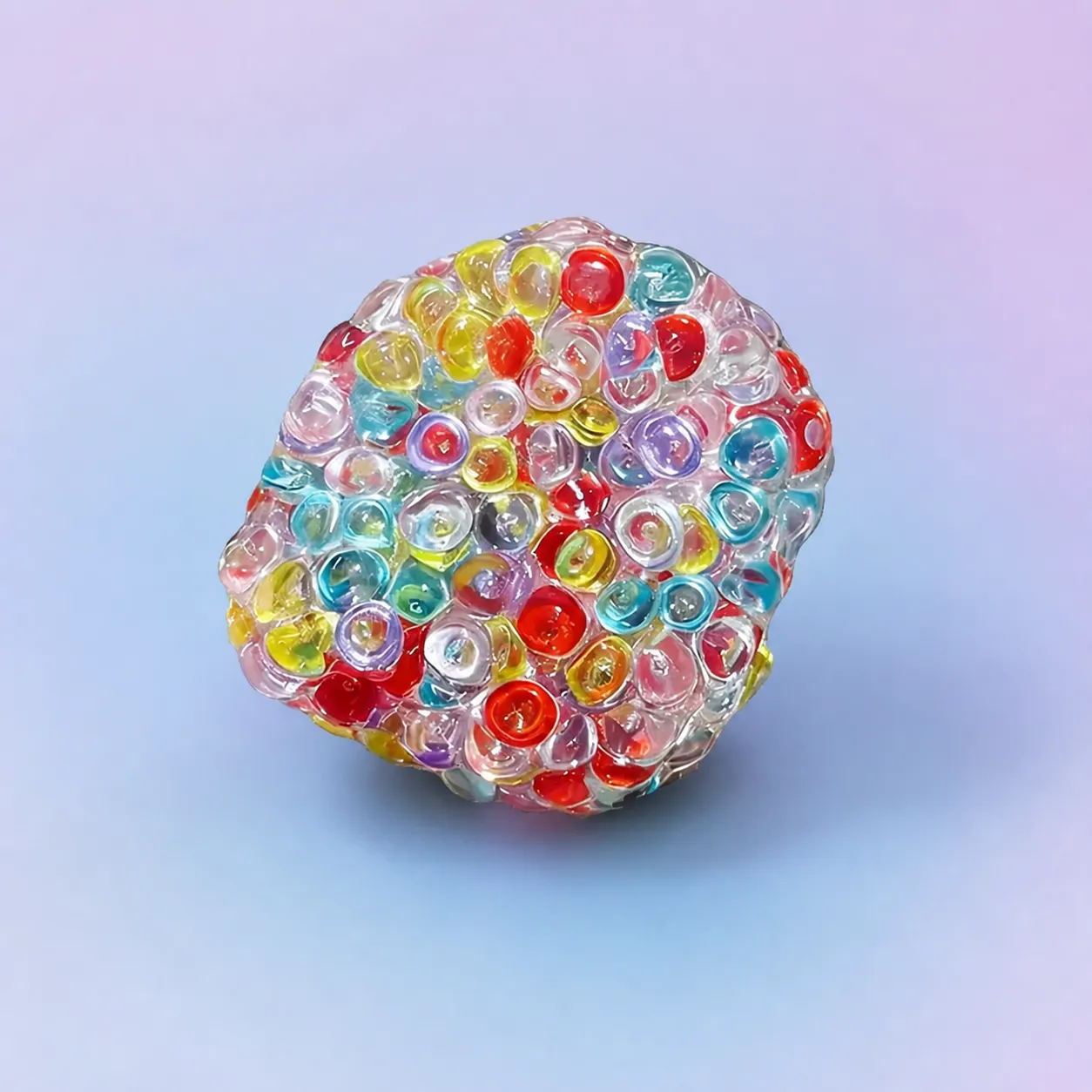
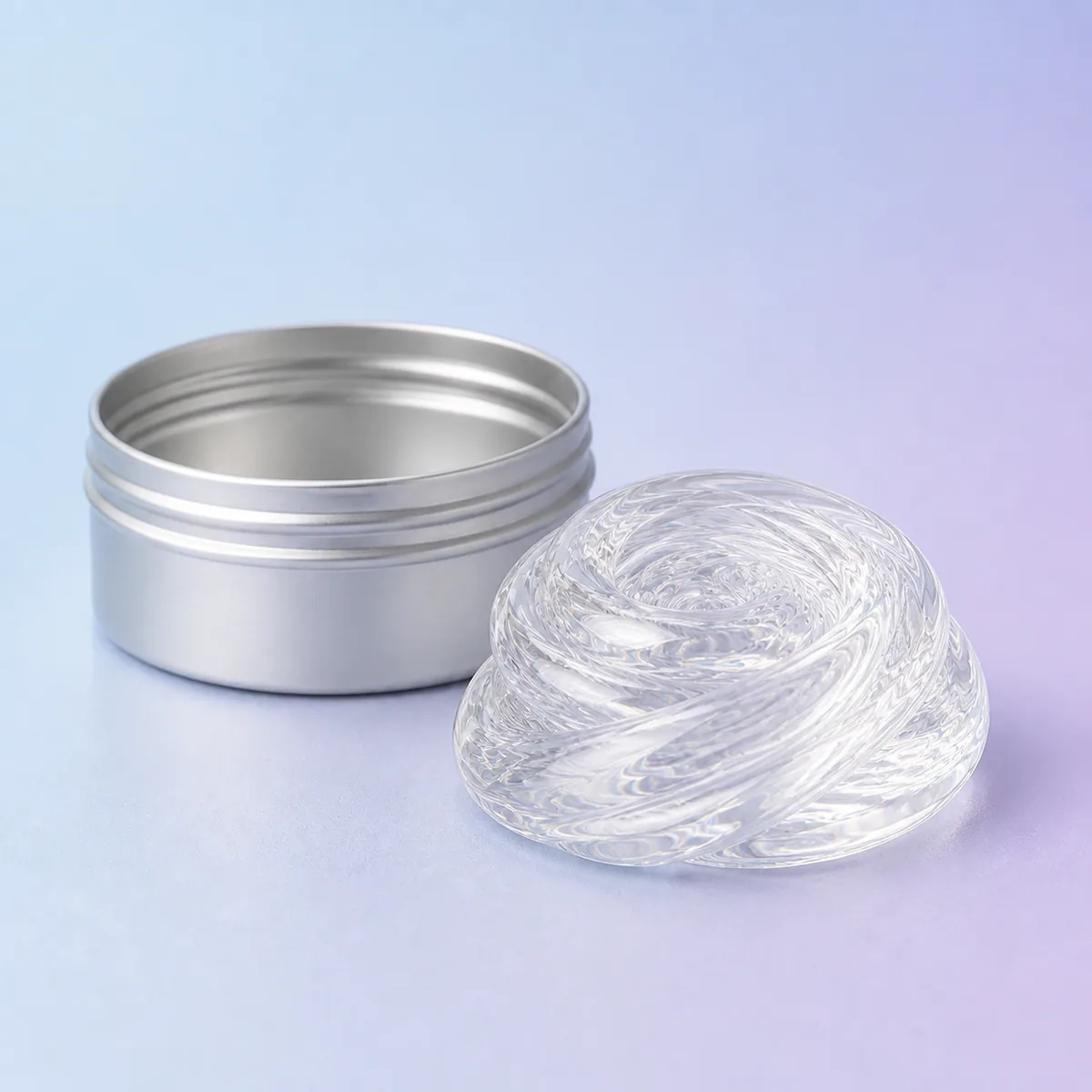
The ones that ask the least of a stiff joint: a light, full-hand squeeze instead of a hard pinch, a soft material with almost no resistance, and nothing with small parts to grip precisely. A translucent gel stress ball that compresses under a full palm, a moldable dough ball, soft putty, and a worry stone that only needs a light thumb rub all fit that description, and none of them ask a finger to do anything a stiff joint would resist.
Most fidget toys on the market were designed with young, flexible hands in mind, tight springs, small buttons, a satisfying resistance that assumes a firm grip is available on demand. That is not a criticism of those toys, just a mismatch worth naming, since a hand that tires easily or does not close all the way needs the opposite: give first, resist later, if at all.
None of this is a medical recommendation. It is a materials question: what motion is comfortable to repeat, what texture does not fight back, and what shape does not require the kind of precise, sustained pinch that a lot of hands find harder to hold as the years go on. Hands change, and arthritis is a large part of why for a great many people: CDC puts age-adjusted diagnosed arthritis at 18.9% of US adults as of 2022, and an earlier CDC estimate found diagnosed arthritis climbing from 3.6% at ages 18 to 34 to 53.9% at 75 and older, with 78 million US adults projected to have arthritis by 2040. That is ordinary, not a problem to be solved by a toy.
Do fidget toys help with arthritis?
Not as a treatment, and we will not claim otherwise. The Arthritis Foundation recommends daily or every-other-day hand exercise to maintain strength and mobility, citing a 2015 trial published in The Lancet in which people with rheumatoid arthritis doing daily hand exercises for a year showed roughly twice the improvement in hand function, grip, and finger flexibility compared with those who did not. That is real, structured exercise guidance, not a claim about commercial fidget toys, and it comes with a caution that matters more than anything else on this page: the Arthritis Foundation states plainly that if you are experiencing an acute or active flare in your hands, avoid squeezing movements altogether. Grip and pinch work, including a squeeze ball or resistance putty, is for maintenance between flares, not for pushing through one. Gentle range-of-motion movement, without squeezing or gripping, is what the Foundation recommends instead while a flare is active, and anything causing sharp pain or increased swelling should be stopped. Accommodating a hand that does not work quite like it used to is not a fringe idea either: UK government guidance on workplace adjustments names arthritis directly, giving a specially adapted keyboard as a plain example of an ordinary, reasonable accommodation, not a special case.
We are not going to hand you an exercise program, and anyone who does should be treated with some suspicion. If your hands are stiff, sore, swollen, or getting worse, that conversation belongs with a doctor or a hand therapist, not a toy company with a blog. What a fidget can offer outside of a flare is much smaller and much more honest: a few quiet minutes with something soft in your hand, no goal attached, nothing to complete or improve.
What should you avoid if your hands are stiff or sore?
During an active flare, the honest answer is to avoid squeezing or gripping anything at all, gentle or not, per the Arthritis Foundation’s own guidance, and to let the hand rest or move through a gentle range of motion instead. Outside of a flare, avoid anything that needs a hard pinch grip to operate, small buttons or parts that ask for precision, and putty or dough stiff enough that kneading it takes real effort rather than easing into it. A high-resistance stress ball can do the opposite of what you want: instead of a satisfying squeeze, it becomes a small workout for a joint that would rather rest, and a fidget that leaves your hand more tired than it started is not doing its job.
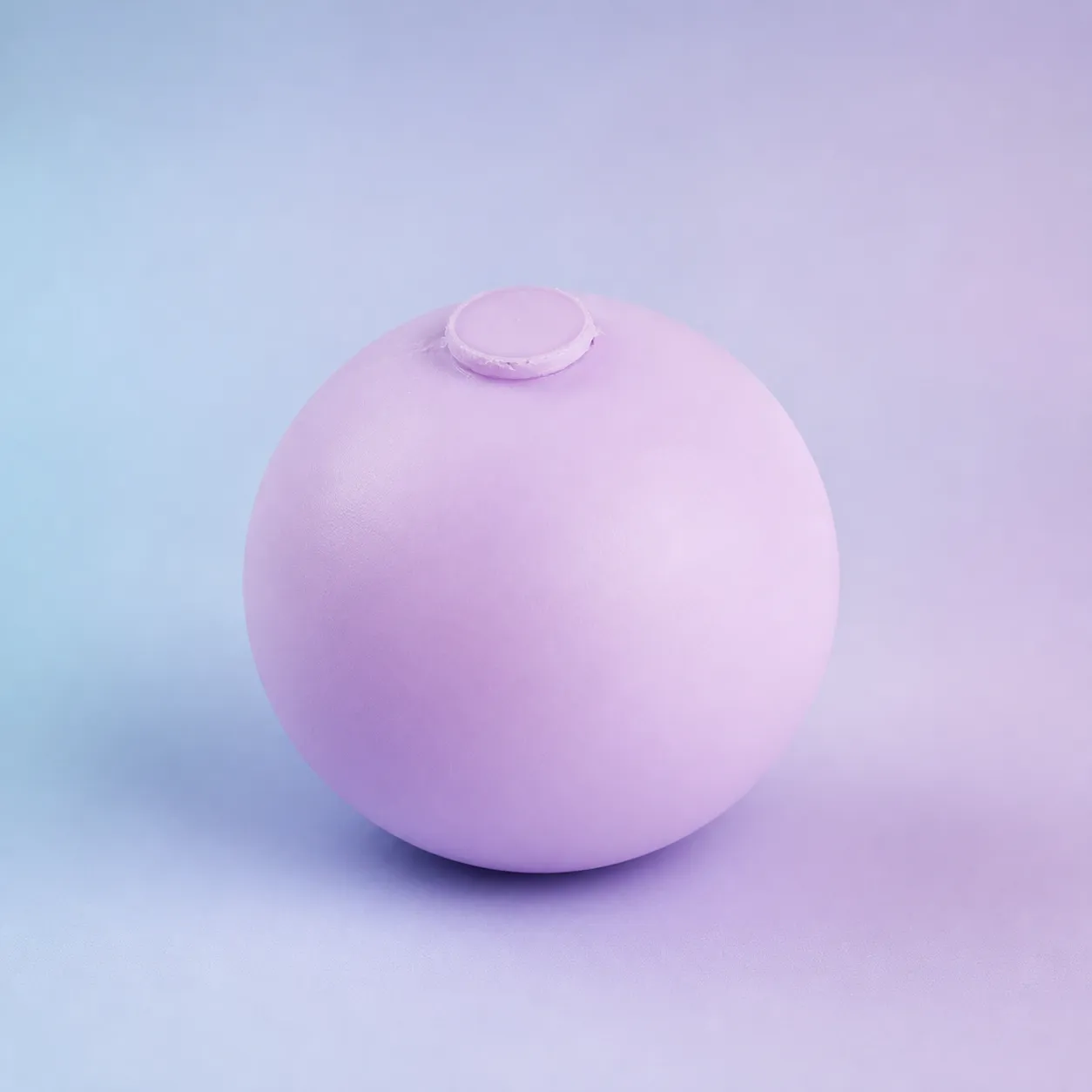
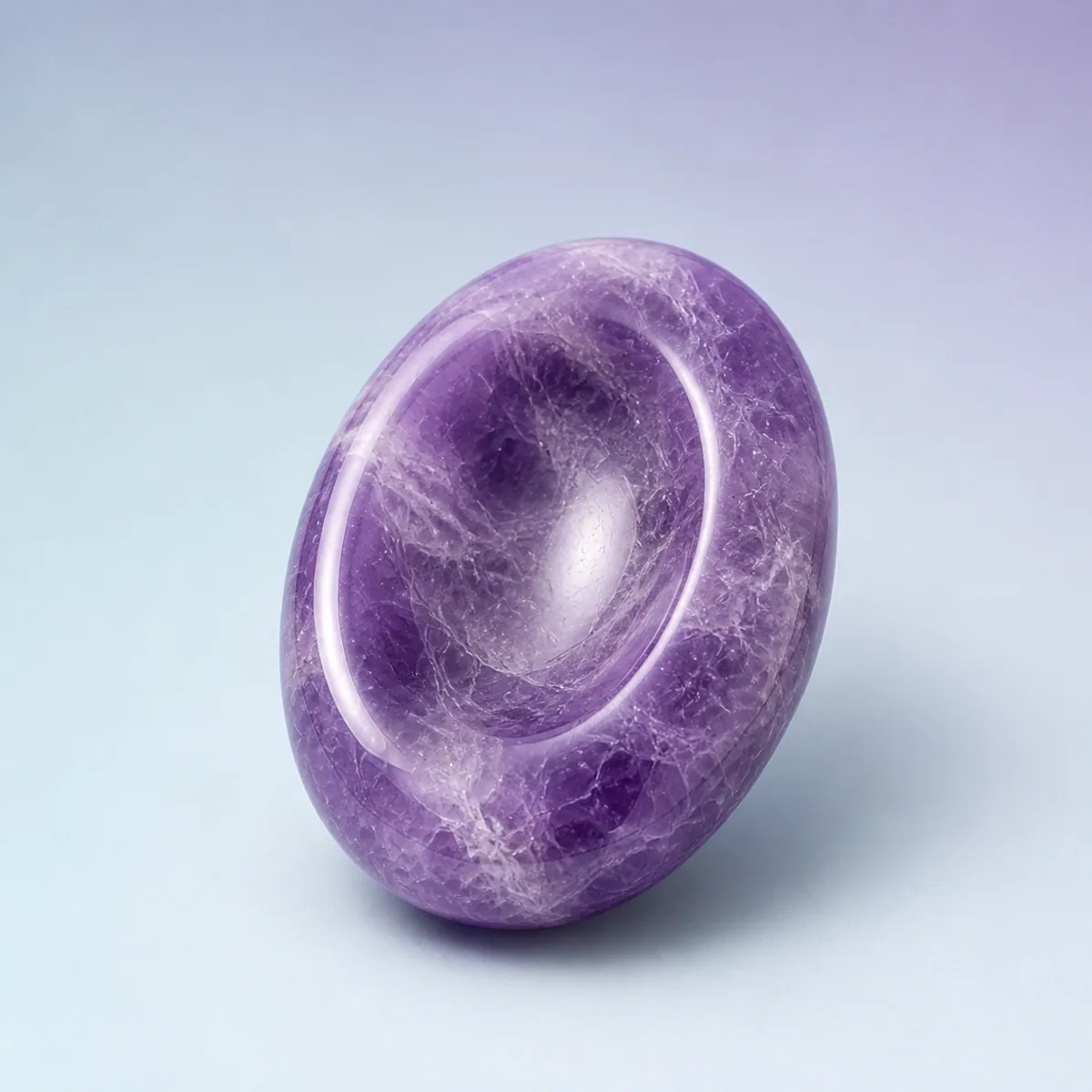
Soft is the right direction here, not challenging. Our Steady Hand stress ball is a light, full-palm compress rather than a hard grip test, and Mold & Hold softens further the more you handle it, so it gets easier rather than staying the same resistance every time. A worry stone asks even less: no squeeze at all, just a slow pass of the thumb across a surface that is already smooth.
Which motion suits which kind of stiffness?
| If your hands feel | Try | Motion required |
|---|---|---|
| Stiff and slow to open fully | Mold & Hold Dough Stress Ball | Full-hand squeeze, no fine grip |
| Sore with a hard pinch | Calm Worry Stone | A light thumb rub, no gripping at all |
| Fatigued by repetitive motion | Calm Putty | Open-ended stretch and fold, change it up |
| Wanting light, steady resistance | Steady Hand Squeeze Stress Ball | A gentle full-palm compress |
| In an active flare | None of these for now | Rest or gentle range of motion, no squeezing |
None of these are ranked best to worst. A stiff morning hand and a fatigued afternoon hand are different problems, and the honest answer is that the right pick changes day to day, sometimes hour to hour, more than most fidget guides admit.
Is this an OK gift for a parent or older relative?
Yes, and it is worth choosing with the same respect you would use for any adult. A worry stone or a soft putty does not need explaining, does not look medical, and does not ask anyone to perform an exercise on command in front of family. It also is not a strange thing to keep around: the federal Job Accommodation Network already lists fidget devices, including a worry stone, as a recognized workplace accommodation, so this is an ordinary object for a desk drawer or a coat pocket, not just a bedside curiosity dressed up for the occasion. Skip anything that reads as a toy for a child; a smooth stone worn into a thumb-shaped hollow reads as what it is, a small, adult object with a quiet job to do, not a gadget that needs justifying at the dinner table.
When should you see a professional instead of buying a fidget?
If pain, swelling, or stiffness is affecting daily tasks like opening a jar, turning a key, or buttoning a shirt, getting worse over weeks rather than staying the same, or entirely new, that is a conversation for a doctor, not a shopping decision. A fidget toy can be a small comfort alongside real care, never instead of it, and knowing the difference is the whole point of being honest about what a nine-dollar stone can and cannot do. Calm in the palm of your hand, however that hand is doing today.
Sources & further reading
We reference trusted organizations by name. This article is informational and not a substitute for professional medical advice.
- Arthritis Foundation: US nonprofit publishing hand-exercise guidance for arthritis, including its explicit caution to avoid squeezing movements during an acute or active flare.
- CDC (Centers for Disease Control and Prevention): Publishes national arthritis prevalence data, including how sharply diagnosed arthritis rises with age.
- GOV.UK: Confirms UK employers have a legal duty to make reasonable workplace adjustments and gives its own examples, including providing a specially adapted keyboard for someone with arthritis.
- Job Accommodation Network: A US federal accommodation resource that lists fidget devices, including a worry stone, as options for concentration-related workplace accommodation needs.
Frequently asked questions
What is the best fidget toy for arthritic hands?
One that asks the least of a stiff joint: a light, full-hand squeeze rather than a hard pinch, a soft material with little resistance, and no small parts to grip precisely. A translucent gel stress ball, a moldable dough ball, soft putty, and a worry stone all fit that description well.
Do fidget toys actually help with arthritis?
Not as a treatment, and no toy company should claim otherwise. Some people find a gentle, low-resistance motion satisfying to repeat outside of a flare, which is a comfort claim, not a medical one, and the Arthritis Foundation advises avoiding any squeezing motion while a flare is active. Real arthritis care belongs with a doctor, physical therapist, or occupational therapist.
What should older hands avoid in a fidget toy?
Anything that needs a hard pinch grip, small buttons or fiddly parts that require precision, and stiff putty or dough that takes real effort to knead. A high-resistance stress ball can turn into a small workout for a joint that would rather rest, which defeats the point.
Is a worry stone good for stiff hands?
Yes, because it needs only a light thumb rub and no gripping at all, which makes it one of the gentlest motions available. It is silent, pocket-sized, and does not ask a sore joint to close around anything.
Can you give a fidget toy as a gift to an older parent without it feeling patronizing?
Yes, if you choose it with the same respect you would use for any adult gift. A worry stone or soft putty does not need explaining, does not look medical, and does not ask anyone to perform an exercise on command.
When should stiff or sore hands see a doctor instead of trying a fidget toy?
When pain, swelling, or stiffness is new, getting worse, or affecting daily tasks like opening jars or buttoning a shirt. A fidget toy can be a small comfort alongside real care, but it is never a substitute for a doctor's evaluation.