Can you use a fidget toy while you drive?
Not the kind that asks anything of your hands or your eyes, and we would rather tell you that plainly than sell you something for the wrong seat. A moving car already spends your attention on the road, the mirrors, the brake lights ahead of you. Handing part of that same attention to a squishy or a marble fidget is not a small trade. It is the same attention, just split two ways.
Fidgets and driving are not strangers to each other, though. The driver’s seat and the passenger seat are simply not the same job, and the honest version of this guide handles them differently.
Why fidgeting and driving do not mix
The reason is not caution for its own sake. NHTSA, the federal agency that studies traffic safety, defines distraction in three parts: visual, taking your eyes off the road; manual, taking your hands off the wheel; and cognitive, taking your mind off driving, and notes a single task can involve more than one type at once. Working a hand-held fidget checks the manual box outright, and anything with moving parts worth watching checks the visual box too, which puts it squarely inside NHTSA’s own definition of a distraction risk. The scale of the underlying problem is not small: NHTSA’s own observational survey found the share of US drivers visibly manipulating a handheld device rose from 3.0% in 2023 to 4.5% in 2024, meaning more than 537,000 drivers are doing so at any given daylight moment nationwide, and distraction of any kind is estimated to be a factor in roughly 29% of crashes, contributing to 3,208 deaths and 315,167 injuries in 2024 alone.
The research on fidgeting and attention specifically is not the whole picture either, and we would rather hold both truths than pick the convenient one. A 2013 study in Frontiers in Psychology tracked people through a 40-minute lecture video and found that fidgeting rose as attention fell, and that more fidgeting lined up with remembering less of the material. A 2024 study in Frontiers in Psychiatry measured fidgeting in adults with ADHD during a seated attention task and found it lined up with better sustained focus for some of them, described as a possible compensatory habit rather than a distraction. Context is doing the work in that finding: a fixed seat, a fixed task, eyes already settled on one thing. A windshield is a different kind of task, one where your eyes and hands are supposed to move together, not settle on something in your palm. No state statute names fidget toys specifically as prohibited while driving; nearly every state has some distracted-driving law, per the Governors Highway Safety Association’s tracker, but they are written around phones and texting, not toys.
What can passengers actually use?
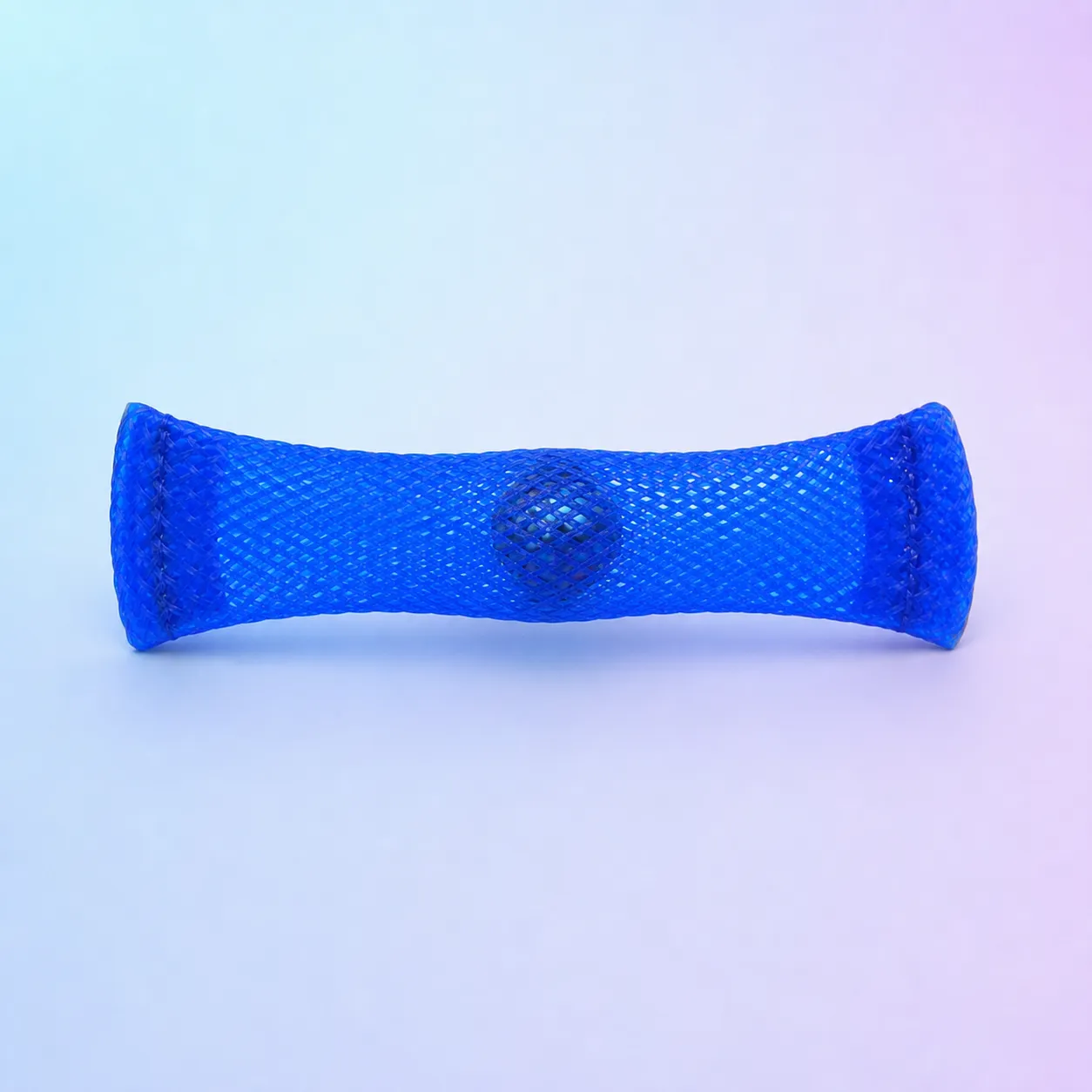
Passengers do not have this problem, since their hands and eyes are free for the whole trip. A car ride is a genuinely good use for a fidget: long, restless, and short on things to do with your hands. The Roll & Squeeze Mesh Marble Fidget gives a passenger a glass marble to push and roll inside its mesh pouch, quiet enough that the driver will not notice it from the next seat. The Sitting Cat Slow-Rise Squishy suits a longer stretch of highway especially well: press the belly, watch the foam slowly rise back, repeat for as many miles as it takes, with no sound to compete with the radio or a conversation.
Both are silent, and silence matters more in a car than in almost any other setting, since there is nowhere for a click or a pop to go in a small, closed space.
What about a ring or a bracelet?
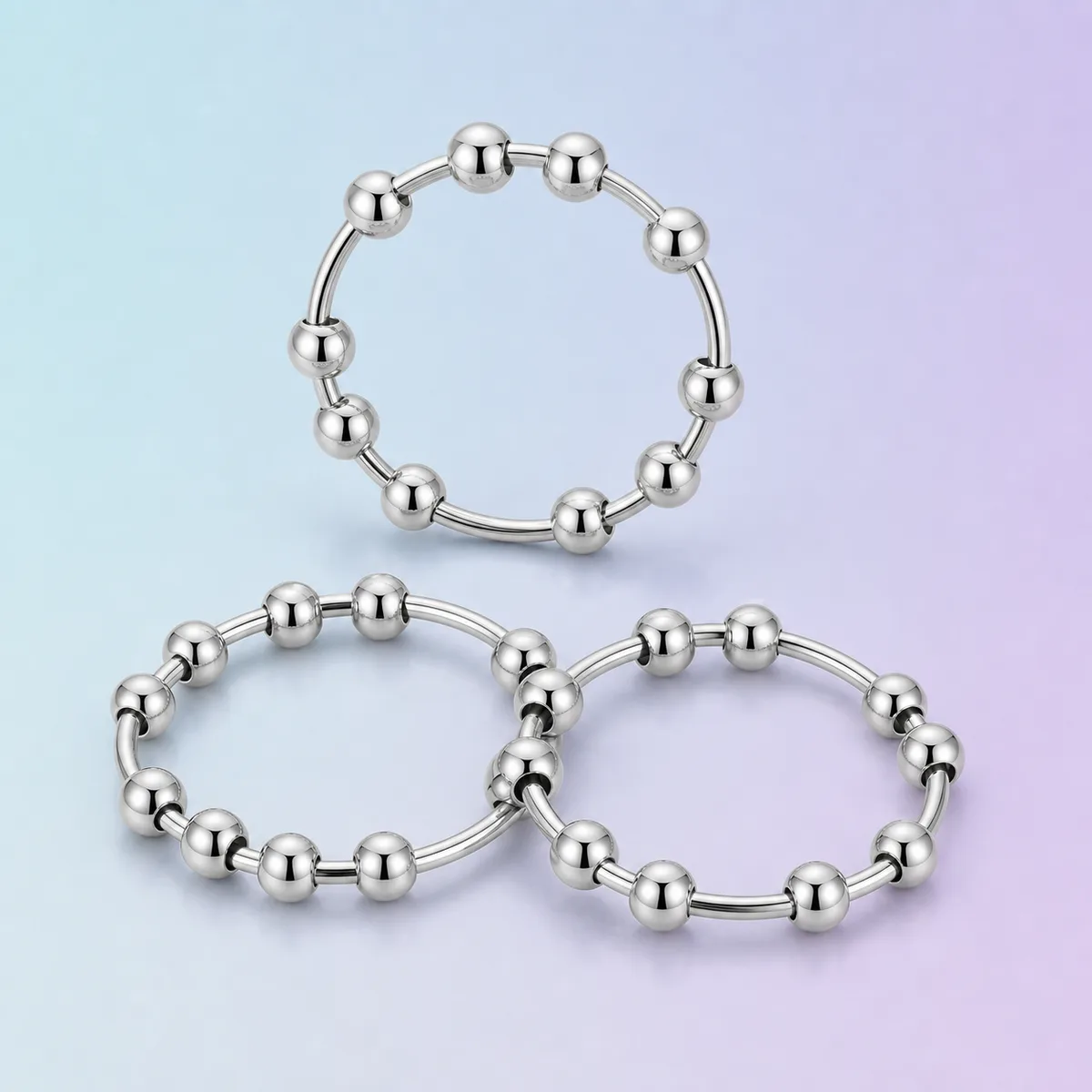
Wearables sit in the middle, and the honest answer depends on what your hands actually do with them, not what they are called. The Always-On Fidget Bracelet asks nothing active of you: it sits on the wrist, and if your thumb happens to brush the textured band at a stoplight, that is closer to touching your own sleeve than reaching for something. The Quiet Spinner Sensory Ring Set is more hands-on by design, since its whole job is a bead your thumb rolls around a hoop, and rolling a bead is a small motion that still borrows attention from your grip and your steering hand.
Save the active rolling for when the car is genuinely stopped and parked, not just paused at a light. A light can change, or a pedestrian can step out, faster than a thumb can let go of a ring.
A quick way to decide
| Setting | What is fine | What to skip |
|---|---|---|
| Driving, car in motion | A worn bracelet you are not actively touching | The mesh marble, the squishy, active ring-spinning |
| Driving, parked and stopped | Any of the four, once you are genuinely stationary | Nothing, once you are actually parked |
| Passenger seat, any time | Mesh Marble Fidget, Sitting Cat Squishy, the ring, the bracelet | Nothing off-limits |
| Sharing a long drive | Passing the ring set to whoever is not driving | Handing anything to the driver mid-trip |
Fidgets for long road trips
A road trip is where a car earns its keep as a fidget-friendly place, for everyone except the person driving. Keep a small stash in the console or a door pocket, not loose on the seat or the floor, since a marble fidget that rolls under a pedal is a real hazard and not a hypothetical one. Swap who holds what when you swap drivers: the person stepping out of the driver’s seat can pick theirs back up the moment they hand over the keys, and the person stepping into it should set theirs down before they do.
The Job Accommodation Network, the U.S. Department of Labor’s own workplace accommodation resource, lists items like a worry stone by name as a legitimate tool for concentration-related needs. That is a useful data point on how ordinary these objects have become outside the toy aisle, even though a car is a different setting than an office. CHADD draws a related, useful line: a fidget tool is quiet and regulatory, a fidget toy is entertaining and built to be noticed, and only the first belongs anywhere near a task that cannot spare attention. A road trip has room for both. A windshield only has room for the first, and only when it is worn, not worked.
Whichever you bring along, the trip goes the same way either direction: the driver’s hands stay on the wheel, and the passenger’s hands get a job. Calm in the palm of your hand, in whichever seat is not the one steering.
Sources & further reading
We reference trusted organizations by name. This article is informational and not a substitute for professional medical advice.
- NHTSA (National Highway Traffic Safety Administration): Publishes the federal manual, visual, and cognitive distraction taxonomy for driving, plus annual distraction-affected crash and injury statistics.
- Governors Highway Safety Association (GHSA): Tracks state distracted-driving laws; nearly every state has one, but they are written around phones and texting, not toys or fidget items generically.
- CHADD: Draws a practical distinction between a fidget tool (discreet, regulatory) and a fidget toy (entertaining, attention-grabbing), and notes that attention-grabbing fidgeting can itself divert focus from the task at hand.
- Frontiers in Psychology: Published Farley, Risko and Kingstone's 2013 study finding that fidgeting increased as attention declined during a 40-minute lecture video, and that more fidgeting predicted worse retention of the material even after accounting for attentiveness.
- Frontiers in Psychiatry: Published Son and colleagues' 2024 study finding that fidgeting in adults with ADHD, measured during a seated attention task, was associated with better sustained focus for some participants, describing it as a possible compensatory habit.
- Job Accommodation Network (JAN): A US Department of Labor service that lists specific fidget products, including a worry stone, as recognized accommodation tools for concentration-related needs.
Frequently asked questions
Can you use a fidget toy while driving?
Not a hand-held one, and not while the car is moving. Driving already uses the same attention a fidget asks for, so a squishy, a marble fidget, or an actively spun ring belongs in the passenger seat or in a parked car, not in the driver's hands.
Is it safe to wear a fidget ring while driving?
Wearing one is fine if you leave it alone. A ring or bracelet resting on your hand does not take attention away from the road, but actively rolling its beads does, so save that motion for when the car is fully parked, not just paused at a light.
What fidget works best for a passenger on a long drive?
A silent one that does not need to be watched, since a passenger still shares the car with a driver who needs quiet to concentrate. The Roll & Squeeze Mesh Marble Fidget and the Sitting Cat Slow-Rise Squishy both fit that description and make good company for a long highway stretch.
Does fidgeting actually help you focus while driving?
No, and the evidence points the other way for an attention-heavy task like driving. Studies on fidgeting and attention are mixed overall, with some research linking movement to better focus in specific, stationary situations, but a windshield is not a stationary situation, and nothing found here supports fidgeting while operating a vehicle.
Where should you keep fidget toys in the car?
In a console, glovebox, or door pocket, not loose on the seat or the floor. A small object that rolls under a brake pedal is a genuine hazard, and keeping fidgets stowed until the car is parked or a passenger wants one avoids that risk entirely.
Can kids use fidget toys in the back seat?
Yes, since they are passengers with free hands, and a car ride is a common place for a restless child to want something quiet to do. Choose one by age rating as you would anywhere else, and keep it out of reach of the driver's seat.