Can you take a fidget toy into an exam?
There is no single answer, because the rule comes from the individual school, exam board, or test center, not from any general law or standard. Some invigilators will wave through a silent worry stone without a second glance. Others will ask you to put anything on the desk away, fidget or not, because their instructions say bags and objects stay closed during the exam. Both are common, and neither is wrong, which is exactly why “is it allowed” needs to be asked of the actual room you will be sitting in, not answered in general.
What does hold steady across nearly every exam hall is the type of object that tends to pass without comment: small, silent, and unfamiliar to nobody watching. That is worth understanding before test day, because a fidget you have to explain is a fidget that is already causing a distraction, whatever the eventual answer turns out to be.
What makes an exam different from a classroom or a desk?
Silence, mostly. A classroom tolerates a soft click here and there, and a desk at home tolerates almost anything. An exam hall is built around total quiet, because dozens of people are working against the clock in the same room, and any sound, a rolling marble, a squeaking case, a wrapper being peeled, carries much further than it would anywhere else. Invigilators are trained to notice anything unusual on a desk. Fidgets are not treated as suspicious on their own. Watching for anything out of place is simply the whole job during the exam.
That is also why an object with no moving parts to see or hear, and nothing that needs explaining at a glance, has the easiest path through the room. A worry stone sitting in a closed hand looks like nothing at all. A fidget cube on the desk looks like something a teacher has to make a decision about.
Does fidgeting during a test actually help you focus?
The honest answer is that the research is mixed, and none of it was run inside an actual exam hall. The closest available evidence is Farley, Risko and Kingstone’s 2013 study, where people watched a 40-minute lecture and rated their own attention every five minutes. Fidgeting rose steadily as the lecture went on, in step with declining attention, and predicted worse retention of the material afterward, even once the researchers accounted for attention on its own. That points toward fidgeting rising alongside strain, not relieving it, in a task that looks a lot like sitting through a long exam.
A separate study by Graziano, Garcia and Landis looked at fidget spinners specifically, given to 60 young children with ADHD, and found spinner use was associated with poorer attention, not better, across a classroom program already built around evidence-based strategies. A third study, by Sarver and colleagues, followed boys aged 8 to 12 with ADHD and found more movement predicted better working memory, but no change in attention at all. None of these settle the question for you personally, and none of them were about exam performance directly. What they add up to is a caution against assuming any fidget automatically helps, and a case for choosing based on what is genuinely quiet and unobtrusive rather than what feels fun to hold.
Which fidgets are most likely to be allowed?
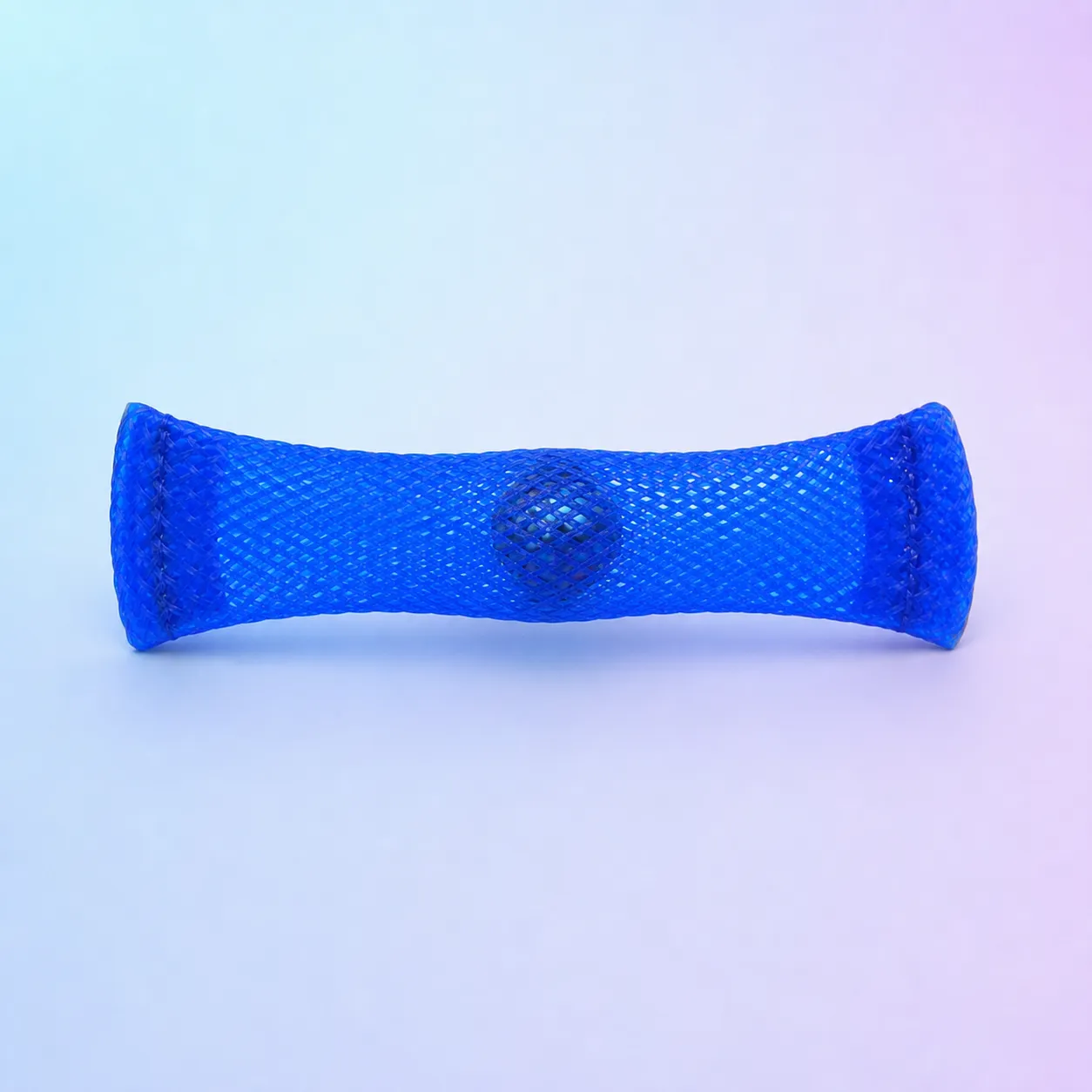
CHADD, a national ADHD nonprofit, draws a distinction that fits an exam hall precisely: a discreet fidget tool versus an attention-grabbing fidget toy. Only the first belongs in a silent room. A Calm Worry Stone or the silicone Always-On Fidget Bracelet make no sound and need no explanation, which puts them at the quiet end. The Roll & Squeeze Mesh Marble has a soft rolling sound that is genuinely pleasant at a desk or during revision at home, and it is the one item here we would steer toward study sessions rather than the exam room itself, since even a small sound can carry in true silence.
Which fidget suits which part of exam season?
| Setting | Best pick | Why |
|---|---|---|
| The exam hall itself | Calm Worry Stone or Always-On bracelet | Silent, no moving parts to explain |
| Studying and practice papers | Roll & Squeeze Mesh Marble | Soft sound is fine at home, keeps hands busy |
| Building a pre-exam routine | Exam Calm Kit | Four silent or near-silent tools, tested for exam settings |
| Waiting outside before the exam starts | Any of the above | Room is not yet silent, more flexibility |
What should you do before test day?
Ask, specifically and in writing, rather than assume either way. A message to the exam office, SENCO, or teacher that names the exact object, a silicone worry stone with no sound or moving parts, gets a clearer answer than a general question about whether fidgets are allowed. Schools and test centers can usually say yes to something specific much faster than they can approve a category.
If the answer on the day turns out to be no, a hand-only backup works without needing approval: a light press of a thumbnail into your palm, or a steady grip on the edge of the desk, draws on the same small, repeatable motion without an object at all. It is worth building that habit anyway, since it travels with you to any exam, any room, and any invigilator who has never seen your particular worry stone before and does not have time to decide about it mid-paper.
Whatever the final answer, the goal is the same one you would want walking into any exam: hands that have somewhere quiet to go, so the rest of you can stay on the page. A permission slip settled a week in advance is worth more on the day than the fidget itself, because it is one less unknown sitting next to you when the clock starts. Calm in the palm of your hand, even on test day.
Sources & further reading
We reference trusted organizations by name. This article is informational and not a substitute for professional medical advice.
- CHADD: National ADHD nonprofit that distinguishes discreet, regulatory fidget tools from entertaining, attention-grabbing fidget toys, and recommends the least visible option for focus-critical settings.
- Frontiers in Psychology: Published Farley, Risko and Kingstone's 2013 study finding fidgeting increased as attention declined during a 40-minute lecture, and that fidgeting predicted poorer retention of the material independent of attention.
- Journal of Attention Disorders: Published Graziano, Garcia and Landis's study of 60 children with ADHD, mean age under 5, finding fidget spinner use was associated with poorer attention across a classroom intervention.
- Journal of Abnormal Child Psychology: Published Sarver and colleagues' 2015 study of boys aged 8 to 12 with ADHD finding that higher activity levels predicted better, though not normalized, working memory performance, with no measured effect on attention itself.
Frequently asked questions
Can you take a fidget toy into an exam?
It depends entirely on the specific exam, school, or test center, since there is no single rule that covers every exam hall. Silent, pocket-sized objects with no batteries or wrapper are the ones most likely to be allowed. The only way to know for certain is to ask the exam office or invigilator before test day, not to assume.
What fidget toys are usually allowed in exams?
Silent, low-profile objects tend to get through: a worry stone, a silicone bracelet, or putty kept quietly in one hand. Anything with a visible click, a rolling sound, batteries, lights, or a case that crinkles is far more likely to be questioned or asked to be put away.
Does fidgeting during a test actually help you focus?
The research is mixed, not settled. A 2013 study found fidgeting increased as attention declined during a lecture and predicted worse retention of the material, while a separate study found young children with ADHD showed poorer attention while using a fidget spinner. Neither result proves a fidget will help you personally during a specific test.
Will a fidget toy distract other students during an exam?
It can, which is exactly why silence and low visibility matter more in an exam hall than almost anywhere else. A soft click or a rolling sound that would go unnoticed in an office can carry across a silent room, so the safest choice is something that makes no sound at all.
How do you ask a school if a fidget toy is allowed?
Ask the exam office, SENCO, or teacher directly and in writing well before the exam date, naming the specific object rather than asking a general question. A specific request, a silicone worry stone with no sound or moving parts, for example, is easier for a school to say yes to than a vague one.
What should you do if a fidget is not allowed on the day?
Have a silent backup that needs no approval at all, like pressing a thumbnail lightly into your palm or gripping the edge of the desk, since these draw on the same regulating motion without an object. For future exams, put the request in ahead of time so the answer is settled before you are sitting down.