What fidgets work for arthritic hands?
A fidget for arthritic hands works best when it asks for a gentle, whole-hand squeeze rather than a hard pinch or a twist, and when you can stop the moment a joint says stop. This is not a small audience: about 21.3 percent of US adults, roughly 1 in 5, report a diagnosed arthritis condition, and that share climbs to about 44 percent of people aged 65 to 74. None of what follows is a treatment for arthritis, and none of it replaces the exercise plan a doctor, a rheumatologist, or an occupational therapist would build around your specific joints. What a fidget can offer is smaller and more honest: something soft to hold, at a resistance you control completely, on the days your hands are up for it.
What do arthritis organizations actually recommend, and when should you stop?
They recommend joint protection and gentle movement between flares, and they are direct that squeezing and gripping exercise should stop, not continue, while a joint is actively inflamed. The Arthritis Foundation’s joint-protection guidance points toward using your largest, strongest joints and muscles, palms and forearms, rather than fingertips, to take stress off small hand joints and spread the load over a bigger surface; it specifically flags pinching motions, gripping something the way you would pinch a pen, as harder on small joints than a relaxed, whole-hand grip. NHS hand-therapy handouts add the rule that matters most here: do not squeeze or grip through a joint that is red, hot, swollen, or actively painful. Rest and gentle stretching only during a flare, and resume once it settles, typically starting little and often rather than pushing straight back to where you left off. Cold makes stiff joints less flexible, so warming your hands first, warm water or a warm pack, tends to make any gentle movement more comfortable once a flare has passed.
That guidance holds for a soft stress ball exactly as it holds for a prescribed hand-therapy exercise: it is not exempt because it is marketed as a fidget. If your hands are stiff, swollen, or painful in a way that is new or worsening, a GP, rheumatologist, or occupational therapist is the right person to build an actual program with. A fidget you reach for at your desk is a different, much smaller thing than that program, and it never substitutes for it.
Is Calm Putty the same as hand-therapy putty?
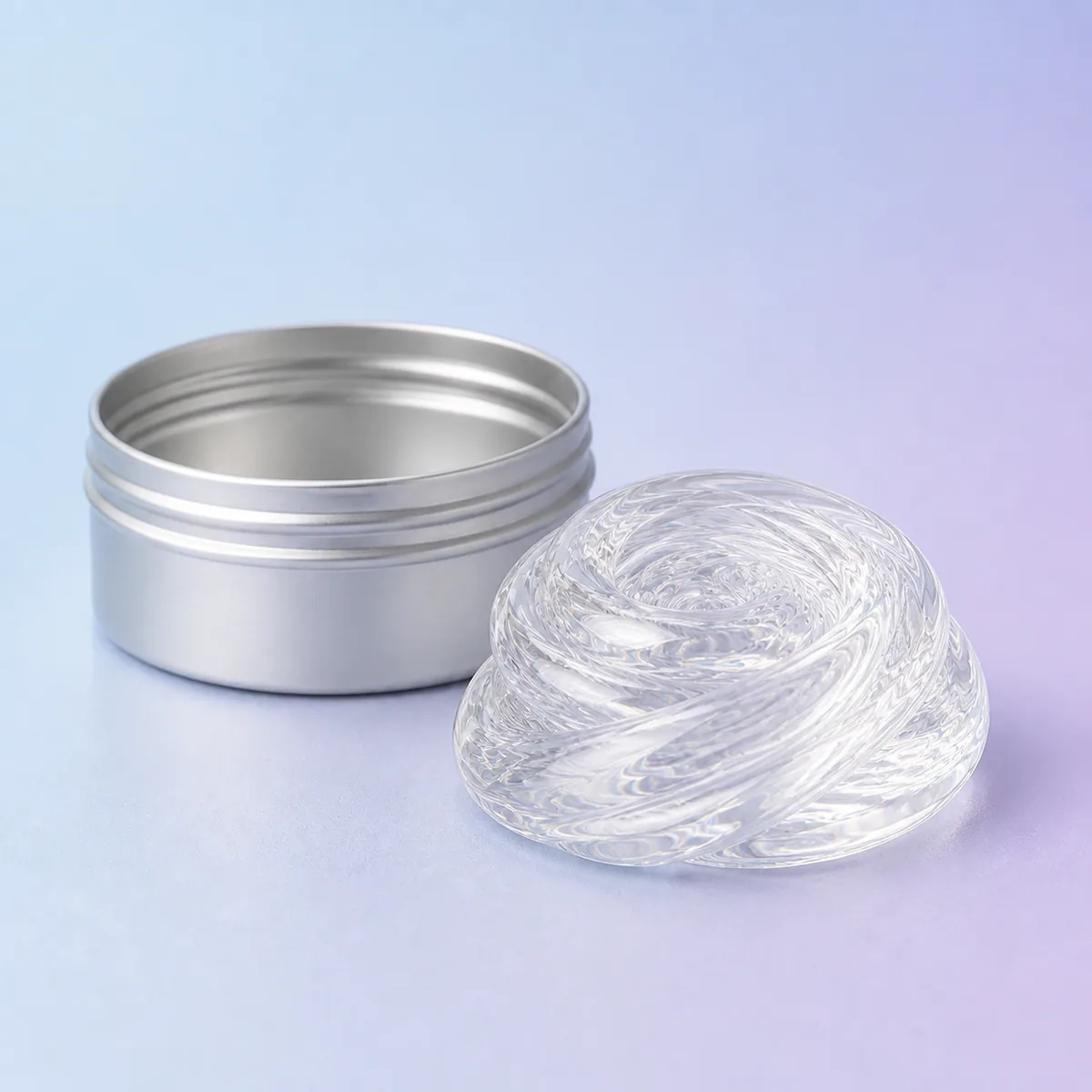
No, and it is worth being direct about that. Clinical hand-therapy putty is sold in a standard six-color resistance scale, tan through black, xx-soft through x-firm, specifically so a hand therapist can grade a progressive program around a hand’s actual recovery. Calm Putty is a single-consistency fidget putty: soft, stretchy, made to pull, snap, and knead for the sensory feel of it, not to grade or measure anything against a clinical scale. If you are working through a real hand-therapy program, ask your therapist for graded putty made for that purpose. If you want something pleasant to knead at your desk that never asks more of your hands than you choose to give it, Calm Putty is exactly that, and nothing more.
What matters more than material: how much grip it asks for
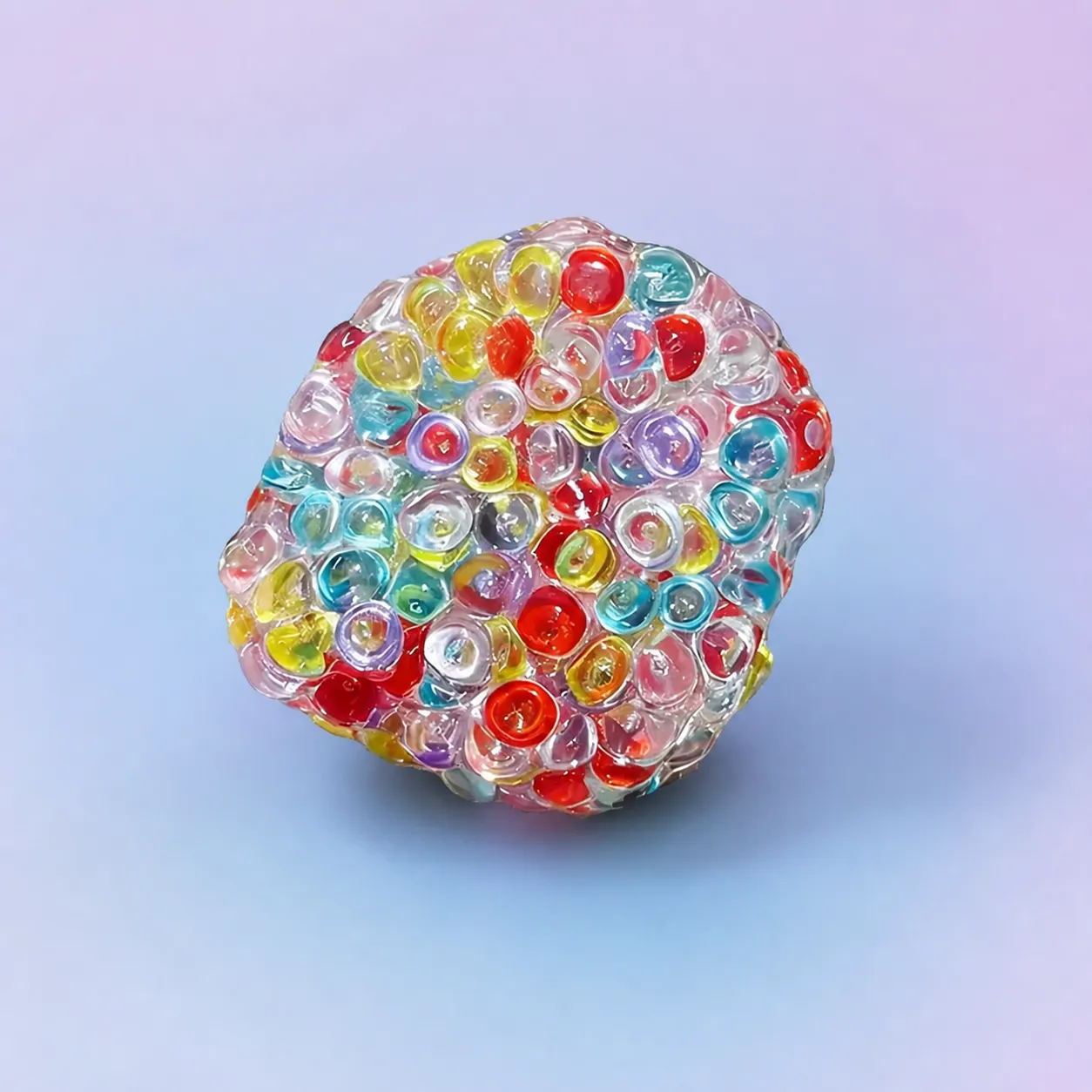
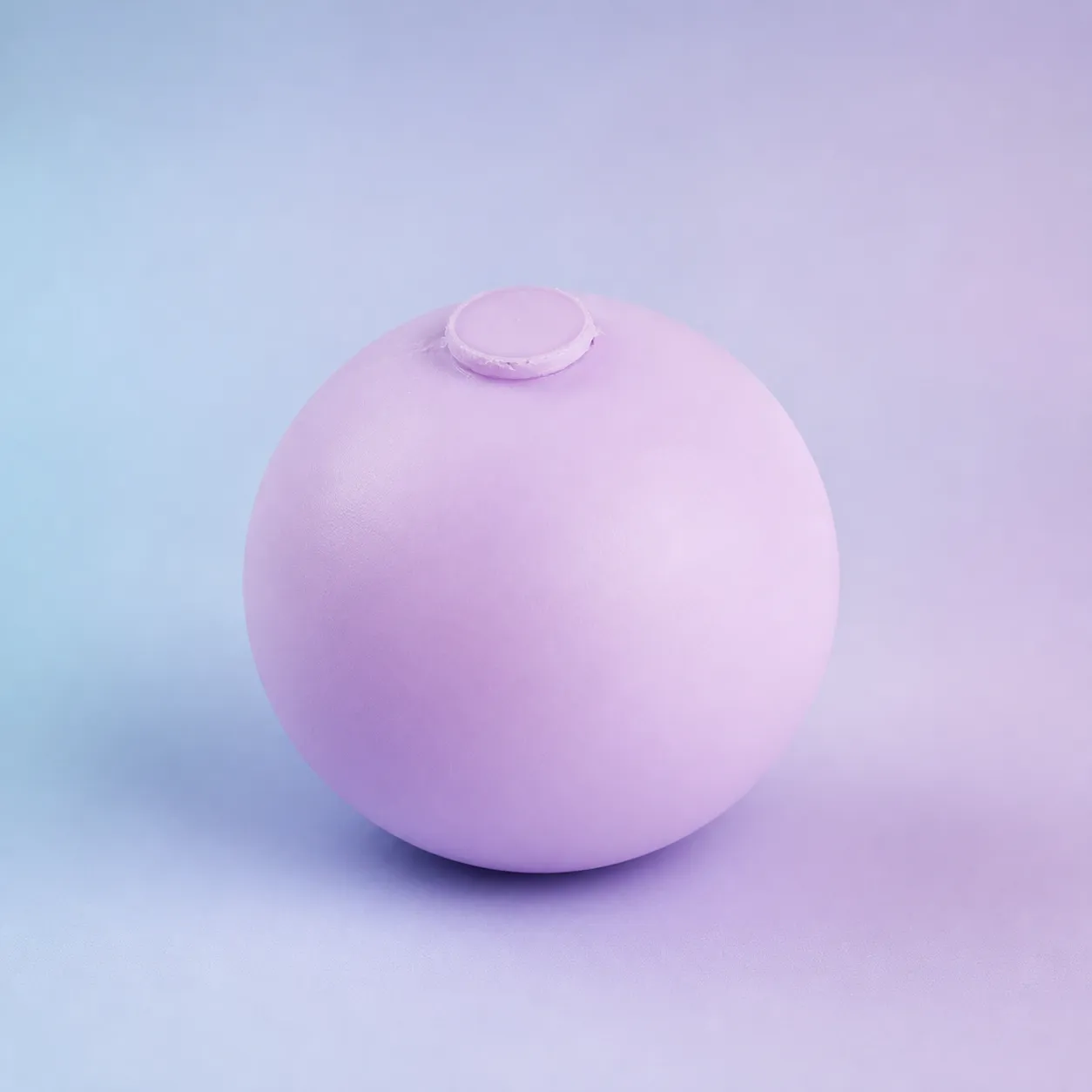
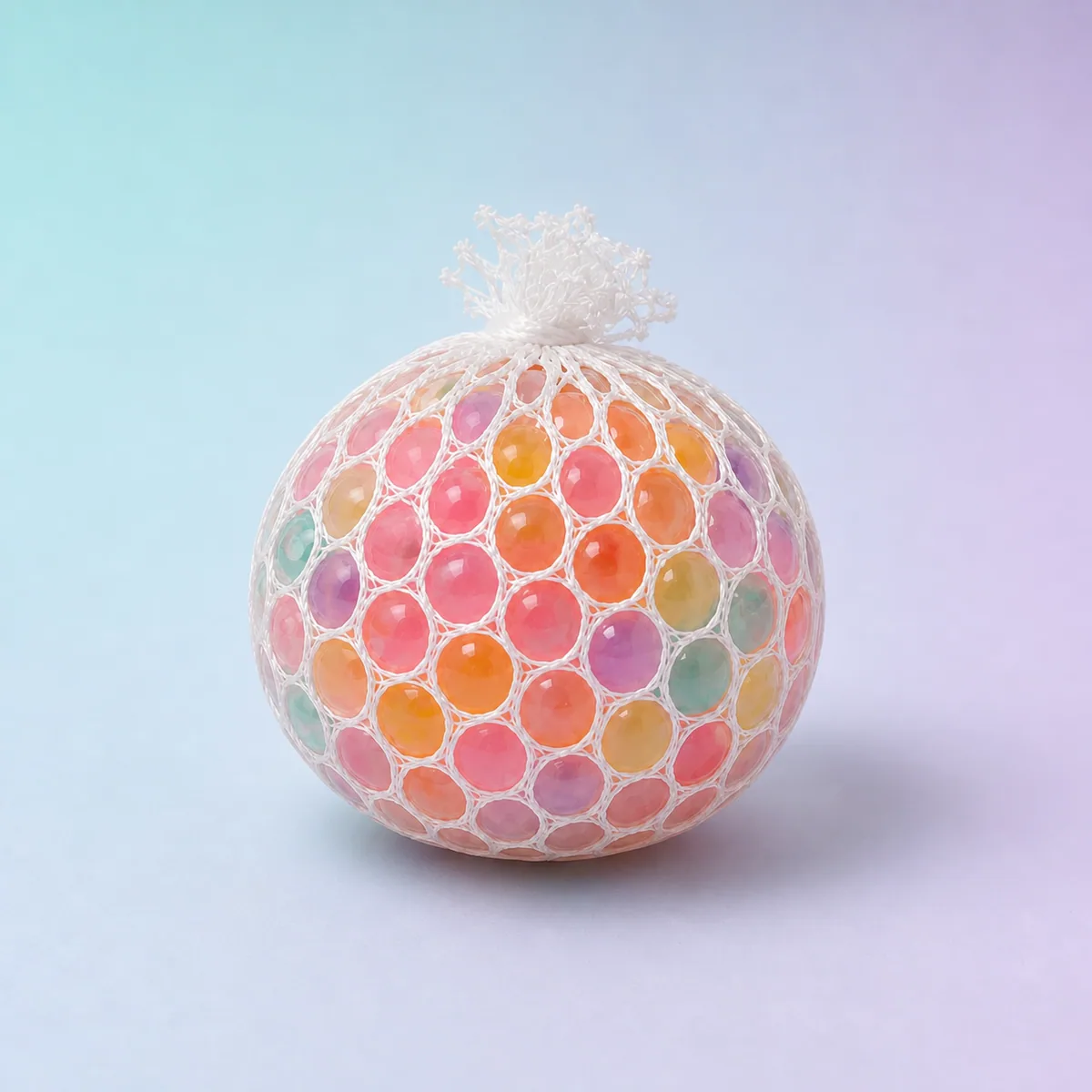
Four things behave very differently in an arthritic hand, and the difference is mostly about how much precise grip or pinch each one demands rather than what it is made of. The Steady Hand Squeeze Stress Ball is a translucent gel ball that compresses under a full, flat-palm squeeze, no fingertip pinch required. The Mold & Hold Dough Stress Ball works the same way, a soft flour-filled ball you dent and smooth back with the whole hand rather than two fingers. Calm Putty asks for slightly more, since pulling and stretching engages fingers more directly, which some hands find satisfying and others find like too much on a harder day. The Calm Orb Water-Bead Squeeze Ball bulges and settles under a gentle full-hand squeeze, with a soft give that does not require much force to feel something happen.
What if today is a harder day than yesterday?
Arthritic hands do not feel the same every day, and a fidget that felt easy on Monday can feel like too much on Thursday, or off-limits entirely if a joint is flaring. Having more than one option on hand means you are not stuck with a single resistance regardless of how your joints feel. On a harder day, the Calm Orb Water-Bead Squeeze Ball or the Steady Hand Squeeze Stress Ball ask the least of you: rest it in your palm, let your fingers curl loosely around it, and let the whole hand do the work rather than any one joint. On a steadier day, Calm Putty gives your fingers something more active to do, if that is what feels good that day. On a flare day, the honest answer is to set all of them down until it passes.
Which of these asks the least of a sore hand?
| Fidget | Motion | Grip needed |
|---|---|---|
| Steady Hand Squeeze Stress Ball | Full-palm squeeze, releases quietly | Whole hand, no pinch |
| Mold & Hold Dough Stress Ball | Dent and smooth back | Whole hand, low resistance |
| Calm Orb Water-Bead Squeeze Ball | Gentle bulge and settle | Whole hand, very light |
| Calm Putty | Pull, stretch, snap | Fingers and thumb, self-directed |
When should you stop, or ask someone else?
Stop the moment a joint hurts, not after, and skip all of it during an active flare, when a joint is red, hot, swollen, or painful, in line with NHS guidance to rest rather than exercise through that state. A fidget should never be the thing you push through pain to finish, and if squeezing or kneading anything makes a joint worse rather than better on an ordinary day, that is useful information to bring to a doctor or a therapist, not something to work around on your own. Hands with arthritis flare in ways that vary day to day and person to person, which is exactly why the Arthritis Foundation and NHS point toward individualized professional guidance rather than a single recommended routine, and why nothing on this page claims to be that guidance.
What a soft, low-resistance fidget can genuinely offer is a pleasant, low-stakes thing to hold at your own pace, on the days your hands are willing. That is a small claim, made on purpose. Calm in the palm of your hand, gently held.
Sources & further reading
We reference trusted organizations by name. This article is informational and not a substitute for professional medical advice.
- Arthritis Foundation: A US patient organization publishing joint-protection guidance, including using larger, stronger joints and muscles instead of fingertip pinches to reduce strain on small hand joints.
- CDC: The US Centers for Disease Control and Prevention publishes national arthritis prevalence data through its National Health Interview Survey.
- NHS Foundation Trusts: UK NHS hospital trusts publish patient-facing therapeutic-putty exercise handouts for hand and finger strength, including the instruction to rest during an active flare rather than exercise through it.
- Southpaw Enterprises: An occupational-therapy equipment supplier and industry-standard source for the six-color Theraputty resistance scale used to grade clinical hand-therapy putty.
- Cleveland Clinic: A US academic medical center publishing consumer health guidance, including that cold reduces hand flexibility and warming hands before gentle movement tends to help.
Frequently asked questions
What is a good fidget for arthritic hands?
One that asks for a gentle, whole-hand squeeze rather than a hard pinch or a twisting grip, like a soft stress ball or a water-bead ball. The right choice also depends on the day, since arthritic hands can feel different from one day to the next, so it is worth having more than one option at a lower and a slightly firmer resistance.
Do fidget toys help with arthritis?
A fidget toy does not treat arthritis, and nothing here claims it does. The Arthritis Foundation and NHS hand-therapy sources generally recommend gentle movement between flares and an individualized plan built with a professional, and a soft, low-resistance fidget can be a pleasant, low-stakes thing to hold on the days your hands are up for it, alongside that guidance, not instead of it.
Should you squeeze a fidget during an arthritis flare?
No. NHS hand-therapy guidance is explicit that squeezing and gripping exercise should stop while a joint is red, hot, swollen, or actively painful, with rest and gentle stretching only until it settles. That applies to a soft stress ball exactly as it applies to a prescribed exercise, so put it down during a flare and pick it back up once the joint calms.
Is Calm Putty the same as hand-therapy putty?
No. Clinical hand-therapy putty is sold in a graded six-color resistance scale, tan through black, so a hand therapist can build a progressive rehab program around it. Calm Putty is a single-consistency fidget putty made for the sensory feel of pulling and stretching, not for grading or measuring anything, so anyone in an actual therapy program should ask their therapist for graded putty instead.
Which fidget needs the least grip strength?
The Steady Hand Squeeze Stress Ball and the Mold & Hold Dough Stress Ball both work with a full-palm squeeze and no fingertip pinch, which tends to suit a sore or stiff hand best. Calm Putty asks more of the fingers and thumb, since pulling and stretching engages them more directly.
Who should you talk to about arthritis in your hands?
A doctor, a rheumatologist, or an occupational or physical therapist, since the Arthritis Foundation and NHS both point toward an individualized, professionally built plan rather than a single fixed routine. A fidget can be a small, pleasant addition alongside that care, not a replacement for it.