What is a back-to-school calm kit?
A back-to-school calm kit is a small, personal set of quiet tools a student can reach for when school feels like a lot. Think of it as a pencil case for restless hands: a worry stone for the walk in, something silent to fidget with at the desk, something soft to press on a hard afternoon, plus a few plain basics like a water bottle and a predictable routine.
It is not a cure for stress, and we would never pretend it is. It is a way to give anxious, restless energy somewhere harmless to go, so a big day feels a little more manageable. That is a modest promise. It is also an honest one, and honesty is the whole point of a kit like this.
The best version of this kit is not the biggest. It is the one a student actually carries and actually uses. A few well-chosen things they like the feel of will beat a drawer full of gadgets every time.
What should you put in a back-to-school calm kit?
Start with three kinds of tool, then add the boring basics that matter just as much. The three tools are a silent desk fidget, something soft to press or squeeze, and a quiet pocket anchor like a worry stone. The basics are water, a small snack, and a steady routine.
Here is the simple version, matched to when it helps:
| The moment | What helps | A quiet pick from our shop |
|---|---|---|
| The walk in, or waiting for a test to start | A silent pocket anchor | Calm Worry Stone |
| Restless hands during a lecture or reading | A slim, silent desk fidget | Roll & Squeeze Mesh Marble Fidget |
| Needing to fidget without being seen | A wearable, near-silent option | Quiet Spinner Sensory Ring Set (3-Pack) |
| A hard afternoon, or a study break at home | Something soft to press | Peachy Slow-Rise Squishy |
| One set that covers the whole day | A ready-made kit | The Exam Calm Kit (4-Piece) |
A quick word on each, so you can picture the feel in the hand.
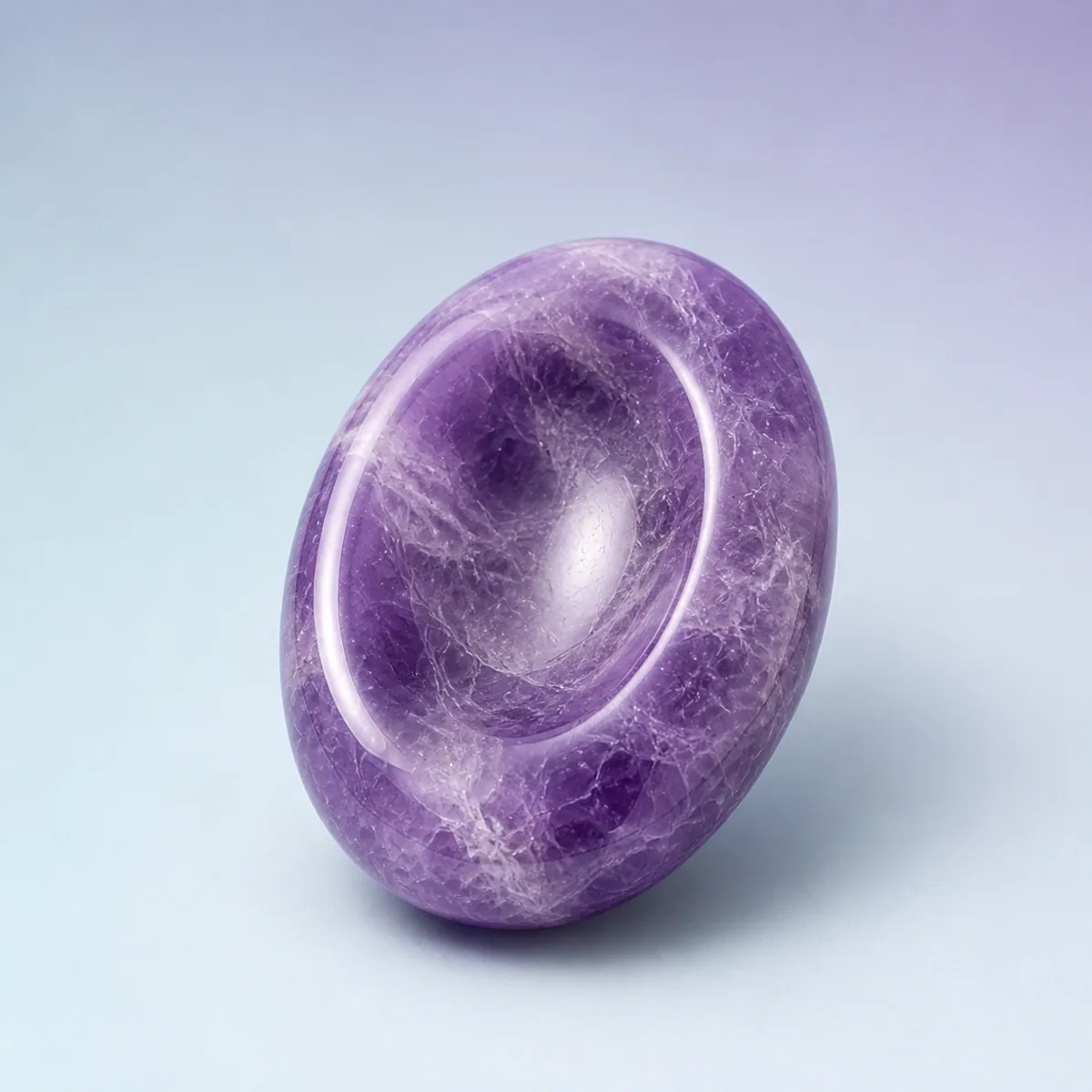
The Calm Worry Stone is the quietest thing we make. It is a smooth, flat oval with a thumb-shaped hollow worn into the middle, so a thumb finds it without looking and slides back and forth in a slow rhythm. No clicks, no pops, nothing for anyone to notice. It slips into a pocket for the walk to a first-period test.
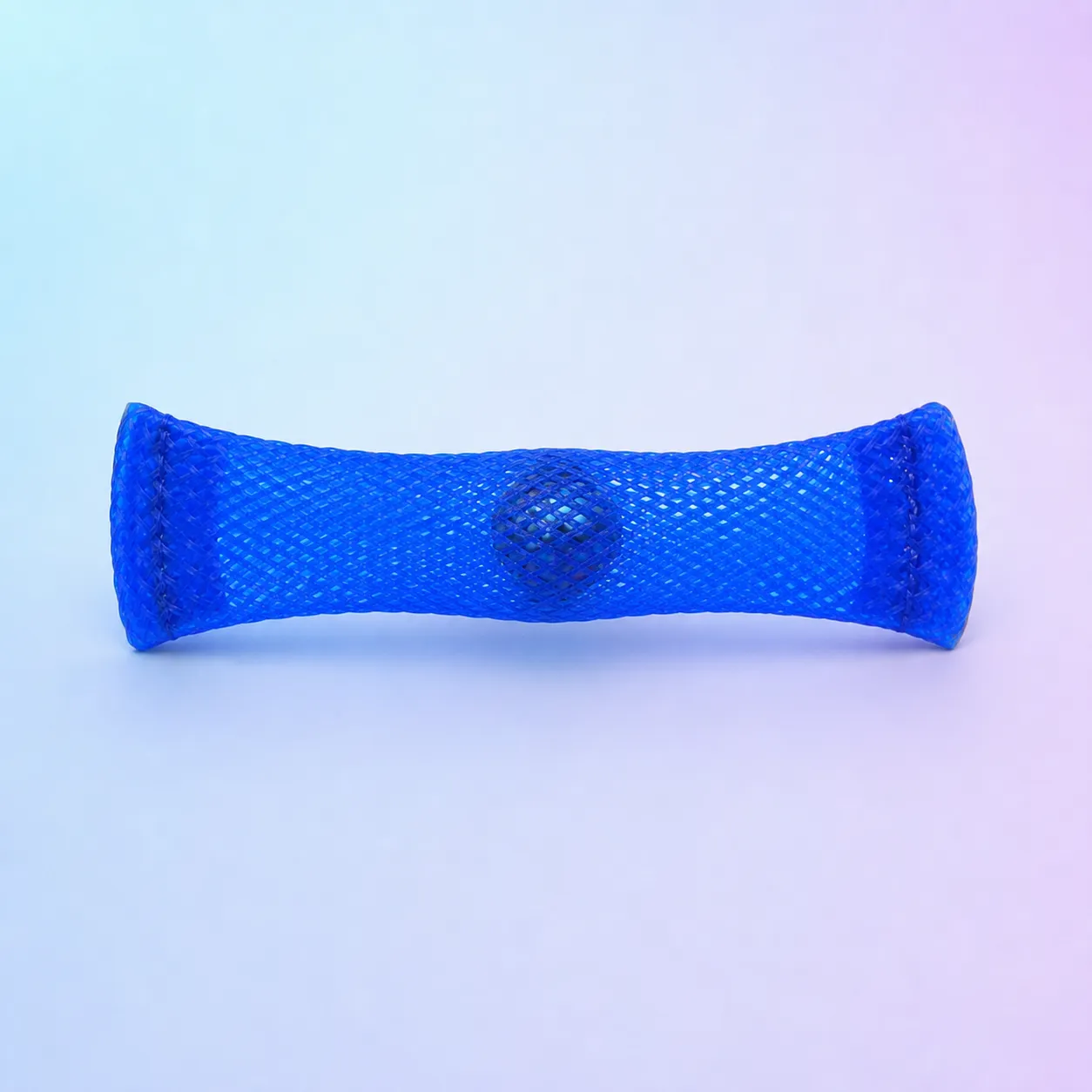
The Roll & Squeeze Mesh Marble Fidget is one glitter marble sealed inside a woven mesh tube, about 9 cm long and light enough to forget you are holding it. Push the marble down the sleeve, roll it back, squeeze it through the mesh. It is completely silent and slim enough to work under a desk during a lecture.
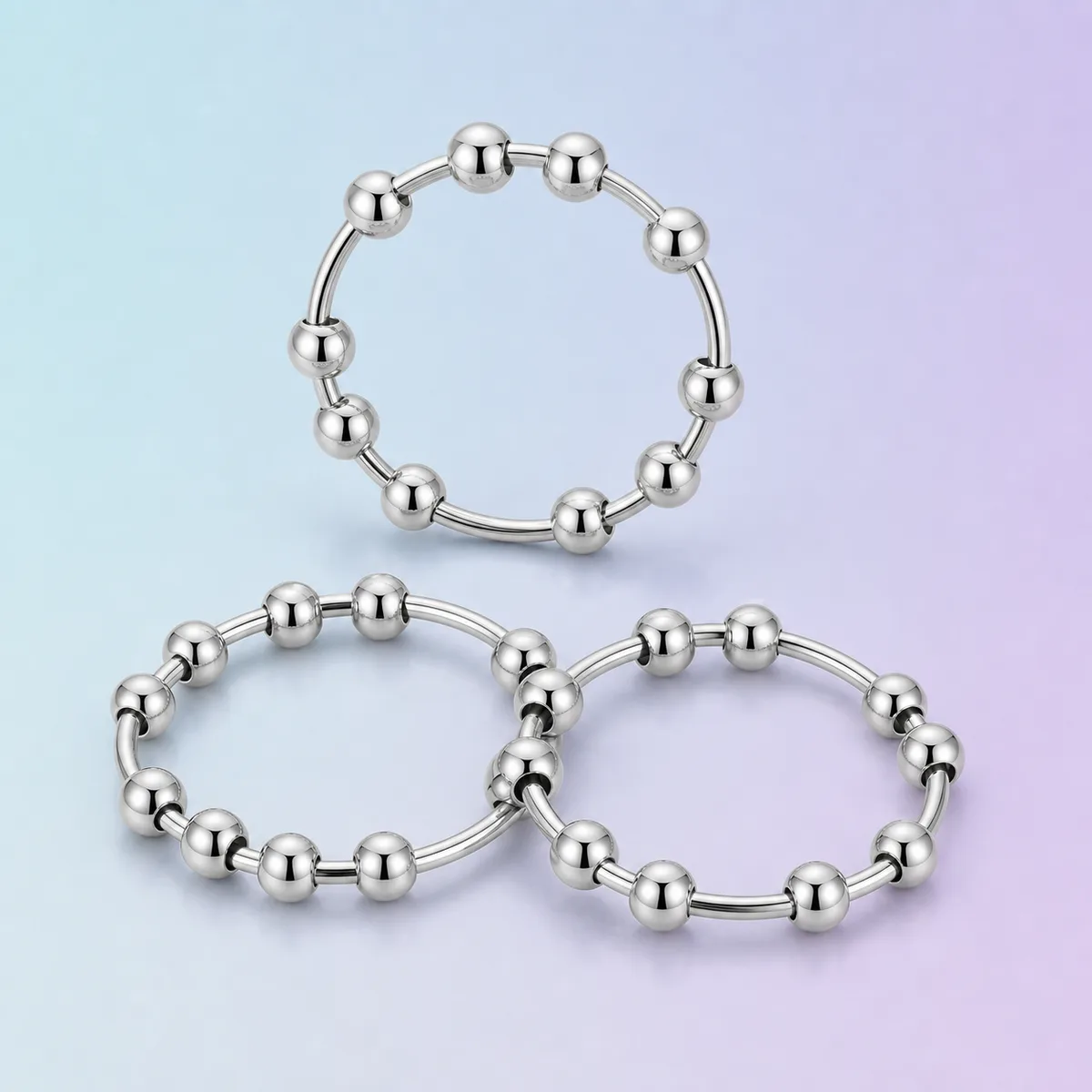
The Quiet Spinner Sensory Ring Set (3-Pack) is for the student who wants to fidget without anyone knowing. Polished beads roll and slide around a slim steel hoop that wears like plain jewelry. We will be straight about the sound: it is very quiet rather than silent, with only a faint metal note if the beads touch. The 3-pack means one for the pencil case, one for a bag, and one for home.
The Peachy Slow-Rise Squishy is the soft one. Press the foam and it takes a few seconds to round back into a peach, giving hands a slow, repeatable motion for a stressful afternoon or a study break. It is silent and mess-free, which is why it lives happily in a desk drawer or on a nightstand.
And the non-toy basics? A full water bottle, a small snack for the blood-sugar dip after lunch, a spare pencil so a missing one is not a crisis, and a routine the student can count on. None of that is exciting. All of it does real work.
Which fidgets are actually classroom-appropriate?
The classroom-appropriate ones are quiet and low-look: tools that make no noise, stay inside one hand, and do not turn into a toy that gets passed around. If a fidget clicks, rattles, lights up, or begs to be shown to a friend, it belongs at home, not in a lesson.
Sound is the first filter, and we think you deserve the honest version rather than a marketing one:
- Silent, genuinely: the Calm Worry Stone, the Roll & Squeeze Mesh Marble Fidget, and the Peachy Slow-Rise Squishy make no sound at all in normal use.
- Very quiet: the Quiet Spinner Sensory Ring Set is near-silent, with a faint sound only if the beads knock together. For most classrooms that is fine, but it is not literally silent, and we would rather say so.
The second filter is how much attention the tool draws. A worry stone in a pocket looks like nothing. A spinner ring looks like a ring. A mesh marble stays under a desk. That “low-look” quality is what lets a student self-regulate in a room full of people without becoming the thing everyone watches.
The third filter is grip. A good classroom fidget works one-handed, so the other hand can still write, turn a page, or hold a book. Anything that needs two hands and full concentration is a break-time tool, not a lesson tool.
How do you match the kit to the school day?
Match the tool to the moment. A school day has a shape, and different parts of it ask for different kinds of calm, so a kit works best when each item has a job.
- Before the hard part. The walk in, the wait outside an exam room, the minute before a presentation. This is worry-stone territory: something to hold in a pocket that slows the hands and steadies the breath.
- During the hard part. A long lecture, a test, a class that runs restless. Reach for the silent, low-look options that work one-handed, like the mesh marble or the spinner ring, so hands have a quiet job while the mind does the work.
- After the hard part. The study break, the bus home, the wind-down before homework. This is where something soft and slow, like the Peachy Slow-Rise Squishy, gives tired hands a gentle reset.
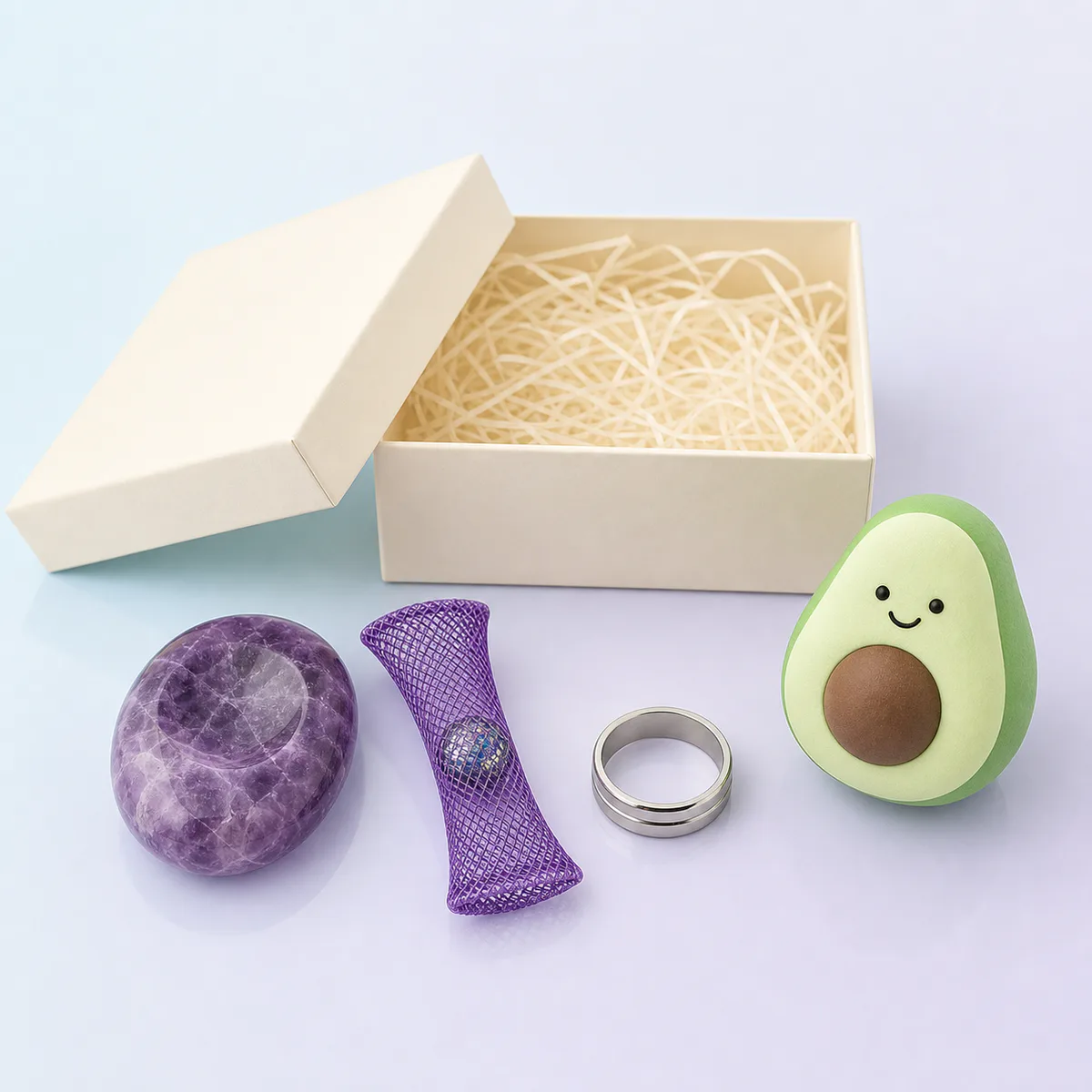
If matching each moment yourself feels like a lot, that is exactly why we built The Exam Calm Kit (4-Piece). It gathers four of our most silent, least distracting fidgets (a worry stone, a mesh marble roller, a spinner ring, and a slow-rise squishy) into one gift-ready box, chosen so nothing draws a glance from an invigilator. At $34.99 it also saves about $13 versus buying the four pieces separately, which is a real, verifiable saving rather than a made-up one. It makes a genuinely thoughtful gift for a student heading into deadline season.
Do back-to-school calm kits actually help students focus or feel calmer?
For some students, yes, and the honest answer is that it depends on the person. A quiet, repetitive fidget can take the edge off restless or anxious energy by giving the hands a steady task, which some people find helps them settle and stay with the work. It is a supportive tool, not a treatment, and not a guarantee.
We want to be straight with you, because this is the question every parent is really asking. The research on fidget tools is mixed and still emerging. Some studies point to real benefits for focus and calm; others find small or inconsistent effects, partly because “fidget” covers everything from a silent worry stone to a noisy clicking gadget. What we can say plainly is that plenty of students, teachers, and occupational therapists find these tools genuinely useful as one part of a wider toolkit.
Groups like CHADD and ADDitude often discuss fidgeting and movement as recognized strategies for focus and restlessness, particularly for students with ADHD, and the American Occupational Therapy Association recognizes sensory tools within the broader self-regulation approaches OTs use in schools. That is meaningful real-world support. It is not the same as a clinical cure, and holding both truths at once is the honest place to stand: worth trying, and not a treatment.
One thing a calm kit cannot do is replace real help. If a student’s worry is persistent, if it disrupts sleep, eating, friendships, or the ability to get through a normal day, or if school has started to feel like something to dread, please talk to a school counselor, a doctor, or a therapist. Organizations like the Child Mind Institute and the Anxiety and Depression Association of America offer guidance on childhood and teen anxiety and on when to reach out. A fidget can sit beside that support. It should never stand in for it.
How do you set up a calm kit so it helps instead of distracts?
Keep it small, keep it quiet, and bring the teacher into the loop. A calm kit works best as a low-key background support, so the goal is a few well-matched tools the student barely has to think about, not a pencil case full of gadgets competing for attention.
A few practical steps that tend to work:
- Let the student choose the textures. Hands know what they reach for. A tool someone actually likes the feel of gets used; one chosen for them often does not.
- Talk to the teacher first. A short, honest heads-up (“these are quiet tools that help him focus, is that alright?”) beats a surprise every time, and most teachers appreciate being asked.
- One tool at a time. Using a single fidget quietly is calming. Juggling five is a distraction. Rotate if you like, but keep one in play.
- Mind the age and safety notes. Several items are rated 8+ because they contain small parts and are not for children under 3, and the slow-rise squishy is rated 6+. Everything in our kits is EN71 tested and BPA- and phthalate-free, but a small part is still a small part, so keep them away from younger siblings.
- Refill the boring basics. A calm kit with an empty water bottle and no snack is only half a kit. The unglamorous stuff carries more of the day than any fidget.
Set up this way, a back-to-school calm kit is a small, steady thing a student can lean on: a bit of quiet ballast for a loud day, calm they can keep in the palm of a hand. It will not make school easy. It can make a hard moment a little more bearable, and some days that is exactly enough.
Sources & further reading
We reference trusted organizations by name. This article is informational and not a substitute for professional medical advice.
- CHADD: Discusses fidgeting and sensory movement as recognized strategies for focus and restlessness, particularly for ADHD.
- ADDitude: Publishes practical classroom and study strategies, including fidget tools and movement, for students who learn and focus differently.
- American Occupational Therapy Association: Recognizes sensory tools within the self-regulation and school-based approaches occupational therapists use.
- Child Mind Institute: Offers guidance on childhood and teen anxiety, including back-to-school stress and when to seek professional support.
- Anxiety and Depression Association of America: Provides resources on test anxiety and everyday worry, and guidance on when professional help is appropriate.
- ASTM International: Publishes the ASTM F963 toy-safety standard used, alongside EN71 in Europe, to test children's products.
Frequently asked questions
What should go in a back-to-school calm kit?
A silent desk fidget, something soft to press or squeeze, and a quiet pocket anchor like a worry stone cover most of the day. Add plain basics that matter just as much: a water bottle, a small snack, and a predictable morning and evening routine. Keep it small enough to actually carry, and let the student choose the textures their hands reach for.
Are fidget toys allowed in the classroom?
It depends on the school and the teacher, so the honest move is to ask first. Many teachers are fine with tools that stay quiet, stay in one hand, and don't become a toy that gets passed around. Choosing silent, low-look options makes that conversation much easier, and looping in the teacher early tends to work better than hoping nobody notices.
What is the best quiet fidget for a classroom?
The quietest options are the ones with no click and no rattle. A worry stone and a mesh marble fidget are genuinely silent, and a slow-rise squishy is silent to press. A spinner ring is very quiet, with only a faint sound if the beads touch. For a test or a lecture, quieter and smaller almost always wins.
Do calm kits actually help with test or school anxiety?
For some students they help take the edge off a hard moment by giving restless hands a steady, repetitive task. That is real, and it is worth being clear-eyed about it: a calm kit is a supportive tool, not a treatment, and the evidence on fidget tools is mixed but promising. If school anxiety is persistent or interfering with sleep, friendships, or daily life, please talk to a school counselor, doctor, or therapist.
What age is a back-to-school calm kit right for?
It depends on the child and the specific items. Several of our fidgets are rated 8+ because they contain small parts and are not safe for children under 3, and a slow-rise squishy is rated 6+. Read the age note on each item, keep small parts away from younger siblings, and pick tools that fit the student's hands and the day they actually have.