Are fidget toys safe for toddlers?
It depends on the specific product, not on “fidget toy” as a category. A soft, single-piece squishy and a set of many tiny loose pieces are not the same physical object, even if both get called sensory toys, and federal law treats them differently for exactly that reason. The honest starting point is the age label, which is a safety designation tied to a real test, not a marketing suggestion.
We would rather walk you through what that label actually means than let “for toddlers” stand in as a vague reassurance. Here is the actual rule, the actual test, and how it applies to a squishy, a bracelet, a push-pop board, and a set of minis.
What does the small-parts rule actually require?
The CPSC tests for small parts with a cylinder measuring 2.25 inches long by 1.25 inches wide, built to approximate a young child’s fully expanded throat. Anything that fits entirely inside it, in any orientation, without being squeezed, is legally a small part. For a product intended for children under 3, small parts are banned outright: a warning label cannot legalize them, the part has to be eliminated or the whole design changed.
For toys intended for children 3 to 6 that do contain small parts, federal regulation requires this exact label: “WARNING: CHOKING HAZARD, Small parts. Not for children under 3 yrs.” Small balls, marbles, and latex balloons get their own wider band, covering children up to age 8, because CPSC treats those three shapes as an elevated risk even for slightly older kids.
What about magnets and water beads?
These get their own dedicated federal rules because both categories caused documented deaths. Since October 2022, any small, separable magnet strong enough to matter has had to fall under a specific strength threshold, measured as a flux index, so that if a child swallows more than one, the magnets are too weak to pinch through intestinal tissue and cause the kind of injury that put this rule on the books. None of our fidgets use loose, separable magnets, which sidesteps the hazard entirely rather than trying to squeak under the limit.
Water beads got a newer, dedicated federal standard that took effect in March 2026, setting a maximum expansion size and a limit on acrylamide content, on top of stronger warning labels. The CPSC’s own safety advice is blunt: if a toy contains water beads, such as a ball filled with them, discard the product the moment beads start to escape. That rule is about loose and escaped beads specifically, not a blanket verdict on every sealed product that happens to use the same absorbent material, but the discard-if-damaged instinct is the right one either way.
Both rules exist because the underlying injuries were real and documented over years, not hypothetical. That is also why supervision matters even for a product that passes every applicable test as manufactured: a rule written around a product’s condition at the point of sale cannot account for what happens after months of chewing, dropping, or a seam starting to give. A toy that was fine on day one is worth a second look on day two hundred.
Which of our own toys are toddler-friendly by design?
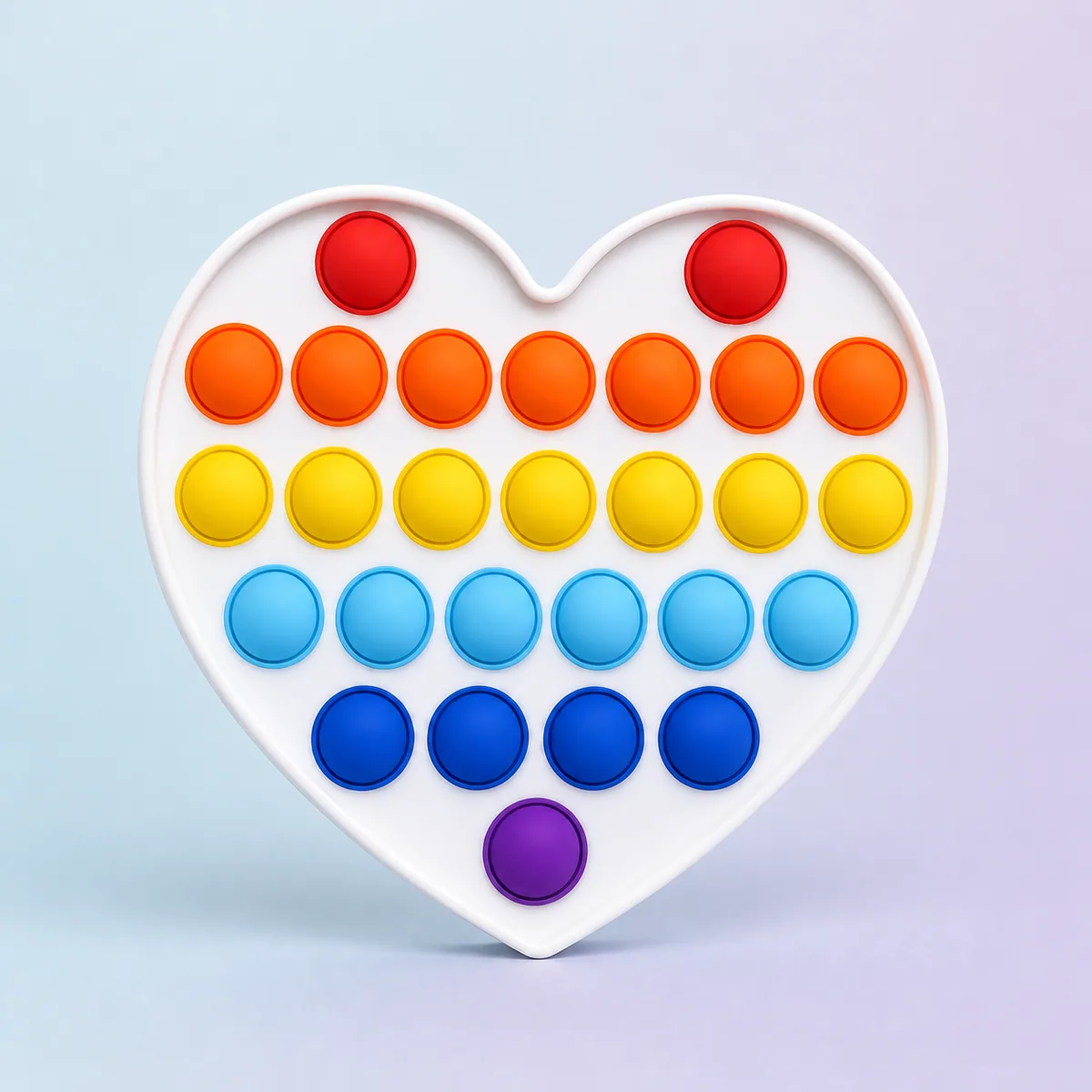
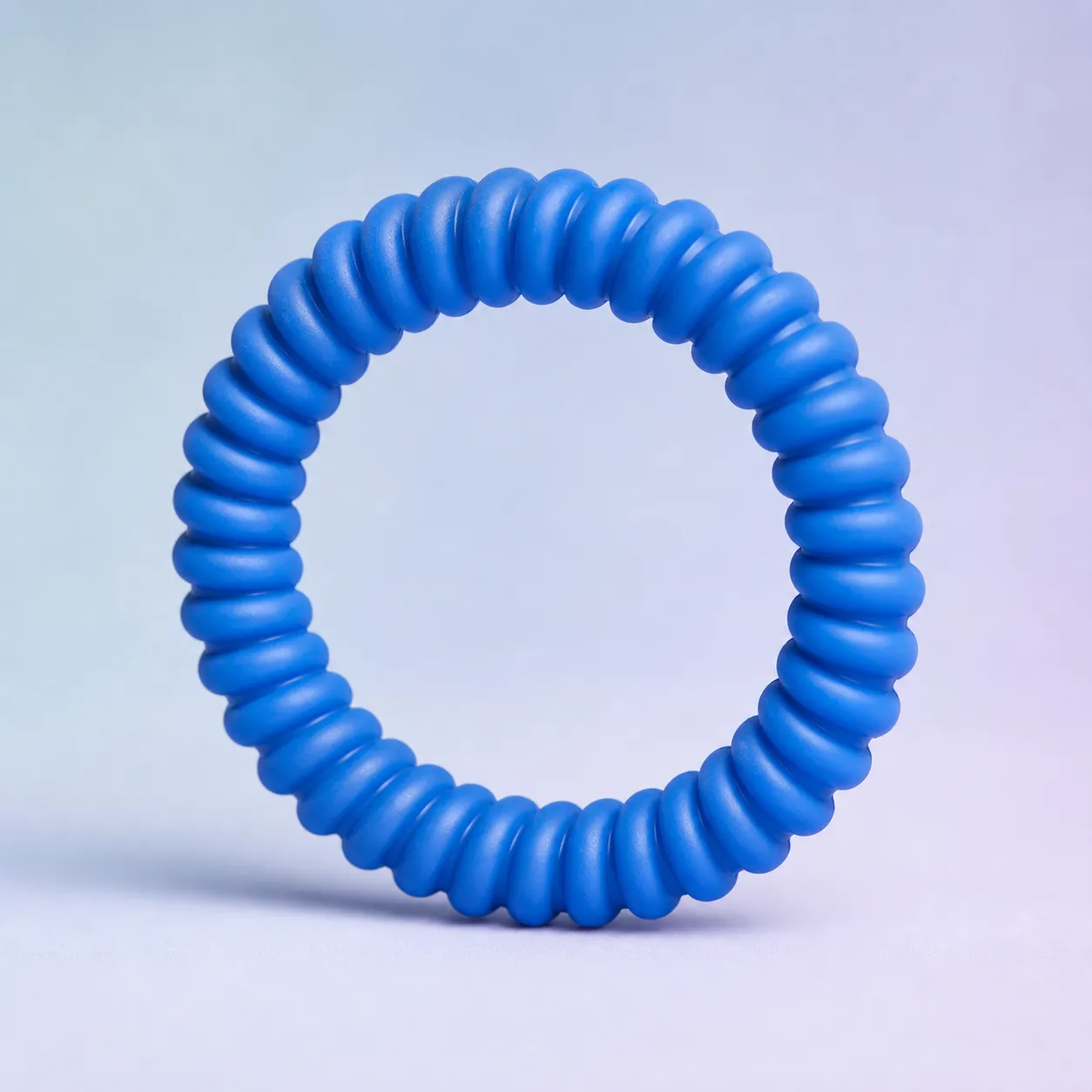
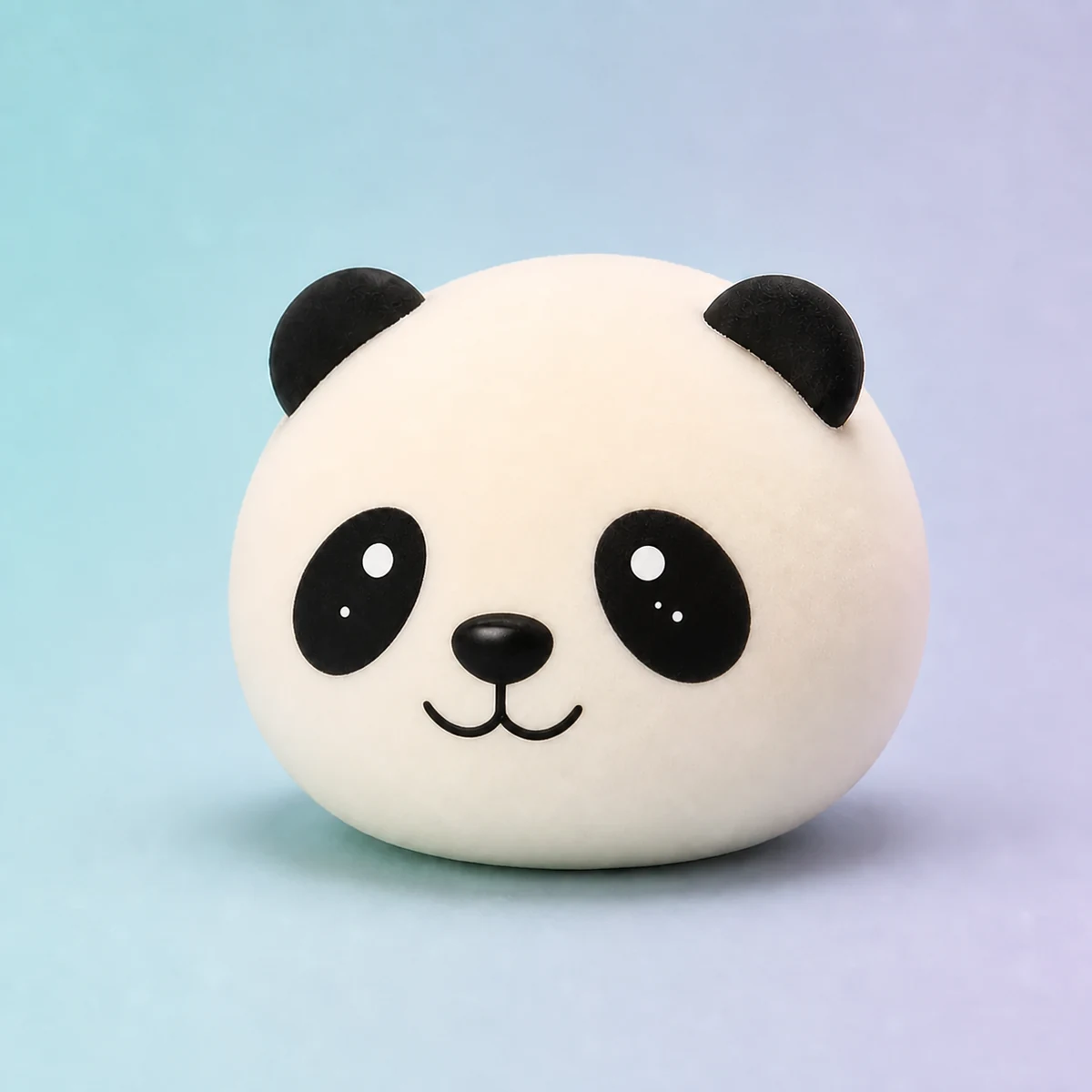
Start with construction rather than category. Hush Pop Push-Pop Sensory Board is one solid silicone board with bubbles molded into it; there is nothing to detach and nothing small enough to separate from the whole. Bun Buddy Panda Slow-Rise Squishy is a single piece of foam in one molded shape, the same as any of our slow-rise squishies. Always-On Fidget Bracelet is one soft silicone band with no clasp, beads, or hardware to come loose, which is part of why it carries an 8+ recommendation tied to fit rather than a choking concern.
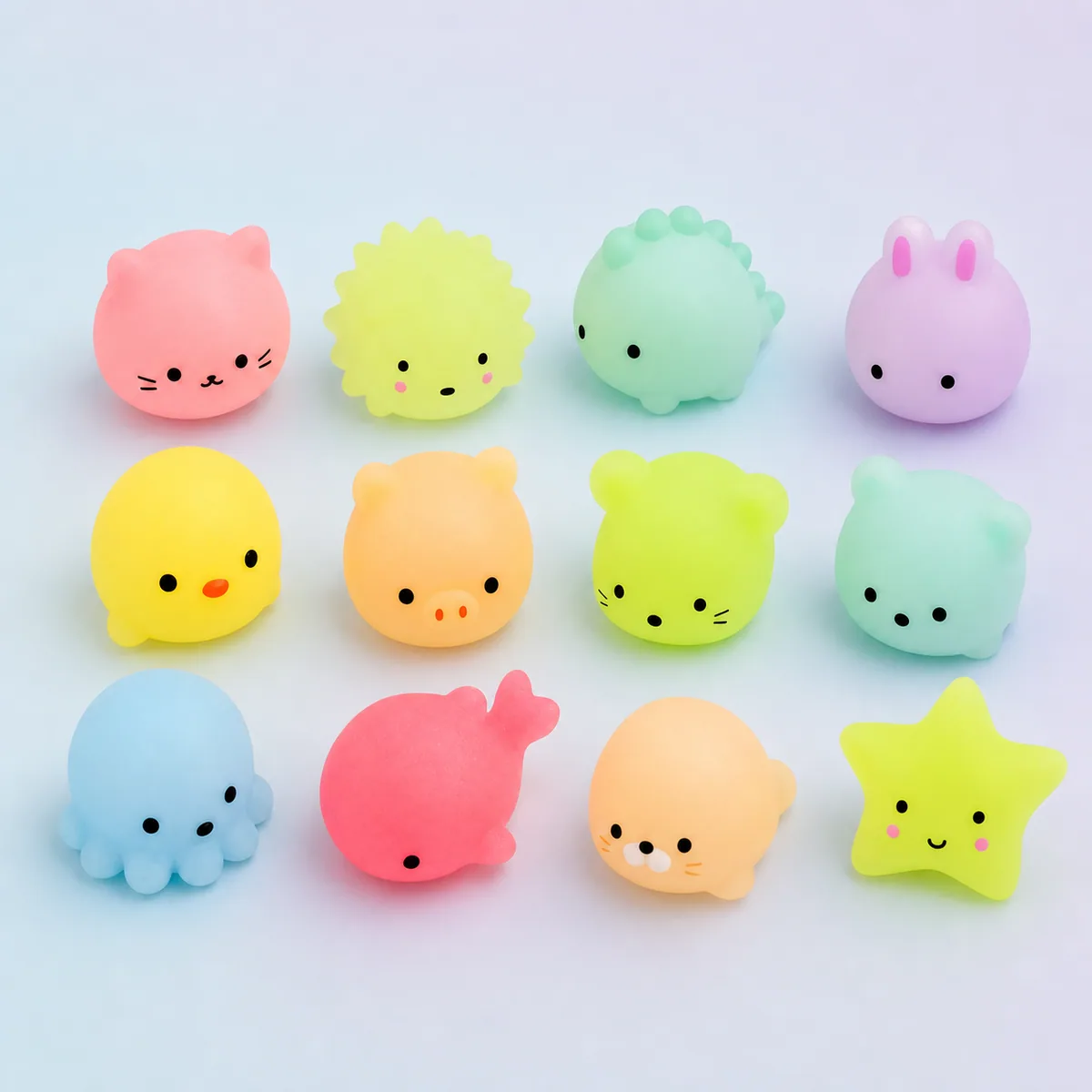
Mini Mochi Animals Squishy Set is the one to look at more closely, simply because it is twelve small squishies in one pack rather than one larger piece. Small does not automatically mean unsafe, but it does mean the physical logic behind the small-parts cylinder is directly relevant, and it is worth supervising a very young child with any set of small objects rather than assuming a pack is interchangeable with a single larger squishy.
What does the broader toy safety standard cover?
ASTM F963, the mandatory US toy safety standard, applies to anything designed, made, or marketed as a plaything for children under 14, and every toy sold in the US has had to meet its current version since April 2024. Separately, the CPSC’s own Age Determination Guidelines grade a product by matching its characteristics to a child’s skills, play behavior, and interests across an age band, not by any single number. Both are useful context, but neither one is a promise specific to squishies, thinking putty, or click cubes by name; they are general frameworks applied to this category the same way they are applied to every other toy.
None of this replaces plain observation. A toddler who still mouths everything within reach needs a different level of caution than a toddler who has grown out of that phase, regardless of what any label says, and the guidelines themselves are built around exactly that kind of developmental variation rather than a strict birthday cutoff.
A quick reference for the age bands
| Age band | What is legally required |
|---|---|
| Under 3 | No small parts allowed at all; no label can substitute for removing the part |
| 3 to 6 | Small parts allowed only with the specific federal choking-hazard warning label |
| Under 8 | Wider band for small balls, marbles, and latex balloons specifically |
| Under 14 | Covered by ASTM F963, the mandatory US toy safety standard, for general construction and testing |
So the practical version is simple: read the label, look at whether the object is one solid piece or many small ones, supervise closely with anything new, and treat “discard if damaged” as a permanent rule, not a one-time warning. Calm in the palm of your hand, and safely there too.
Sources & further reading
We reference trusted organizations by name. This article is informational and not a substitute for professional medical advice.
- U.S. Consumer Product Safety Commission: Sets and enforces the federal small-parts rule, the magnet safety rule, the new water-bead toy standard, and requires toys sold in the US to meet ASTM F963.
- American Academy of Pediatrics: Publishes consumer guidance through HealthyChildren.org advising parents to follow the age recommendations on toy packaging, since those labels are built around choking hazards and developmental readiness.
- ASTM International: Publishes ASTM F963, the mandatory US toy safety standard covering any object designed, made, or marketed as a plaything for children under 14.
- UL Solutions: Reports on the CPSC's 2020 Age Determination Guidelines, which grade a product against a child's skills, play behavior, and interests rather than a single fixed cutoff.
Frequently asked questions
Are fidget toys safe for toddlers?
It depends on the specific product, not the category. A single molded squishy or a soft silicone bracelet with no detachable parts is a different risk than a set of many small, loose pieces. Federal law bans small parts outright for anything intended for children under 3, so the honest approach is to check the label and the construction, not assume based on what a fidget toy generally is.
What is the small parts rule for toys?
Any toy intended for children under 3 cannot legally contain a part that fits entirely inside a 2.25 by 1.25 inch test cylinder, in any orientation, without compressing. A warning label cannot make that legal; the part has to be removed or the product redesigned. Toys for children 3 to 6 that do contain small parts must carry a specific federal choking-hazard warning instead.
Are magnetic fidget toys safe for young children?
Small, separable magnets are specifically regulated because ingesting more than one lets them attract through intestinal tissue, which can cause serious injury. A federal rule in effect since October 2022 requires small loose magnets to fall under a strength threshold that makes that outcome far less likely. None of our fidgets use loose, separable magnets, which sidesteps this specific hazard rather than solving it after the fact.
Are water bead toys safe for toddlers?
Loose water beads are a documented hazard, and a new federal safety standard for water bead toys took effect in March 2026 covering size, chemical content, and warning labels. The CPSC's own guidance is to discard any product containing water beads if the beads start to escape their casing. Water bead products are never the right choice for children under 3.
How do I know if a squishy or fidget toy is right for my toddler's age?
Start with the age label on the product, since federal age-grading rules are built around choking hazards and small-parts testing, not difficulty. Then look at the object itself: is it one solid piece, or does it have small, separate pieces that could come loose. A single molded squishy or a fitted silicone bracelet is a simpler shape to reason about than a set of many tiny pieces.
Do all our toys carry an age rating?
Products with small parts or a fit-dependent design, like our wearable rings and bracelet, carry a stated age recommendation on the product page; our silicone bracelet, for example, is rated 8+. For anything without a stated rating, use the general rule above: check construction, supervise young children with any small object, and when in doubt, choose the simplest, single-piece design.