Are fidget toys allowed at work?
For a quiet personal fidget at your own desk, yes, in nearly every workplace, because no law in the US or UK bans a small silent object in your hand while you work. What actually matters is different: whether you ever need one as a formal accommodation, because that is where real legal protection starts. The everyday case, a worry stone in your pocket or a spinner ring on your finger, is mostly not a policy question at all. It is a workplace-culture one.
That distinction is worth being precise about, because “is it allowed” gets asked two different ways. One is “will anyone stop me,” which almost nobody bothers to police for something this small and quiet. The other is “can I insist on one,” which is a real legal question with a real answer, and that is the one worth understanding before you actually need it.
What does US law say about fidgets at work?
US law protects fidget tools through the accommodation process, not through a blanket rule that permits them everywhere. The Americans with Disabilities Act requires covered employers to provide reasonable accommodation, which the Equal Employment Opportunity Commission defines as any change to the work environment that lets someone with a disability do their job on equal footing. That coverage only applies to employers with 15 or more employees on the payroll for 20 or more weeks a year, so a small shop is not bound by this federal law the way a large company is.
The Job Accommodation Network, a US Department of Labor service, keeps a page of fidget-specific accommodation ideas and names real products on it, including a worry stone and a fidget cube. JAN also lists fidget devices as a solution for attention and concentration limitations tied to autism. Its ADHD-specific page is more limited: it does not name fidget items at all, and instead lists structured physical breaks as the accommodation for hyperactivity and impulsivity. Worth knowing if you are building a case around a specific diagnosis, because the paperwork looks different depending which condition you are accommodating.
Getting a formal accommodation approved runs through what the EEOC calls the interactive process, an informal back-and-forth between you and your employer to figure out what you need and whether it is workable. It is not automatic, and it is not a guarantee of any specific item. What you get is a conversation, with a real employer on the other side who can propose a different fix that still solves the problem.
What does UK law say about fidgets at work?
UK law is more explicit about fidgets by name. ACAS, the public body that gives free employment advice, lists fidget toys outright as an example workplace adjustment for concentration, alongside ear defenders, standing desks, and quiet workspaces. The underlying duty comes from the Equality Act 2010, which ACAS describes plainly: employers must make reasonable adjustments for employees, workers, contractors, and job applicants. GOV.UK confirms the same legal duty and gives its own worked examples, a special keyboard for someone with arthritis, letting a socially anxious employee skip hot-desking, though its list does not name fidget items specifically.
ACAS is careful to frame every adjustment as individual rather than standard-issue. Its own worked example is a call-centre worker with ADHD who uses a standing desk to work off energy and sharpen focus, not a fidget toy at all. Fidgets are not automatically the answer. A named, specific adjustment, tailored to one person, is how the law is meant to work.
Do you have to ask before using one?
No, not for the everyday case. Nothing requires you to disclose anything or request anything to keep a worry stone in your pocket or a ring on your hand. The accommodation process exists for when you need your employer to actively support something, guarantee you can use it in a specific setting, or protect you if a manager objects. If nobody has ever raised an eyebrow, there is nothing to formalize.
Where it gets real is a workplace that has pushed back, or a role where you want something protected in writing before that happens. That is when naming the condition, if you have one, and going through the interactive process turns a quiet personal habit into a documented right.
Which fidgets work best at a desk?
Pick by how much attention the object draws, not by how much you like it.
| Fidget | Noise | Visibility | Good for |
|---|---|---|---|
| Calm Worry Stone | Silent | Low, fits in a palm or pocket | Calls, meetings, open-plan desks |
| Calm Putty | Silent | Low, stays under the desk | Long focus stretches, thinking time |
| Quiet Spinner rings | Nearly silent | Reads as ordinary jewelry | All-day wear, nothing to reach for |
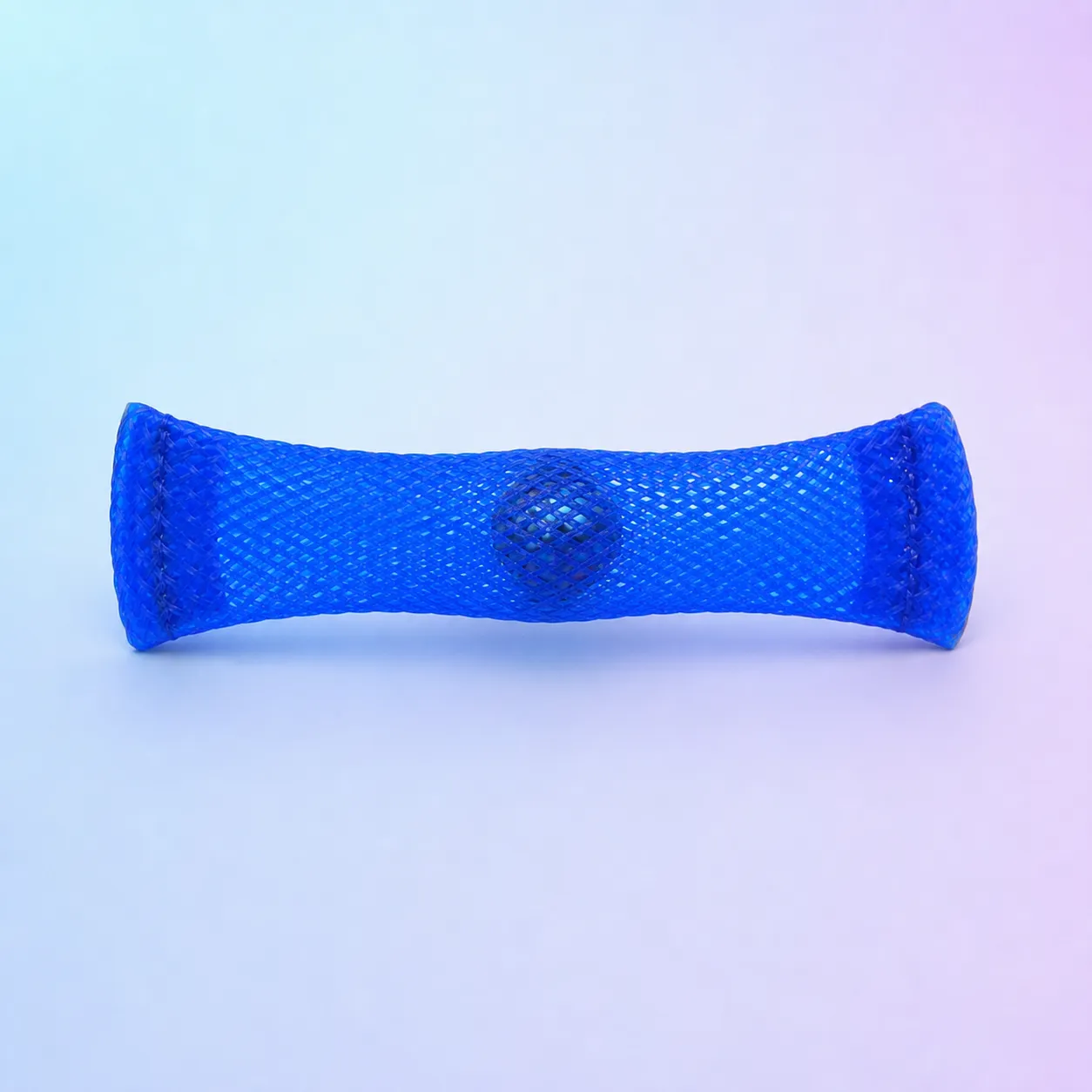
| Roll & Squeeze Mesh Marble | Soft rolling sound | Small, one hand | Private offices, quieter rooms |
A silent object that stays below desk height solves nearly every workplace situation without a conversation. Save something with more visible motion, like the mesh marble, for a private office or a room where a soft sound will not travel to the next desk.
What if it becomes an issue?
Then it is worth knowing the actual standard, not just the workplace mood. Neither the ADA nor the Equality Act 2010 promises you a specific object. Both promise a process, and an outcome that reasonably solves the underlying need, which might end up being a fidget or might be something else entirely. JAN and ACAS both frame their examples as options to raise, not entitlements to demand.
Most people never need any of this. A quiet fidget at a desk is common enough that it rarely draws a second look, and the honest odds are that you will never have to cite a law to keep using one. But if you do, the accommodation exists, the process is real, and a worry stone in your pocket is already on an official government-linked list of things worth asking for. Calm in the palm of your hand, wherever your desk happens to be.
Sources & further reading
We reference trusted organizations by name. This article is informational and not a substitute for professional medical advice.
- Job Accommodation Network (JAN): A US Department of Labor service that lists specific fidget products, including a worry stone and a fidget cube, as workplace accommodation options for concentration and autism-related needs, though its ADHD-specific page does not name fidget items.
- US Equal Employment Opportunity Commission (EEOC): Defines reasonable accommodation under the ADA and describes the interactive process, an individualized dialogue between employer and employee, as the standard path to approval.
- ACAS: UK public body giving free employment advice; names fidget toys directly as an example reasonable adjustment for concentration under the Equality Act 2010, and stresses that adjustments must be tailored to the individual.
- GOV.UK: Confirms UK employers' legal duty to make reasonable adjustments and gives its own worked examples, though its listed examples do not name fidget items specifically.
Frequently asked questions
Are fidget toys allowed at work?
For a quiet, personal fidget at your own desk, yes, in nearly every workplace, because no US or UK law bans one. The legal question only becomes real if you need one as a formal accommodation, which is a different, individualized process. Most people never need to invoke it at all.
Does the ADA guarantee the right to a fidget toy at work?
No. The ADA requires employers with 15 or more employees to provide reasonable accommodation through an individualized interactive process, not a guaranteed specific item. The Job Accommodation Network lists fidget devices, including a worry stone, as one accommodation option, but approval depends on your employer and your documented need.
Do UK employers have to allow fidget toys?
UK employers have a legal duty under the Equality Act 2010 to make reasonable adjustments, and ACAS names fidget toys directly as an example adjustment for concentration. As with the US process, adjustments are tailored to the individual rather than automatic or standard-issue.
Do I need to tell my employer I use a fidget toy?
No, not for ordinary use. Nothing requires disclosure or a request to keep a worry stone in your pocket or a ring on your hand. Disclosure and the formal process only matter if you want your employer to actively support or protect a specific accommodation.
What if my employer says fidget toys are not allowed?
Ask what the actual concern is, noise, visibility, or distraction to others, since most objections are about those, not the object itself. If you need protection in writing, the ADA or Equality Act 2010 process exists for that, and both the Job Accommodation Network and ACAS list fidget tools as recognized accommodation examples to raise.
What is the quietest fidget for an office?
A worry stone or a silicone-based putty is silent and stays below desk height, which solves nearly every office situation. A spinner ring reads as ordinary jewelry and needs nothing to be pulled out of a bag or pocket.