Worry stone vs. fidget ring: what is the difference?
A worry stone is a smooth, palm-sized object you carry and rub with a thumb, while a fidget ring is jewelry with a moving part, worn on the finger instead of carried in a pocket. Both give restless hands a small, repeatable, nearly silent motion, and the real choice between them comes down to two questions: do you want to carry it or wear it, and does your thumb want a broad rubbing motion or a rolling one. Neither is a treatment for anxiety or anything else; both are supportive tools for hands that want something steady to do, and the honest evidence on fidget tools in general is mixed. If a bigger, ongoing struggle is behind the restlessness, a qualified professional is the right next step, and the stone or the ring is simply for your hands while you get there.
How do you use a worry stone, and what does it feel like?
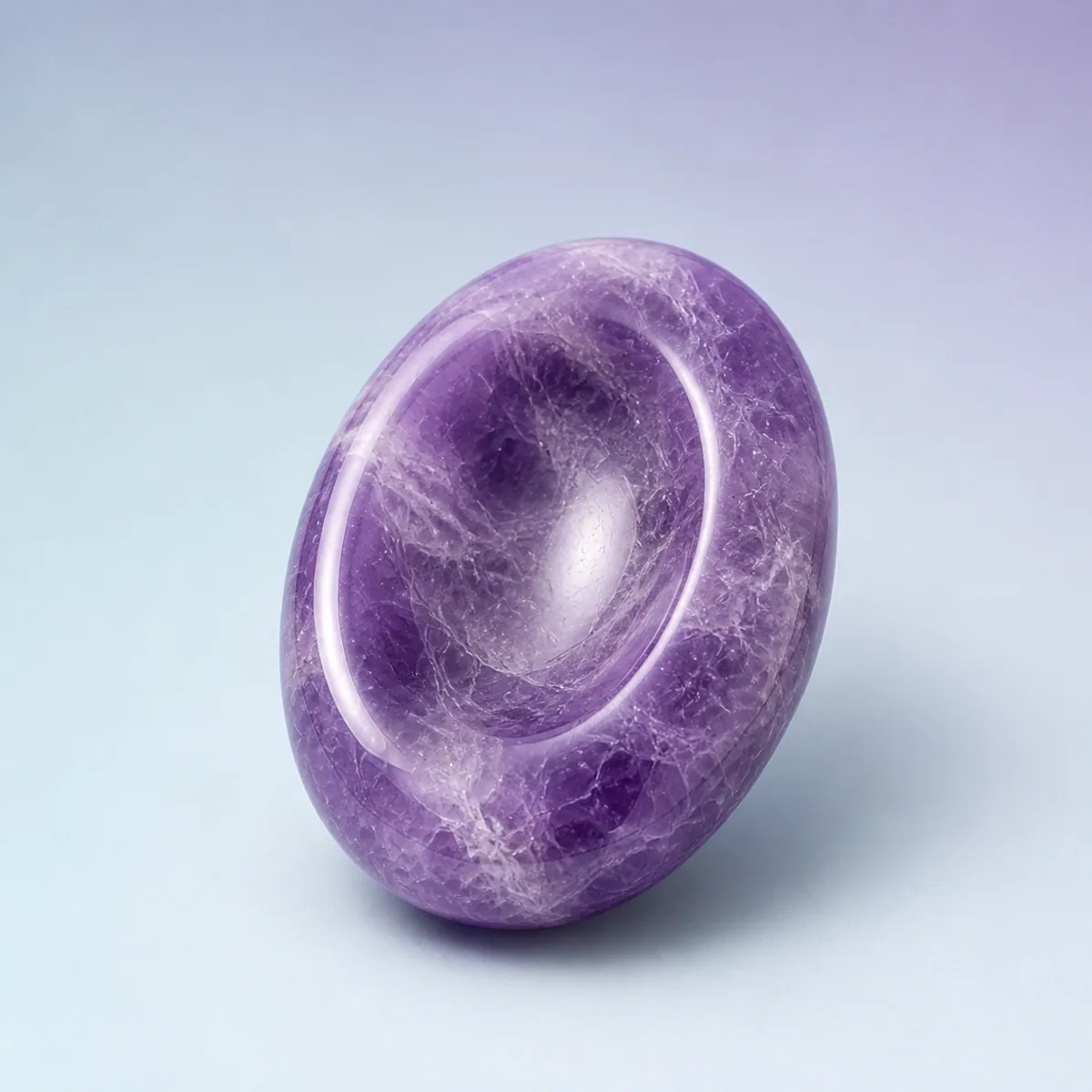
Calm Worry Stone is a polished, palm-warmed stone with a thumb-shaped dip worn into the middle, and the whole motion is your thumb finding that dip and rubbing back and forth across it. There is nothing to break, wind, or lose track of beyond the stone itself, and no learning curve: your thumb finds the hollow almost on its own within the first few seconds of holding it. The tradeoff is that it lives in a pocket or a bag rather than on your body, so it only helps if you remember to bring it, and it can go missing the way any small loose object can. Some colorways come in polished resin and others in natural stone, but the job is the same either way: a surface smooth enough to rub for an hour without irritating skin, and a dip shaped to keep drawing your thumb back to the same spot.
How does a fidget ring compare, and what does it feel like on your hand?
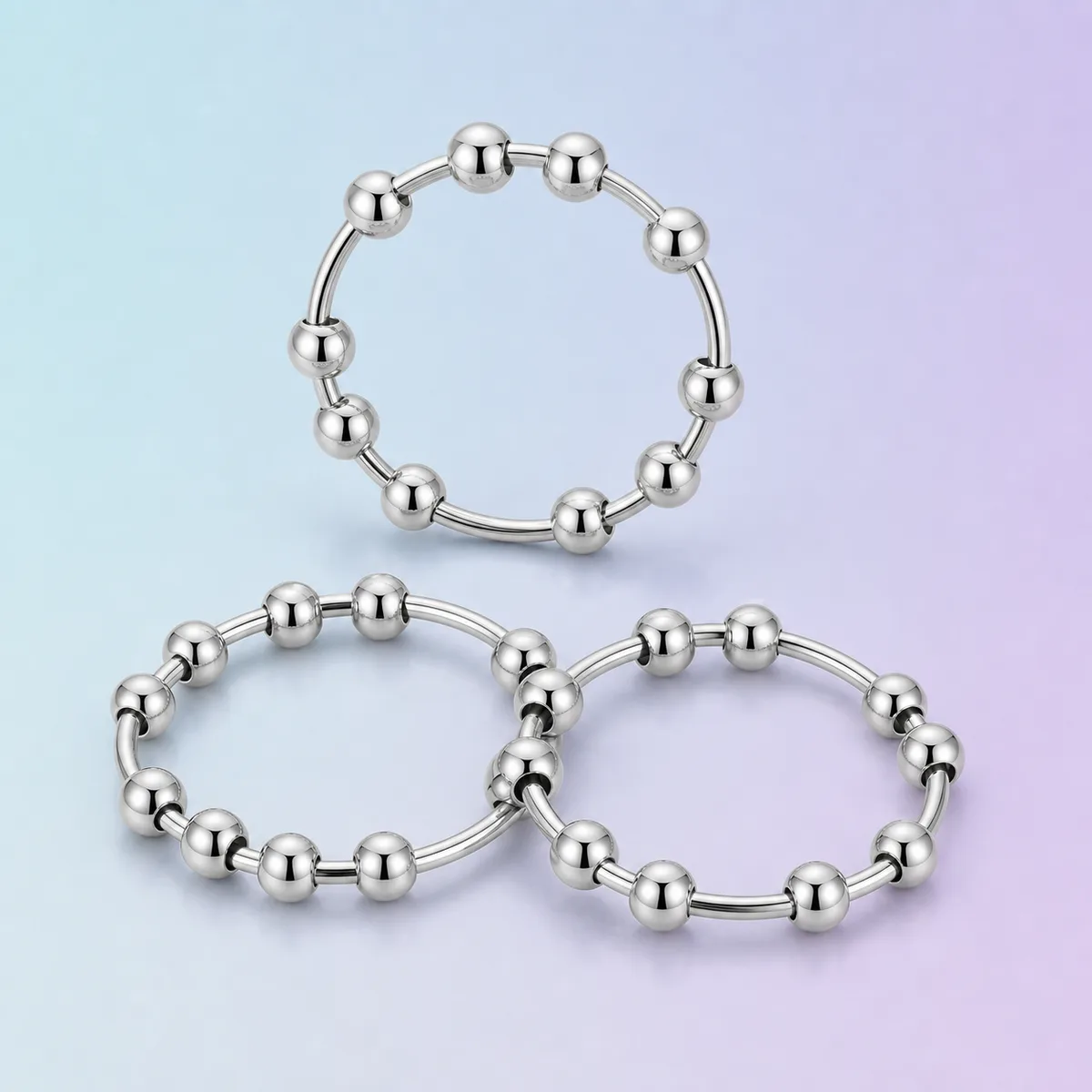
Quiet Spinner Sensory Ring Set gives your thumb a rolling motion instead of a rubbing one: polished steel beads set into a double-wire hoop that spin and slide as your thumb pushes them around. Because it is worn rather than carried, it is with you before you have thought to reach for anything, on a commute, in a meeting, at a desk. The stainless steel construction adds a faint metallic tick as the beads roll, quiet across a room but noticeable to the wearer, and unlike a worry stone, a ring has to fit: too loose and it spins off, too tight and it restricts the finger. Because rings are small and easy to slip off and set down somewhere, the set comes as three, which is less a luxury than a practical fix: one for the desk, one for the bag, one spare for whichever finger the swelling or the weather favors that day.
Where does the silicone bracelet fit in?
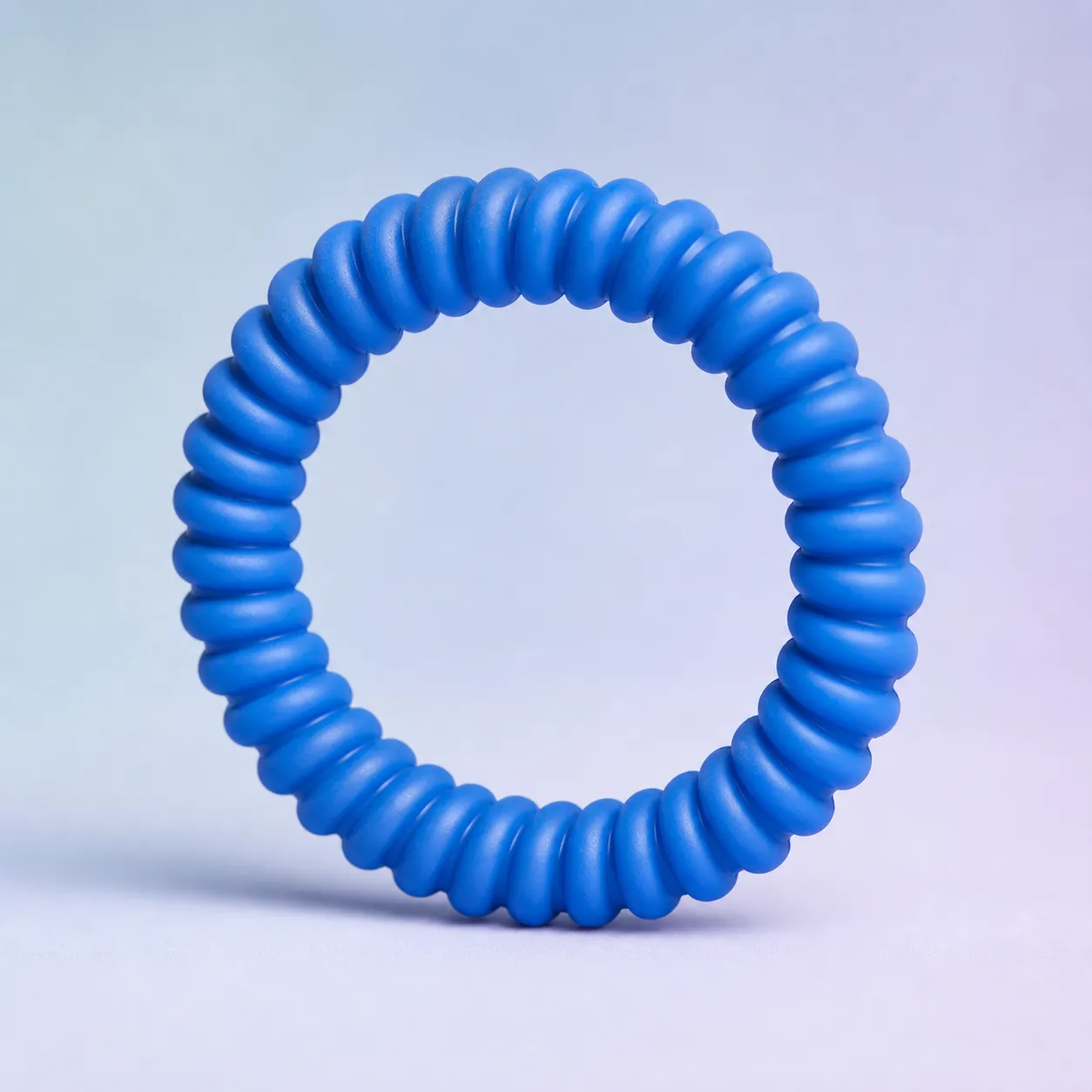
Always-On Fidget Bracelet is a third, in-between option: worn like the ring, but silicone rather than metal, with a quiet textured band your thumb can run along instead of a rolling bead. It has no moving parts to catch, wind, or tick, so it stays completely silent, and its soft material makes it the easier first choice for a metal-sensitive wrist or a younger child’s hand than a beaded steel ring. It is also the option most people forget they are wearing, which is either the whole point or the one thing to watch for: a fidget you stop noticing is a fidget you stop reaching for, so some hands do better with the slightly more present tick of the ring.
Worry stone, ring, and bracelet, compared
| Fidget | Material | Motion | Worn or carried | Noise |
|---|---|---|---|---|
| Calm Worry Stone | Polished resin (some natural stone) | Rub a thumb hollow | Carried | Silent |
| Quiet Spinner Sensory Ring Set | Stainless steel | Roll beads around a hoop | Worn | Faint tick, quiet |
| Always-On Fidget Bracelet | Silicone | Run a thumb along a textured band | Worn | Silent |
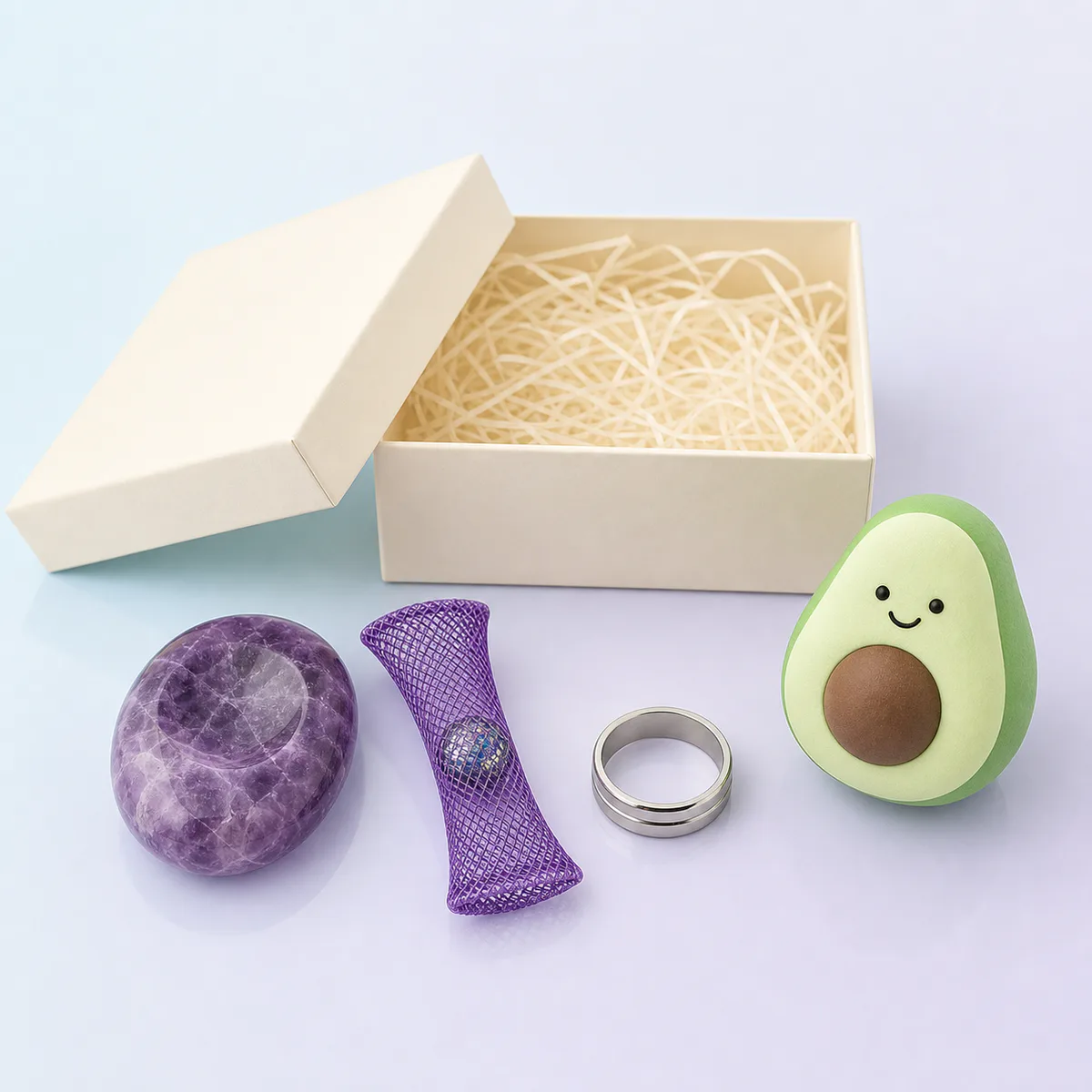
| The Exam Calm Kit | Mixed (resin, mesh, steel, PU foam) | Several, chosen for quiet | Carried | Silent to very quiet |
Which fits an exam or a meeting, and which is easier for a first try?
For a silent exam hall or a meeting where your hands need to work under a desk without a sound, the worry stone and the silicone bracelet are the safer picks, and The Exam Calm Kit builds on the same idea with a small set of tools chosen specifically to stay quiet under pressure. The ring is a fine choice for a meeting too, since its tick is faint, but a genuinely silent room is where the stone or the bracelet pulls ahead.
For a first-time user or a young child, a worry stone is the easier starting point. The motion is a broad thumb rub that needs almost no practice, while rolling small beads around a ring hoop takes more precise finger control, a kind of coordination that keeps developing through early childhood. That does not make a ring the wrong choice for a teen or an adult, since most hands past that stage manage it easily. It is a reason to start younger hands, or a first-time fidgeter of any age, with the stone or the bracelet before handing over the ring.
This also makes the choice a decent gift question. A worry stone or a bracelet is the safer pick for someone you are not sure will bother learning a new motion, since there is nothing to learn. A ring or the full Exam Calm Kit suits someone who already fidgets often and wants more to work with, a student stacking one tool against another through a long study session rather than settling on a single item.
A stone to rub, a band to hold onto, or a ring to roll, all three are doing the same basic job: giving a restless thumb somewhere to go. Calm in the palm of your hand, or on the finger, whichever your hands prefer.
Sources & further reading
We reference trusted organizations by name. This article is informational and not a substitute for professional medical advice.
- National Autistic Society: Frames repetitive hand movements as a form of self-regulation, advising that if someone is stimming to self-regulate, others should not try to stop them unless they are at risk of harm.
- Autistic Self Advocacy Network: An advocacy organization run by autistic people that describes stimming, including rocking, playing with the hands, or humming, as a way of regulating the senses.
- American Academy of Pediatrics: Describes typical fine motor milestones in early childhood, including how the precise finger control needed to roll or pinch small objects develops over time.
Frequently asked questions
What is the difference between a worry stone and a fidget ring?
A worry stone is a smooth object you carry in a pocket and rub with your thumb, while a fidget ring is jewelry you wear that rolls or spins under your thumb instead. Both give restless hands a small, repeatable motion, but one has to be carried and the other stays on your hand.
Which is quieter, a worry stone or a fidget ring?
A worry stone is completely silent, since there is nothing to move but your own thumb across the stone. A fidget ring like Quiet Spinner Sensory Ring Set is very quiet but not silent, since the steel beads make a faint tick as they roll, audible to the wearer more than anyone nearby.
Is a fidget bracelet the same as a fidget ring?
Not quite. Always-On Fidget Bracelet is worn like a ring, but it is a silicone band with a textured surface rather than a metal hoop with rolling beads, so it has no moving parts and stays completely silent. It also skips metal entirely, which matters for sensitive skin or a younger child's hand.
Which is easier to use for the first time, a worry stone or a ring?
A worry stone is easier to start with, since rubbing your thumb across a shaped dip needs almost no practice. Rolling small beads around a ring hoop takes more precise finger control, a kind of coordination that keeps developing through early childhood, so a first-time fidgeter or a young child usually finds the stone or the bracelet more immediately comfortable.
What is The Exam Calm Kit, and how does it relate to a worry stone?
The Exam Calm Kit is a small set of silent or near-silent tools, including materials like resin, mesh, steel, and PU foam, chosen for exactly the kind of quiet, carried use a worry stone is built for. It gives a student several options in one kit rather than committing to a single item.
Can you wear a fidget ring or bracelet all day?
Most people can. Stainless steel and silicone both hold up to normal daily wear, though a ring should come off if it catches on hair or bedding at night, and either should come off at the first sign of skin irritation. A worry stone has no wear consideration at all, since it never stays against skin for more than a few seconds at a time.