What are calming toys?
Calming toys are small sensory objects that give restless hands a quiet, repeatable thing to do. A foam squishy that rises slowly after you press it, a ball that squeezes and springs back, a blob of gel that oozes, a cube that folds end over end, a ring with beads that roll under your thumb, a smooth stone to rub in a pocket. The calm comes from the motion and the feel, and many people find that small physical task settling when the rest of them is not.
That is the whole definition, and it is worth being plain about because the phrase gets stretched. A calming toy does not calm you the way a medicine or a therapy would. It gives your hands a job, and for a lot of people, in a lot of moments, that is enough to take the edge off. We make these, so we have every incentive to oversell them; we would rather tell you exactly what they are.
The six kinds, and what each one does
Most calming toys fall into six everyday families, and they differ mainly by speed, feel, and noise.
| Kind | The motion | Speed | Noise | Examples |
|---|---|---|---|---|
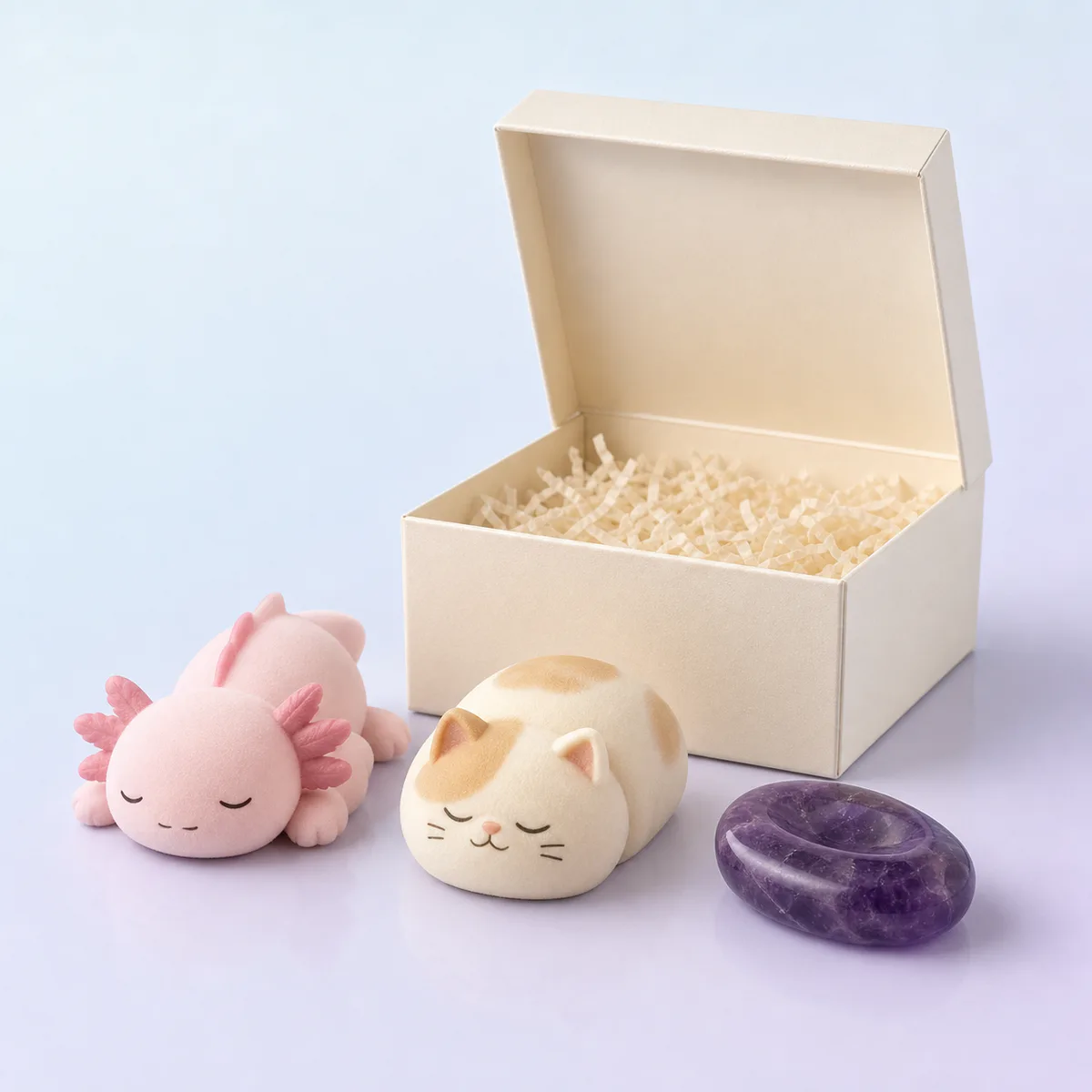
| Slow-rise squishies | Press, then watch it rise | Slow | Silent | Peachy, Doughboy dumpling, Sleepy Cat |
| Squeeze and stress balls | Squeeze and release | Fast or moldable | Silent | Calm Orb, Bubble Grapes, Mold & Hold |
| Gel and putty | Stretch, ooze, knead | Slow | Silent | Jelly Blob, Calm Putty |
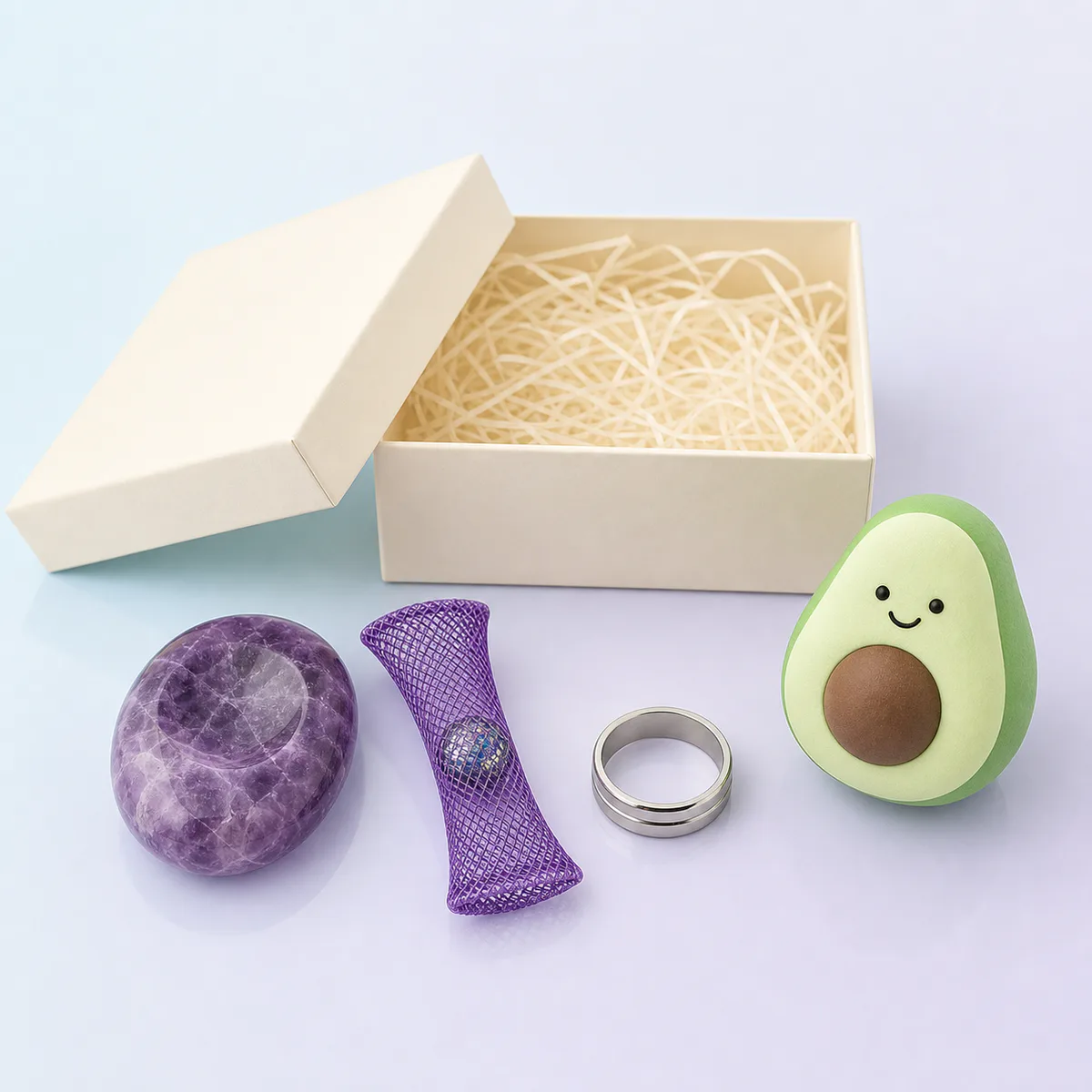
| Pocket fidgets | Fold, click, roll | Continuous | Soft click or silent | Infinity Flip Cube, Click-Cube, mesh marble |
| Wearables | Roll a bead or a band | Continuous | Silent to very quiet | Quiet Spinner rings, Always-On bracelet |
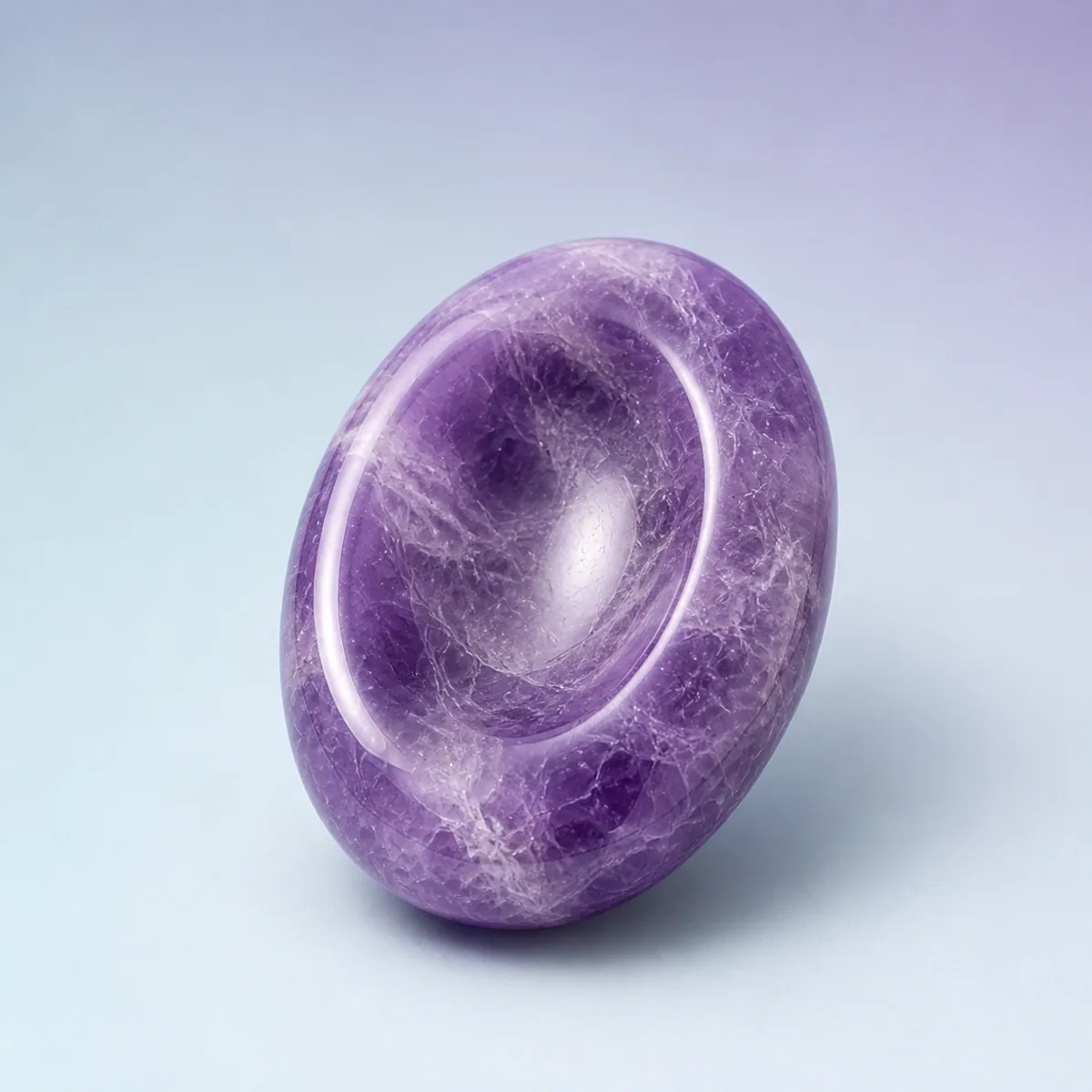
| Worry stones | Rub a thumb hollow | Slow | Silent | Calm Worry Stone |
Slow-rise squishies are the winding-down kind. They are soft open-cell foam that eases back over several seconds after you press it, so the rhythm is press, wait, watch, repeat. Silent, and the one we point people to for bedtime.
Squeeze and stress balls are the letting-off-steam kind. A water-bead ball bulges between your fingers and resets; a moldable dough ball holds the dent for a moment. Fast feedback for tension you can feel in your hands.
Gel and putty are the open-ended kind. There is no single motion: stretch it, snap it, flatten it, fold it. People who get bored of one-trick fidgets tend to settle here, and both are silent.
Pocket fidgets are the continuous kind. An infinity cube folds forever; a click cube offers six small inputs; a mesh marble rolls under the fingers. Most make a soft sound, which matters for where you use them.
Wearables are the always-there kind. A spinner ring or a textured bracelet means there is nothing to carry and nothing to fish out of a bag; the fidget is on your hand before you have noticed you need it.
Worry stones are the oldest kind, a smooth stone with a hollow the thumb finds on its own. Silent, discreet, and the one that looks like nothing at all, which is exactly why adults keep one in a coat pocket.
How do you choose one?
Ask three questions, in this order: what motion your hands already reach for, how quiet the room has to be, and who is using it.
The motion first. Watch your own hands on a tense day. If you press and squeeze, start with a squishy or a ball. If you twist rings, pick at sleeves, or roll a pen, start with a spinner ring or a worry stone. If you pull and stretch things, putty. Your hands have usually already told you what they want; the toy just gives them something better to do it with.
Then the room. A silent exam hall, a library, a shared bedroom, and a quiet office rule out anything that clicks, which leaves squishies, gel, putty, stones, and silicone bands. A commute or a busy office can take a soft click.
Then the person. For a young child, follow the age rating and avoid small parts; a slow-rise squishy rated for their age or a soft push-pop is the simple choice, and water-bead products are never for under-3s. For a teen, discretion tends to matter most, which is where spinner rings, worry stones, and small squishies win. For adults, choose by the moment: desk, commute, bedtime, or waiting room.
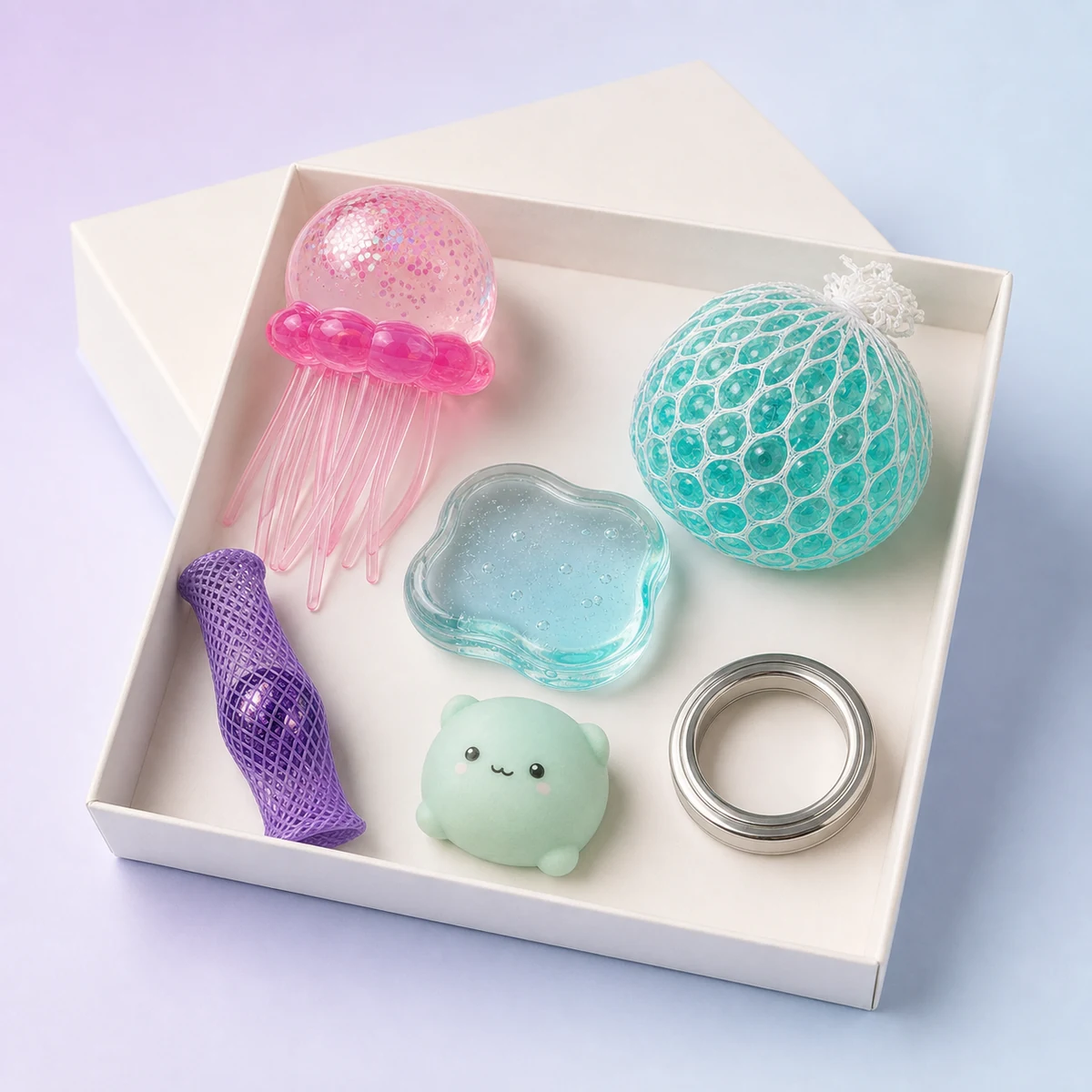
If none of that settles it, a starter bundle with several kinds is the cheapest way to find out, because the honest truth is that the right motion varies from person to person and there is no way to know from a screen.
What calming toys do not do
They do not treat anxiety, ADHD, autism, insomnia, or anything else, and we will not tell you they do. Here is the honest frame, which is also the one occupational therapists tend to use: sensory and fidget tools can be one part of a self-regulation toolkit, the effects vary from person to person, and the research is mixed but promising. Worth trying, and not a treatment. Both things are true at once.
So if you are choosing one for yourself, choose it because your hands like it and the moment is easier with it. If you are choosing one for a child or a student, choose it as a support alongside whatever real help they have. And if the thing you are trying to calm is bigger than a stressful afternoon, please talk to a qualified professional. The toy is the small, steady thing for your hands while you do.
Where to start
For a desk, the Calm Putty or the Jelly Blob. For the pocket, the Calm Worry Stone. For bedtime, the Sleep & Wind-Down Kit, which is two slow-rise squishies and a worry stone and nothing that glows or clicks. For exam season, the Exam Calm Kit, four silent or near-silent tools chosen so they will not draw a glance. For someone who does not know yet, the Calm Starter Bundle, six kinds in one box.
Whichever you pick, the promise is modest and real: a quiet, repeatable thing to do with your hands, made for a real nervous system. Calm in the palm of your hand.
Sources & further reading
We reference trusted organizations by name. This article is informational and not a substitute for professional medical advice.
- American Occupational Therapy Association: Occupational therapists describe sensory and fidget tools as possible supports for self-regulation, with effects that vary from person to person.
- CHADD: Describes fidget tools as one possible part of a broader self-regulation toolkit rather than a standalone fix.
- Child Mind Institute: Frames sensory and fidget tools as supportive aids and points to professional support for anything diagnosable.
- U.S. Consumer Product Safety Commission: Has warned that water beads can cause serious injury if swallowed by young children; age ratings and small-parts warnings on sensory toys exist for this reason.
- Anxiety and Depression Association of America: Provides resources on stress, grounding techniques, and knowing when to seek professional help.
Frequently asked questions
What are calming toys?
Small sensory objects that give restless hands a quiet, repeatable motion: squishies that rise slowly, balls that squeeze and release, gel and putty that stretch and ooze, pocket fidgets that fold or click, wearable rings and bracelets, and worry stones to rub. Many people find that small physical task settling in stressful moments. They are supportive tools, not treatments.
Do calming toys work for anxiety?
They can make an anxious moment easier to sit through for many people, by giving nervous energy somewhere to go and attention a small, steady task. They do not treat anxiety, and we will not claim they do. The research on fidget tools is mixed, and if anxiety is interfering with daily life, a qualified professional is the right support.
What is the best calming toy for a child?
For a young child, a supervised slow-rise squishy rated for their age, a push-pop fidget, or a soft silicone bracelet: simple, silent or soft, and free of small parts. Check the age rating on every product; water-bead balls are never for children under 3. For a classroom, choose something silent so it does not become a distraction for everyone else.
What is the best calming toy for adults?
It depends on the moment. For a desk, putty or a gel blob; for a commute or a waiting room, a worry stone or a spinner ring; for bedtime, a slow-rise squishy, which is silent and gives the eyes a slow thing to follow; for meetings, anything silent that works under the table. If you do not know what your hands want, a starter bundle with several kinds is the cheapest way to find out.
Are calming toys the same as fidget toys?
Mostly. Fidget toy describes the motion, something to fidget with; calming toy describes the reason people reach for one. A click cube is a fidget toy that some people find calming and others find stimulating; a slow-rise squishy is built for winding down. The label matters less than matching the motion to the moment.
Which calming toys are silent?
Foam slow-rise squishies, gel blobs, putty, worry stones, mesh marble fidgets, and silicone bracelets are silent. Spinner rings are very quiet. Infinity cubes, click cubes, and push-pops make a soft sound, which is fine in most rooms and too much for a silent exam hall.