Where did fidget toys come from?
Fidget toys are much older than they look. People have kept their hands busy with small objects for thousands of years, so the spinner that swept through classrooms in 2017 was not the start of anything. It was the newest version of a very old habit.
The urge itself is simple and human. When the mind is restless, bored, anxious, or trying hard to focus, the hands want something to do. Cultures all over the world answered that urge in their own way, with smooth stones, strings of beads, metal balls, and later foam, plastic, and steel. The materials changed. The impulse did not. What we now package and sell as a fidget toy is really a very old behavior wearing modern clothes.
What did people use before modern fidget toys?
Long before anything was marketed as a fidget toy, people reached for worry stones and worry beads. Both are small, smooth objects made to be handled slowly and repeatedly, and both go back a very long way.
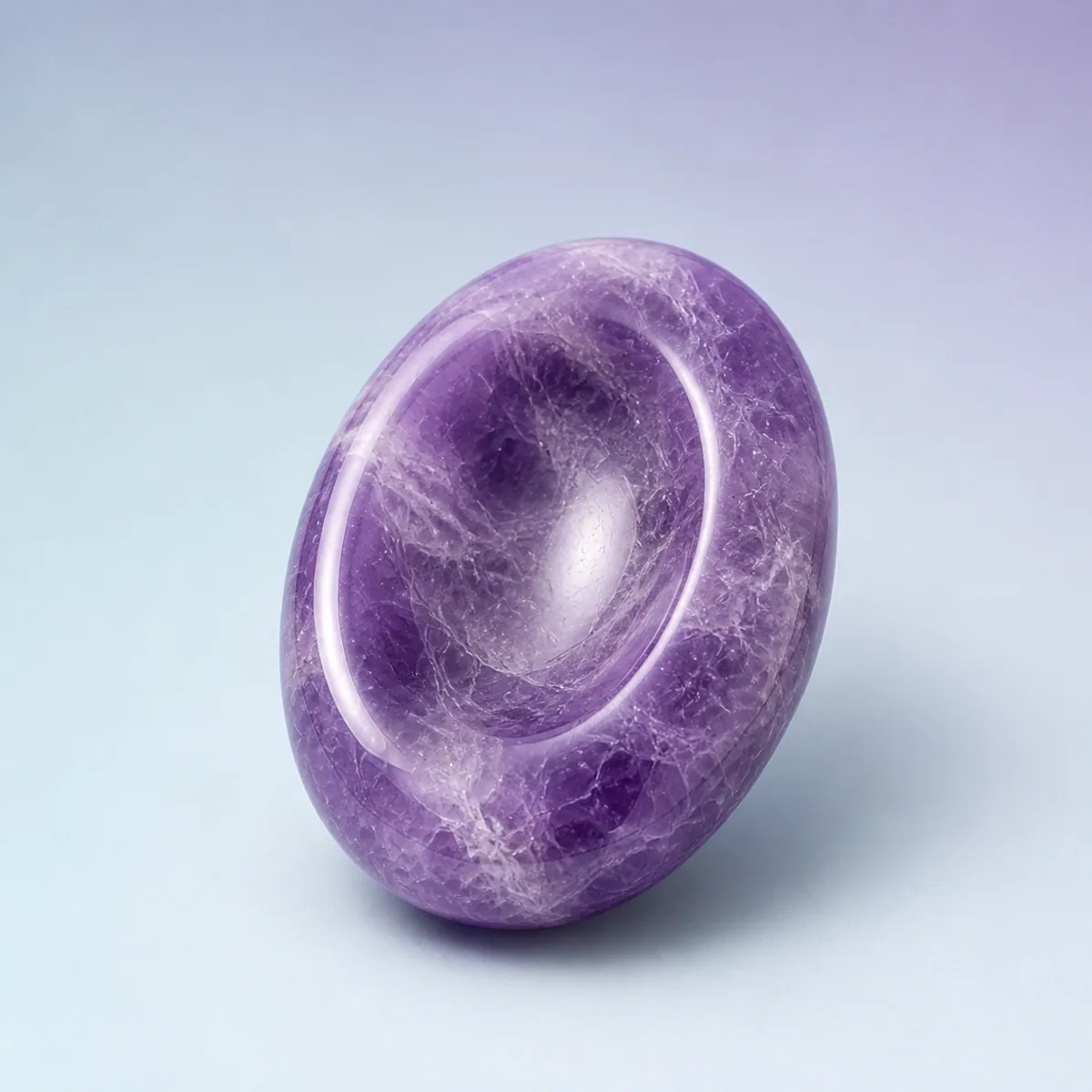
A worry stone is a flat, polished stone with a thumb-shaped dip worn into the middle. You hold it and slide your thumb back and forth across the hollow, and the slow, repeated motion is the whole point. Smooth palm stones like this show up in many cultures, and the idea is often traced back to ancient Greece. The appeal is easy to feel even now: cool, weighted, quiet, and endlessly repeatable. Our own Calm Worry Stone is a direct descendant of that tradition, a smooth oval with a thumb hollow, made for exactly the same slow rhythm people have used for centuries.
Worry beads are the other great ancestor. The Greek komboloi is a short string of beads that you flick, roll, and click through your fingers to pass the time and settle your hands. It is worth being clear about one thing: a komboloi is not a religious object. Prayer beads, like a Catholic rosary, a Muslim misbaha, or a Hindu or Buddhist mala, are used for counting prayers or mantras. The komboloi borrowed the form but dropped the religion, which makes it one of the purest early fidget tools we know of, a string of beads whose only job is to give the fingers something to do.
What are Baoding balls?
Baoding balls are a pair of small metal balls that you rotate in one hand, and they are one of the oldest fidget objects still in common use. They take their name from the city of Baoding in China, where they have been made for a very long time.
The motion is the appeal. You hold two balls in your palm and rotate them around each other, first one way and then the other, keeping them from clicking together as your fingers learn the pattern. Some versions carry a soft chime inside, so the movement has a quiet sound. Traditionally they were linked with hand dexterity and relaxation, and they ask a little more skill than most modern fidgets, which is part of why people stay interested in them. Set a pair next to a spinner and the family resemblance is obvious. Different century, same idea: keep the hands moving in a small, repeatable loop. They are also a reminder that a fidget does not need a battery or a brand. A good one can be nothing more than two smooth objects and a little practice.
When was the stress ball invented?
The soft foam stress ball arrived in the 1980s, and it is the object that turned fidgeting into an everyday office fixture. Squeezable objects existed before then in various forms, but the foam version is the one that landed on desks everywhere.
Part of that was timing. The stress ball showed up as offices were paying more attention to workplace stress, and it made a perfect promotional giveaway: cheap, printable with a logo, and instantly understood. Squeeze it in a tense meeting, drop it in a drawer, hand one out at a conference. For a lot of people, the foam stress ball was the first fidget they ever owned, even if nobody called it that yet. From there, the desk-toy shelf kept filling up with executive toys, clackers, tangles, and putty, each a small variation on the same theme. It also set a template the whole category still follows: a small, affordable object whose entire purpose is to give a restless hand somewhere to go.
What happened with the fidget spinner craze of 2017?
The fidget spinner turned a quiet, centuries-old habit into a worldwide fad almost overnight. In 2017, spinners were suddenly everywhere: toy shops, corner stores, school playgrounds, and endless online videos. Then, just as fast, came the backlash.
A few things happened at once. The toys sold in enormous numbers, and much of the marketing leaned on health claims, promising help with autism, ADHD, and anxiety. Those claims mostly ran ahead of the evidence. At the same time, teachers found the spinners were pulling attention rather than steadying it, and many schools banned them as a distraction. Who actually invented the modern spinner became a tangled, disputed story, and cheap versions raised real safety and quality concerns. Within a year the craze had cooled.
It is worth holding two honest thoughts about that moment. The hype was overblown, and the specific medical promises were not fair to make. And yet the underlying idea, that a lot of people like having something to fidget with, was real all along. The spinner was a genuine fidget object buried under some bad marketing. When the fad passed, the habit stayed, because the habit was never the fad.
How do we understand fidget toys now?
Today, fidgets are best understood as sensory-regulation tools, not cures and not magic. After the spinner boom and bust, the more grounded view is the one occupational therapists have held for a long time: for some people, having a small, repetitive movement to do with the hands can support focus and a feeling of calm.
This view is more modest and more honest than the 2017 sales pitch, and it holds up better. Fidget tools are widely used in classrooms, in therapy settings, and by neurodivergent people as one part of a larger toolkit for staying regulated. The evidence is genuinely mixed, and no reputable source claims a fidget treats or cures a condition. What many practitioners and users do report is that the right fidget, quiet and matched to the person, can make restlessness easier to sit with. That is a real, everyday benefit, and it does not need to be exaggerated to be worth something.
It also helps to say plainly who this is for. Plenty of people fidget with no label and no diagnosis, just restless hands during a long call. Others, including many autistic and ADHD people, use fidgets as a daily tool for staying regulated. Neither group needs permission, and neither needs a grand claim to justify a simple object that helps a little.
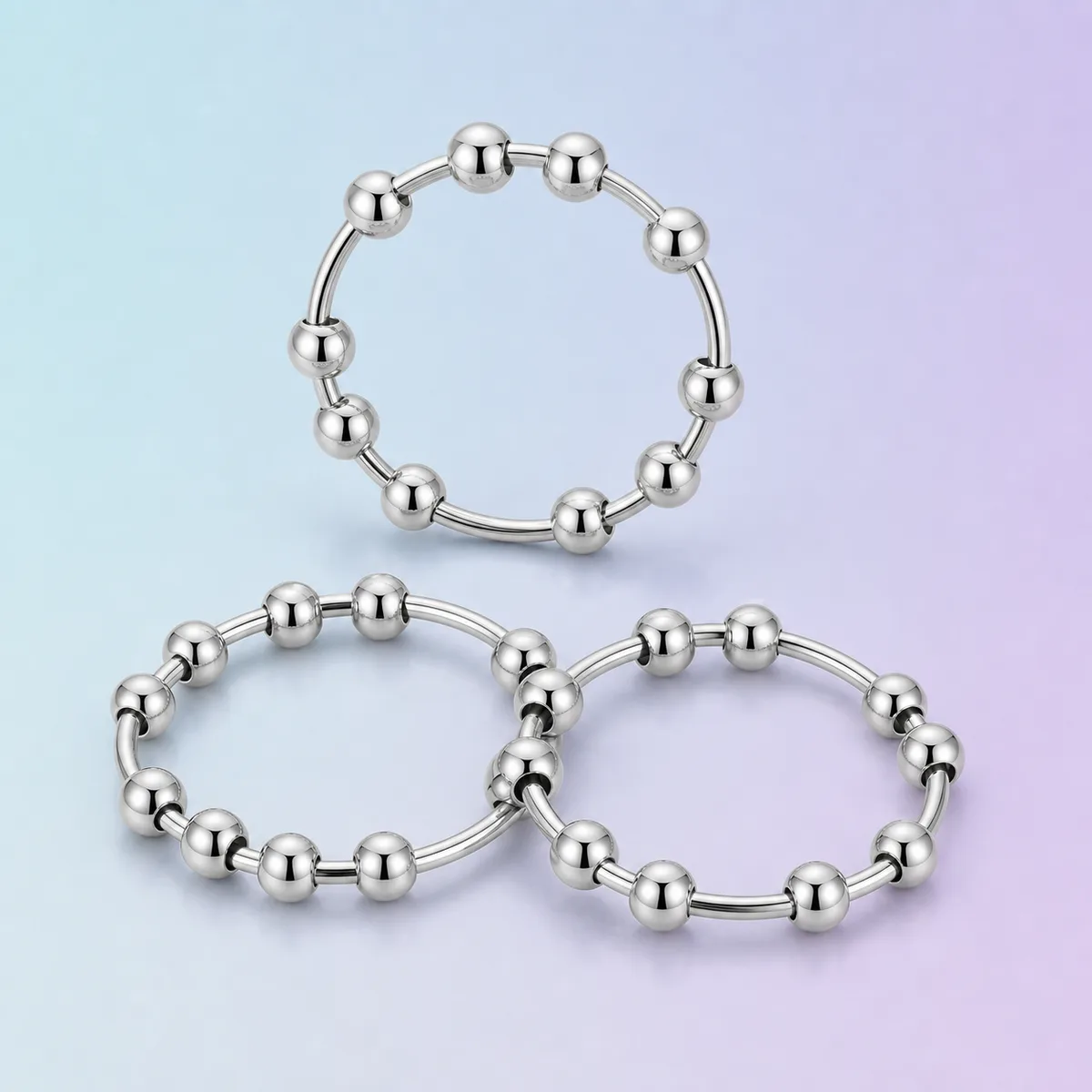
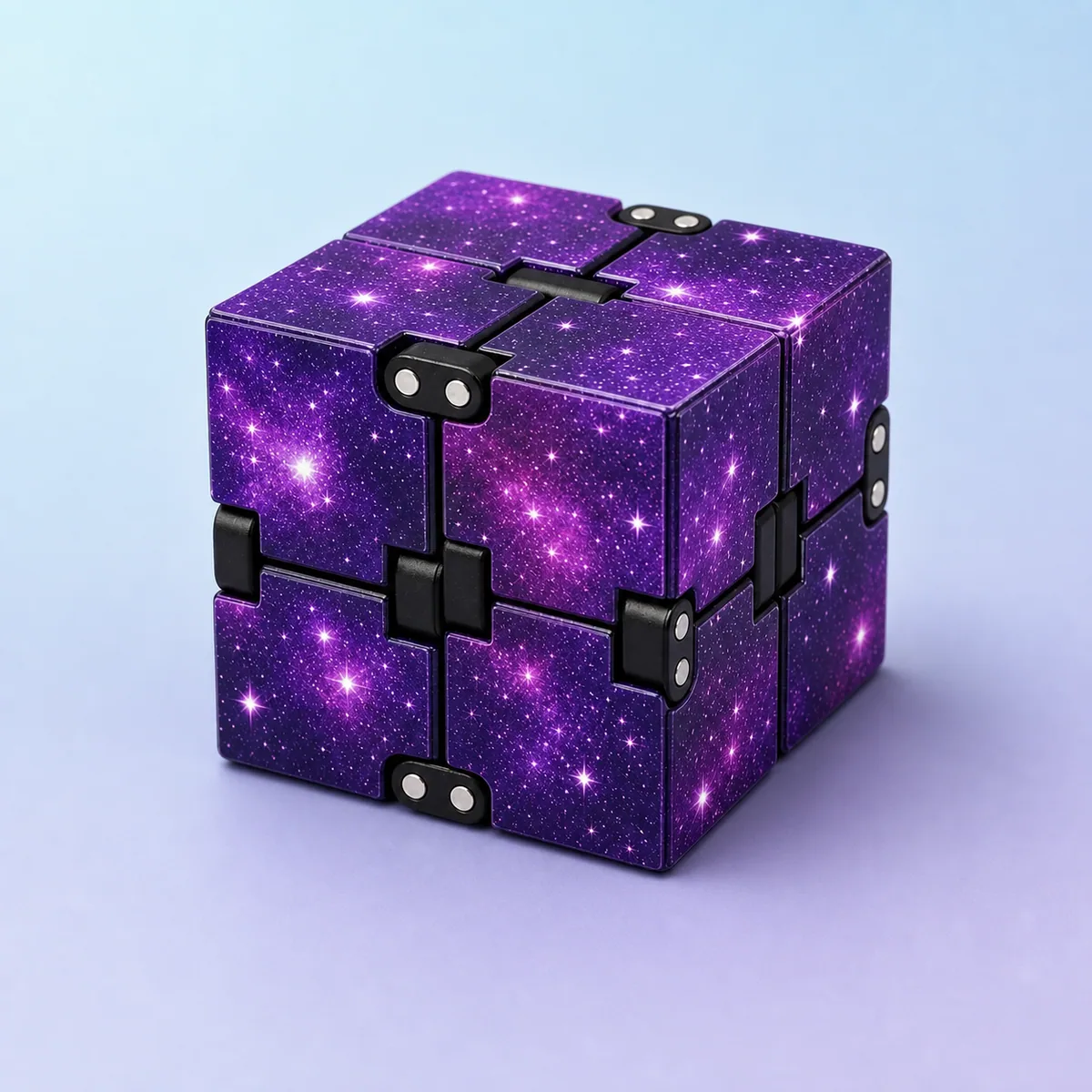
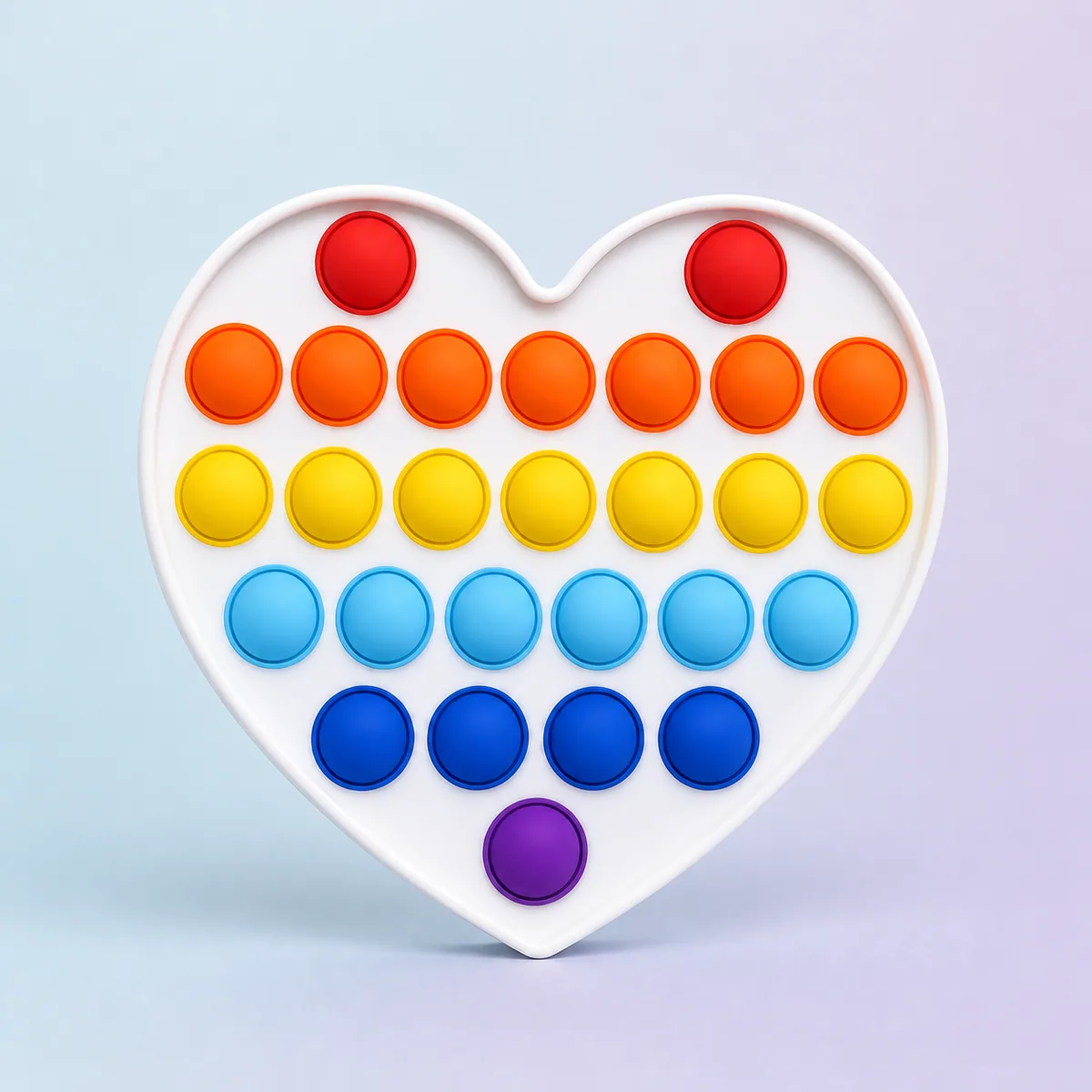
The modern catalog simply gives the old habit more forms. A worry stone offers the slowest, quietest option, almost unchanged in thousands of years. A discreet wearable like the Quiet Spinner Sensory Ring Set (3-Pack) does much the same job as a string of worry beads, just shaped like jewelry you can wear to a meeting. Cubes, pop toys, and squishes each ask for a slightly different motion. The best one is still the one your hands keep reaching for, which is exactly how people have always chosen these objects.
What can the history teach you about choosing a fidget?
The long history offers one genuinely useful lesson: the fidgets that last are simple, quiet, and matched to a real need, not the ones that trend. Worry stones and worry beads have stayed in use for centuries because they do one small thing well. The fidget spinner burned bright and mostly faded because it was sold as far more than it was.
So when you pick one, think less about hype and more about the motion your hands actually want: something to rub, to roll, to slide, or to squeeze. Consider where you will use it and how much noise you can make. A silent worry stone suits a waiting room, a quiet ring suits a meeting, and a clicky toy might be fine at your own desk but not in a classroom. That is the same clear-eyed way people have chosen handheld comfort objects for a very long time. Today’s fidget toys are simply the newest link in a very old chain, calm in the palm of your hand, exactly as it has always been.
Sources & further reading
We reference trusted organizations by name. This article is informational and not a substitute for professional medical advice.
- American Occupational Therapy Association: Recognizes sensory tools and fidgets within broader self-regulation and sensory-integration approaches used by occupational therapists.
- CHADD: Discusses fidgeting and movement as recognized strategies for managing restlessness and supporting focus, particularly for ADHD.
- Child Mind Institute: Offers guidance on how fidgets and sensory tools are used to support focus and calm in children and teens.
- ADDitude: Covers fidget tools and movement as practical self-regulation strategies for focus in neurodivergent people.
- STAR Institute for Sensory Processing: Focuses on sensory processing and self-regulation, the framework behind understanding modern fidgets as sensory tools.
Frequently asked questions
Who invented fidget toys?
No single person invented the fidget toy, because the idea is far older than any modern product. Handheld objects for busy hands, like worry stones, worry beads, and Baoding balls, appear across many cultures going back centuries. The modern versions, from the foam stress ball to the fidget spinner, are recent takes on a very old human habit.
What is a komboloi?
A komboloi is a string of beads from Greece, flicked and rolled through the fingers to pass time and keep the hands busy. Unlike prayer beads such as a rosary or misbaha, the komboloi has no religious purpose. It is one of the clearest early examples of a pure fidget object.
When was the stress ball invented?
The foam stress ball as we know it appeared in the 1980s and quickly became a common desk object and promotional giveaway. Squeezable balls and similar objects existed in other forms before then, but the soft foam version is what turned the fidget into an everyday office item.
Were fidget spinners really invented for autism or ADHD?
This is a common myth, and the honest answer is that the story is disputed and mostly marketing. Fidget spinners were widely sold in 2017 with claims that they helped autism, ADHD, and anxiety, but those claims ran ahead of the evidence. Fidgets can be supportive sensory tools for some people, which is a much more modest and honest claim.
Do fidget toys actually work, or are they just a fad?
Both parts have some truth. The 2017 spinner craze was a fad, and much of the marketing around it was overblown. At the same time, fidgets have a long history and a real role as sensory-regulation tools that many people, including neurodivergent people, find genuinely helpful. The honest position is that they are supportive tools, not a cure.
What is the difference between a worry stone and a fidget toy?
A worry stone is a specific, very old kind of fidget: a smooth stone or polished piece with a thumb-shaped dip, rubbed slowly for a calming rhythm. A fidget toy is the broader modern category, which includes worry stones along with spinners, cubes, rings, and squishies. In other words, a worry stone is one of the oldest fidget toys there is.