What are sensory toys, and how do they help autistic people?
Sensory toys are objects designed to give the body calming or organizing input through touch, sight, sound, movement, or pressure. For many autistic people, they offer a quiet way to self-regulate, focus, or feel more at ease in a busy world. They are supportive tools, not a cure or a treatment.
The idea is simple. Our nervous systems take in a constant stream of sensory information. For some autistic people, that stream can feel like too much, or sometimes not quite enough. A sensory toy gives a person something predictable and controllable to do with their hands or eyes. Squeezing a soft squishy. Watching glitter drift. Rolling a marble through mesh. That small, repeatable input can help the body settle.
We want to be radically honest here. Research on fidget and sensory toys is mixed and still emerging. Organizations that work with autistic people, and occupational therapists, often note that these tools can help with regulation and focus for some individuals. But results vary a lot from person to person. A sensory toy is one gentle support among many, not a guarantee, and never a substitute for understanding and accommodation.
What is the difference between sensory seeking and sensory avoiding?
Sensory seeking means a person craves more input, like squeezing, spinning, bouncing, or deep pressure. Sensory avoiding means a person feels overwhelmed by certain input and pulls away from it, like covering their ears or disliking sticky textures. Many autistic people do both, depending on the sense and the moment.
This distinction matters because it changes what a helpful toy looks like. A sensory seeker might love a firm squeeze ball, a stretchy gel blob, or something with strong resistance. An avoider might prefer something soft, quiet, and visually gentle, with no surprising textures or loud clicks.
A few everyday signs to notice, always with kindness and never as a label:
- Possible seeking: squeezing hands, chewing, rocking, loving tight hugs, fidgeting constantly, touching everything.
- Possible avoiding: flinching at loud sounds, disliking certain fabrics or food textures, pulling away from messy play, covering eyes or ears.
- Often both: a person might seek deep pressure but avoid sticky or wet textures.
You do not need to diagnose anyone to use this lens. Just observe, stay curious, and follow the person’s lead. Occupational therapists describe sensory profiles as deeply individual, so the goal is to learn this specific person, not a category.
What is proprioceptive and tactile input, and why does it matter?
Proprioceptive input is the sense of your body’s position and effort, the feedback you get from pushing, pulling, squeezing, or carrying weight. Tactile input is the sense of touch, what your skin feels. Both are central to sensory regulation, and many calming toys work by gently engaging one or both.
Proprioception is sometimes called the body’s grounding sense. When you squeeze something firm, your muscles and joints send steady, reassuring signals to the brain. Many people find this organizing and calming. That is part of why a resistant squeeze ball or a dense, slow-rising squishy can feel so satisfying to hold and press.
Tactile input is about texture and surface. Smooth, bumpy, squishy, beaded, cool gel. Some textures feel lovely and grounding. Others feel unpleasant, and that is completely valid. The key is variety and choice, so a person can find the textures that feel right to their own body.
A quick map of toy types to the input they tend to offer:
- Firm squeeze balls and water-bead orbs: strong proprioceptive resistance and hand engagement.
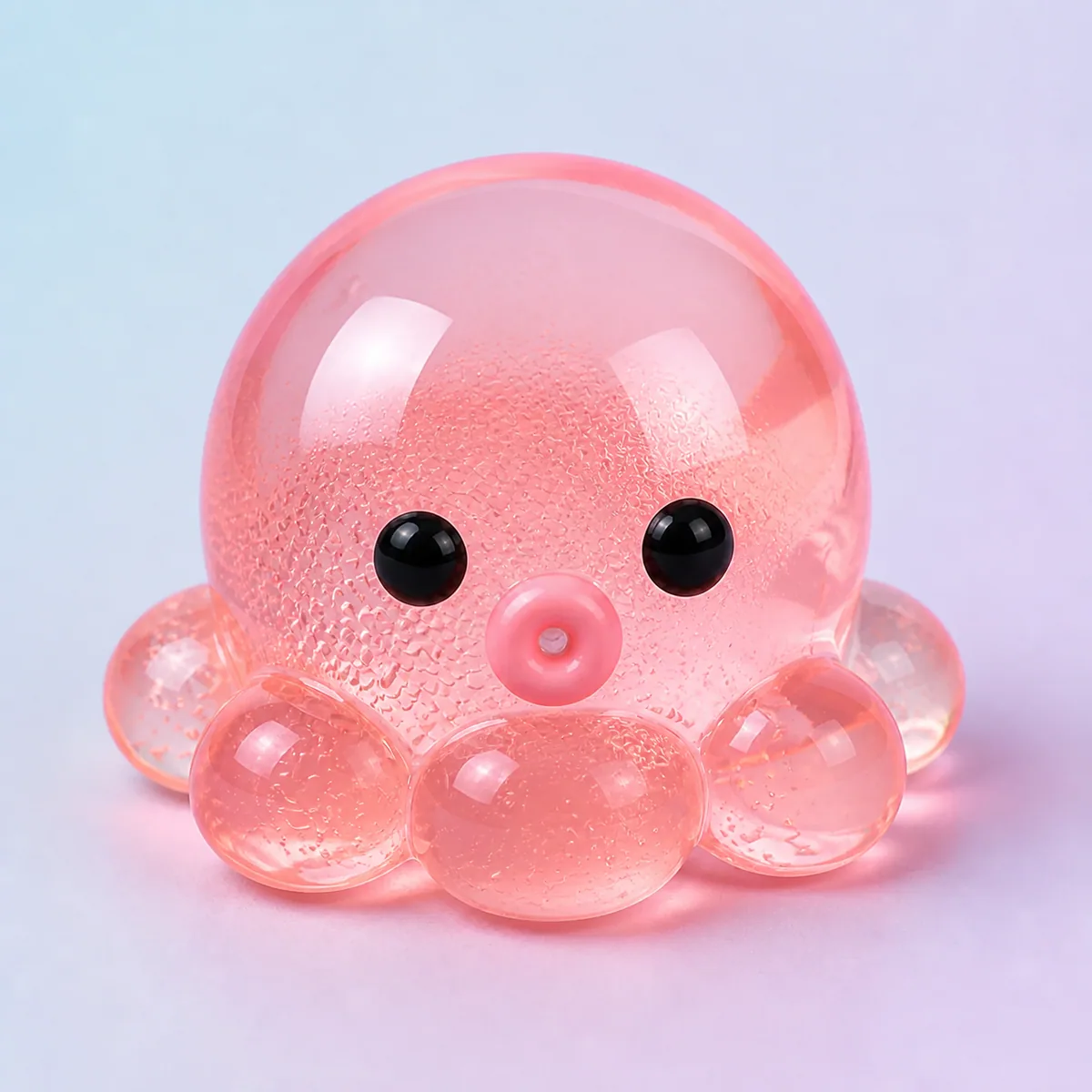
- Slow-rising squishies: gentle tactile softness plus a calming, watchable return to shape.
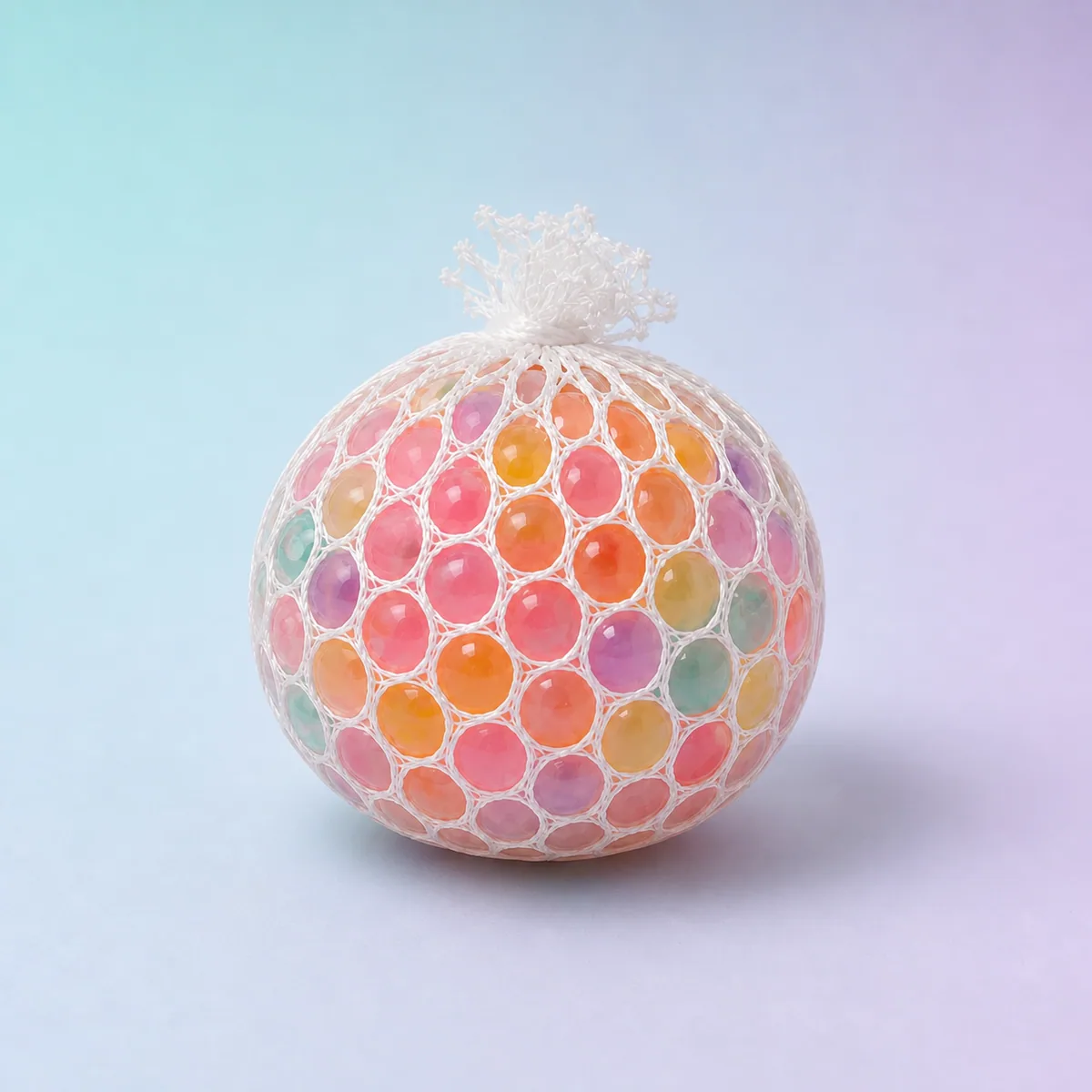
- Gel blobs and mesh marbles: tactile and visual input with a quiet, repeatable motion.
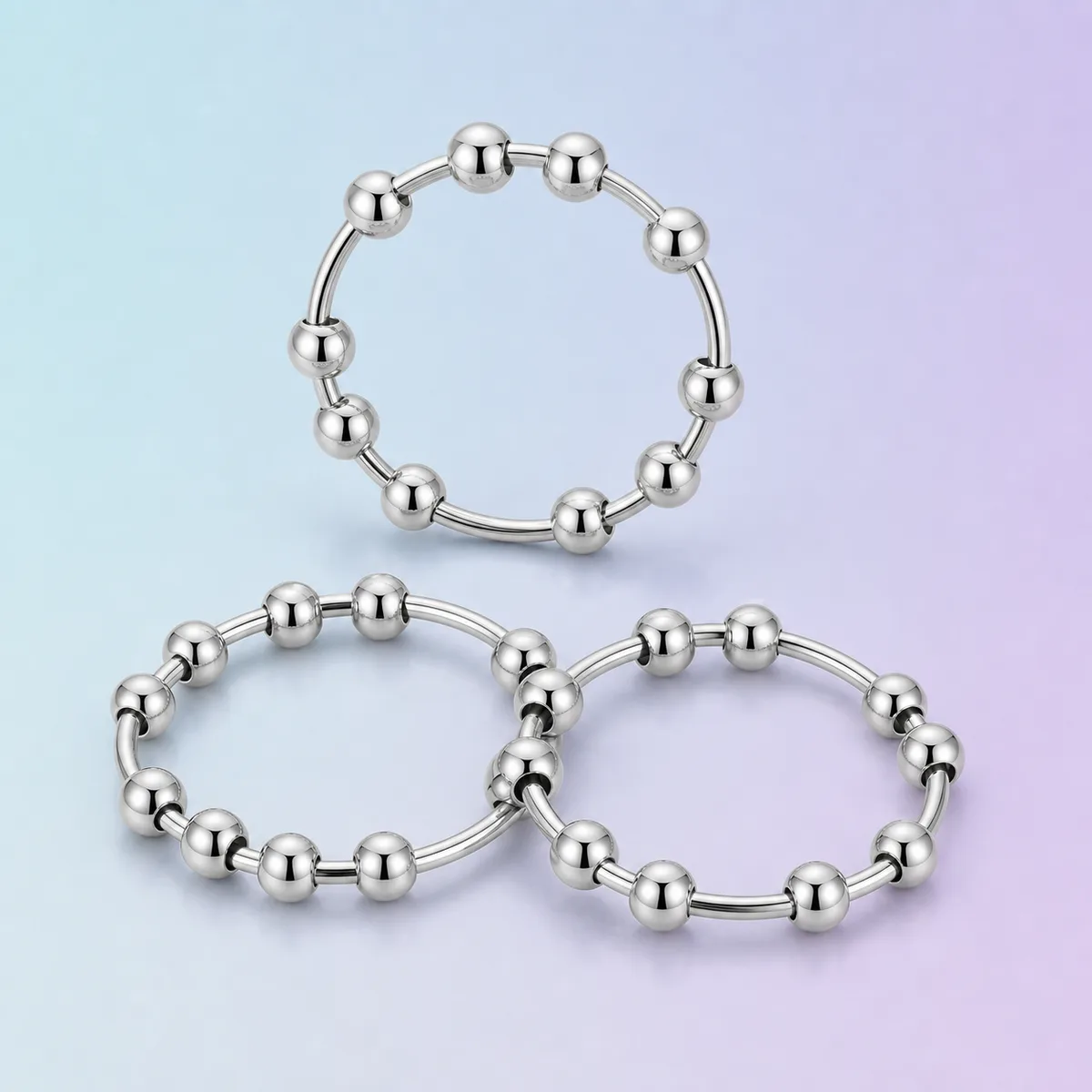
- Fidget rings and spinners: discreet, low-key movement for hands that like to be busy.
How do I choose safe sensory toy materials?
Choose sensory toys made from non-toxic materials with sturdy seams and no small parts that could break off, especially for young children or anyone who mouths objects. Check the recommended age, inspect toys regularly for tears or leaks, and supervise play when there is any choking or swallowing risk.
Safety is where we are most careful, because comfort should never come at a cost. A few practical checks before you buy and while you use a toy:
- Materials: look for non-toxic, child-safe materials. Squishies and gel toys should feel well made, not flimsy or strongly chemical-smelling.
- Size and parts: avoid small detachable pieces for young children or anyone who puts things in their mouth. Beaded or filled toys must have strong, intact seams.
- Durability: slow-rising squishies and gel blobs can tear over time. Inspect them, and retire any toy that splits or leaks.
- Cleanliness: choose toys you can wipe down, since shared and well-loved toys get handled a lot.
- Mouthing and chewing: if a person chews on objects for input, a squishy is not a chew toy. Talk to an occupational therapist about purpose-made chewable tools instead.
When in doubt, supervise. The point of a sensory toy is ease and safety, so a calm, watchful adult nearby is part of the design, not a failure of it.
How do autonomy and consent shape sensory toy use?
Autonomy means the autistic person chooses their own tools, explores at their own pace, and can always decline. A sensory toy works because it is wanted, not imposed. Forcing a toy on someone, or taking one away as punishment, turns a source of comfort into a source of stress, which defeats the entire purpose.
This is one of the most important and most overlooked parts of supporting sensory needs. A fidget is not a behavior tool to be controlled. It belongs to the person using it.
Some gentle principles, often echoed by autistic self-advocates and occupational therapists:
- Offer, do not assign. Let the person try several options and keep the ones they like.
- Respect a no. If they dislike a texture or do not want a toy, that is the right answer for them.
- Do not remove tools as discipline. A sensory aid is a support, not a privilege to revoke.
- Allow stimming. Repetitive, self-soothing movement is natural and often helpful, not something to suppress.
- Follow their pace. Some people want quiet, discreet tools. Others love bright, expressive ones. Both are fine.
When we lead with respect, the toy becomes what it should be: a small, freely chosen comfort that the person can reach for whenever they need it.
Which sensory toys are good starting points for different needs?
A good starting set covers a range of input: something firm to squeeze, something soft and slow-rising, something visual and quiet, and something discreet for public spaces. Offering variety lets the person discover what their own body responds to, rather than guessing for them.
Here is a gentle map from common needs to The Calm Toy options. Think of it as a menu, not a prescription. The right pick is always the one the person actually enjoys.
| Need or setting | Type of input | A gentle pick |
|---|---|---|
| Wants firm resistance to squeeze | Strong proprioceptive | Calm Orb Water-Bead Squeeze Ball, Grape Bubble Squeeze Ball |
| Likes soft, slow tactile comfort | Gentle tactile, calming visual | Mochi Octopus Slow-Rise Squishy, Shelly Sea Turtle Slow-Rise Squishy |
| Soothed by watching and grounding | Visual and tactile | Drift Jellyfish Glitter Squishy, Jelly Blob Transparent Gel Fidget |
| Needs something discreet at school or work | Quiet, low-key motion | Quiet Spinner Sensory Ring Set, Roll & Squeeze Mesh Marble Fidget |
| Sleep wind-down | Soft, repetitive, soothing | Bun Buddy Panda Slow-Rise Squishy |
| Not sure yet, wants to explore | A mix of textures | The Calm Starter Bundle, Mini Mochi Animals Squishy Set |
If you are buying for a classroom or a group, a variety set like the Mini Mochi Animals Squishy Set lets many different sensory profiles each find something that fits. And if you simply do not know where to begin, a sampler like The Calm Starter Bundle is a low-pressure way to let someone explore textures and choose their own favorites.
When should I talk to a professional about sensory needs?
Reach out to an occupational therapist or your child’s care team if sensory differences are causing daily distress, affecting safety, sleep, eating, or learning, or if you are seeking an autism assessment. Sensory toys can support everyday comfort, but they do not diagnose or treat anything, and professional guidance is invaluable.
A toy can help someone feel a little calmer in a hard moment. It cannot replace understanding, accommodation, or care from people trained to help. That is not a weakness of sensory toys. It is just an honest description of what they are.
Consider professional support when:
- Sensory overwhelm is frequently leading to distress or meltdowns that are hard to recover from.
- Sensory differences are affecting eating, sleeping, learning, or relationships.
- You want a proper assessment, since organizations like the CDC, the NHS, and the Child Mind Institute point families toward qualified evaluation for diagnosis.
- You want a tailored plan, which an occupational therapist, the kind described by groups such as the American Occupational Therapy Association, can build around the individual.
We say this with warmth. You are not failing by asking for help, and a sensory toy is allowed to be exactly what it is: a small, kind support for everyday life, calm in the palm of your hand.
Sources & further reading
We reference trusted organizations by name. This article is informational and not a substitute for professional medical advice.
- American Occupational Therapy Association: Occupational therapists assess individual sensory profiles and can build tailored strategies; cited as a source families can turn to for personalized guidance.
- CDC: Referenced generally as a public health body that guides families toward qualified evaluation for developmental and autism assessment.
- NHS: Referenced as a healthcare service that points families toward professional assessment and support for autism and sensory needs.
- Child Mind Institute: Referenced as an organization providing family-facing information on autism, sensory processing, and when to seek evaluation.
Frequently asked questions
Do sensory toys help with autism?
They can help some autistic people self-regulate, focus, or feel calmer, but results vary and the evidence is mixed and emerging. Sensory toys are supportive tools, not a treatment or cure for autism. The best results come from following the individual's preferences and pairing toys with genuine understanding and accommodation.
Are sensory toys only for children?
No. Autistic teens and adults use sensory toys too, and many prefer discreet options like fidget rings or quiet mesh marbles for work or public spaces. Sensory needs do not disappear with age. Anyone who finds calm or focus in tactile input can benefit, regardless of how old they are.
How do I know if someone is a sensory seeker or avoider?
Watch how they respond to input. Seekers often squeeze, spin, chew, or crave deep pressure and movement. Avoiders pull away from loud sounds, certain textures, or messy play. Many people do both depending on the sense. You do not need a diagnosis to observe gently and follow the person's lead.
Are squishy and gel sensory toys safe?
Generally yes, when they are made from non-toxic materials with sturdy seams and used as intended. Check the recommended age, avoid small parts for young children, and supervise anyone who mouths objects. Inspect toys regularly and retire any that tear or leak. A squishy is not a chew toy, so seek purpose-made tools for chewing.
Can a sensory toy replace therapy for autism?
No. Sensory toys can support everyday comfort and regulation, but they do not diagnose or treat autism and cannot replace therapy or professional care. If sensory differences cause distress or affect daily life, consult an occupational therapist or your care team. Think of toys as one small, friendly support alongside proper guidance.