How do you use a worry stone?
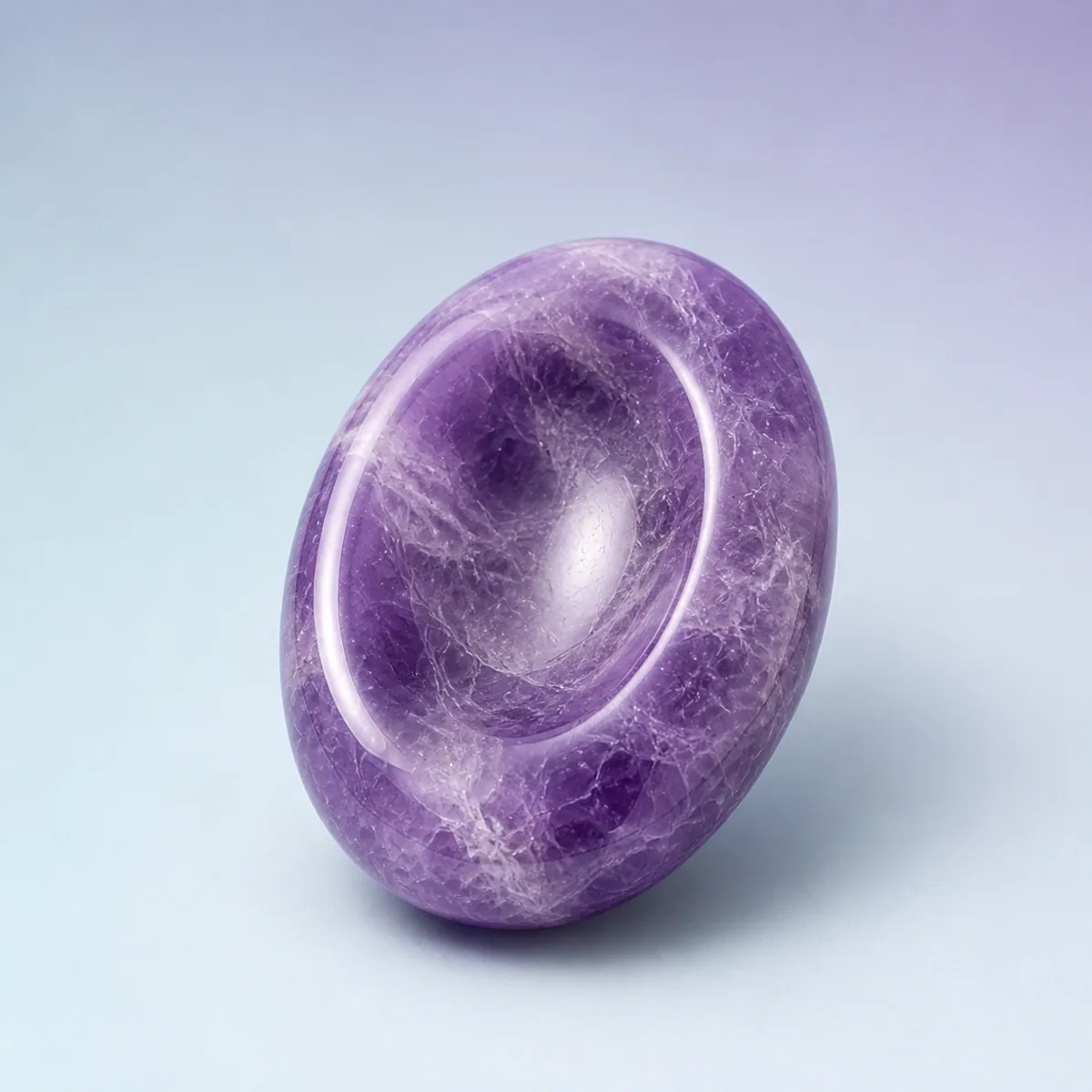
You rub your thumb across the smooth dip carved into one side, in slow circles or back and forth, and that is the entire technique. There is no grip to learn and no direction that is wrong. Most people hold the stone loosely in one hand, thumb resting in the hollow, and let the motion run on its own while the rest of them is doing something else: listening, waiting, thinking through a hard conversation.
The stone works because your thumb already knows what to do with a smooth, shallow groove. A worn stair rail gets the same treatment from strangers who never decided to rub it; a worry stone just gives that instinct a shape it fits every time.
Where does the worry stone actually come from?
Two different stories get told about worry stones, and only one of them is documented. What is actually confirmed is more recent and more modest: the carved gemstone worry stone with a machined thumb groove, the familiar item sold in rock shops and gift stores today, became a common commercial product in the United States in the 1970s. Before that, worry stone mostly meant whatever smooth pebble someone happened to be carrying, not a manufactured object with a specific shape.
The older story, that the idea traces back to ancient Greece, Tibet, Ireland, and various Native American traditions, is the one you will see repeated on almost every product listing that sells one. It is worth knowing that this version is folklore, not documented history, which is the next section.
Is the ancient origin story true?
Not as far as any source we could check confirms. Wikipedia’s own entry on worry stones flags the ancient Greece, Tibet, Ireland, and Native American claim with a citation-needed tag, meaning even the encyclopedia’s editors could not attach a source to it. The one specific claim in that entry that does carry a citation, that sea-worn stones were used by the ancient Greeks specifically, is itself marked as coming from an unreliable source. A company blog that researched the object’s history put it plainly: worry stones have no single inventor, and they read as a folk practice that tends to surface independently in more than one place rather than a single tradition with a traceable origin.
None of that means people did not carry smooth stones in their pockets long before the 1970s. It means the specific, tidy story of Greek philosophers or Tibetan monks handing down this exact object has never been documented anywhere we could verify, and retailers who state it as settled fact are repeating folklore, not history.
Worry stones and worry beads: not the same object
Do not confuse a worry stone with Greek worry beads, or komboloi, which is a separate and genuinely well-documented tradition. A komboloi is a string of beads you flick and roll between your fingers, not a single stone with a thumb groove, and its history is real and traceable in a way the worry stone’s ancient-origin claims are not. The two get lumped together in casual writing because they serve a similar purpose, a small repeated motion for restless hands, but they are different objects with different, unequally documented pasts.
The technique, step by step
- Find the groove. Turn the stone until your thumb settles into the shallow dip on its own. Most worry stones have one obvious hollow; a few have two, one for each thumb.
- Hold it loosely. Cup the stone in your palm with your fingers curled lightly around the edge. A tight grip works against the motion rather than with it.
- Rub in slow circles. Move your thumb around the hollow, or back and forth across it, whichever feels more natural. There is no correct direction.
- Let your attention go elsewhere. The stone is meant to run in the background while you listen, wait, or think, not to hold your focus the way a puzzle would.
- Pocket it between uses. A worry stone is small enough to live in a coat pocket or a bag permanently, ready before you have consciously decided you need it.
Does rubbing a worry stone actually help?
Many people find it does, in the same modest way any small repeated motion helps restless hands: it gives nervous energy somewhere to go and gives your attention a steady, physical task to rest on. That effect fits inside a broader category clinical sources describe as grounding. The VA’s National Center for PTSD describes grounding techniques that use touch and physical sensation, holding a textured object and noticing what it feels like, to interrupt anxious spiraling and reconnect with the present moment. Cleveland Clinic’s guidance covers similar ground: touching a nearby object and describing its texture as a way to shift attention out of distressing thoughts and into the senses, alongside the better-known 5-4-3-2-1 method. NHS self-help pages recommend grounding and distraction through the physical senses in the same general terms. None of the three names a worry stone specifically, and none of them makes any claim about anxiety disorders or PTSD being treated by touch alone; what they describe is the touch-based category a worry stone happens to fit inside. A worry stone is a supportive sensory tool, not a treatment, and we will not tell you it relieves anxiety. If anxiety is interfering with your sleep, work, or relationships, a qualified professional is the right next step, and the stone is for your hands while you get there.
Worry stone, fidget ring, or a full kit?
| If you want | Pick | Why |
|---|---|---|
| The oldest, simplest motion | A worry stone | One groove, one thumb, nothing to lose track of |
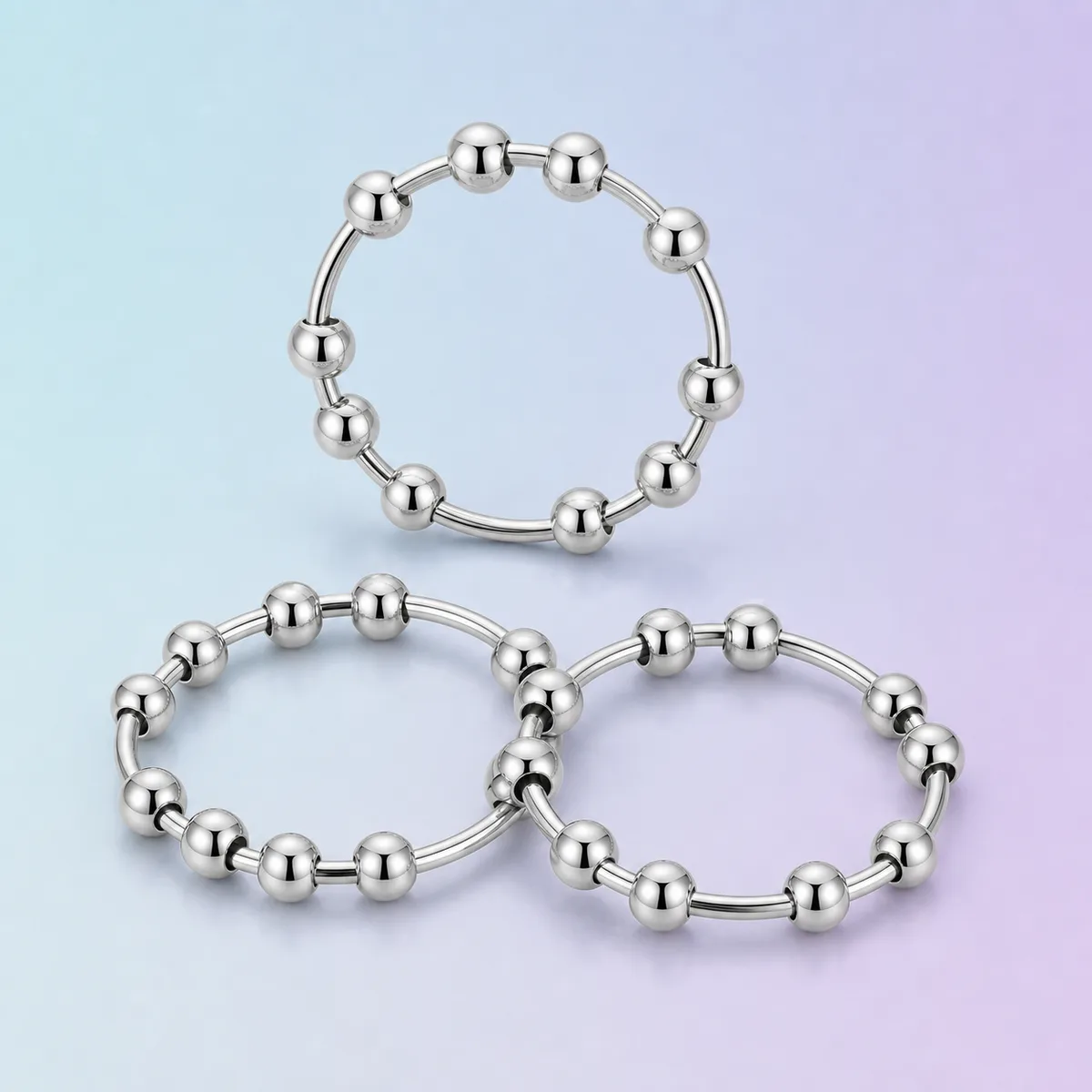
| Something on your hand already | A spinner ring | No pocket to dig in, silent, always there |
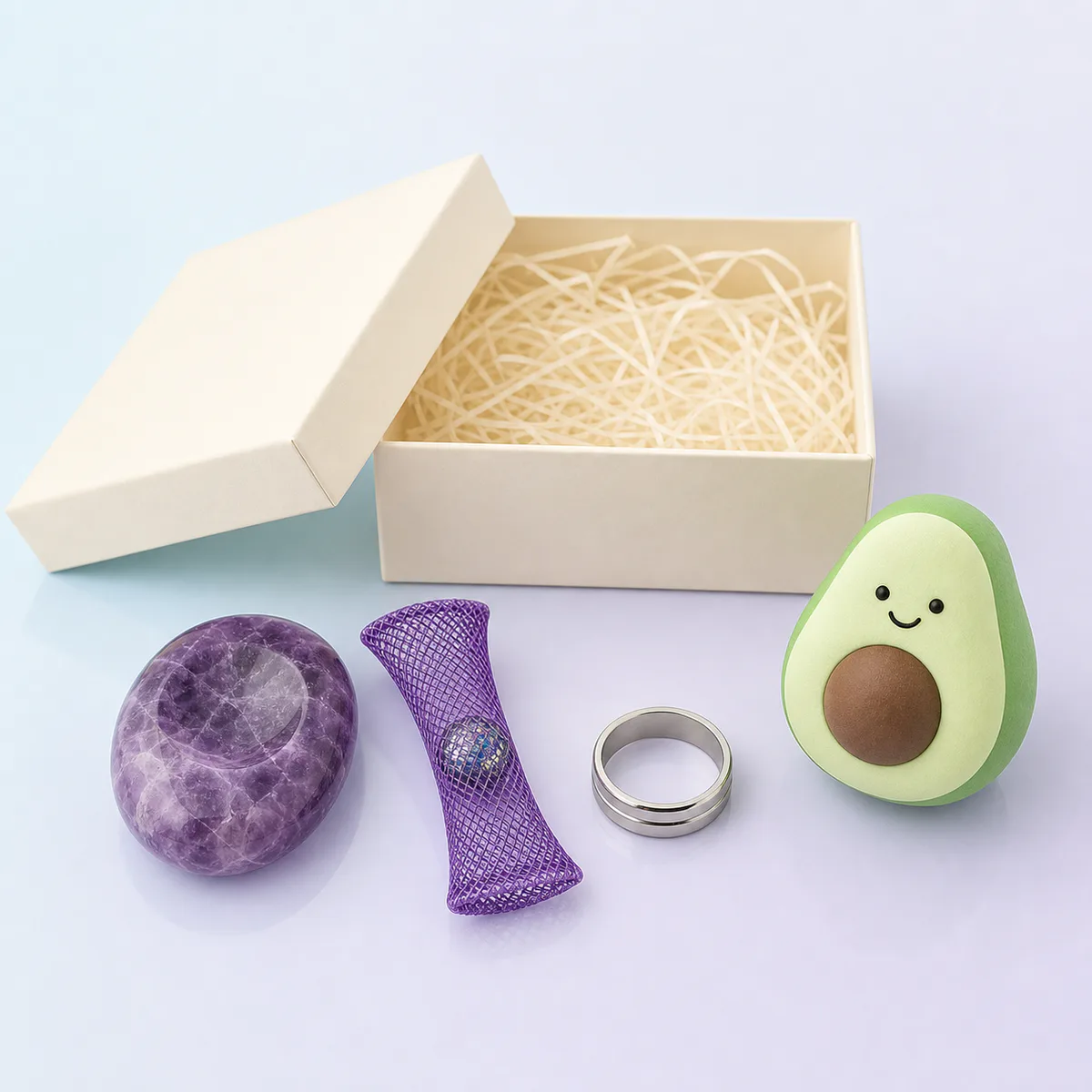
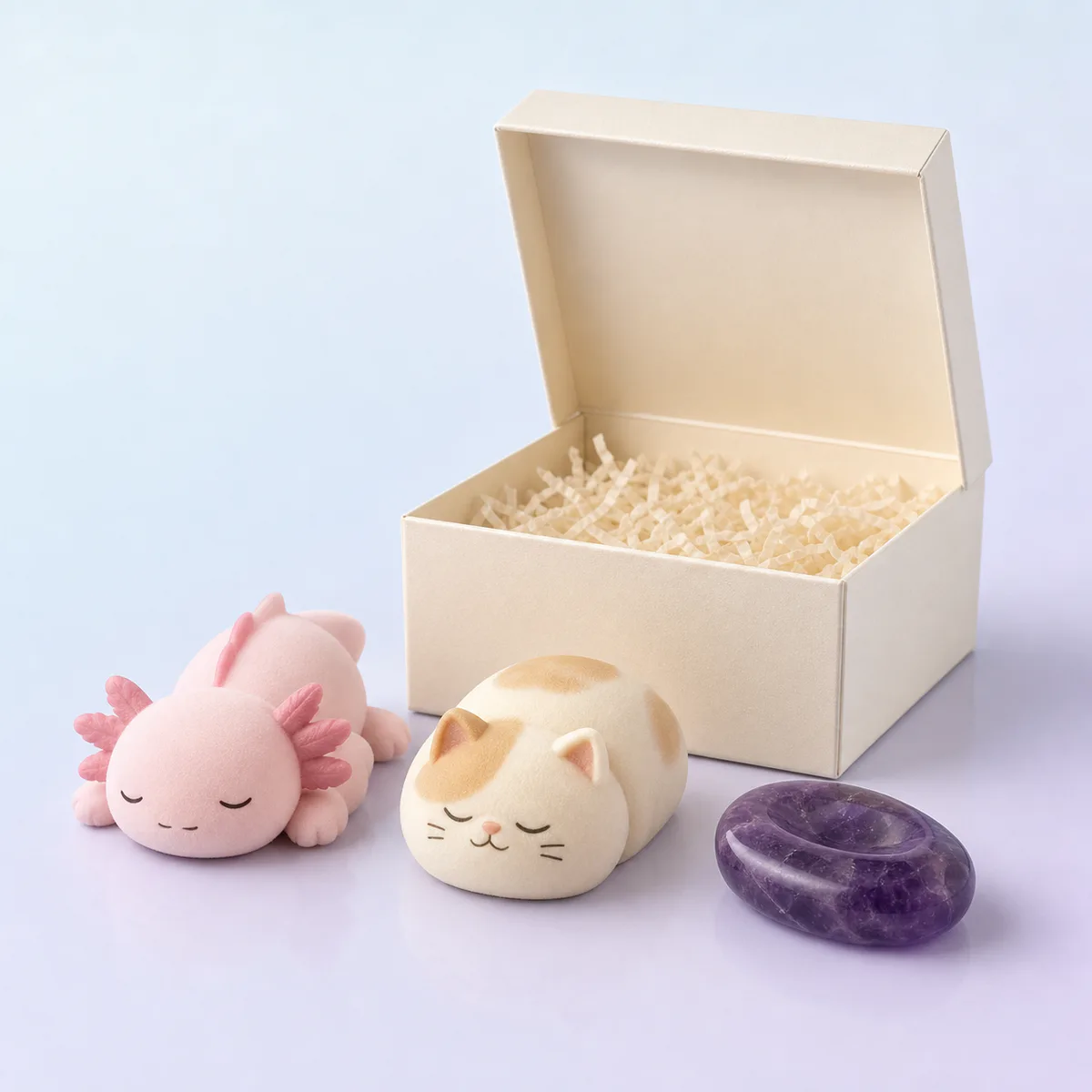
| A kit built for one situation | The Exam Calm Kit or Sleep & Wind-Down Kit | Matched tools for a specific quiet room or bedtime |
| Total silence, no exceptions | A worry stone or a silicone ring | Neither makes any sound at all |
Where a worry stone earns its keep
A coat pocket, a desk drawer, a nightstand: a worry stone asks for nothing more than somewhere small to live between uses. Our Calm Worry Stone is one of the four tools in the Exam Calm Kit for exactly this reason, silent enough for a test you cannot make a sound in, and it shows up again in the Sleep & Wind-Down Kit for the same quiet reason at the other end of the day. Skip the ancient-origin story on the label and keep the honest one: a smooth stone, a thumb, and a habit that is genuinely older than any of us can prove. Calm in the palm of your hand.
Sources & further reading
We reference trusted organizations by name. This article is informational and not a substitute for professional medical advice.
- Wikipedia: Its worry stone entry flags the popular claim that the idea originates in ancient Greece, Tibet, Ireland, and Native American traditions with a citation-needed tag, meaning no source has been confirmed for it.
- Parting Stone: A company blog on the object's history states that worry stones have no single inventor and describes them as a folk practice, framing the ancient-origin claims as unsourced folklore rather than documented fact.
- U.S. Department of Veterans Affairs, National Center for PTSD: Publishes self-help material describing grounding techniques that use touch and physical sensation to interrupt anxious spiraling and reconnect with the present moment, without naming worry stones specifically.
- Cleveland Clinic: Publishes consumer health guidance on grounding techniques, including the 5-4-3-2-1 sensory method and touch-based grounding through a nearby object's texture.
- NHS: Publishes self-help pages recommending grounding and distraction techniques, including touch and the physical senses, as general coping tools for anxiety.
Frequently asked questions
How do you use a worry stone?
Rub your thumb in slow circles or back and forth across the smooth, shallow groove carved into one side, holding the stone loosely in one hand. There is no set direction or grip. Most people carry it in a pocket or bag and reach for it during a wait, a hard conversation, or any moment their hands want something quiet to do.
Where did worry stones originate?
The often-repeated story that they trace back to ancient Greece, Tibet, Ireland, and Native American traditions is not documented; Wikipedia's own entry flags that specific claim as needing a citation that has never been supplied. What is actually confirmed is that the carved gemstone worry stone with a machined thumb groove became a common commercial product in US shops in the 1970s, a much more recent and much better supported fact.
Is the ancient origin of worry stones a true story?
Not as far as any source we could verify. A company blog that researched the object's history describes worry stones as a folk practice with no single inventor, and the ancient Greece, Tibet, and Ireland claims as unsourced folklore rather than documented history. It is fine to enjoy the story, but it should not be repeated as settled fact.
Are worry stones and worry beads the same thing?
No. Worry beads, or komboloi, are a string of beads flicked and rolled between the fingers, a separate and genuinely well-documented Greek tradition. A worry stone is a single carved stone with a thumb groove, and its own ancient-origin claims are not documented the way komboloi's history is.
Does a worry stone actually reduce anxiety?
It is a supportive sensory tool, not a treatment, and we will not claim it relieves anxiety. The technique fits inside what the VA's National Center for PTSD, Cleveland Clinic, and NHS self-help pages describe as touch-based grounding, using a physical sensation to bring attention back to the present, though none of them names a worry stone specifically. If anxiety is interfering with your daily life, a qualified professional is the right support.
What is a good way to carry a worry stone?
A coat pocket, a bag, or a desk drawer works well, since the whole point is that it is small enough to be within reach without planning for it. Some people keep one at a nightstand for winding down and a second one for a bag or desk, so there is always one nearby. Ours ships as part of both the Exam Calm Kit and the Sleep & Wind-Down Kit for exactly that reason.