How do you store a fidget collection?
Sort it by material, not by how neatly it looks piled in one bin. A collection that mixes squishies, putty, gel, and hard fidgets is really four small collections with four different sets of needs, and storing them all the same way is how a good toy quietly ages faster than it should.
That sounds like more effort than it is. Most of it comes down to a few containers and one habit: keep everything out of direct sun and heat, and keep hard things away from soft things. The rest is specific to each material.
Where should squishies and TPR toys live?
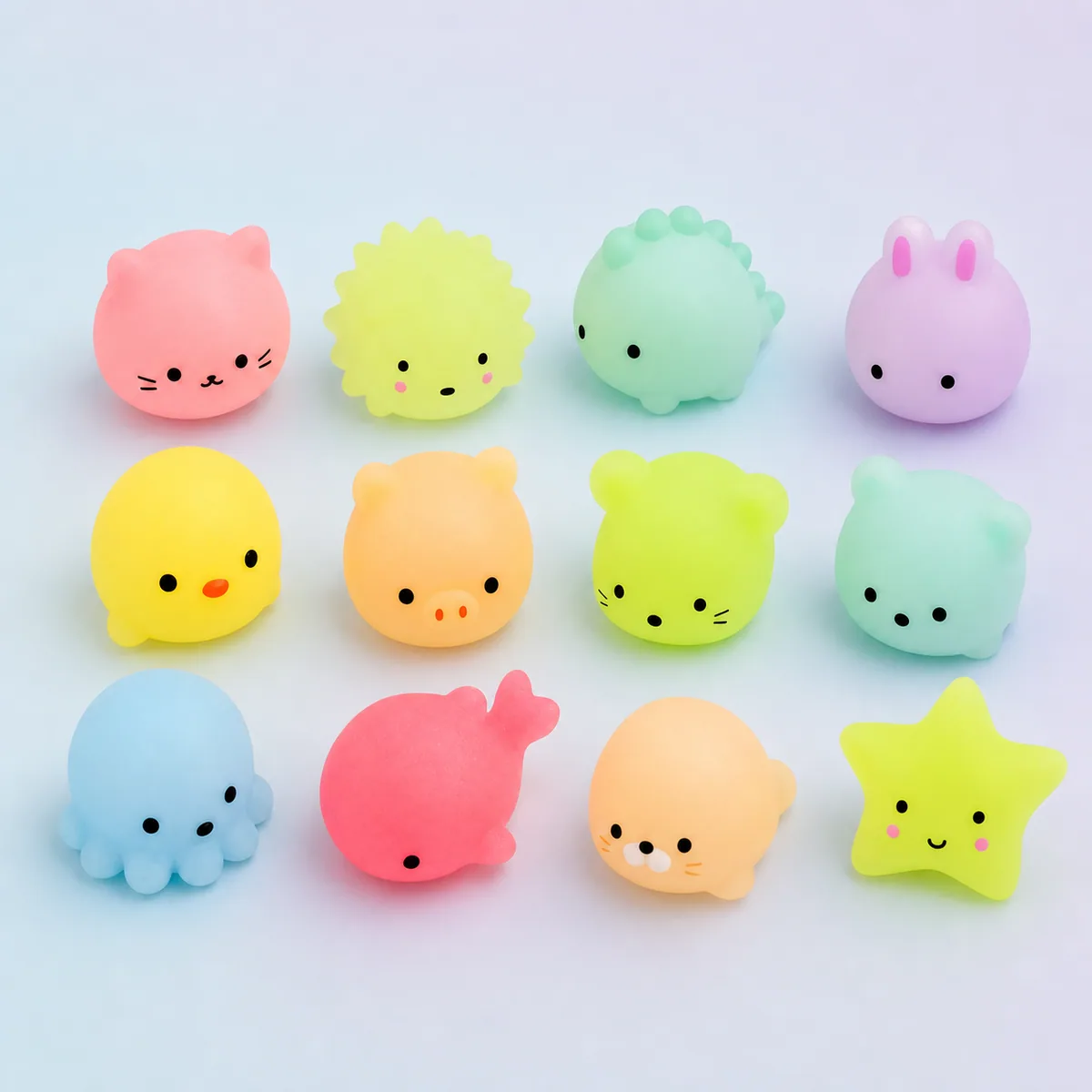
Somewhere shaded and at room temperature, whether they are foam or TPR. A set like Mini Mochi Animals Squishy Set is small enough to live in a drawer, a zip pouch, or a fabric bin with a lid, all of which keep direct light off the squishies between uses. What matters is avoiding a sunny windowsill, a car, or anywhere near a heat vent, since sun and heat are the two things that age foam and soften TPR fastest.
Keep squishies away from keys, pens, and anything with a sharp edge if they share a bag or a drawer with other items. A stray key is a common cause of a torn skin on a foam squishy, and it is an easy thing to separate out with a small pouch or a second compartment.
How do you store putty and gel without ruining them?
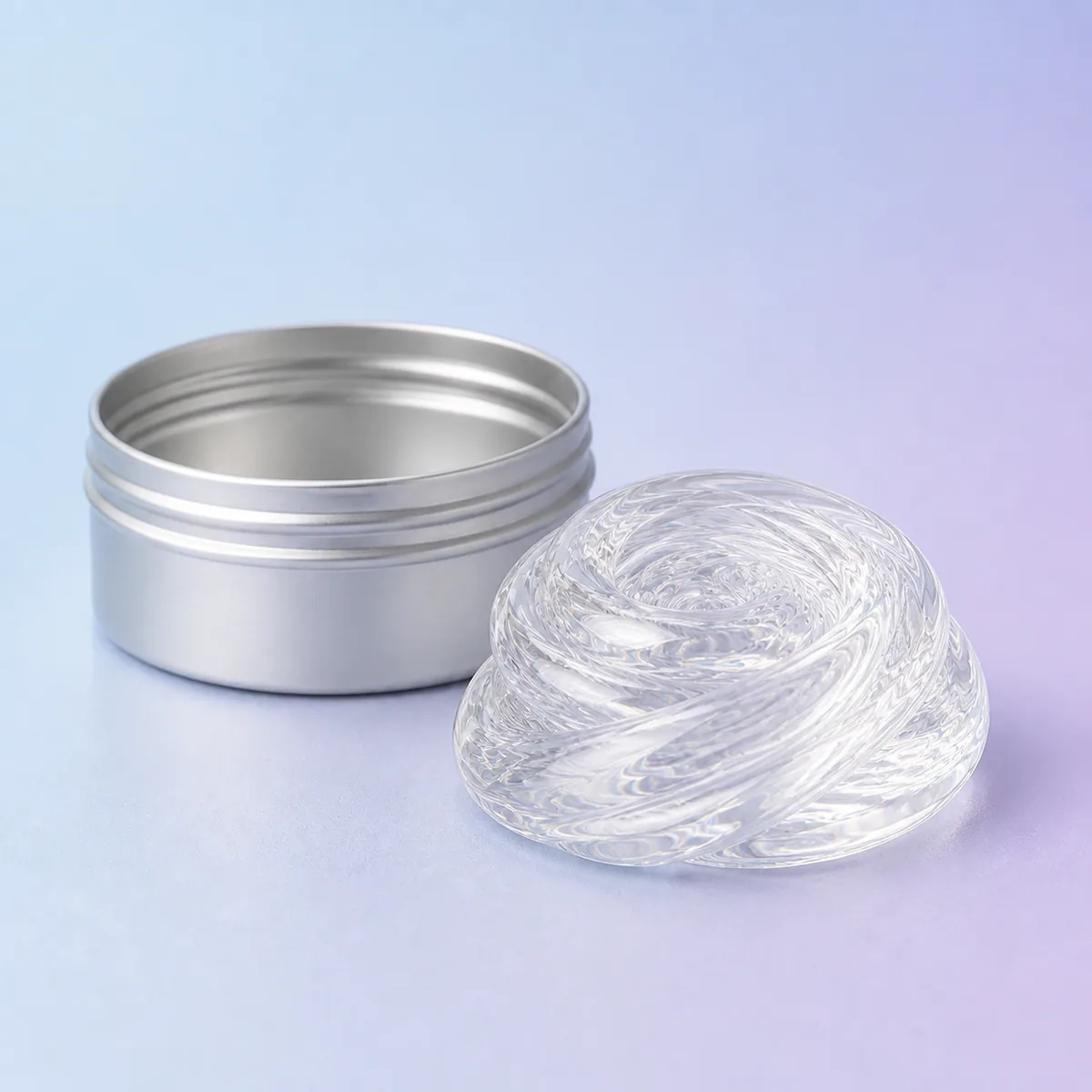
Differently from each other, and differently from everything else. Thinking putty like Calm Putty belongs in its own tin, kept away from fabric, carpet, upholstery, and hair, since a putty that has picked up lint or hair from a drawer liner rarely sheds all of it again. Worked on a hard desk and returned to its tin after each session, a good putty stays clean and stretchy for a long time.
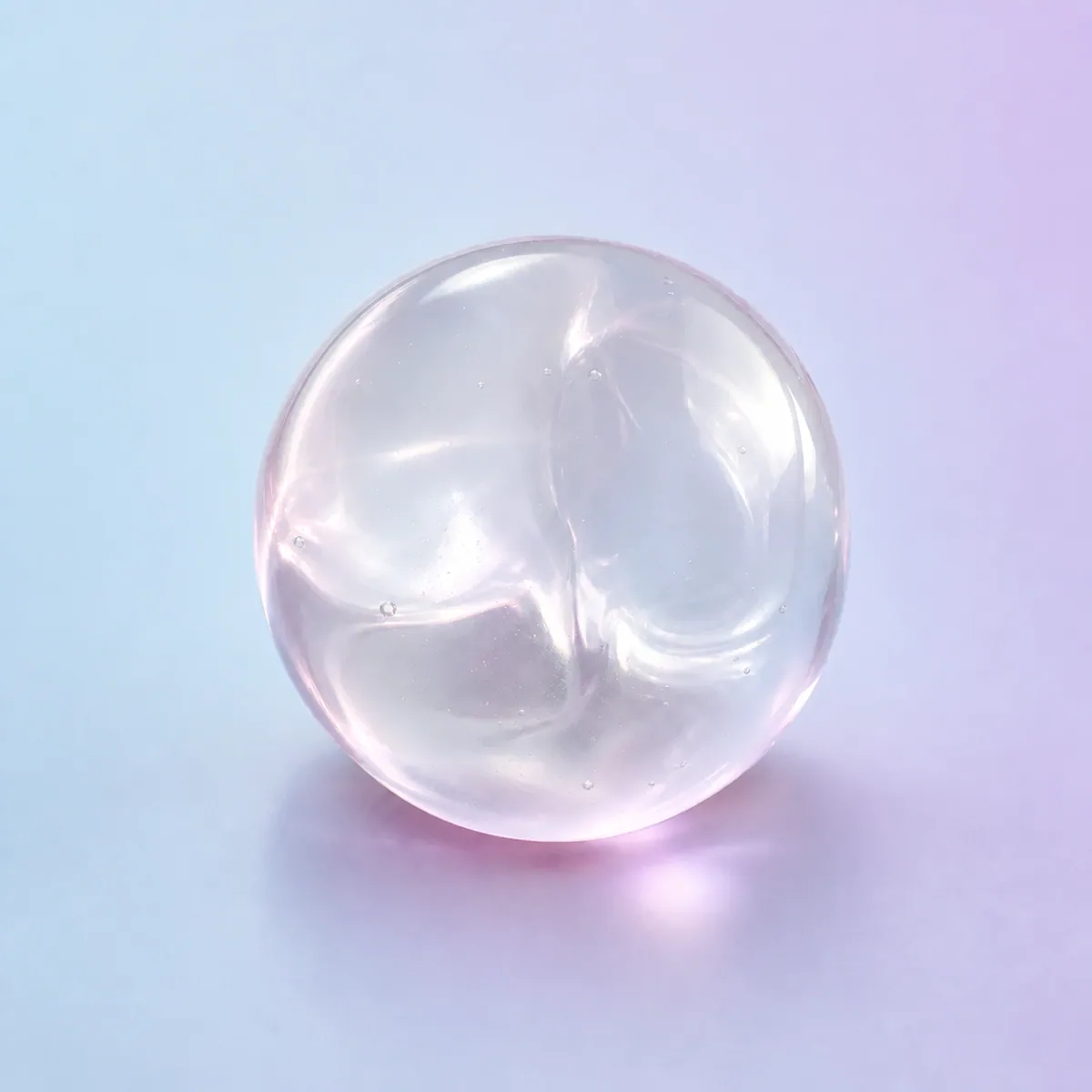
Gel fidgets need the opposite kind of attention: not moisture control, but dust control. A clear gel blob like Jelly Blob Transparent Gel Fidget shows off every speck of dust and lint it touches, since there is nowhere for it to hide against a transparent surface. A closed container, even something as simple as a small lidded box or its original packaging, keeps it looking and feeling clean far longer than a loose bag does. If it starts to look cloudy anyway, a quick cool rinse resets it.
What about wearables and hard fidgets?
Store rings, cubes, chains, and other hard fidgets apart from your soft toys. A metal ring, a hinge, or a hard plastic edge can nick, dent, or catch on a squishy or a gel blob if they are jostled together in a bag or a packed drawer. A small pouch, a dedicated tray, or even a separate section of the same drawer keeps hard fidgets from doing quiet damage to everything softer around them.
Wearables like rings also do well dry and wiped down before they go back into storage, especially if they get worn daily and pick up skin oils and grit. A quick wipe before they go away costs a few seconds and keeps them from spotting or collecting grime between the beads and the band.
How do you store a collection safely around young children?
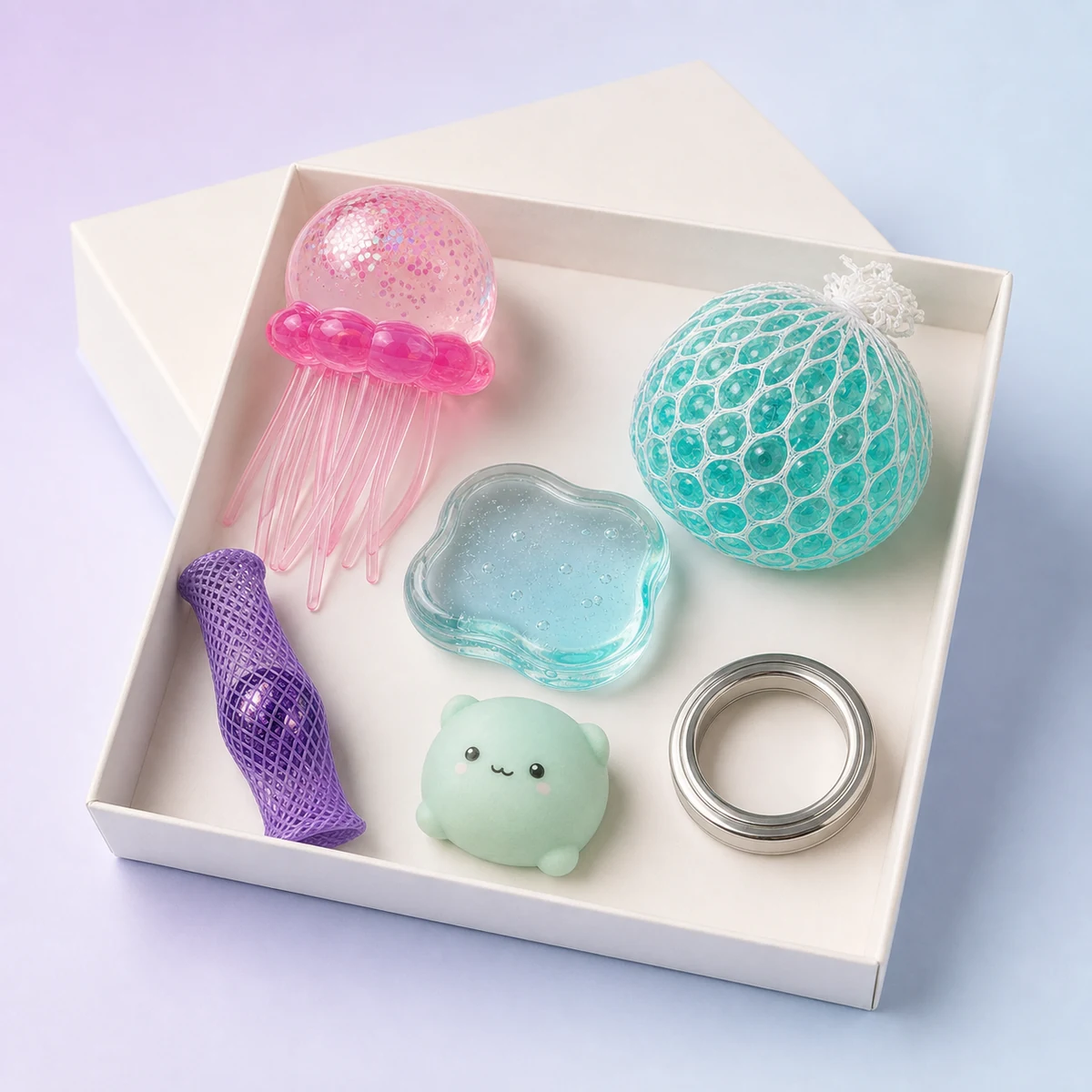
The same way you would treat the toys the day they arrived. Anything with loose small parts or water beads inside, like a mesh marble fidget or a water-bead squeeze ball, should stay sealed the way it came, and a storage spot within a young child’s reach is not the place for those items to sit unsupervised. A bundle like Calm Starter Fidget Bundle mixes several materials in one box, which makes it easy to store together but also worth a quick check that every piece is sized and intended for the youngest person who might get into it.
| Type | Best storage | What to avoid |
|---|---|---|
| Squishies and TPR toys | Shaded drawer, bag, or bin at room temperature | Direct sun, hot cars, heat vents |
| Thinking putty | Its own tin, on a hard surface between uses | Fabric, carpet, loose in a drawer with lint |
| Gel fidgets | A closed, dust-free container | Open trays, dusty shelves, direct sun |
| Rings, cubes, and other hard fidgets | A separate pouch or compartment | Packed tightly against soft squishies or gel |
| Anything with small parts or water beads | Sealed, out of reach of young children | Loose in a shared bin a young child can open |
How often should you check on a stored collection?
Every couple of months is plenty for most people. Fidget toys that sit unused for a while are easy to forget about, and a quick look catches problems early: a squishy that has started to yellow on the side facing a window, putty that has firmed up because it has been sitting somewhere cold, or a gel blob that has gone cloudy under a layer of dust. Catching any of these early means moving the item to a better spot or giving it a quick clean, rather than discovering months later that something has gone past saving.
This matters more for a growing collection than a single favorite toy, simply because it is easier to lose track of what is at the back of a drawer. A short check, moved into whatever routine you already use to tidy a room, is enough. You do not need a schedule or a checklist for this, just an occasional glance while the drawer is already open for something else.
None of this needs to be elaborate. A drawer with two or three small containers inside covers most collections, and the payoff is a set of fidgets that still feel like themselves a year from now instead of a tangle of yellowed foam, lint-covered putty, and cloudy gel. Calm in the palm of your hand, however many you keep on hand.
Sources & further reading
We reference trusted organizations by name. This article is informational and not a substitute for professional medical advice.
- American Chemistry Council, Center for the Polyurethanes Industry: Publishes background on flexible polyurethane foam, the open-cell material used in slow-rising squishies, and on how foam products should be stored and handled.
- U.S. Consumer Product Safety Commission: The US toy-safety regulator, which has issued public warnings about loose water bead products and guidance on children's toys.
- ASTM International: Publishes toy safety standards covering the plastics, silicone, and metals used in squishies and fidget toys.
Frequently asked questions
What is a good way to store a mixed fidget collection?
Sort by material rather than trying to fit everything in one bag or bin. Squishies and TPR toys want shade and room temperature, putty wants its tin, gel wants a closed container, and hard fidgets like rings and cubes want their own space away from anything soft. A shallow drawer with a few small containers inside handles most collections well.
Can you store squishies and hard fidgets together?
It is better not to pack them tightly together. A hard edge on a click cube or a metal ring can nick, dent, or catch on a soft squishy or gel blob if they are jostled against each other in a bag or a full bin. Giving hard fidgets their own small pouch or compartment protects both.
How should you store thinking putty long term?
In its tin, kept away from fabric, carpet, upholstery, and hair from the start, since those are the messes putty cannot fully shed once it has picked them up. Worked on a hard desk and stored in its tin between sessions, a good putty stays clean and stretchy for years.
Why does a gel fidget need a different kind of storage than a squishy?
Because a clear gel fidget like Jelly Blob Transparent Gel Fidget shows off every speck of dust and lint it touches, far more visibly than an opaque foam squishy does. A closed, dust-free container keeps it looking and feeling clean much longer than tossing it loose into a bag with everything else.
Is it safe to store a fidget collection where young children can reach it?
Only if nothing in the collection has loose small parts or water beads accessible. Items like a mesh marble fidget or a water-bead squeeze ball should stay sealed the way they arrived, and any collection a young child can reach should be checked the same way you would check it fresh out of the box.
Does temperature matter for storing fidget toys?
Yes, especially for squishies and TPR toys. A hot car, an attic, or a spot near a radiator softens and ages foam and rubber-like materials faster than room-temperature storage does. A closet shelf or a drawer away from heat sources is a safer long-term home than anywhere that gets genuinely hot.