What fidgets work best on planes and long journeys?
Small, silent, and easy to keep in a seat pocket or the bag under the seat in front of you. A cabin does not give you much room or much privacy, so anything that rolls onto the floor, needs a table, or makes a sound competes with everyone around you, not just yourself. The short list: a worry stone for the parts of the flight where hands need to be empty, an infinity cube for the long cruising stretch, and a screen-free kit for winding down toward sleep on an overnight leg.
Why a plane cabin has its own rules
A plane seat is one of the smallest personal spaces most people sit in on purpose. Armrests are shared, the tray table folds away more than it stays out, and whatever is in your hands has nowhere to go if you drop it except under your own seat or, worse, the row ahead. CHADD’s distinction between a discreet fidget tool and a more entertaining fidget toy is worth keeping in mind here too: a seatmate you will be sitting beside for six hours is not the audience for anything that clicks, spins, or asks to be looked at.
Most airlines also ask passengers to keep hands and loose items put away for takeoff and landing, which rules out anything you would need to actively hold during those two windows. Save the hands-on fidgets for once the seatbelt sign goes off and the flight has settled into its longest, most boring stretch, which is exactly when a fidget earns its keep the most.
What should you bring for each part of the trip?
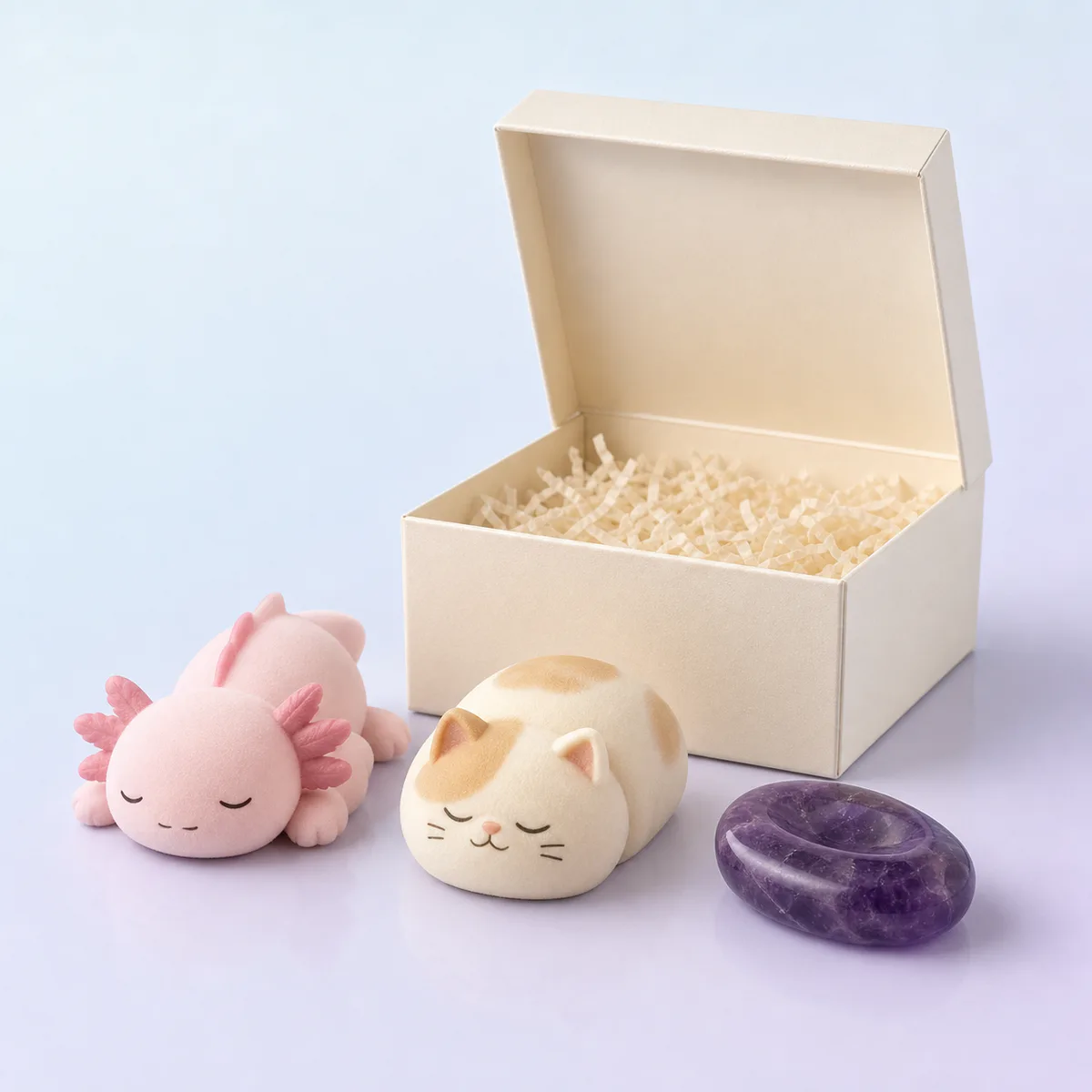
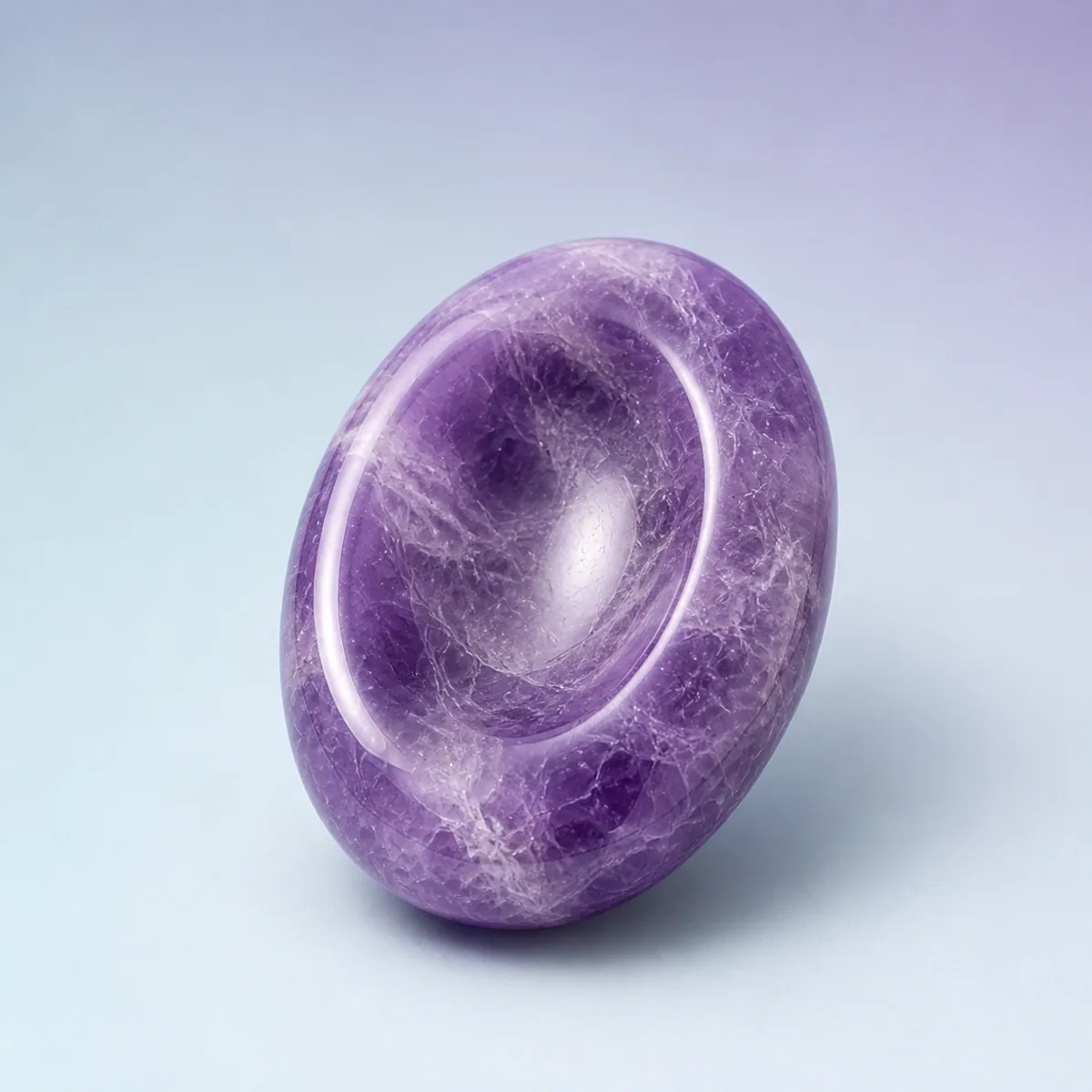
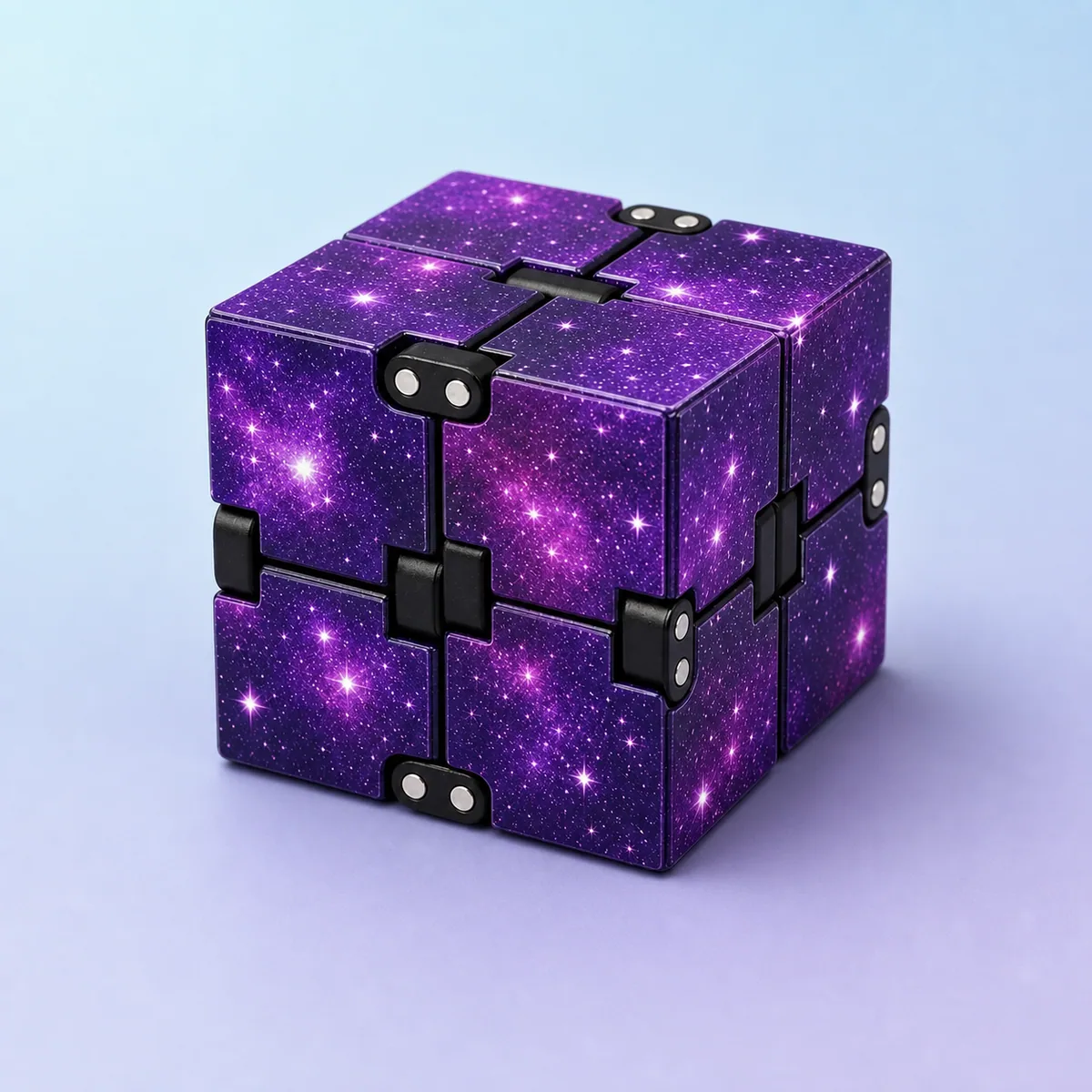
Think of a flight in three stretches, and pack differently for each. Boarding and the seatbelt-sign windows call for something small enough to hold without setting anything down, which is where the Calm Worry Stone wins: a thumb over a smooth dip, nothing to lose track of, easy to close a fist around the second a flight attendant walks by. The long cruising stretch is where the Infinity Flip Cube earns its keep, a folding loop of eight blocks that flips end over end for as long as your hands want to keep going, learned once and then done almost without looking. An overnight or red-eye leg is different again: the Sleep & Wind-Down Kit, two slow-rise squishies and a worry stone, gives you something screen-free to wind down with once the cabin lights dim, instead of one more hour looking at a small bright screen an inch from your face.
Traveling with kids
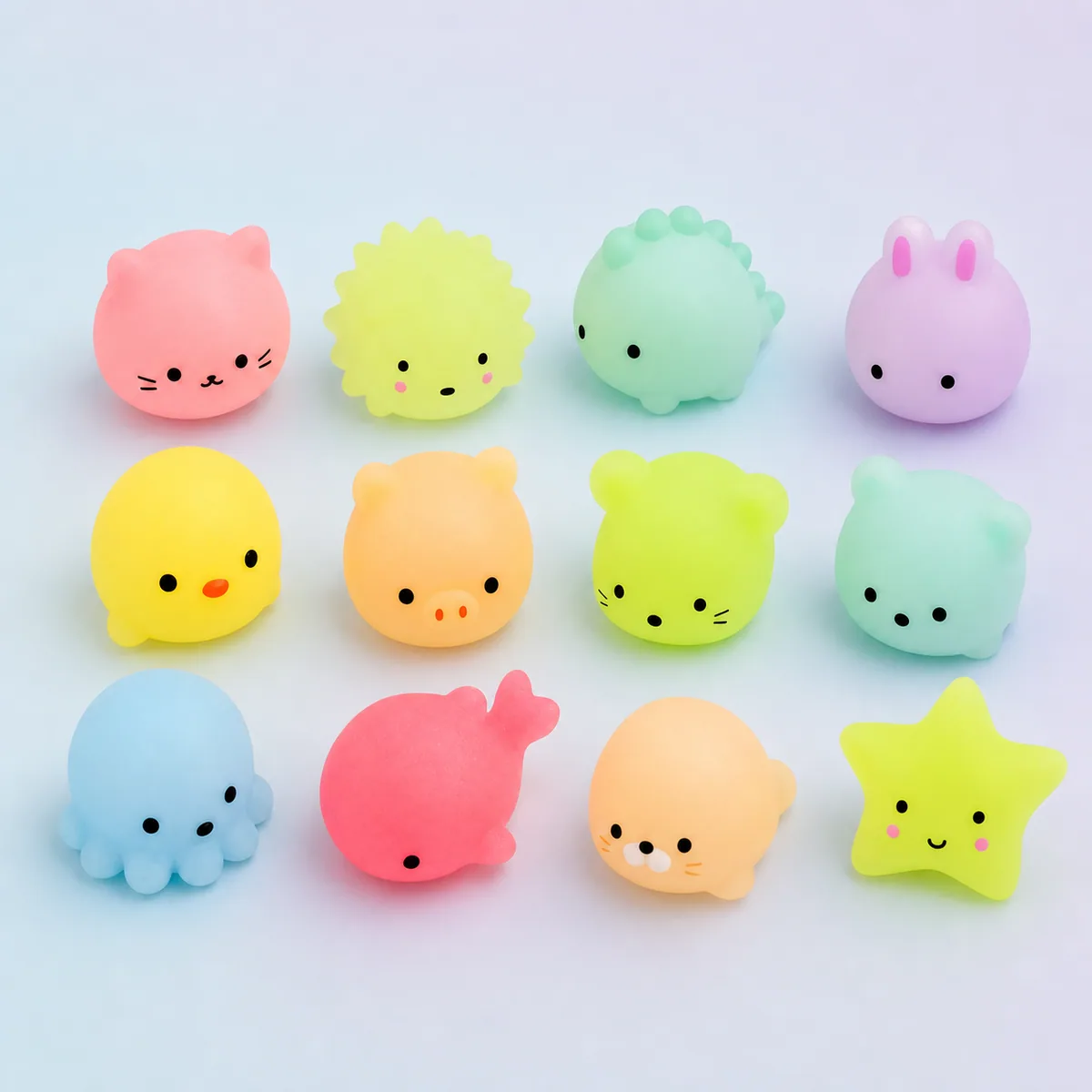
A long trip with a child is its own kind of long, and the Mini Mochi Animals Squishy Set is built for exactly that: twelve tiny, springy animals that fit in a small bag, cheap enough to lose one under a seat without it mattering, and varied enough that a bored kid can trade one for another every hour instead of asking for a tablet. Pack a handful loose in a zip pouch rather than carrying the full set in its box, since box lids do not survive a seat-back pocket well.
A quick packing guide
| Part of the trip | Bring | Why |
|---|---|---|
| Boarding, takeoff, landing | Calm Worry Stone | Small enough to hold or pocket right away |
| Long cruising stretch | Infinity Flip Cube | A continuous loop for hands with hours to fill |
| Overnight or red-eye leg | Sleep & Wind-Down Kit | Screen-free wind-down before you actually try to sleep |
| Traveling with a child | Mini Mochi Animals Squishy Set | Twelve small, low-stakes options to rotate through |
Are there programs for sensory or autism-related travel anxiety?
Yes, and they are worth knowing about beyond just packing a fidget. Wings for Autism, and its companion program Wings for All, is run by The Arc, a US disability-rights nonprofit, and lets travelers with autism or another intellectual or developmental disability rehearse an entire airport process, check-in, TSA screening, the boarding-area wait, boarding a non-departing aircraft, alongside airport, airline, and TSA staff, at specific participating airports rather than every airport nationwide. The Hidden Disabilities Sunflower is a lanyard, wristband, or pin operated by a UK-based company and recognized at more than 160 airports worldwide, including over 50 in the US; anyone who identifies as having a hidden disability can request one, with no eligibility check required, and it works purely as a discreet visual signal that the wearer may need more time or patience. It does not grant priority security screening or boarding, and no official material claims it does. TSA Cares can also be requested specifically for autism-spectrum or sensory-related screening needs, and TSA even publishes a video resource on screening travelers on the autism spectrum for exactly that purpose.
Layovers and the trip beyond the plane
A long trip rarely stays on one plane. A layover means more waiting, often standing or perched somewhere without a proper seat, which is exactly where a pocket fidget beats anything that needs a lap or a table. The Calm Worry Stone keeps working the same way it did in your assigned seat, since a gate area is really just another waiting room with better people-watching.
A train or a long bus ride relaxes the takeoff-and-landing restriction entirely, since there is no seatbelt sign asking for empty hands. The Infinity Flip Cube can run for the whole ride if your hands want it to, and there is more elbow room to actually watch it fold than a cramped economy seat usually allows. If a fidget gets handed back and forth between family members over several legs of a trip, stick to whichever one is quietest, since a shared gate area or train car is still a room full of people who did not choose to sit near you.
Before you fly
Check your airline’s current carry-on list before you pack, since rules shift and the fastest way to avoid a conversation at security is to already know the answer. TSA’s own carry-on rules treat solid items, a worry stone, a folded cube, thinking putty, the same whether they are headed to a desk or a departure gate: no restriction. A true gel fidget is the one item here worth planning around, since it has to fit the 3.4-ounce liquids allowance to travel in a cabin bag rather than checked luggage. None of the fidgets we recommend for a flight are unusual or restricted the way a pocketknife or a lighter would be; they are small plastic, foam, resin, and silicone objects, and nothing more.
A fidget will not fix a fear of flying, and we are not going to tell you it does. If flying anxiety is a real struggle, a qualified professional is a far better resource than any object in a seat pocket. What a fidget does is give your hands a small, steady job for however many hours the trip takes, which is worth having whether the flight is smooth or not. Calm in the palm of your hand, whichever seat you are stuck in.
Sources & further reading
We reference trusted organizations by name. This article is informational and not a substitute for professional medical advice.
- TSA (Transportation Security Administration): Publishes the carry-on liquids and gel rules that apply to putty and gel-filled fidgets on a plane, and runs TSA Cares, including a video resource on screening travelers on the autism spectrum.
- The Arc: US disability-rights nonprofit that runs Wings for Autism and Wings for All, letting travelers with autism or IDD rehearse a full airport process with airport, airline, and TSA staff present.
- Hidden Disabilities Sunflower Scheme Ltd.: UK-based company operating the Hidden Disabilities Sunflower lanyard, recognized at 160-plus airports worldwide, a discreet signal for extra time or patience with no eligibility check and no fast-track guarantee.
- CHADD: Draws a practical distinction between a fidget tool (discreet, regulatory) and a fidget toy (entertaining, attention-grabbing), advising that only the former suits a setting where excessive fidgeting could cause social disruption.
Frequently asked questions
What fidget toy works best to bring on a plane?
Something small, silent, and easy to hold without a table, since a plane seat gives you very little room. The Calm Worry Stone works well for takeoff and landing, and the Infinity Flip Cube is a good choice for the long cruising stretch once the seatbelt sign is off.
Can you use a fidget toy during takeoff and landing?
Most airlines ask passengers to keep hands and loose items put away during those windows, so a small pocketable item like a worry stone that you can close your hand around is a better fit than anything you need to actively hold or watch.
What should you pack for an overnight or red-eye flight?
A screen-free option that helps you wind down rather than keeps you alert. The Sleep & Wind-Down Kit, two slow-rise squishies and a worry stone, gives your hands something quiet to do once the cabin lights dim instead of one more hour looking at a screen.
What fidget toys are good for kids on a long trip?
Small, varied, and low-stakes, since a child on a long trip wants novelty more than any single object. The Mini Mochi Animals Squishy Set packs twelve tiny animals that can be traded through one at a time, and losing one under a seat does not matter much.
Are fidget toys allowed through airport security?
They are small plastic, foam, resin, and silicone objects, not restricted items like blades or liquids, but rules can shift, so checking your airline's current carry-on list before you pack is the simplest way to avoid any surprise.
Do fidget toys help with fear of flying?
They are not a fix for a fear of flying and we will not tell you they are. What a fidget gives you is a small, steady job for your hands during a long stretch of time you cannot control, which is worth having whether or not flying itself makes you anxious.