Do fidgets actually help in meetings and on video calls?
The honest answer is that the research on fidgeting and attention is genuinely mixed, so the safer move is a practical one, not a scientific one: pick something silent, low-visual, and easy to keep out of camera frame. Real published studies point in different directions depending on who was studied and what exactly counted as fidgeting, and nobody has found a single fidget that reliably helps everyone concentrate. What the evidence does support is picking a quiet, discreet object over a loud or eye-catching one, which is a much smaller claim, and a much safer one to act on.
That gap between “the science is unsettled” and “here is what to actually do in your next meeting” is where most fidget advice goes wrong. We would rather hand you the honest, mixed picture and a workable rule than a confident claim we cannot back.
What does the research actually say about fidgeting and attention?
It says two real, published things that do not agree with each other. A 2015 study of boys aged 8 to 12, some with ADHD and some without, tracked activity level during working-memory tasks. For the boys with ADHD, higher activity predicted meaningfully better, though not fully normalized, working-memory performance. It did not, however, predict any change in attention itself for either group, so the benefit measured was specific and narrow, not a general focus boost.
A separate 2013 study told a different story. Participants watched a 40-minute lecture and rated their own attention every five minutes, while researchers tracked fidgeting. Fidgeting rose steadily as the lecture went on, in step with declining attention, and predicted worse retention of the material on a later test, even after the researchers statistically accounted for attention on its own. The authors describe this as evidence that fidgeting relates to weaker outcomes through something beyond attention alone, not through boosting it.
A third study looked specifically at fidget spinners, in 60 children with ADHD, mean age under 5. Spinner use was associated with poorer attention across the study, in both phases of an already evidence-based classroom program. That is a pointed result against the popular assumption that spinners help kids focus, at least in this age group and this setting.
A fourth, more recent study measured fidgeting via wearable sensors in 70 adults with ADHD, mean age around 30, during a cognitive task. It found a pattern consistent with fidgeting acting as a possible compensatory mechanism that supports sustained attention, while the researchers themselves flagged that other explanations are still on the table. Four real studies, four different populations, and no single verdict.
Tools versus toys: the distinction that actually matters
CHADD, a national ADHD nonprofit, draws a line that maps well onto meetings specifically: a fidget tool is discreet and regulatory, while a fidget toy is entertaining and tends to grab attention, including other people’s. A licensed psychologist quoted by CHADD recommends leaning on the least obvious options for settings where visible fidgeting would stand out, things like tapping one finger once, wiggling your toes inside your shoes, or a slow, isolated foot tap.
That distinction is the most useful, evidence-adjacent guidance available here, and it lines up with common sense too. A click cube or an infinity cube is fun and satisfying, and it is also visible and audible, which is exactly what a lecture hall or a boardroom does not need more of. A worry stone in a closed hand is neither.
What actually works on a video call?
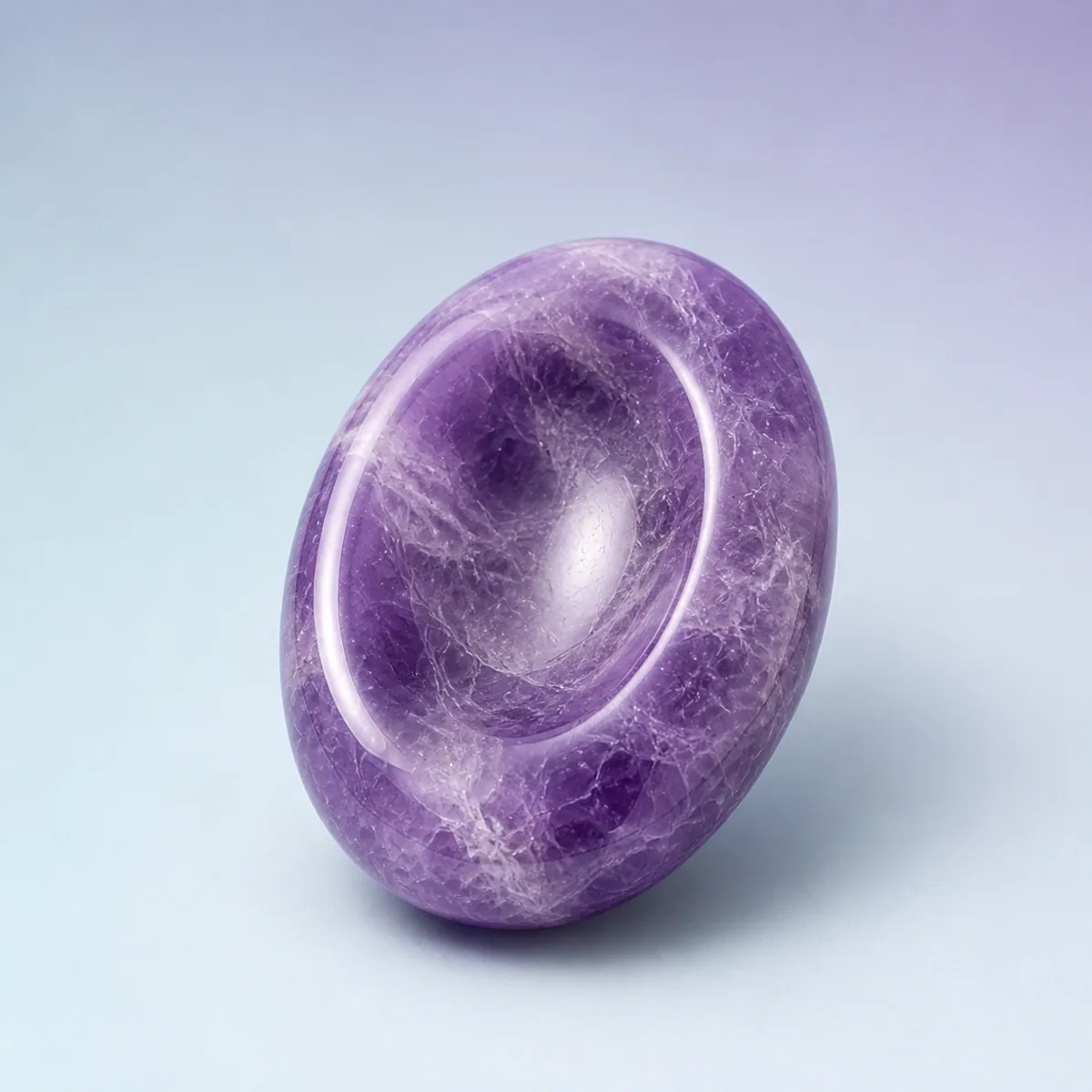
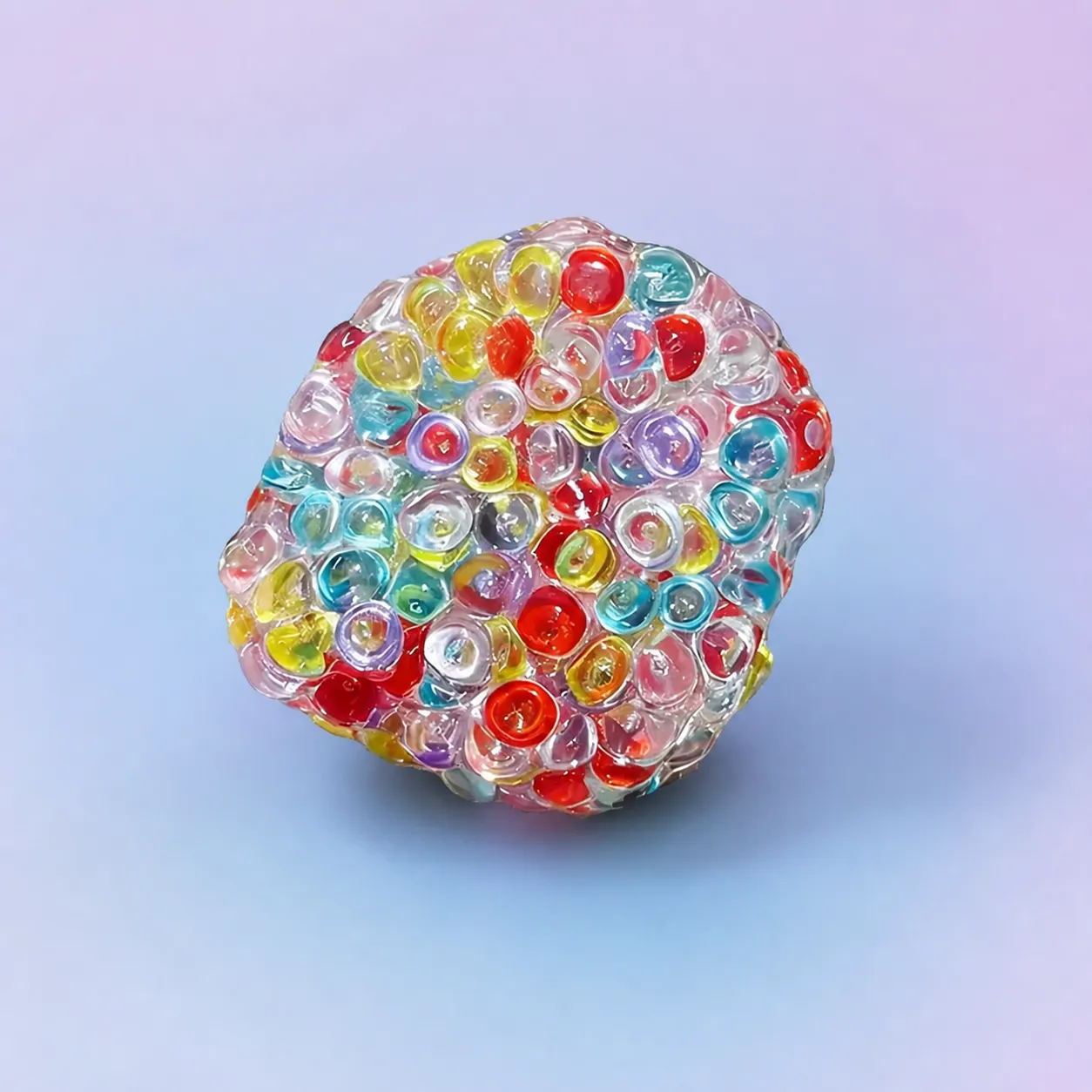
Anything silent, held below the frame, and small enough in its motion that nobody on the call would notice. The Calm Worry Stone sits in your lap or against the edge of the desk, warm and silent, worked with a thumb the camera never sees. The Jelly Blob gel fidget oozes and stretches one-handed with no sound at all, which suits the moments your other hand is on the mouse or taking notes. The Steady Hand Squeeze Stress Ball compresses quietly under a full squeeze, good for the tense stretch right before you have to speak. The Always-On Fidget Bracelet needs nothing extra at all, since it is already on your wrist under the camera line, ready the moment your hands go still.
Which fidget suits which meeting?
Match the object to how visible your hands already are.
| Setting | Best pick | Why |
|---|---|---|
| Video call, camera on | Worry stone or bracelet | Off-frame or already worn, silent |
| Long conference call, camera off | Gel blob or stress ball | Full attention on texture, nobody watching |
| In-person meeting, seated at a table | Worry stone under the table | Silent, invisible, still within reach |
| Presenting or speaking often | Bracelet | Hands stay visible and free while you talk |
When should you leave the fidget at your desk?
When it becomes the thing you are paying attention to instead of the meeting, or the thing everyone else notices instead of what you are saying. The spinner-and-young-children study is a useful reminder that a fidget can pull focus the wrong way, not just the right one, and that risk goes up with anything that clicks, spins visibly, or asks for two hands. If a tool is doing its job, you should barely notice you are using it. If you keep glancing down at it, it has become a toy again, and it is time to put it away for that call.
Meetings are not a lab, and no study here was designed to answer “should you fidget on this specific call.” What the research does support is choosing quiet over loud and discreet over eye-catching, which is advice you can actually use today. Calm in the palm of your hand, even with the camera on.
Sources & further reading
We reference trusted organizations by name. This article is informational and not a substitute for professional medical advice.
- CHADD: National ADHD nonprofit that distinguishes discreet, regulatory fidget tools from entertaining, attention-grabbing fidget toys, and recommends the less visible option for focus-critical settings; also quotes a licensed psychologist recommending less obvious stims like isolated finger taps for disruptive settings.
- Journal of Abnormal Child Psychology: Published a 2015 study of boys aged 8 to 12 with ADHD finding that higher activity levels predicted better, though not normalized, working memory performance, with no measured effect on attention itself.
- Frontiers in Psychology: Published a 2013 study finding fidgeting increased as attention declined during a 40-minute lecture, and that fidgeting predicted poorer retention of the material independent of attention.
- Journal of Attention Disorders: Published a study of 60 children with ADHD, mean age under 5, finding fidget spinner use was associated with poorer attention across a classroom intervention.
- Frontiers in Psychiatry: Published a 2024 study of 70 adults with ADHD measuring fidgeting during a cognitive task, describing fidgeting as a possible compensatory mechanism for sustained attention while noting other explanations are possible.
Frequently asked questions
Do fidget toys actually help in meetings?
The research is mixed rather than settled. Some studies link fidgeting or movement to better working memory in specific groups, mainly children with ADHD, while other studies link fidgeting itself, or a specific item like a spinner, to worse attention and retention. The practical answer for most people is to pick something silent and low-visual and judge by how the meeting actually goes.
Is fidgeting good or bad for focus, according to research?
Both findings exist in real, published studies, which is exactly why the honest answer is mixed. A 2015 study of boys with ADHD found more movement predicted better working memory but not better attention, while a 2013 lecture study found fidgeting rising alongside declining attention and worse retention. Neither result generalizes cleanly to every person or every setting.
What is the difference between a fidget tool and a fidget toy?
CHADD, a national ADHD nonprofit, describes a fidget tool as something discreet and regulatory, and a fidget toy as something more entertaining and attention-grabbing. For a meeting or a call, a tool is the safer choice, because a toy is more likely to become the thing people notice instead of what you are saying.
Do fidget spinners help you focus?
Not based on the one study that looked at this directly. A study of young children with ADHD found fidget spinner use was associated with poorer attention, not better, even within an evidence-based classroom program. That is one specific study in one specific age group, not a verdict on every fidget item.
What is the best fidget for a video call?
Anything silent that stays below the camera frame: a worry stone in your lap, a gel blob you can squeeze one-handed, a stress ball under the desk, or a silicone bracelet you are already wearing. The goal is a motion nobody on the call can see or hear, so it never competes with your face for attention.
Should I use a fidget during an important presentation?
If you are the one presenting, keep it smaller and less visible than you would in a meeting where you are mostly listening, since your hands are more visible when you are talking. A worn item like a bracelet or a ring, or something held below the table entirely, works better than anything with visible motion.