Can a fidget toy help with skin picking or hair pulling?
Sometimes, for some people, and only as one small piece of a much bigger picture. A fidget toy can give restless fingers something else to reach for in the moment, which is one strategy people use alongside real treatment for skin picking and hair pulling. It is a supportive aid, not a treatment, and it is not a cure.
We want to be honest with you from the very first line, because this topic asks for it. Skin picking and hair pulling are not habits you should be able to simply stop, and needing help with them is not a weakness. They are recognized conditions called body-focused repetitive behaviors, or BFRBs. A toy in your pocket will not fix a BFRB. What it can sometimes do is give your hands a gentler, different thing to do while you build the skills that actually help, usually with someone trained to teach them.
So hold two things at once. A fidget can be a genuinely useful part of your toolkit. It cannot be the whole plan, and if it does not stop the pulling or picking on its own, that is not a personal failing.
What are BFRBs (body-focused repetitive behaviors)?
BFRBs are a group of related conditions in which a person repeatedly touches or grooms their own body in a way that causes damage, like pulling out hair or picking at skin. Skin picking has a clinical name, dermatillomania, also called excoriation disorder. Hair pulling is called trichotillomania. Nail biting and cheek biting fall in the same family.
These are real, recognized conditions, listed in the DSM-5 among the obsessive-compulsive and related disorders. They are more common than most people realize, they often begin around adolescence, and they affect people of every background. Here is what matters most to know:
- They are not vanity, and not a choice. Most people with a BFRB deeply want to stop and feel real distress about it. Willpower is not the missing ingredient.
- They often run on autopilot. Some picking or pulling happens with barely any awareness, during a screen, a phone call, or a drive. Some is more focused, in response to an urge or a feeling.
- They are frequently tied to emotion and sensation. Stress, boredom, and anxiety can set them off, and so can a sensory pull toward a specific texture, like a coarse hair or an uneven patch of skin.
- Shame makes them worse, not better. Hiding it and beating yourself up tends to feed the cycle. You deserve support, not judgment.
Naming the thing clearly is not clinical coldness. It is the opposite. You are dealing with something that has a name, a research base, and effective help.
How could keeping your hands busy actually help?
Keeping your hands busy can help because a lot of picking and pulling happens when the hands are idle and drifting, often out of awareness. Giving your fingers a different, satisfying motion is a strategy that overlaps with a core technique used in BFRB treatment, called a competing response.
Here is the plain version of how professionals approach this. The best-supported treatment for BFRBs is a behavioral therapy, usually habit reversal training, often inside a broader approach called the Comprehensive Behavioral, or ComB, model. Habit reversal has a few moving parts:
- Awareness training. Learning to notice the urge, and the earliest moments of the behavior, since so much of it runs on autopilot.
- A competing response. Doing something with your hands that is physically hard to pick or pull while doing, and holding it until the urge passes. Clenching a fist, sitting on your hands, or occupying your fingers with an object are common examples.
- Support and follow-through. Building in the people and reminders that keep the practice going.
A fidget toy fits into that middle step. It can be the thing your hands do instead, and for some people it helps to match the toy to the sensation their fingers go looking for: a smooth stone for a rubbing urge, soft putty for a squeezing one. This is sometimes called sensory substitution.
Two honest caveats, because they matter. The toy is not the technique. The awareness, the competing response, and the practice are skills a trained therapist teaches, and the toy is just a helpful prop in your hand. And the direct evidence for fidget toys reducing BFRBs is thin and mostly anecdotal, while the evidence for habit reversal is strong. Reach for the toy, and reach for real help too.
What kind of fidget toys work best for picking and pulling hands?
The most useful toys tend to be tactile, absorbing, and able to keep the fingers genuinely occupied, ideally with a texture close to whatever your hands go looking for. Quiet matters too, so the toy works in the places picking and pulling tend to happen: the couch, the desk, the car, the mirror.
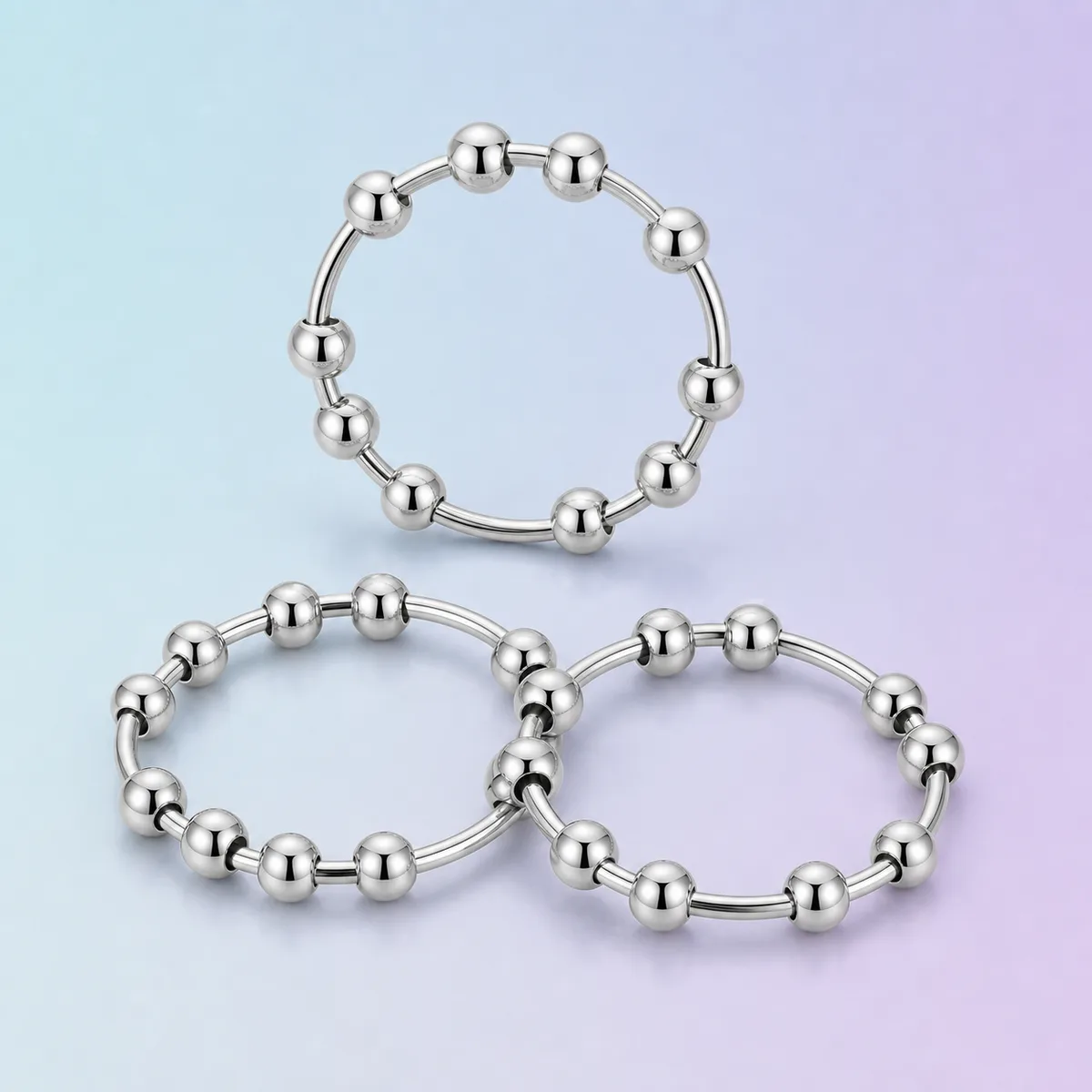
A wearable option earns its place here, because hands so often drift up to the scalp, brows, or face without warning. The Quiet Spinner Sensory Ring Set (3-Pack) sits right on your finger, ready before your hand reaches its target, with polished beads to roll and slide. It is very quiet rather than truly silent, since the metal beads can make a faint sound when they touch, but it stays discreet through a meeting or a class. At $16.99 for three, you can keep one on at all times.
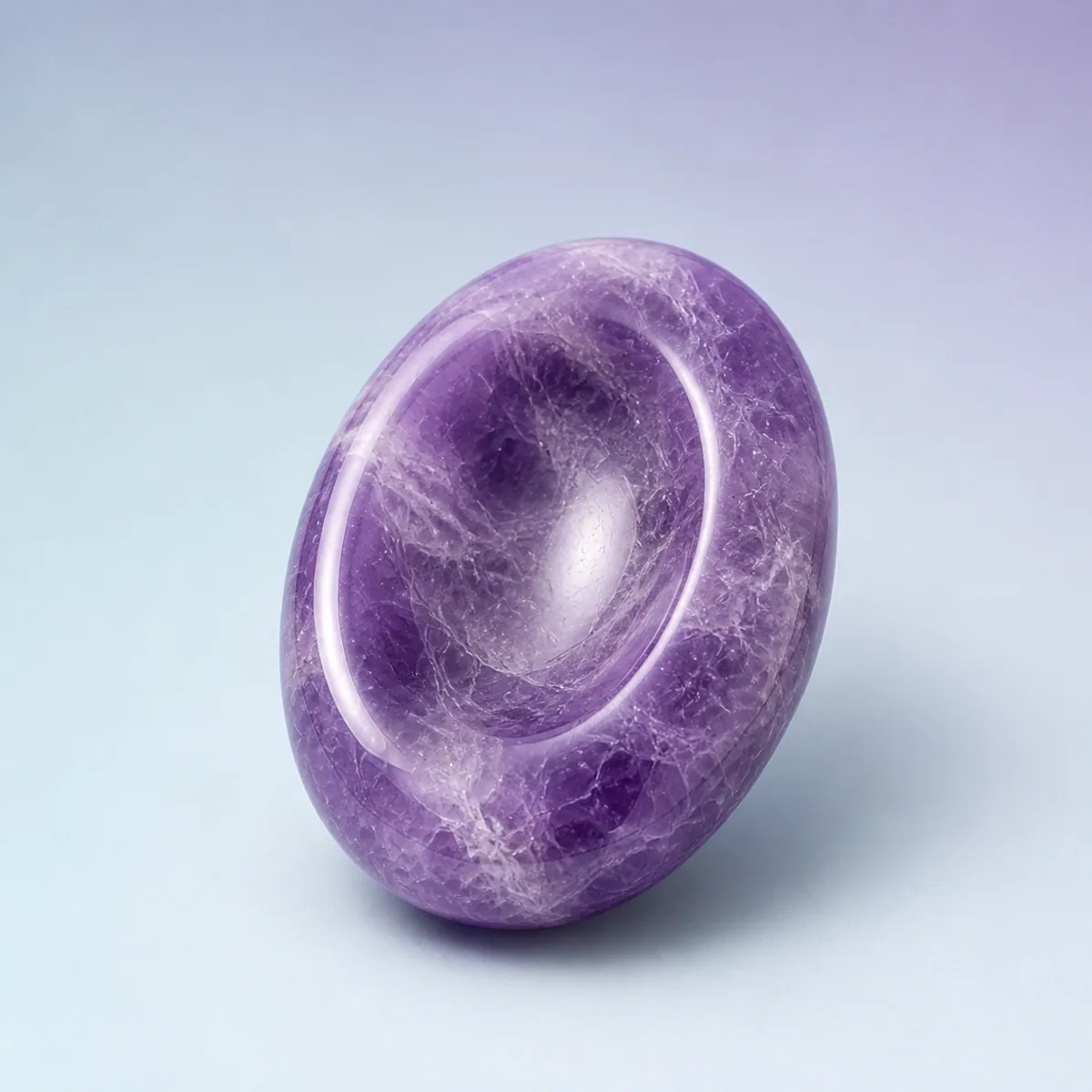
If your fingers seek a rubbing, stroking sensation, a worry stone answers that directly. The Calm Worry Stone has a thumb-shaped hollow worn into the middle, so your thumb finds it without looking and slides back and forth in a slow, silent rhythm. It is smooth, weighted, pocket-sized, and completely quiet, a $9.49 anchor for the walk to a mirror or a tense evening on the sofa.
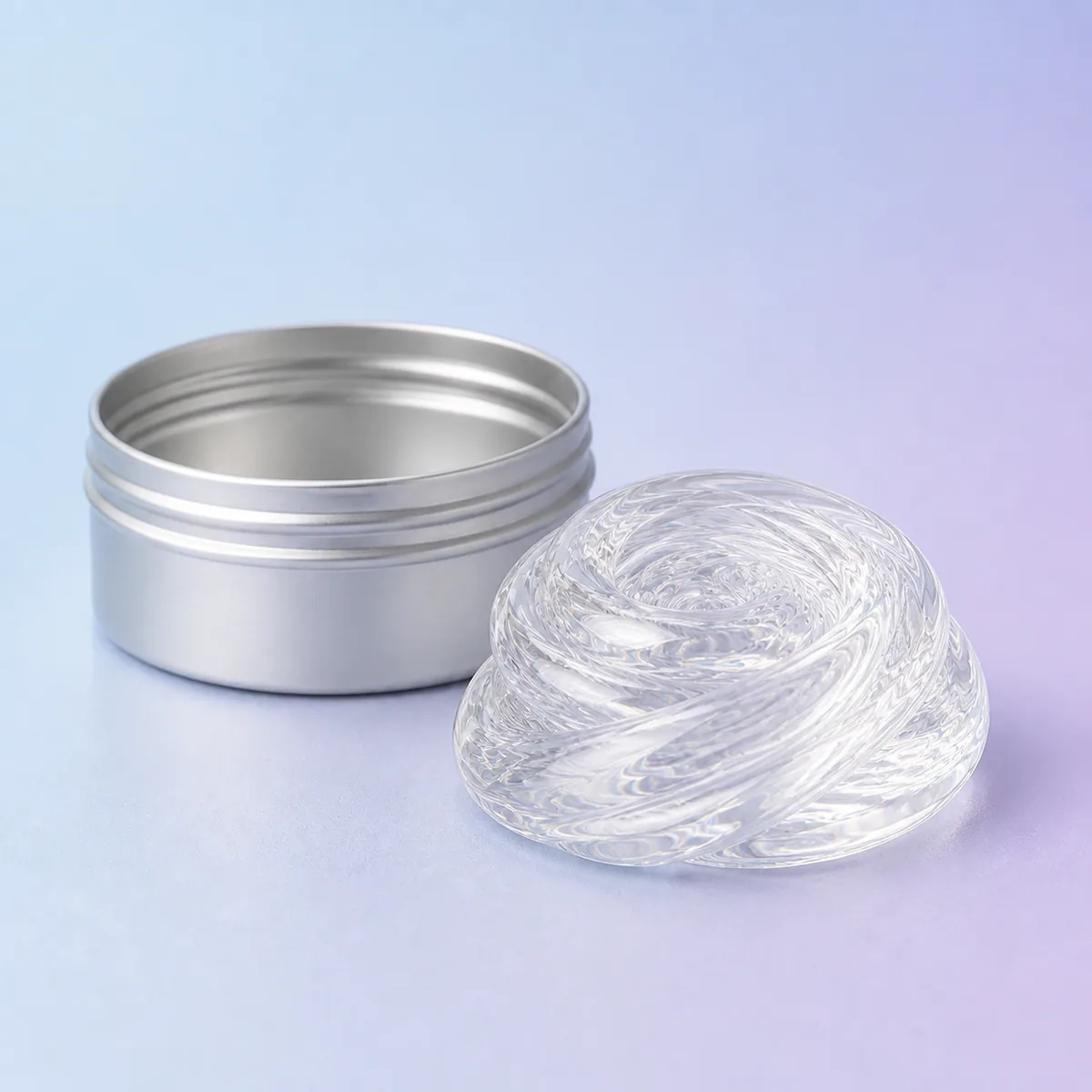
For hands that want to squeeze, stretch, and stay busy for a long stretch, open-ended putty holds attention in a way single-trick toys cannot. Calm Putty pulls like taffy, snaps when you tug it fast, and flattens under your palm, then balls up so you can start again, all in silence. One honest note that is especially relevant here: keep it away from hair and fabric, the way you would any putty. It is $11.99 in a little tin that never dries out.
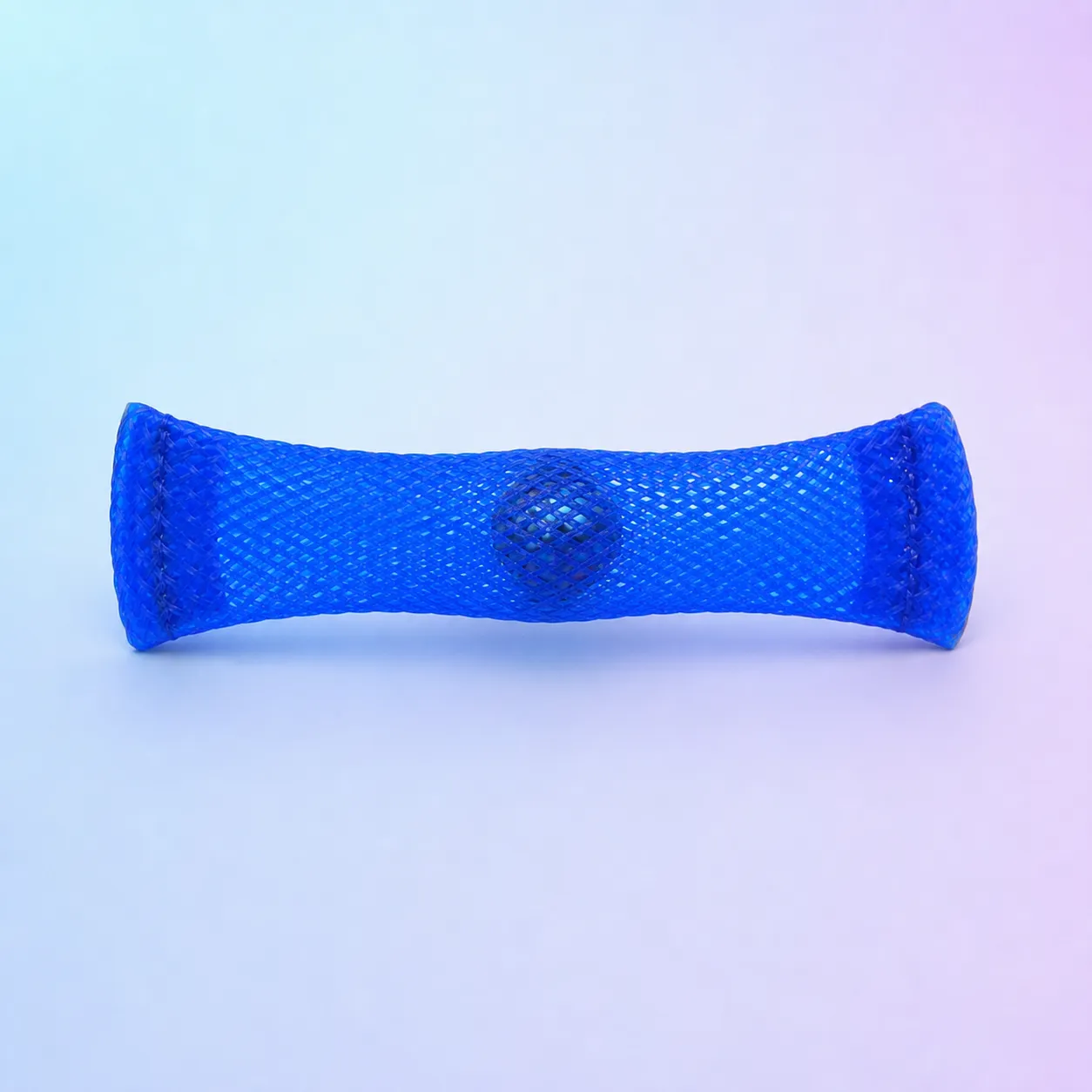
Two more that keep fingers occupied. The Roll & Squeeze Mesh Marble Fidget is a glitter marble sealed in a woven mesh tube, silent and slim, so your fingers push and roll it back and forth for $9.99. And if you want a busier, two-handed motion, the Roll & Flip Chain Fidget gives both hands a compact chain-and-bearing mechanism to turn and flip. Be aware it makes a faint mechanical sound rather than a silent one, so it suits a private desk more than a quiet shared room. It is $9.99.
| If your hands tend to… | Look for… | A quiet pick |
|---|---|---|
| Drift up to your hair, brows, or face | A wearable fidget already on your hand | Quiet Spinner Sensory Ring Set (3-Pack) |
| Seek a rubbing or stroking texture | A smooth, thumb-worn stone | Calm Worry Stone |
| Want to squeeze and stay busy a long while | Open-ended, moldable putty | Calm Putty |
| Need slim, silent finger motion anywhere | A mesh-wrapped rolling marble | Roll & Squeeze Mesh Marble Fidget |
| Want both hands fully occupied at a desk | A chain-and-bearing flip fidget | Roll & Flip Chain Fidget |
There is no single right answer, and the best toy is simply the one your hands reach for instead. If a texture does not click, try another.
How do I actually use a fidget toy for skin picking or hair pulling?
Keep it where the behavior happens, and reach for it early. A fidget helps most when it is already in your hand before the urge peaks, not fished out afterward. Put one where you tend to pick or pull: beside the couch, at your desk, in the car, near the mirror.
A few gentle, practical ways to get more from it:
- Notice your triggers. Picking and pulling often cluster around certain moments: screens, stress, boredom, the bathroom mirror. Knowing yours tells you where to stash a toy.
- Match the motion to the urge. If your fingers want to rub, choose the stone. If they want to squeeze, choose the putty. The closer the substitute, the more it satisfies.
- Pair it with awareness. Use the toy as a cue to check in: what am I feeling right now, and what set this off? That pause is where change begins.
- Be kind on the hard days. Some days it helps a lot, some days not at all. A slip is not a failure, and self-blame only feeds the cycle.
- Treat it as support, not a substitute. The toy sits alongside the skills a professional teaches. It is the smallest, friendliest part of the plan.
Patience matters more than perfection. You are building a new response, and that takes time and kindness.
When should I get help for skin picking or hair pulling, and where?
Reach out for professional support when picking or pulling is causing bald patches, wounds, scarring, or infection, when it is eating your time or your peace, or when it brings shame you carry alone. Those are not signs you have failed. They are signs that this is worth real help, and effective help exists.
The reassuring part is that BFRBs are treatable, and there are people trained specifically in them. A therapist who knows habit reversal training or the Comprehensive Behavioral (ComB) approach can teach you the skills a toy can only support. Your doctor can be a first step and a referral point.
Two organizations are the place to start:
- The TLC Foundation for Body-Focused Repetitive Behaviors offers plain-language education, a supportive community, and a directory to help you find a therapist who treats BFRBs.
- The International OCD Foundation provides resources on BFRBs and related conditions, along with help locating trained specialists.
You are not alone with this, and you are not lacking willpower. A fidget can be a small, steady friend in your hand, calm in the palm of your hand, while the real change comes from skills, support, and people trained to help you build them.
Sources & further reading
We reference trusted organizations by name. This article is informational and not a substitute for professional medical advice.
- TLC Foundation for Body-Focused Repetitive Behaviors: Leading nonprofit for BFRBs, offering plain-language education, community support, and a directory for finding a trained therapist.
- International OCD Foundation: Provides resources on BFRBs and related conditions and helps people locate specialists trained to treat them.
- Mayo Clinic: Offers patient-friendly medical overviews of trichotillomania (hair pulling) and excoriation (skin-picking) disorder.
- Cleveland Clinic: Explains BFRB symptoms, causes, and treatment options in accessible language.
- American Psychological Association: Background on behavioral approaches such as habit reversal training used for repetitive behaviors.
- Anxiety and Depression Association of America: Shares information on BFRBs and the anxiety that often accompanies them, plus guidance on seeking help.
Frequently asked questions
Can a fidget toy stop skin picking or hair pulling?
No. A fidget toy can give your hands an alternative to reach for in the moment, but it is not a treatment or a cure. Skin picking and hair pulling are body-focused repetitive behaviors, and the change that lasts usually comes from behavioral therapy like habit reversal, taught by a trained professional. A toy is a small, supportive prop alongside that work.
What is a BFRB?
BFRB stands for body-focused repetitive behavior. It is a group of related conditions in which a person repeatedly pulls, picks, or bites at their own body in a way that causes damage. Hair pulling is called trichotillomania and skin picking is called dermatillomania, or excoriation disorder. They are recognized conditions, not bad habits or a lack of willpower.
What is a competing response?
A competing response is a core part of habit reversal training. When you notice the urge to pick or pull, you do something with your hands that is physically hard to do at the same time, and you hold it until the urge passes. Occupying your hands with a fidget can support this idea, but the technique itself is best learned from a therapist.
Which fidget is best for hair pulling versus skin picking?
It is personal, so trust what your hands reach for. That said, a wearable option like a spinner ring is often handy for hair pulling, since hands drift up to the head, while a smooth worry stone or soft putty can suit skin picking by offering a rubbing or squeezing texture instead. The closer the substitute is to the sensation you seek, the more it tends to satisfy.
Are BFRBs a form of self-harm?
Usually not, and they are generally considered distinct from self-harm, because the intent is different rather than a wish to feel pain. They can still be genuinely distressing and deserve care and support, not shame. A professional who understands BFRBs can help you make sense of your own experience.
Where can I find real help for skin picking or hair pulling?
The TLC Foundation for Body-Focused Repetitive Behaviors and the International OCD Foundation are trusted starting points, with education and directories to help you find a therapist trained in BFRBs. Look for someone who knows habit reversal training or the Comprehensive Behavioral (ComB) approach. Your doctor can also help with a referral.