Are fidget toys allowed through airport security?
Generally, yes, and most people carry a fidget toy through a checkpoint without anyone giving it a second glance. Airport screening is built around what an object is made of and how it is shaped, not around what it is for, so a solid, harmless personal item mostly reads to a scanner the same way a keychain or a hair clip does. That said, checkpoint procedures are set by individual airports, airlines, and countries, and they do change from one terminal to the next. We are not a security authority, and this is practical, general guidance based on how these items are made, not an official policy from anyone who runs a checkpoint.
The honest, useful version of this answer is a habit, not a guarantee: pack the kind of object that has nothing to hide and nothing to explain, and you will rarely think about security again once you are through it. That habit matters more on travel days than on an ordinary day at a desk, since you are already managing a boarding pass, a bag, shoes coming off, and a line moving faster than you would like.
What makes a fidget easy to carry through security?
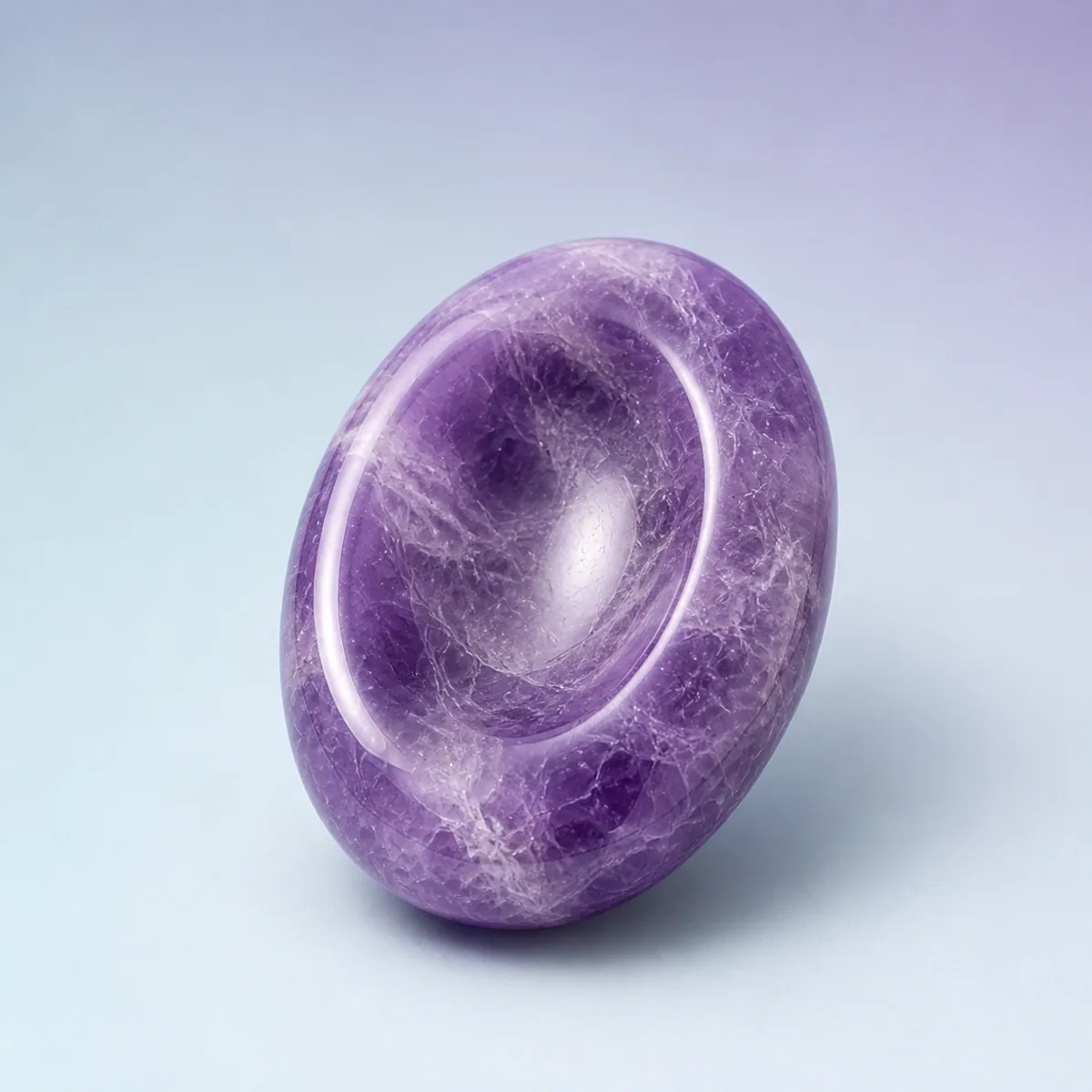
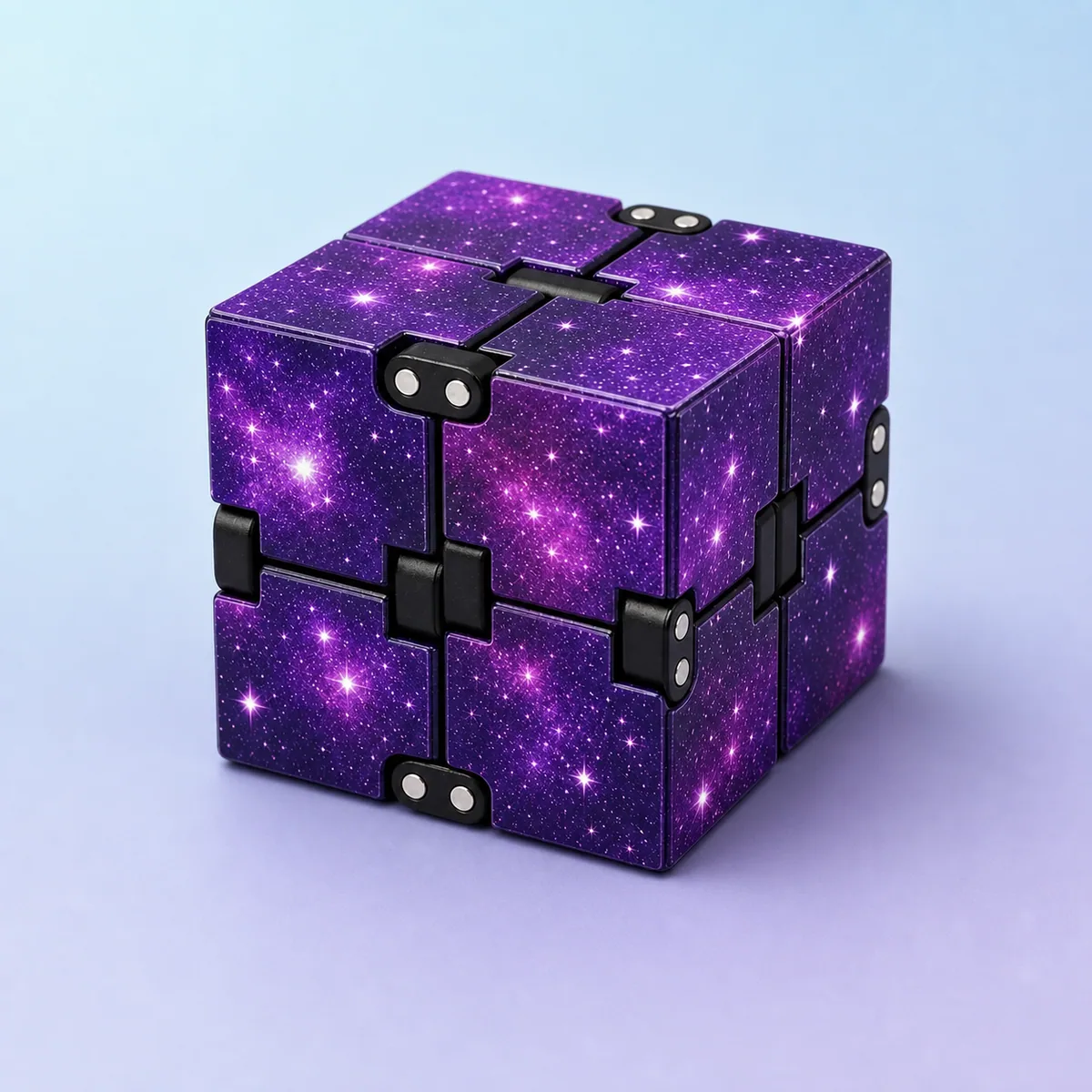
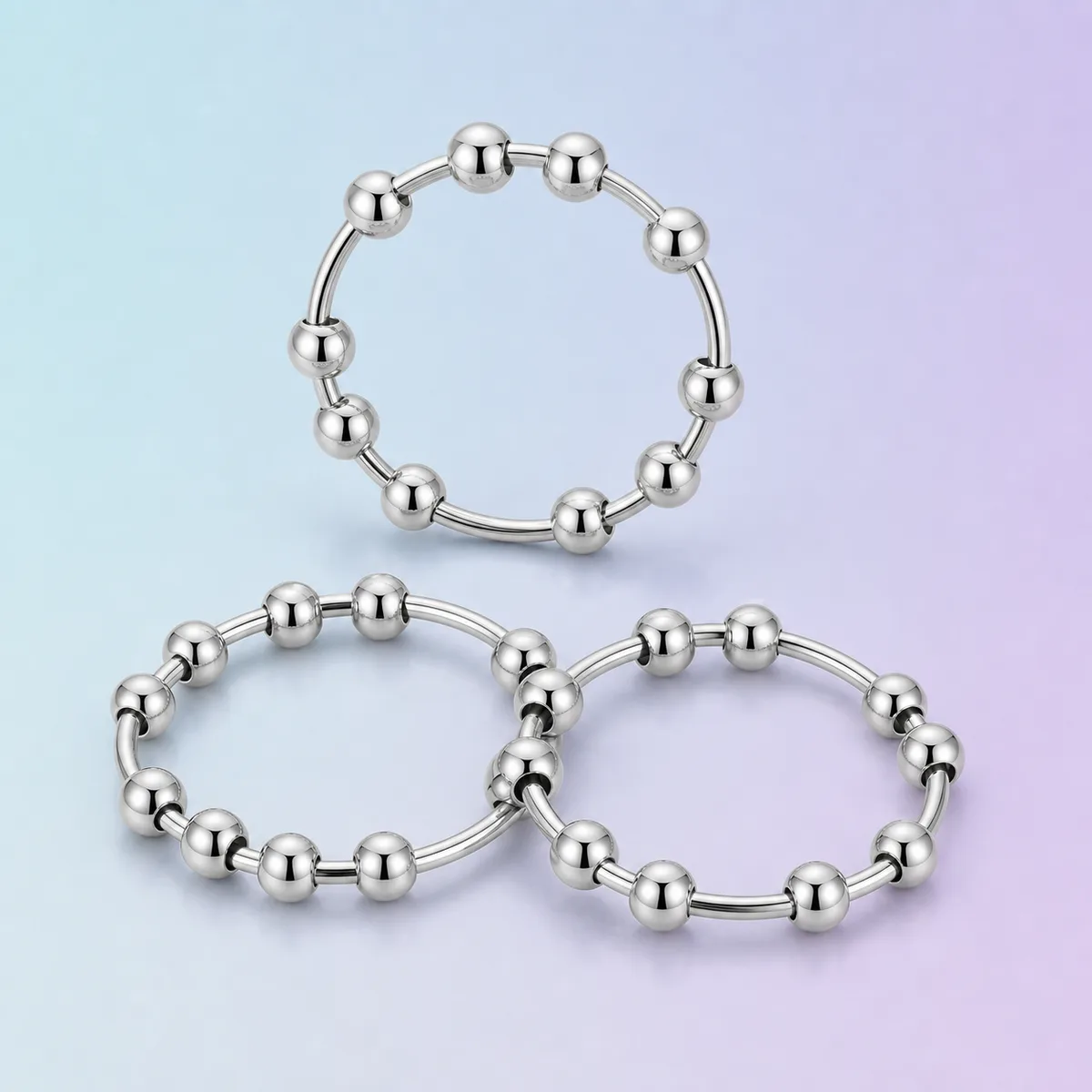
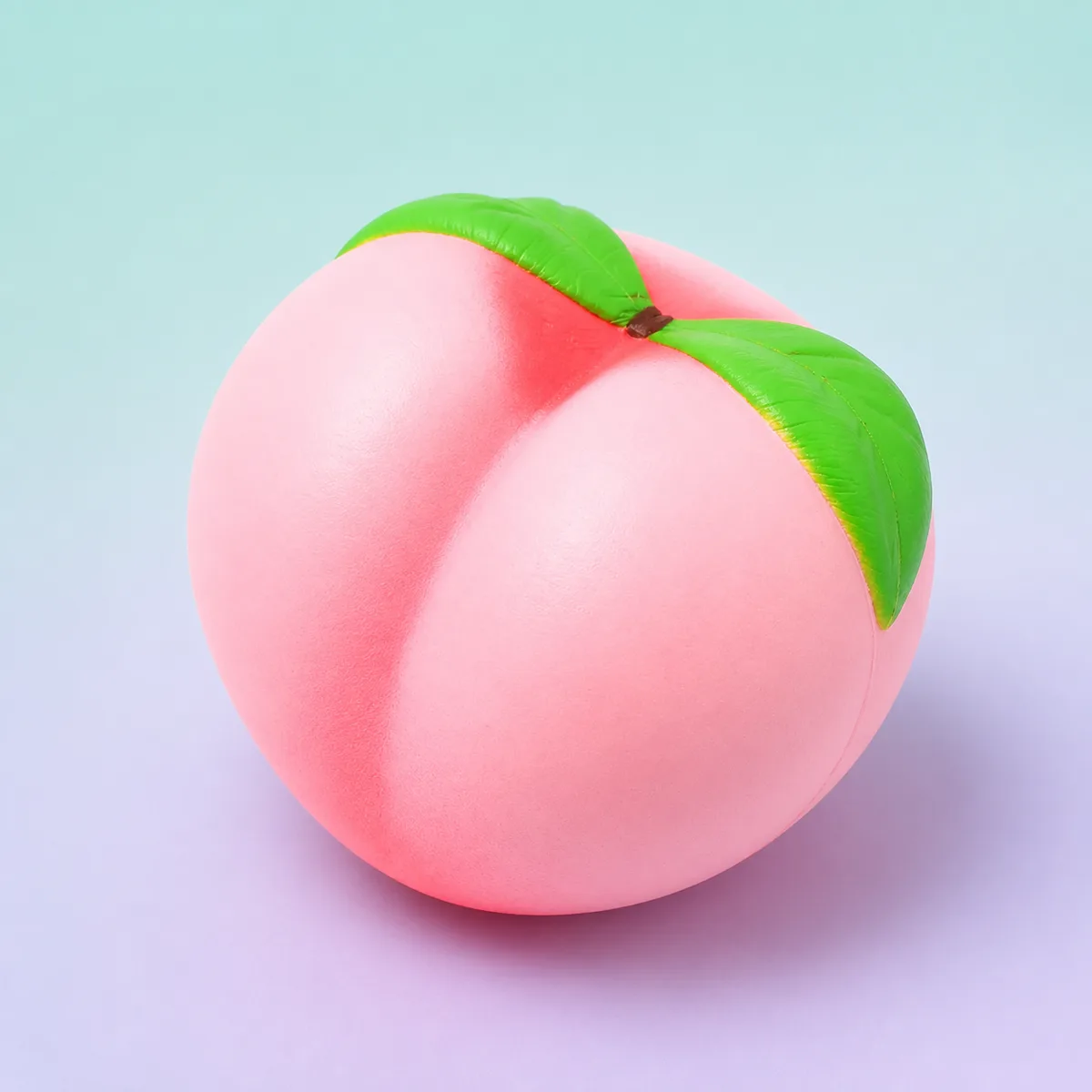
Solid and simple. A single piece of resin, steel, or foam has no compartment to open, nothing to spill, and nothing a screener needs to look twice at. A Calm Worry Stone is solid resin with no moving parts at all. A stainless steel ring from the Quiet Spinner set is small jewelry, no different in kind from a wedding band. An Infinity Flip Cube is folded plastic blocks on fabric hinges, nothing electronic, nothing sealed. A foam squishy like the Peachy Slow-Rise is soft and solid all the way through, with nothing inside to question.
TSA keeps an item-by-item screening database for exactly this kind of question, and it draws the line clearly. Putty is filed under its own “Putty Balls” entry: allowed in carry-on and checked bags with no liquids-rule restriction at all, since it is treated as a solid. A gel-filled toy is a different category: TSA’s “Gel-Filled Toys” page allows it in a carry-on only if it holds less than 3.4 ounces of gel, fitted into the standard quart-size liquids bag under the 3-1-1 rule, with larger ones routed to checked luggage instead. Solid stress balls and squishies with no liquid or gel core face no such limit either way. TSA even keeps a dedicated page confirming fidget spinners are allowed in both carry-on and checked bags, though the final call at any checkpoint always rests with the officer working it. None of this means a gel-filled item is banned. It means solid beats sealed, and a sealed item is the one more likely to need a second look and a few extra minutes you may not have between a delayed gate change and a closing door.
What about during the flight itself?
Once you are through the checkpoint and in the air, none of this matters anymore, and the choice becomes purely about comfort. A flight has its own small stretch of stress built in: the wait at the gate, the climb where ears need to pop, the turbulence that makes armrests feel important, and the long, unstructured middle of a longer route. A worry stone rubbed slowly during takeoff, a squishy pressed while your ears adjust, or a spinner ring worked through the in-between hours all do the same quiet job a fidget does anywhere else.
Does this change if you are flying internationally?
A little, and it is worth knowing before you pack for a UK or EU trip. The UK Civil Aviation Authority caps liquids, aerosols and gels, including cosmetic and toiletry items “of a similar consistency,” at 100 ml per container through security points that have not upgraded to next-generation CT scanners, and the European Commission reinstated that same 100 ml limit at every EU airport from September 2024 after some upgraded scanners could not reliably screen larger containers, a certification setback rather than a new safety finding. Neither authority names a fidget product specifically, so treat a gel-like or putty-like consistency as the deciding factor rather than the object’s name: a firm putty that holds its shape reads as solid, while anything that pours, oozes freely, or slumps like a true gel is safer packed as if the 100 ml rule applies. A handful of UK airports with certified scanners allow up to 2 litres, but most still enforce 100 ml, and the EU’s 2024 rollback is a reminder that the exemption can disappear with no notice.
Which of our fidgets travel best?
| Fidget | Why it travels easily | Best used |
|---|---|---|
| Calm Worry Stone | Solid resin, no moving parts | Queue, takeoff, turbulence |
| Quiet Spinner Ring Set | Small metal jewelry | Worn the whole trip, nothing to pack |
| Infinity Flip Cube | Solid plastic, no battery | Long stretches of a flight |
| Peachy Slow-Rise Squishy | Soft solid foam, nothing inside | Bag, seat pocket, or lap |
Why discretion matters more when you are traveling
CHADD, a national ADHD nonprofit, draws a useful line between a discreet fidget tool and a more attention-grabbing fidget toy, and that distinction earns its keep in an airport especially. A crowded checkpoint, a packed gate, and a full flight are not the place for anything that clicks loudly, lights up, or looks like a toy in the literal sense. A worry stone or a plain spinner ring reads as jewelry or as nothing at all, which is exactly the point when you are moving through a line of strangers with a bag to keep track of. The Job Accommodation Network, a US Department of Labor service, already treats fidget items as recognized concentration tools rather than novelties, naming a worry stone directly among its accommodation examples. It says nothing about airports specifically, but it is a fair reminder that a fidget in your pocket is an ordinary, understood object to plenty of institutions, not a strange thing to be carrying through a terminal.
What if security asks about it?
Answer plainly and keep moving. A sensory tool that helps me sit still is a complete, honest answer, and it is one most screeners have heard before, since fidget items are common enough now that they rarely raise real concern. There is no need to over-explain a diagnosis or a reason, and there is no requirement to give one. A calm answer, offered without hesitation, tends to close the question faster than a nervous one does, and a screener moving a busy line along has every reason to want the same quick resolution you do.
If an item does get pulled aside for a closer look, that is a normal part of screening and not a judgment on you or the object. For anyone who wants support arranged ahead of time, TSA Cares is a free program that assigns a Passenger Support Specialist to help travelers with disabilities, medical conditions, or other circumstances move through screening; request it at least 72 hours before a flight through the TSA Cares web form or by calling (855) 787-2227. It does not exempt anyone from screening or guarantee a faster line, only a person walking alongside you through it.
Pack it somewhere you can reach it without digging, since the version of this that actually works is the one you are not scrambling to find at the front of the line. A queue, a delay, a middle seat for four hours, these are exactly the moments a small, quiet object earns its place in your pocket. Calm in the palm of your hand, gate to gate.
Sources & further reading
We reference trusted organizations by name. This article is informational and not a substitute for professional medical advice.
- TSA (Transportation Security Administration): Publishes an item-by-item screening database confirming putty, solid stress balls, and fidget spinners face no liquids restriction, while gel-filled toys are capped at 3.4 oz under the 3-1-1 rule; also runs the TSA Cares program for travelers who want extra screening support.
- UK Civil Aviation Authority (CAA): Publishes UK airport baggage guidance capping liquids, aerosols, and gels, including gel- or putty-like items, at 100 ml per container through most security points.
- European Commission, Directorate-General for Mobility and Transport (DG MOVE): Reinstated the 100 ml liquids, aerosols and gels limit at all EU airports from September 2024 after some upgraded scanners could not reliably screen larger containers.
- CHADD: National ADHD nonprofit that distinguishes discreet, regulatory fidget tools from entertaining, attention-grabbing fidget toys, useful for choosing something low-key to carry in public.
- Job Accommodation Network (JAN): A US Department of Labor service that lists specific fidget products, including a worry stone, as recognized accommodation tools, supporting that these are legitimate sensory tools rather than novelty items.
Frequently asked questions
Are fidget toys allowed through airport security?
Generally, yes, and most personal fidget toys pass through screening without any issue, since checkpoints are built around materials and shapes rather than the purpose of an object. Rules do vary by airport and by country, so this is general, practical guidance rather than an official policy, and it is worth checking with your airline or airport if you are flying somewhere unfamiliar.
Which fidget toys are easiest to travel with?
Solid, one-piece items are the simplest: a resin worry stone, a stainless steel spinner ring, a foam squishy, or a folding cube with no batteries. Nothing needs to be opened, poured out, or explained, which is what makes an item easy at a checkpoint.
Do fidget rings set off metal detectors?
A small metal ring is jewelry, and jewelry of that size does not typically require separate handling, in the same way a wedding ring or a watch does not. If you are ever asked to remove jewelry at a specific checkpoint, a spinner ring comes off and back on as easily as any other ring.
Should I pack fidget toys in a carry-on or checked bag?
Carry-on, since a fidget is most useful during the wait, the queue, and the flight itself, all places a checked bag cannot reach. Keeping it somewhere easy to find, rather than buried at the bottom of a bag, also makes it faster to show if anyone asks what it is.
What should I say if security asks about my fidget toy?
A short, plain answer works best: a sensory tool that helps me stay calm and still. There is nothing to justify or explain further, and a calm, brief response moves the line along faster than an over-explanation.
What is the best fidget toy for a flight?
Something silent and low-effort for a long stretch of sitting: a worry stone to rub during takeoff, a squishy to press slowly while your ears adjust, or a spinner ring for the hours in between. An infinity cube is satisfying too, though its soft folding sound suits a window seat better than a middle seat on a full flight.