Do fidget toys break down in sunlight?
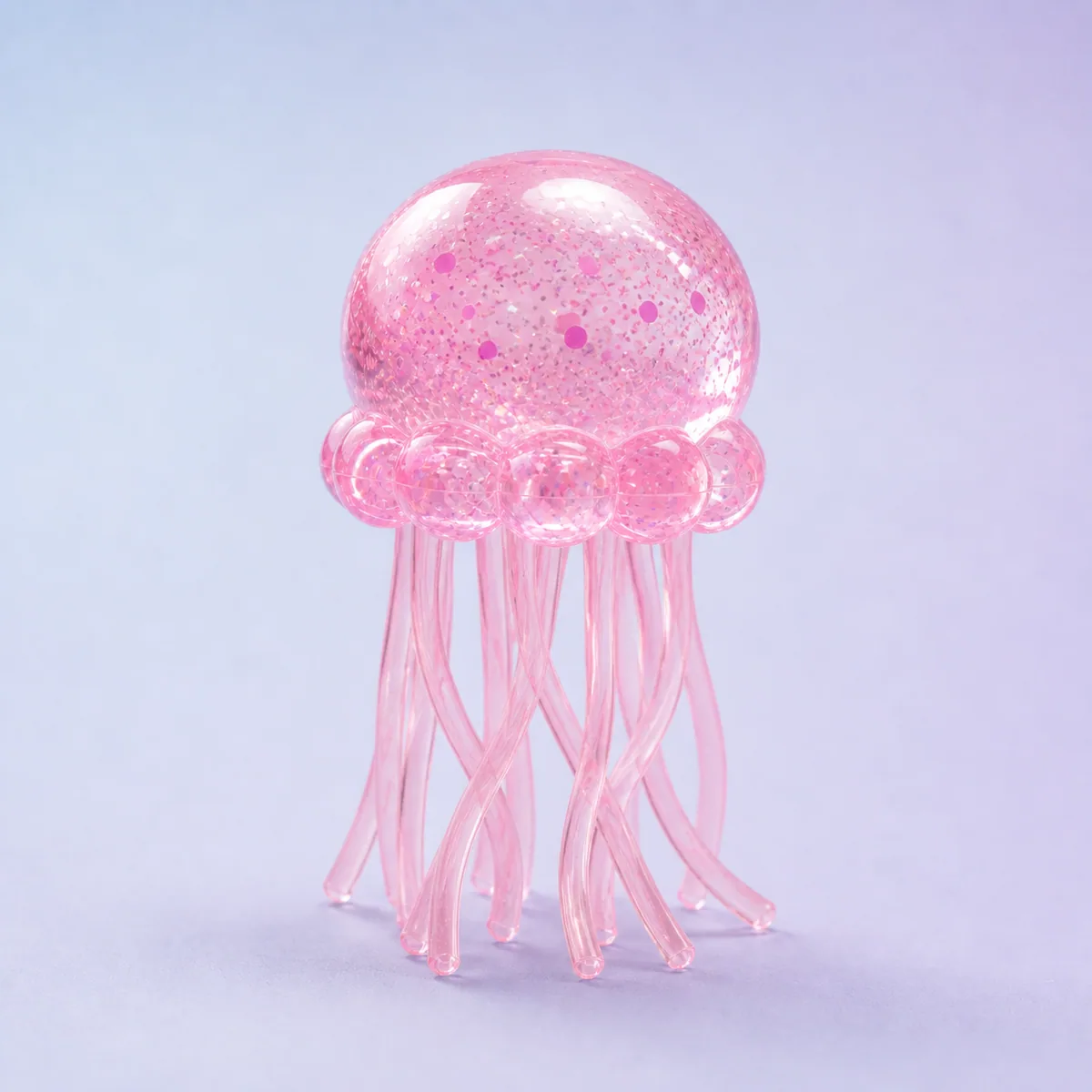
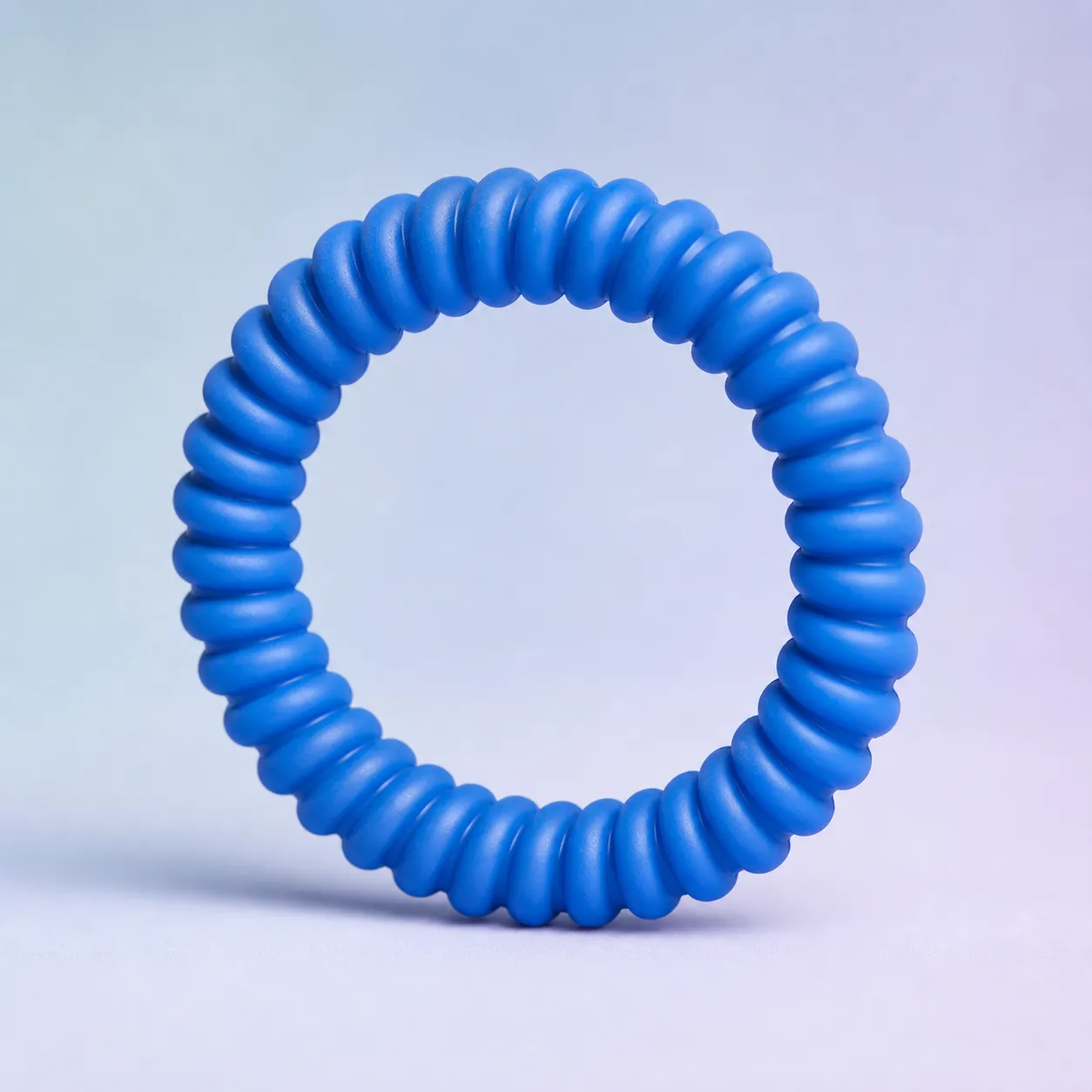
Depends on the material, and foam is the one that shows it first. Polyurethane foam, the base of a slow-rise squishy like the Peachy Slow-Rise Squishy, yellows under UV light through a straightforward photo-oxidation reaction, and enough combined heat, light, and moisture over a longer stretch of time can eventually stiffen the surface or cause it to crumble. Silicone, in the Always-On Fidget Bracelet, resists that kind of damage far better thanks to its chemistry. TPR, in the Lumi Jellyfish Crystal Squishy, falls somewhere in between: a narrower heat range than silicone, and less documented sun behavior either way. None of this requires special care, just the ordinary habit of not leaving squishies in a hot car, and the difference between the three materials is mostly a matter of how much sun and heat it takes before you notice anything at all.
Why does a foam squishy turn yellow in the sun?
Because UV light reacts with compounds inside the foam and produces a yellow byproduct as a direct result. Water used in manufacturing reacts with the foam’s isocyanate component to form aromatic amines, and those oxidize into quinone compounds under light exposure, which are yellow. That is the whole mechanism: a real chemical reaction, not fading in the sense of a color simply washing out. It happens to foam specifically because of the aromatic chemistry in its structure; it is not something silicone or metal fidgets experience the same way. Sunlight is not even the only trigger for this reaction: the same chemistry can start during manufacturing, from processing heat and ordinary exposure to airborne compounds, though the sun on a windowsill is the part actually within your control once a squishy is in your hands.
Does yellowing mean the foam is actually damaged?
Not by itself. The color change from UV exposure alone does not significantly affect the foam’s physical properties, so a squishy that has gone a little yellow but still presses and rises normally is not showing structural damage yet. What actually weakens foam is different: sustained heat, light, and moisture acting together over a longer period, which shows up as stiffness, crumbling, or a loss of flexibility rather than color. Zoom in further and broader materials research describes the mechanism at the surface: prolonged UV exposure breaking down the thin cell walls right at a foam’s outer layer, which is the microscopic version of the same stiffening and crumbling. Treat yellowing as a sign worth noticing, not proof that anything is already broken.
How do silicone and TPR compare to foam in the sun?
Better, in different ways and by different amounts. Silicone’s silicon-oxygen backbone is inherently resistant to UV and ozone, and it tolerates a wider heat range than either foam or TPR, though no material found in this research is described as indefinitely immune to sun and heat. TPR’s usable range is narrower, and the related family of rubber chemistry it belongs to generally needs protective additives to age well, which suggests some vulnerability without them, even though no source found gives TPR a specific sun-exposure figure the way foam and silicone have.
| Material | Used in | Rough heat range | How it takes the sun |
|---|---|---|---|
| PU foam | Peachy Slow-Rise Squishy | About -80F to 200F | Yellows first; combined heat, light, and moisture over time can stiffen or crumble it |
| TPR | Lumi Jellyfish Crystal Squishy | About -40F to 248F | No confirmed sun-specific data, but the wider rubber family needs protective additives to age well |
| Silicone | Always-On Fidget Bracelet | About -103F to 450F or higher | The most sun and ozone resistant of the three, though not indefinitely |
Where should you actually store your fidget collection?
Somewhere boring: a drawer, a bin, or a shelf at normal room temperature. Skip sunny windowsills, car dashboards, and anywhere near a radiator, since heat and UV are exactly what drives the reactions above. Store everything clean and fully dry first, since trapped moisture is its own separate problem, and avoid stacking anything heavy on top of foam, which can leave a dent that does not bounce back out. You do not need a special container built for the job; a closed drawer or an ordinary bin does the same work as anything sold specifically for toy storage, since the goal is distance from heat and light, not a particular kind of box. None of this is a certification or a safety standard: the mandatory ASTM F963 toy standard and CPSC’s federal rules cover things like choking hazards and chemical limits, not how a material ages in a hot car, so this advice is a household habit, not a label promise.
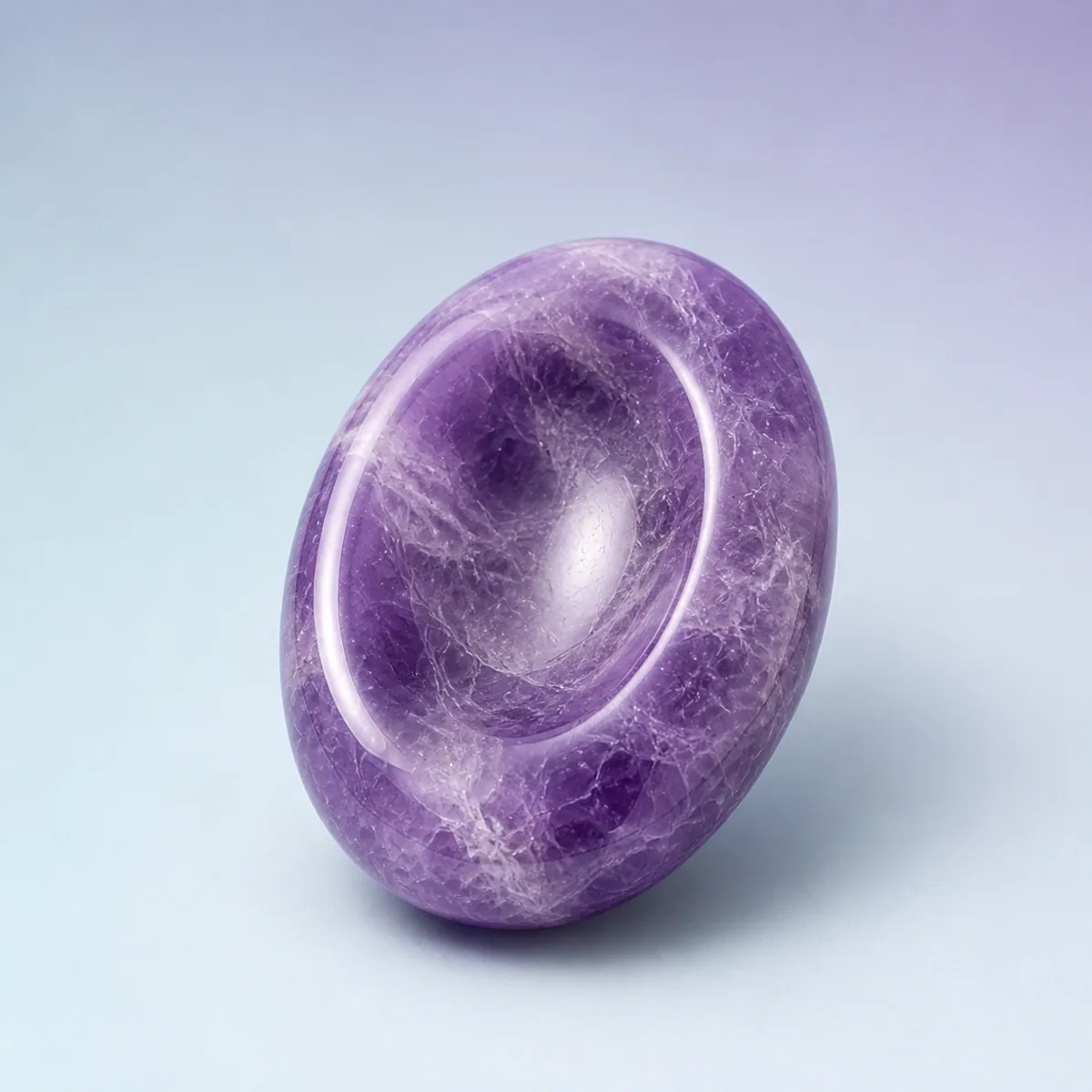
We do not have sun-degradation data specific to polished resin, so we cannot make the same detailed claim for the Calm Worry Stone that we can for foam, TPR, and silicone. Keeping it out of prolonged direct heat anyway is a reasonable habit, not a proven necessity for that particular material, and it costs nothing to be consistent about where you keep the whole collection.
Where to start
If your squishy collection lives on a sunny desk, the fix is a different spot, not a different squishy: the same drawer that holds a Peachy Slow-Rise Squishy will happily hold a Lumi Jellyfish Crystal Squishy too. Reach for the Always-On Fidget Bracelet on the days you actually want something that can survive a bag left in a hot car without a second thought, and keep the Calm Worry Stone in a pocket rather than on a windowsill out of the same simple habit. A few seconds of thinking about where something lands after you put it down is the whole habit, nothing more elaborate than that. None of it is complicated. Calm in the palm of your hand, for as long as the material holds up.
Sources & further reading
We reference trusted organizations by name. This article is informational and not a substitute for professional medical advice.
- Polyurethane Foam Association: Publishes technical information on flexible polyurethane foam chemistry and performance, the viscoelastic foam used in slow-rise squishies like ours.
- U.S. Consumer Product Safety Commission: Writes and enforces federal safety rules for children's products, covering things like choking hazards and chemical limits; it does not test how a material ages under heat and sun.
- ASTM International: Publishes ASTM F963, the mandatory US toy-safety standard covering age grading and physical hazards; it does not cover how a material holds up in a hot car or a sunny window.
Frequently asked questions
Do fidget toys break down in sunlight?
Polyurethane foam squishies yellow under UV light and, with enough combined heat and moisture over time, can eventually stiffen or crumble. Silicone resists sun and heat better because of its chemistry, and TPR falls somewhere in between with a narrower heat range and less documented sun behavior. Whatever the material, keeping fidgets out of direct sun and heat is the simple, low-risk habit.
Why does my squishy look yellow now?
UV light reacts with compounds in polyurethane foam and produces a yellow byproduct, a straightforward photo-oxidation reaction. That color change on its own does not significantly affect how the foam presses or rises. It is a cosmetic sign of sun exposure, not proof the squishy is falling apart.
Is a yellowed squishy still safe to use?
Yellowing by itself is a cosmetic change, not a structural one, based on how polyurethane foam discolors. What actually weakens foam is sustained heat, light, and moisture together over a longer stretch of time, which shows up as stiffness, crumbling, or lost flexibility rather than color. If your squishy still rises and presses normally, the color change alone is not a safety signal.
Which material holds up best in the sun, foam, TPR, or silicone?
Silicone is the most sun and heat resistant of the three, thanks to an inorganic backbone that also resists ozone. Foam is the most vulnerable, since UV light directly yellows it and combined heat and moisture can eventually degrade it structurally. TPR sits in between with a narrower heat range, though specific sun-exposure data for TPR was not available here.
Where should you store squishies and fidgets?
A drawer, bin, or shelf at normal room temperature, away from direct sun, car dashboards, windowsills, and radiators. Store them clean and fully dry, since trapped moisture is its own problem, and avoid stacking anything heavy on top of foam, which can leave a permanent dent. None of this is complicated; it is mostly just keeping them out of the sun.
Does heat and sun affect a resin worry stone the same way?
We do not have sun-degradation data specific to polished resin the way we do for foam, TPR, and silicone. Keeping any fidget out of prolonged direct heat is a reasonable habit regardless of material, even where the evidence for that specific material is thinner. If in doubt, the same drawer or shelf that is good for your squishies is good for your worry stone too.