What breathing patterns can you hold in one hand?
They are short, countable breathing rhythms simple enough to run while one hand stays busy with something else, a worry stone, a ring, a squishy rising back into shape. Pairing a breath pattern with a physical object gives your attention two anchors instead of one, which is often the difference between a technique that holds for five minutes and one that drifts after the second breath. None of the patterns below are treatments. They are self-regulation practices with real but uneven evidence behind them, and the honest version of this guide says exactly where that evidence stops.
What does cyclic sighing actually do?
Cyclic sighing is a double inhale followed by one long exhale, and the best evidence for it comes from a 2023 randomized trial that is more specific than most people repeating the technique realize. Balban and colleagues assigned 108 people to cyclic sighing, box breathing, cyclic hyperventilation, or mindfulness meditation, each practiced five minutes a day for 28 days. Cyclic sighing produced the biggest improvement in positive mood and the biggest drop in resting respiratory rate of the four groups. It did not produce a significant change in heart rate variability or resting heart rate in any group, cyclic sighing included, and that is worth saying plainly since the mood and breathing-rate result gets repeated far more often than the heart-rate non-result does.
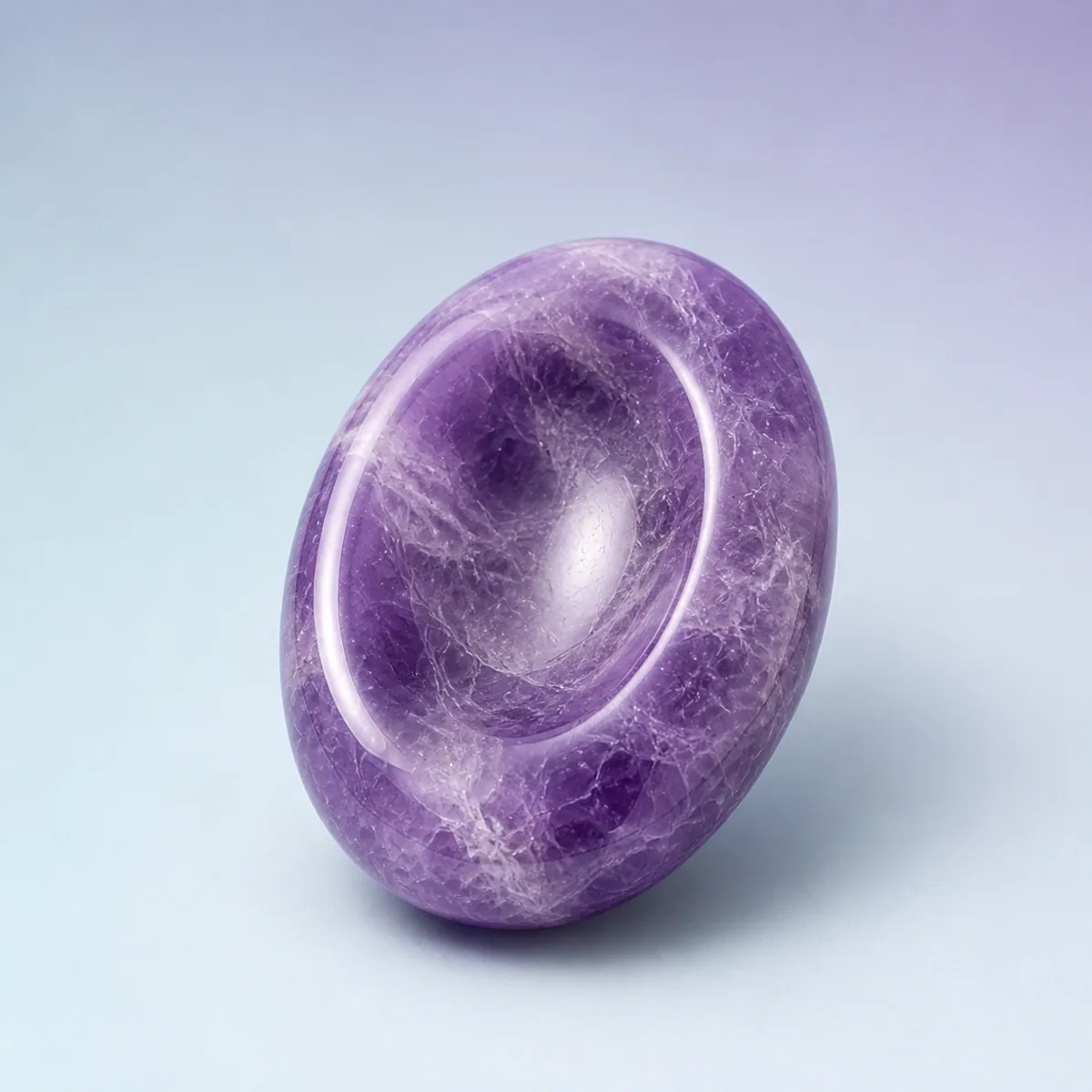
The pattern itself: inhale through your nose until your lungs feel comfortably full, then take a second, shorter inhale on top of that before you exhale, then let a long, slow exhale out through your mouth until your lungs feel empty. Repeat for five minutes. Roll the Calm Worry Stone under your thumb through the exhale specifically, since the long out-breath is the part people tend to rush.
What is slow, resonance breathing?
Resonance breathing means slowing your breath to somewhere under ten breaths a minute, and a 2018 review of 15 studies found that range linked to lower anxiety and arousal and more reported relaxation. The review pointed to roughly six breaths a minute in particular, about one breath every ten seconds, as tied to a resonance effect on the body’s baroreflex that maximizes heart rate variability. This is a different result from the cyclic sighing trial above. One found a heart rate variability effect at a specific slow pace across a body of review evidence; the other found a mood and respiratory-rate effect without a heart rate variability change in a single randomized trial. Not the same technique, and not the same finding.
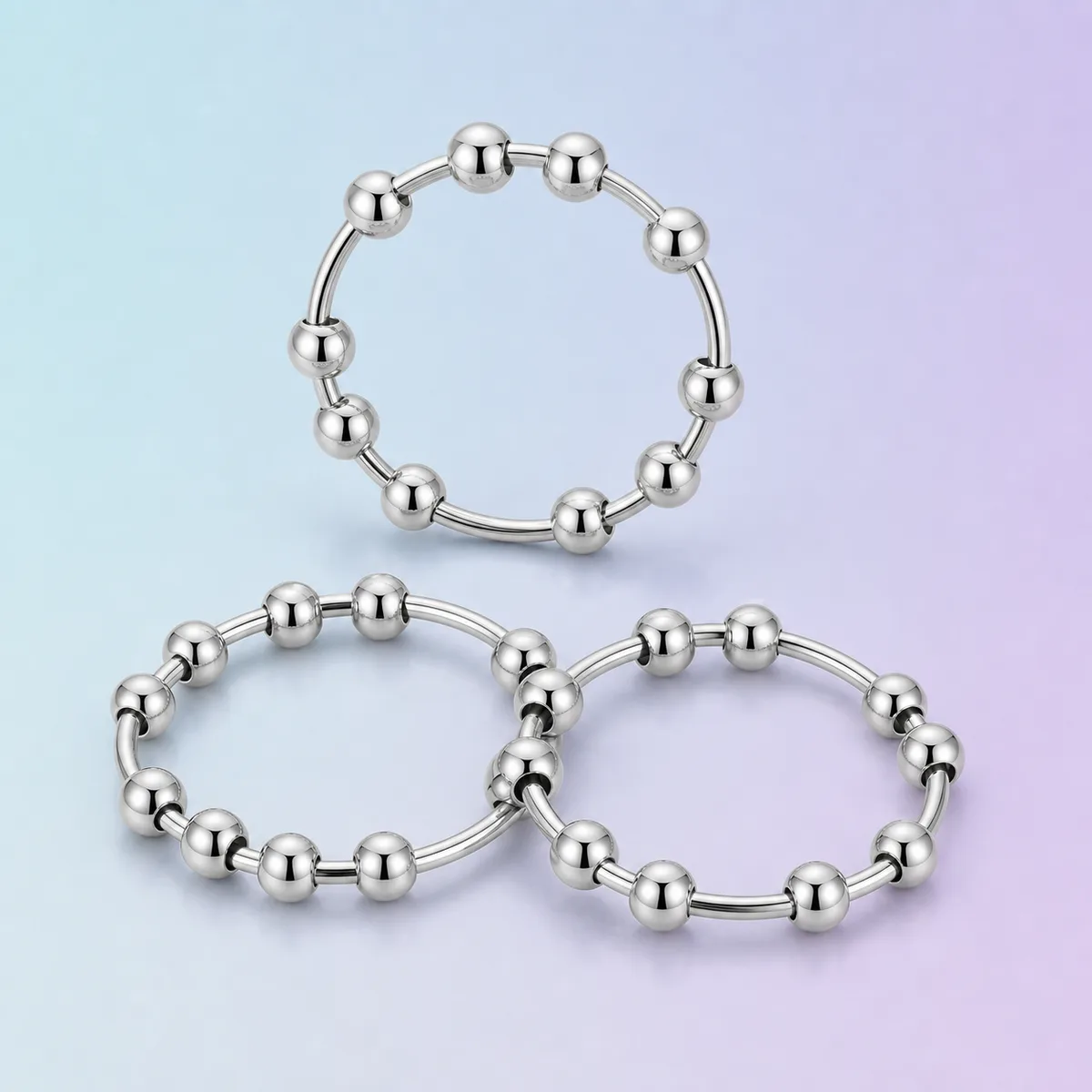
In practice, six breaths a minute is close to a four-second inhale and a six-second exhale. The Quiet Spinner rings suit this one well: one full rotation of a bead under your thumb per breath keeps the count without you having to watch a clock.
Does 4-7-8 breathing hold up?
It has real evidence, but only in a narrow setting so far. A 2026 randomized trial gave 48 people with chronic tinnitus a twice-daily 4-7-8 breathing routine, inhale for 4, hold for 7, exhale for 8, for six weeks, and found meaningful drops in tinnitus severity and distress, plus anxiety, stress, and insomnia scores, against an education-only control group. That is a real result, and it is also a result in one specific patient population, not a general trial. Nothing here confirms 4-7-8 works the same way for someone without tinnitus reaching for it after a hard meeting.
What is five-finger breathing?
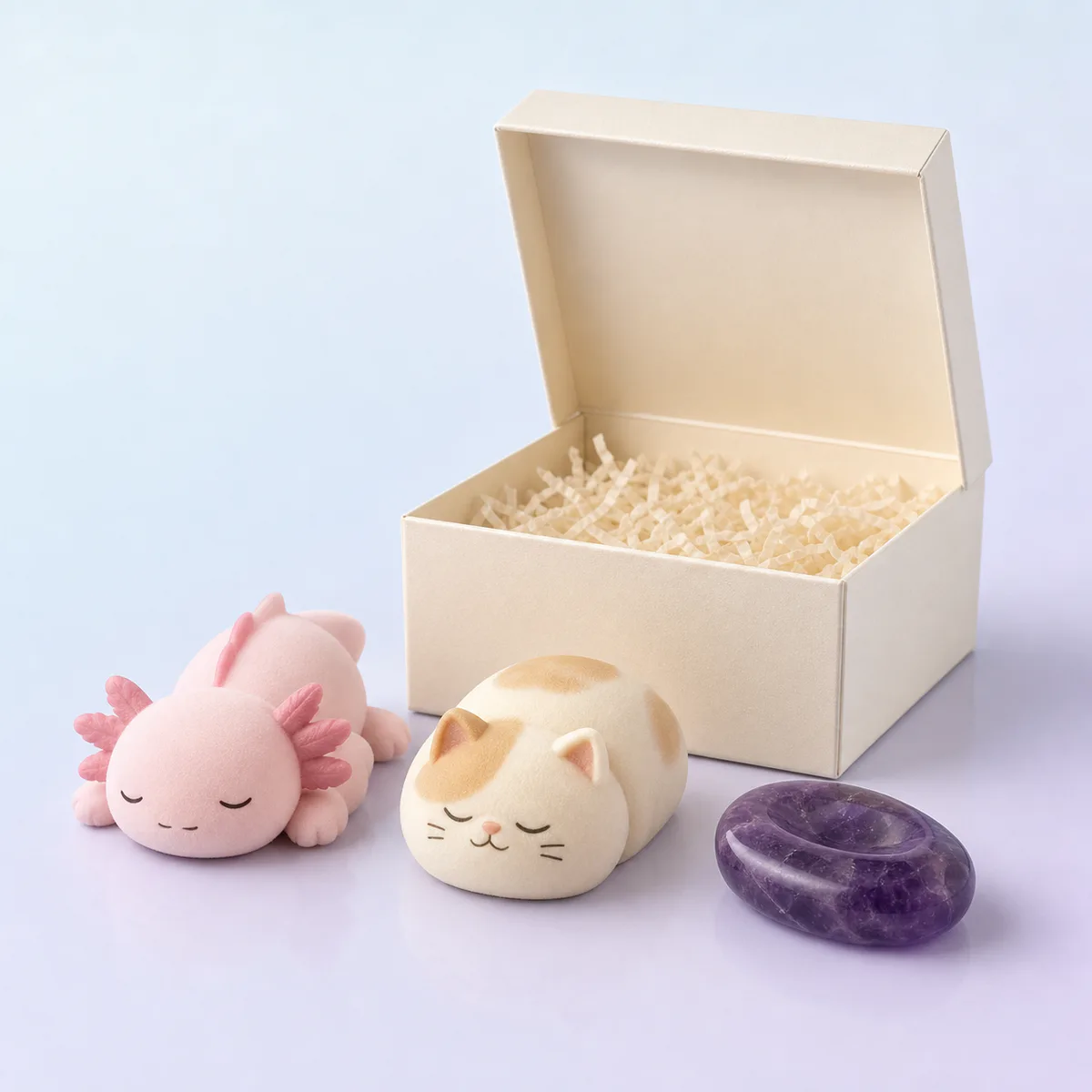
Five-finger breathing is a technique Cleveland Clinic teaches: trace the outline of your spread hand with the index finger of your other hand, breathing in as you trace up each finger and out as you trace down. It bundles breath pacing with a tactile, visual task, tracing a shape, which is a large part of why it works as a grounding exercise even without a dedicated clinical trial behind the specific technique. Swap your own hand for the Peachy Slow-Rise Squishy and you get a similar pairing: press it on the inhale, watch and feel it rise back on the exhale, and let the pace of the foam set the pace of your breath instead of a finger trace.
Which pattern should you try first?
| Pattern | Rhythm | Best evidence for | Pairs well with |
|---|---|---|---|
| Cyclic sighing | Double inhale, long exhale, 5 min | Mood lift, lower breathing rate (not heart rate) | Calm Worry Stone |
| Resonance breathing | About 6 breaths per minute | Lower anxiety and arousal in review evidence | Quiet Spinner ring set |
| 4-7-8 breathing | Inhale 4, hold 7, exhale 8 | Tinnitus-patient trial; general use less studied | Sleep & Wind-Down Kit |
| Five-finger breathing | Trace a hand shape, one breath per finger | Taught by Cleveland Clinic; no dedicated trial | Peachy Slow-Rise Squishy |
None of these is a treatment, and none of them is being presented as one here. What the evidence supports is modest and specific: a mood lift and a slower breathing rate from cyclic sighing, an anxiety and arousal link from slow resonance breathing under review conditions, and symptom relief from 4-7-8 breathing in one clinical population. If anxiety, insomnia, or a diagnosed condition is the thing you are actually trying to manage, a qualified professional is the right next step, and a breathing pattern is the thing you do while you get there. For a bedtime version, the Sleep & Wind-Down Kit pairs a slow-rise squishy with a worry stone, nothing that glows or clicks before your eyes close. Calm in the palm of your hand, one slow exhale at a time.
Sources & further reading
We reference trusted organizations by name. This article is informational and not a substitute for professional medical advice.
- Cell Reports Medicine: Published the 2023 Balban et al. randomized trial comparing cyclic sighing, box breathing, cyclic hyperventilation, and mindfulness meditation on mood, respiratory rate, and heart rate measures.
- Frontiers in Human Neuroscience: Published the 2018 Zaccaro et al. systematic review of 15 studies on slow and resonance breathing and its links to anxiety, arousal, and heart rate variability.
- Brain and Behavior: Published the 2026 Kirazli et al. randomized trial of 4-7-8 breathing in people with chronic tinnitus, measuring tinnitus severity, anxiety, stress, and insomnia.
- Cleveland Clinic: Publishes consumer health guidance on breathing and grounding techniques, including the five-finger breathing method described here.
Frequently asked questions
What are breathing patterns you can hold in one hand?
Short, countable breathing rhythms simple enough to practice while your other hand holds something like a worry stone, a ring, or a squishy. Pairing the breath with a physical object gives your attention two things to track instead of one, which tends to make the pattern easier to stick with. None of them are treatments; they are self-regulation practices with varying evidence behind them.
Does cyclic sighing lower your heart rate?
No, not according to the trial most often cited for it. A 2023 randomized study of 108 people found cyclic sighing improved mood and lowered resting respiratory rate more than the other techniques tested, but found no significant change in heart rate variability or resting heart rate in any group, cyclic sighing included. The mood and breathing-rate result is real; the heart-rate claim commonly attached to it is not what the study found.
What is resonance breathing?
Resonance breathing means slowing down to somewhere under ten breaths a minute, often described as close to six breaths a minute. A 2018 review of 15 studies linked that pace to lower anxiety and arousal and to a resonance effect on heart rate variability. It is a separate technique and a separate body of evidence from cyclic sighing.
Does 4-7-8 breathing actually work?
There is real trial evidence for it, but in a specific setting. A 2026 randomized trial found twice-daily 4-7-8 breathing over six weeks reduced tinnitus severity, anxiety, stress, and insomnia scores in people with chronic tinnitus, compared with an education-only control group. That is a meaningful result in one clinical population, not proof it works the same way for everyone.
What is five-finger breathing?
A technique Cleveland Clinic teaches: trace the outline of your spread hand with your other index finger, breathing in while tracing up each finger and out while tracing down. It combines breath pacing with a tactile, visual task, which is likely why people find it grounding, though no dedicated clinical trial for this specific technique was located. A slow-rise squishy can stand in for the hand-tracing motion.
Can a fidget toy replace a breathing exercise?
No, and it is not meant to. A fidget gives your other hand a steady, quiet job while your breath does the actual work, which can make the pattern easier to keep going for the full stretch. If anxiety or sleep is the bigger issue behind why you are trying these, a qualified professional is the right person to talk to.