What fidgets fit small hands?
A fidget for a small hand should match two different things at once: the size and pressure the child’s hand can actually manage, and, for a child under 3, the federal small-parts rule, which is a separate, non-negotiable safety line rather than a fit preference. Get the first part wrong and a fidget just does not work well; a child fumbles it, drops it, or loses interest. Get the second part wrong and it is a genuine choking hazard, which is a different problem entirely.
We will keep those two questions separate the whole way through, because parents often collapse them into one “is this okay for my kid” judgment call. It is worth doing the extra step: check the age guidance printed on the product first, then look at the child in front of you and ask whether their hands are actually ready for it, since the two answers do not always match.
The small-parts rule, in plain terms
The U.S. small-parts regulation, 16 CFR Part 1501, applies to toys and other articles meant for children under 3 years, 36 months exactly, and it is stricter than most parents assume. An item is tested by seeing whether it fits inside a specific test cylinder without being squeezed, and if it does, it is disqualified outright for that age group. If it does not fit whole, testers then pull, twist, and stress the item roughly the way a real toddler would, in what the regulation calls use-and-abuse testing. Any piece that comes loose during that process, other than paper, fabric, yarn, elastic, or string, then gets tested against that same cylinder on its own. None of the fidgets named in this guide are marketed for a child that young; every one carries an age guidance of 3 and up, and that rule is exactly why.
What a small hand can actually do, by stage
Fine motor skill builds in a fairly well-documented order, and it helps to know roughly where a child sits before picking anything with small pieces or a firm squeeze. By around six months, a baby can transfer an object from one hand to the other and pick up something dropped. Picking up something genuinely tiny between thumb and forefinger is still hard work at 12 months. By 15 to 18 months, a child can typically stack a few blocks, turn a knob or a page, and fit a round peg into a hole.
Closer to age 2, that grows into stacking five or six blocks, unscrewing a jar lid, and folding paper if shown how, and a primitive tripod grasp, thumb on one side of an object and fingers on the other, starts to appear. Hand preference can also begin to show around this age, though it often keeps developing for years afterward, and plenty of children stay comfortably ambidextrous for a while.
None of this means a fidget teaches or speeds up those skills. It does not, and this is not an argument that it does. What it means practically is that a fidget with small, separate pieces suits an older, steadier hand, and a fidget with one soft, larger shape suits a younger or less coordinated one.
Fidgets that suit a smaller, newer grip
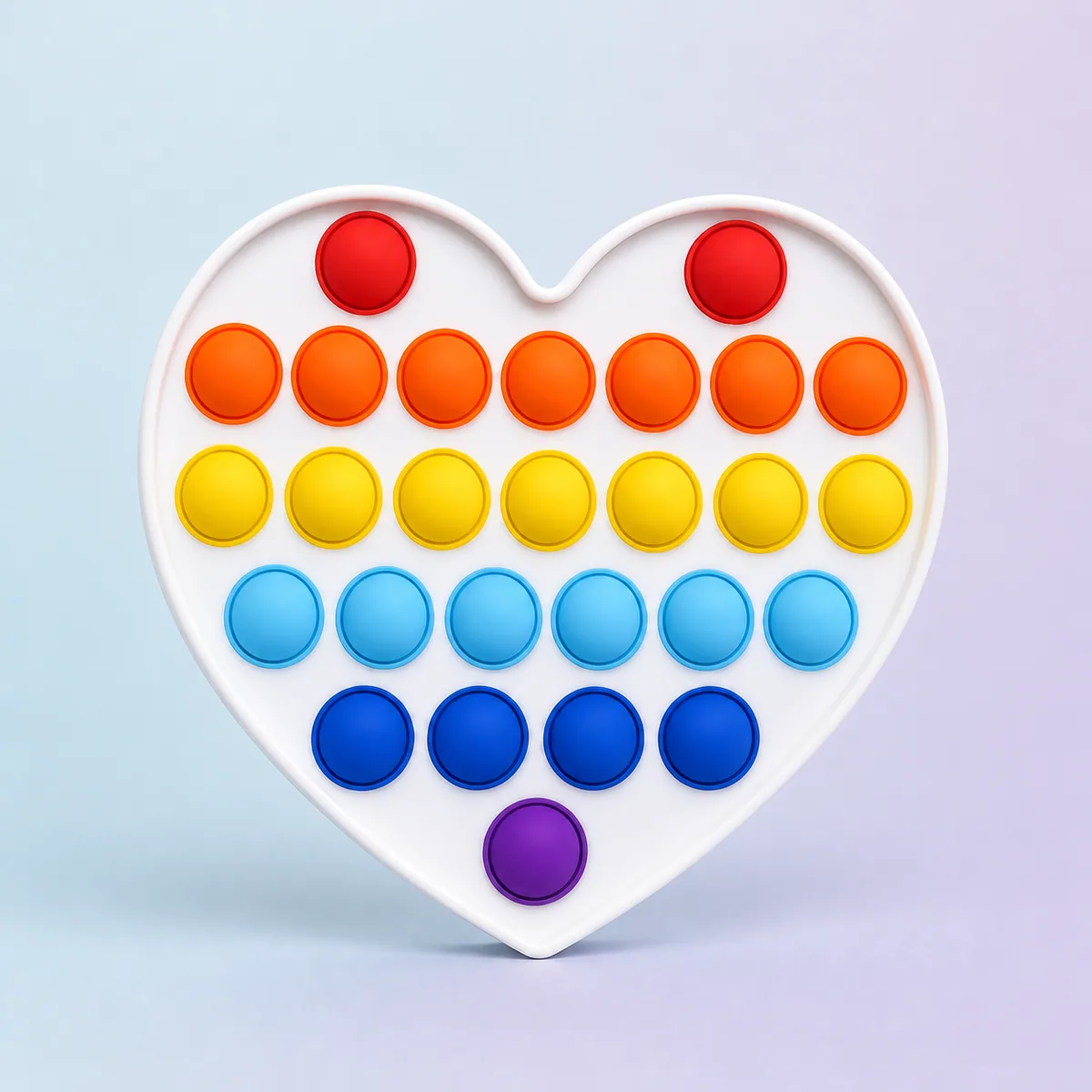
A hand that is still building strength and precision does better with something soft, larger, and low-resistance. The Peachy Slow-Rise Squishy is one shape, rounded and palm-sized, with a deep center cleft that a smaller hand can press without much force and then watch slowly return, no separate parts to manage. The Hush Pop Push-Pop Sensory Board works the same way through a different motion: press a bubble, flip the board, press again, an easy, repeatable action that does not demand a precise grip to feel satisfying.
Fidgets that suit a steadier, older hand
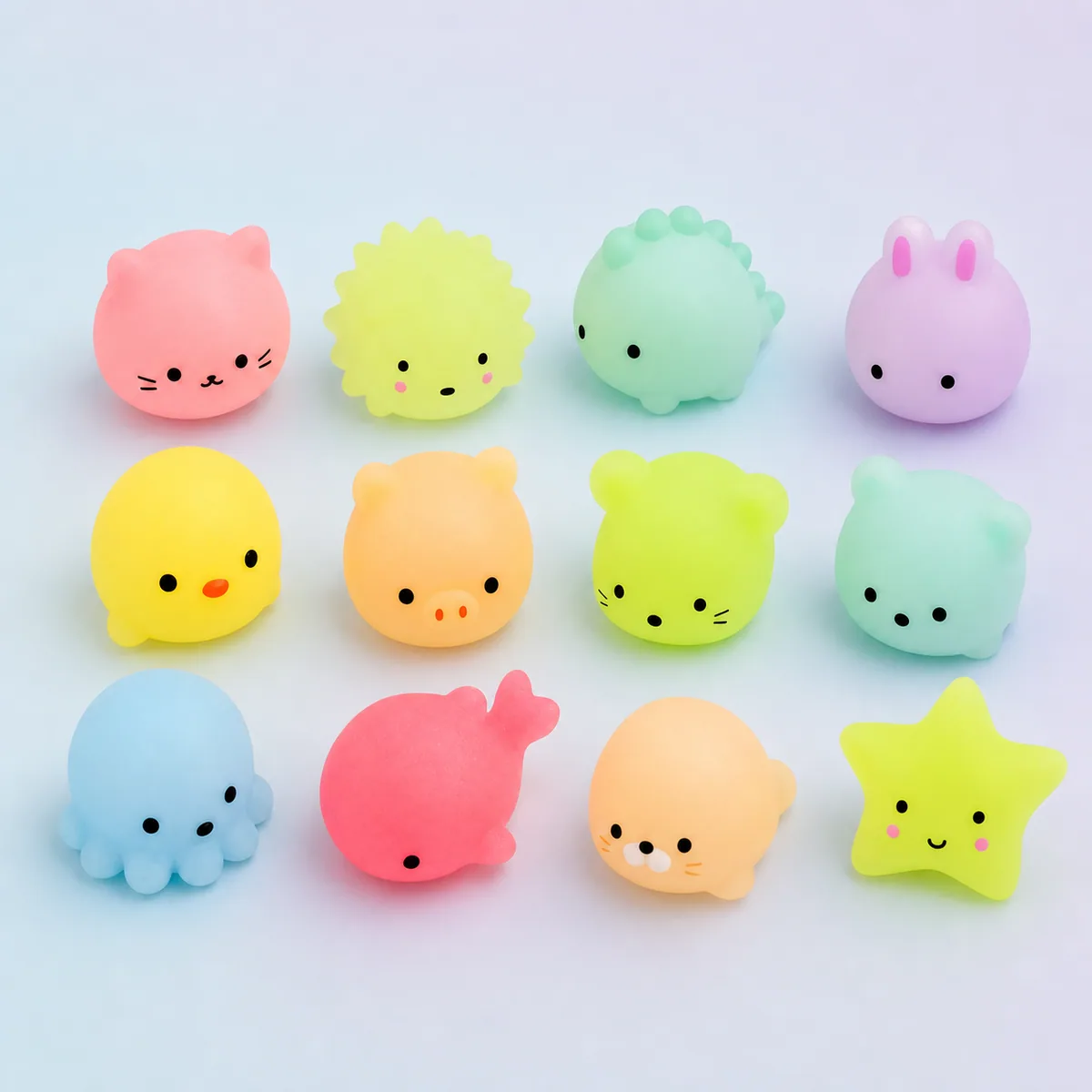
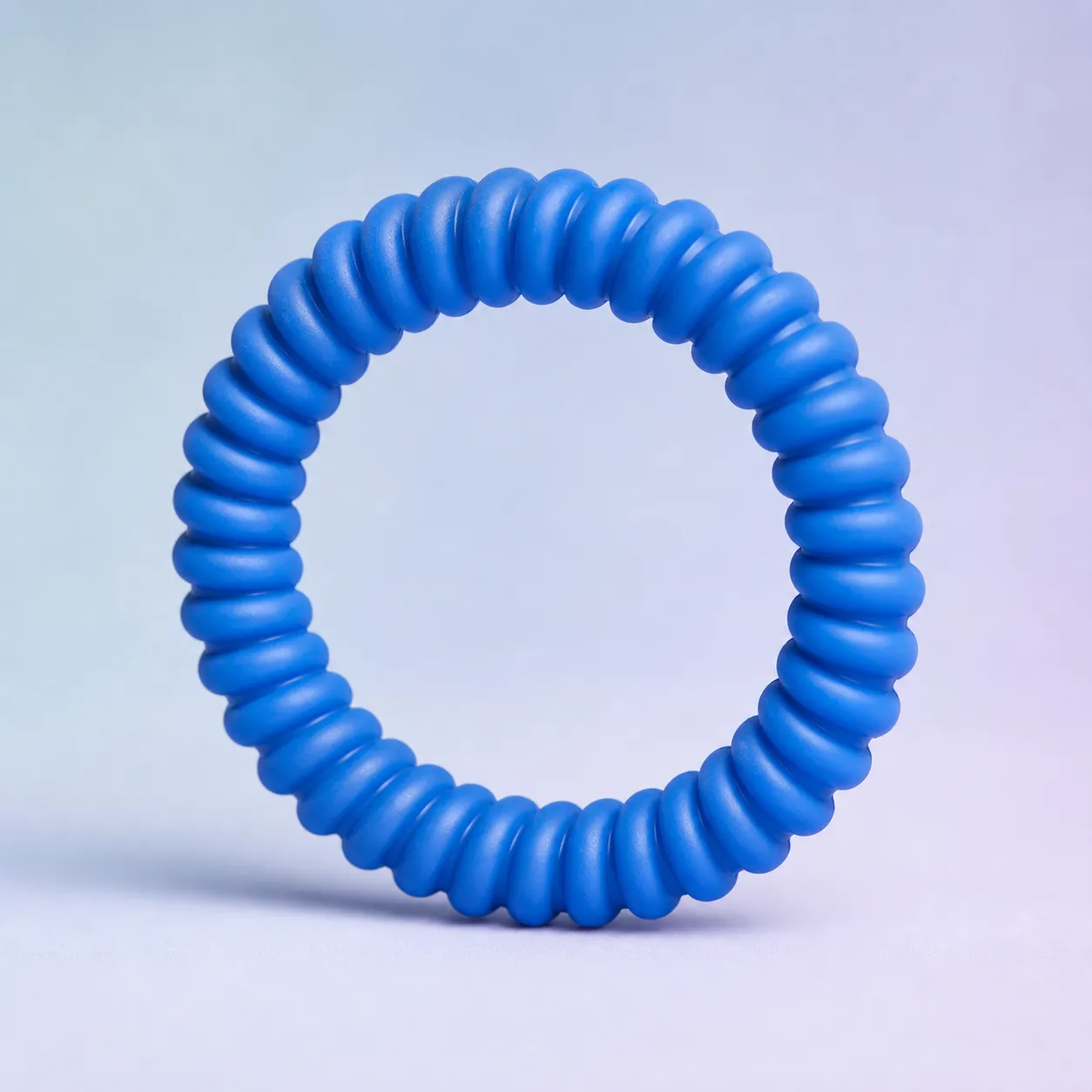
Once a child is reliably managing smaller objects with a real pincer grip, fidgets with more, smaller pieces become manageable rather than frustrating. The Mini Mochi Animals Squishy Set is twelve tiny squishies, which asks for the fine control to pick up and squeeze one small shape at a time, share a few with a sibling, and keep track of the rest. The Always-On Fidget Bracelet asks for almost none of that control, since it is worn rather than gripped, which makes it a fair option at almost any stage past the small-parts age, for a child who wants something on the wrist rather than in the hand.
Matching a fidget to a hand, by stage
| Stage | What the hand can do | A fidget that fits |
|---|---|---|
| Under 3 | Still mouthing objects; small-parts rule applies | None of these; check age guidance first |
| Around 3, newer grip | Whole-hand press, not yet precise | Peachy Slow-Rise Squishy |
| Building control | Repeatable press-and-flip motions | Hush Pop Push-Pop Sensory Board |
| Steadier pincer grip | Picks up and manages small individual pieces | Mini Mochi Animals Squishy Set |
| Any age past small parts | Nothing to grip, worn instead | Always-On Fidget Bracelet |
The honest limit of an age label
An age guidance on a box is a starting point, not a guarantee, and it varies by real skill more than by birthday. Every child develops at their own pace, and these milestones are general markers, not a schedule any one child has to hit on time. Watch how a child actually handles an item before assuming an age number settles it, and when a child is between stages, size up rather than down. A fidget that fits the hand in front of you beats one that only fits the label. Calm in the palm of your hand.
Sources & further reading
We reference trusted organizations by name. This article is informational and not a substitute for professional medical advice.
- U.S. Government Publishing Office: Publishes the official text of 16 CFR Part 1501, the federal small-parts regulation for toys intended for children under 3 years (36 months), including the test-cylinder fit test and the follow-up use-and-abuse testing method.
- American Academy of Pediatrics: Through HealthyChildren.org, publishes fine motor and hand-skill milestones by age, from transferring objects between hands in infancy to a pincer grip and tripod hold closer to age 2, framed as general markers rather than a fixed schedule.
- MedlinePlus (National Library of Medicine, NIH): Publishes infant and toddler developmental milestones and explicitly advises choosing toys without small parts around the age hand-to-mouth exploration is common.
Frequently asked questions
What age can a child use a fidget toy?
It depends on the specific product's age guidance and, separately, on the federal small-parts rule, which applies to any toy meant for children under 3. None of the fidgets in this guide are marketed for that age group; each carries a guidance of 3 and up, and a child's actual grip matters as much as the number on the label.
What is the small-parts rule?
It is a federal safety regulation, 16 CFR Part 1501, that applies to toys intended for children under 3 years old, 36 months exactly. Testers check whether an item, or any piece that comes loose during normal use, fits inside a specific test cylinder; if it does, that toy fails the standard for that age group.
What fidget suits a small child's hand best?
A single soft shape with no small separate pieces, like a slow-rise squishy or a push-pop board, generally suits a newer or smaller grip better than anything with multiple tiny parts. A steadier, more precise grip can manage smaller pieces, like a set of mini squishies, once fine motor control has caught up.
When does a child develop a pincer grip?
Picking up a very small object between thumb and forefinger is still described as difficult at 12 months, with a steadier grip and an early tripod hold, thumb on one side and fingers on the other, typically showing up closer to age 2. Every child develops at a slightly different pace, and that is normal.
Do fidget toys help a child's fine motor skills?
There is no claim here that a fidget toy builds or speeds up fine motor development, and none is being made. The milestones pediatric sources publish show a general order children tend to follow, which is useful for picking a fidget that matches where a child's hands already are, not for accelerating them.
Is a 12-piece squishy set safe for a toddler?
The Mini Mochi Animals Squishy Set is a 12-piece set of small squishies with an age guidance that reflects those small individual pieces, so it is not intended for a child under 3 or for anyone still mouthing objects. Always check a product's specific age guidance rather than assuming based on how soft or small an item looks.