Are squishies biodegradable?
No. Squishies are made from PU foam or TPR, both petroleum-derived synthetic polymers, and neither one breaks down the way a genuinely biodegradable material does. A real biodegradable claim is a specific, testable standard, not a mood, and PU foam and TPR do not meet it. That is the honest answer, and we would rather give it to you plainly than let a vague “eco-friendly” label do the talking.
What does a real biodegradable claim actually require?
It requires meeting a specific technical bar, not just breaking down eventually in some general sense. ASTM D6400, the standard that governs labeling plastics as compostable, requires 90 percent of the material to fully convert into carbon dioxide within 180 days under industrial aerobic composting conditions. Materials built to meet that bar, like PLA and PHA, are a chemically different polymer family from PU foam or TPR, purpose-engineered from the start to break down that way. Nothing about how PU foam or TPR is made moves either material toward that standard.
What would a real “biodegradable” label need to say?
A meaningful claim has three parts, not one: which standard it meets, over what timeframe, and under what disposal conditions. “Biodegradable,” with no standard attached, tells you almost nothing. Industrial composting facilities run hot and turn material constantly, conditions nothing like a backyard compost pile or an ordinary landfill, so a material qualifying under ASTM D6400’s industrial-composting conditions is not making any promise about what happens if you toss it in your own yard. Neither PU foam nor TPR would meet the standard under any of those environments, which is why we will not put the word on a product that has not earned it.
Why doesn’t PU foam break down quickly?
Because it is a thermoset: a crosslinked polymer network formed by reacting polyols with isocyanates, the same reaction that makes it impossible to re-melt. That crosslinking is also why microbial degradation of polyurethane is slow and largely incomplete under ordinary conditions, since most bacteria cannot get past the surface of the material to reach anything they could break down. A small number of specific fungi have been documented breaking polyurethane down under aerobic and anaerobic conditions similar to the bottom of a landfill, which is a real and interesting finding from narrow research settings. It is not evidence that a squishy in an ordinary landfill or backyard will decompose on any practical timescale, and it does not mean PU foam is permanently inert either. Both things are true at once: some breakdown is chemically possible under narrow conditions, and none of that changes what actually happens to a squishy in the years after you are done with it.
What about TPR?
TPR’s real environmental story is recyclability, not biodegradability. Because it is thermoplastic rather than thermoset, it can be melted down and reprocessed the way other plastics are, which is a genuinely different and useful property from PU foam’s one-way chemistry. That is not the same claim as biodegradable, and we are not going to blur the two. A material that can be remelted into something new is still a material that will sit unchanged in a landfill if nobody remelts it.
That distinction matters because “recyclable” and “biodegradable” get used almost interchangeably in casual conversation, and they describe two unrelated things. Recyclable means a material can be reprocessed by someone, somewhere, with the right equipment. Biodegradable means living organisms can actually break it down into simpler compounds on their own, on a defined timeline, without any equipment at all. TPR earns the first word as a material class. Neither TPR nor PU foam earns the second.
What about the worry stone and the bracelet?
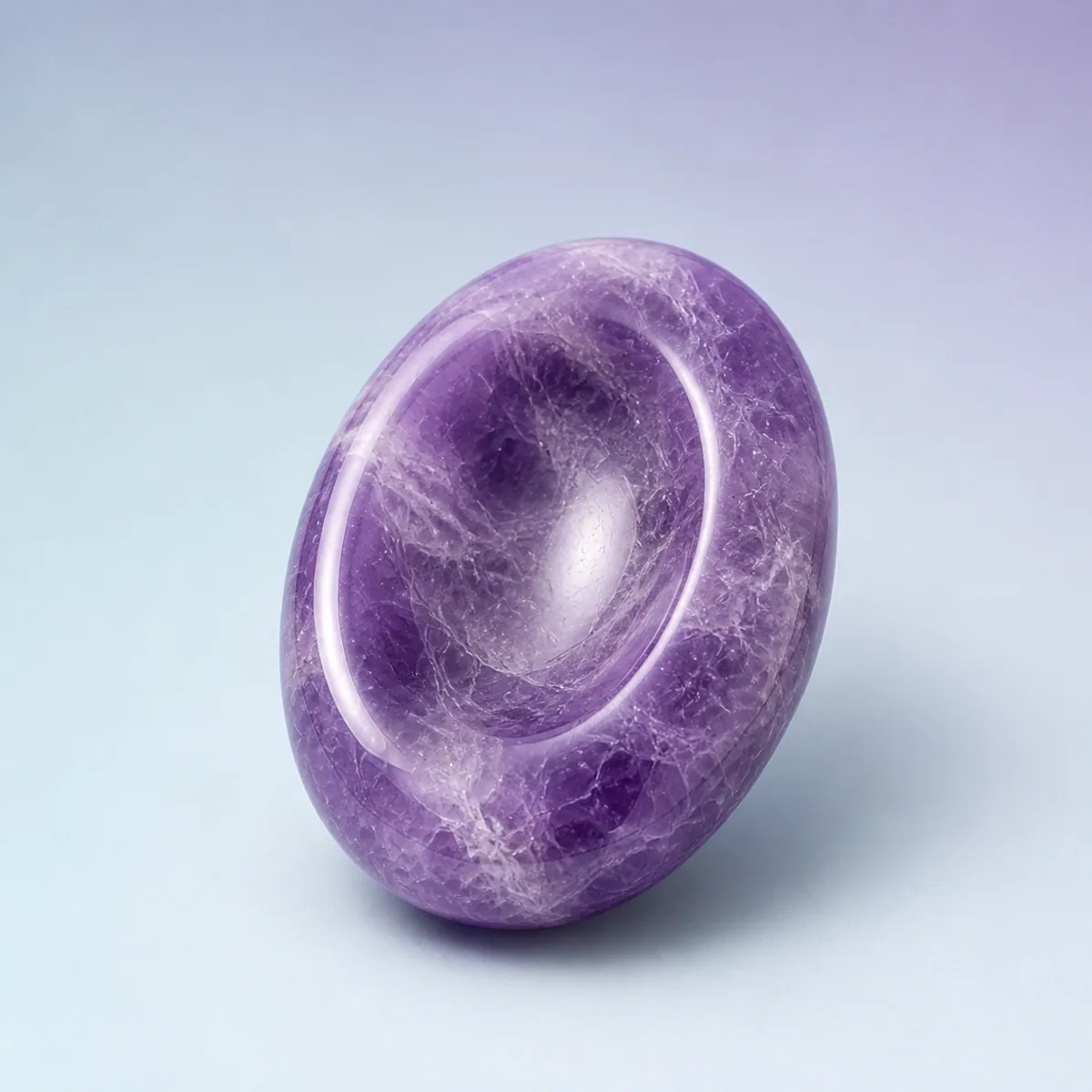
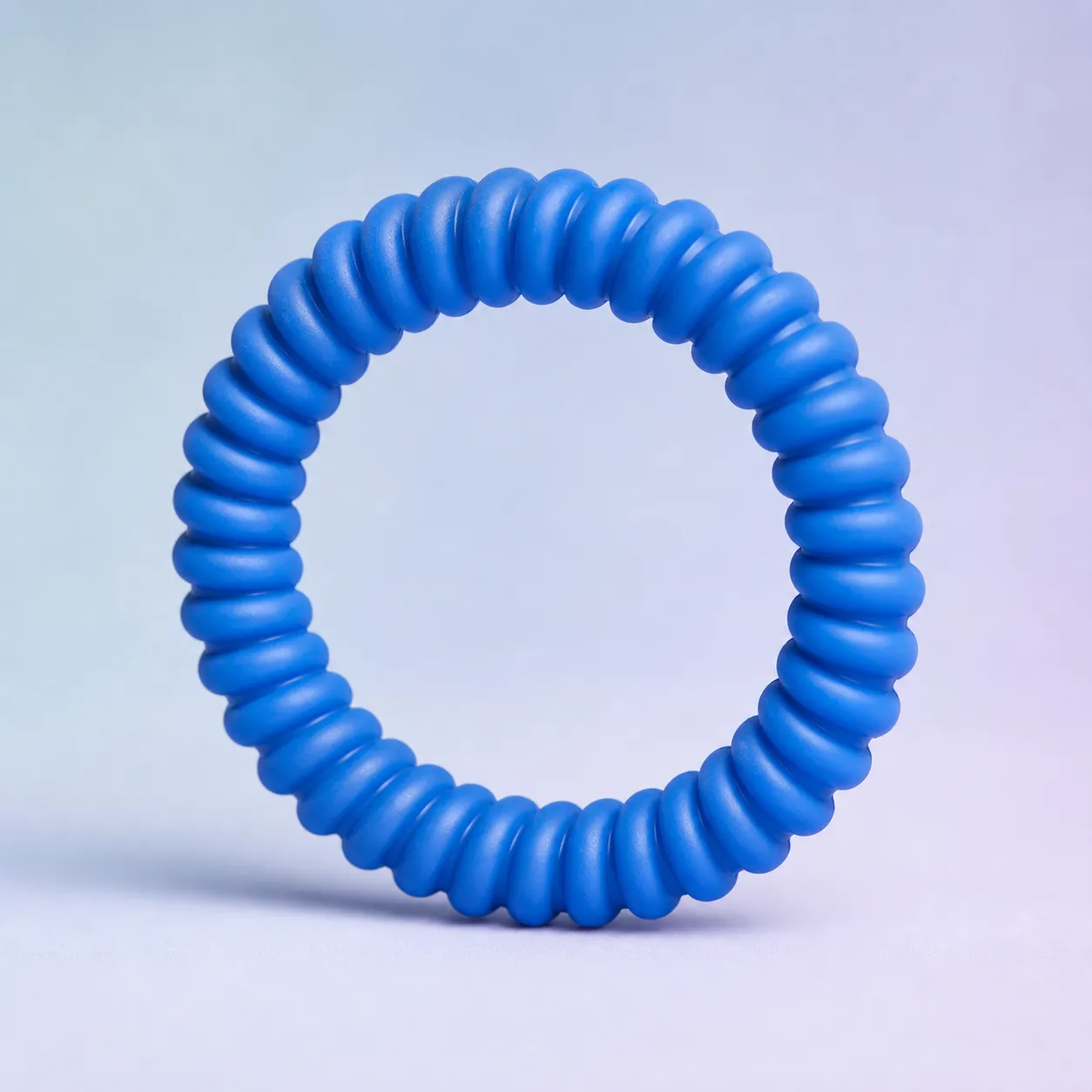
Not every product in this store is foam or TPR, and it is worth being clear about which claim applies to what. The Calm Worry Stone is polished resin, and the Always-On Fidget Bracelet is silicone, both different material families from PU foam or TPR, and this research does not extend a biodegradability claim to either one. What we can say honestly is that both are built to be kept and reused for years rather than replaced often, which is its own kind of lower-impact choice, separate from the composting question entirely. A squishy tends to have a shorter working life anyway, since foam eventually yellows and slows its rise while a worry stone or a bracelet has no rise to lose in the first place.
The honest comparison
| Material | Used in | Biodegradable under ASTM D6400? | Real end-of-life story |
|---|---|---|---|
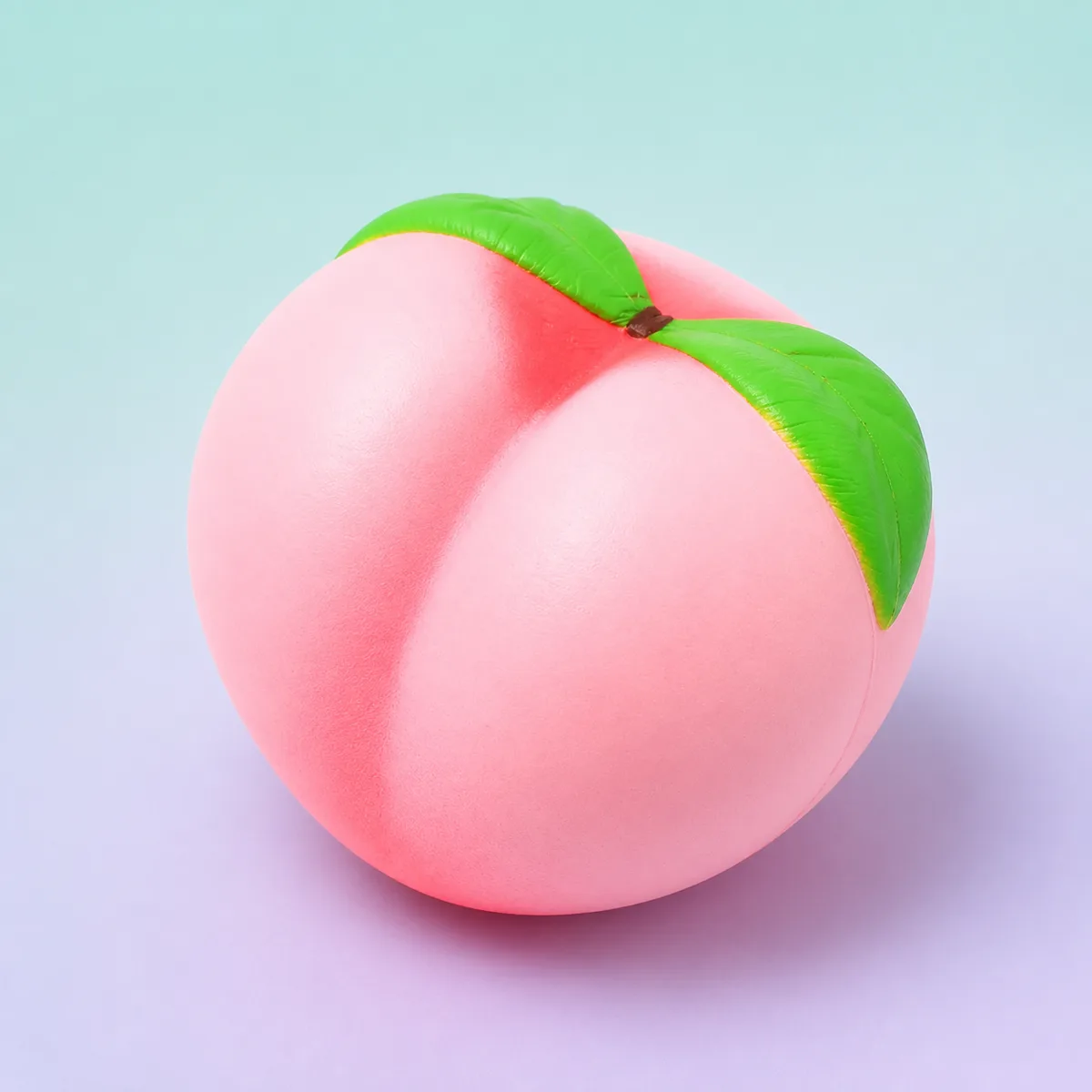
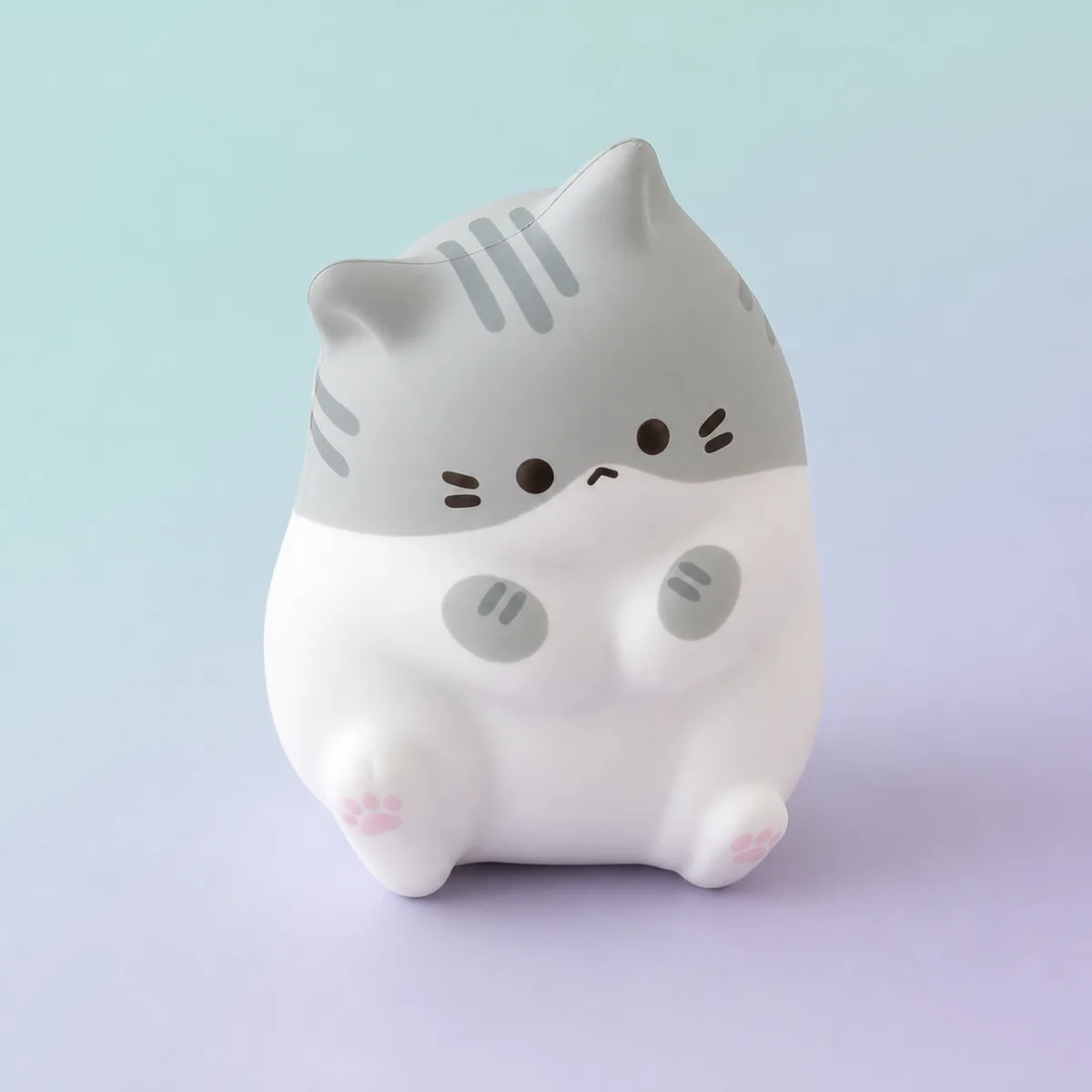
| PU foam | Peachy Slow-Rise Squishy, Sitting Cat Slow-Rise Squishy | No | Manufacturing scrap gets recycled industrially; a finished squishy has no consumer recycling path |
| TPR | Many “gel-look” squishies | No | Remeltable and reprocessable as a material class, not the same as biodegradable |
| PLA, PHA (not used here) | Purpose-built compostable plastics | Yes, when they meet ASTM D6400 | Engineered from the start to convert to CO2 under industrial composting |
| Resin, silicone | Calm Worry Stone, Always-On Fidget Bracelet | Not established either way in this research | Built to last years of everyday handling |
What should you actually do with a squishy you are done with?
Do not put it in a compost bin expecting anything to happen; it will just sit there. PU foam’s only documented recycling pathway is industrial manufacturing scrap turned into things like carpet cushioning, not a household program for a finished, painted, fragranced toy, and TPR’s remeltability as a material class has not been shown to extend to mixed finished products either. The honest, unglamorous answer is that the best thing you can do with a squishy is keep using it, or pass it on to someone who will, for as long as it holds up. Calm in the palm of your hand, for as long as the foam holds, and no longer than that.
Sources & further reading
We reference trusted organizations by name. This article is informational and not a substitute for professional medical advice.
- ASTM International: Publishes ASTM D6400, the standard specification that defines what a plastic must do, 90 percent conversion to carbon dioxide within 180 days under industrial composting, to be labeled compostable or biodegradable.
- Polyurethane Foam Association: The flexible polyurethane foam industry's own trade group frames the material's end-of-life story around industrial-scrap recycling into products like carpet cushioning, not composting or biodegradation.
- Wikipedia: General materials-science reference describing PU foam's slow, largely incomplete microbial degradation under ordinary conditions, the narrow fungal species documented breaking it down under landfill-like conditions, and TPR's environmental profile as recyclable through remelting rather than biodegradable.
Frequently asked questions
Are squishies biodegradable?
No. PU foam and TPR, the two materials used in nearly every squishy, are petroleum-derived plastics that persist under ordinary conditions for decades or longer, not weeks or months. A genuine biodegradable claim requires meeting a specific technical standard, and neither material comes close to it.
What would actually make a plastic biodegradable?
It would need to meet ASTM D6400, the standard that governs compostable-plastic labeling, which requires 90 percent of the material to convert into carbon dioxide within 180 days under industrial composting conditions. Materials engineered to meet that bar, like PLA and PHA, are a chemically different polymer family from PU foam or TPR. Meeting the standard is the whole test; a material either does or it does not.
Does PU foam ever break down at all?
Very slowly, and rarely completely, under ordinary conditions. A small number of specific fungi have been documented degrading polyurethane under aerobic and anaerobic conditions similar to the bottom of a landfill, which is a real finding from narrow research settings. It is not evidence that a squishy in an ordinary landfill will decompose on any practical human timescale.
Is TPR more eco-friendly than PU foam?
TPR can be remelted and reprocessed as a material class, which PU foam's crosslinked chemistry cannot do, so it has a genuine recyclability advantage. That is a different claim from biodegradable, and TPR does not meet the composting standard either. Recyclable and biodegradable are two different properties, and only one applies here, in a limited sense.
Can you recycle a squishy at home?
Not really. PU foam's only documented recycling pathway is industrial manufacturing scrap turned into products like carpet cushioning, not a curbside or household program for a finished, painted, fragranced toy. TPR's remeltability as a raw material has not been shown to extend to mixed finished consumer products either, so there is no simple recycling shortcut once a squishy has been made.
What should I do with a squishy I do not want anymore?
Keep using it as long as it holds up, or pass it on to someone who will, since there is no meaningful composting or household recycling option for the finished product. If it has torn or degraded past use, ordinary disposal is the honest answer, not a green claim we cannot back up. That is a real limitation of the material, not something we are going to dress up.