What is the 5-4-3-2-1 grounding technique?
The 5-4-3-2-1 technique is a sensory grounding exercise where you slowly name 5 things you can see, 4 you can feel, 3 you can hear, 2 you can smell, and 1 you can taste. Working down through the senses pulls your attention out of anxious thoughts and back into the present moment, where you actually are.
It is one of the most widely taught grounding tools, and for good reason. It is simple, it is portable, and it needs nothing but you and the room you are in. Counting down from five gives it a natural shape and a finish line, so you always know how far along you are. Therapists, anxiety organizations like the Anxiety and Depression Association of America, and the NHS all describe sensory grounding as a practical way to steady yourself when worry spikes. Think of it as a way to change the channel in your head, from the anxious story to the actual, ordinary room.
How do you do the 5-4-3-2-1 technique, step by step?
Go slowly and name each thing, out loud or in your head. Start with five things you can see, then four you can feel, three you can hear, two you can smell, and one you can taste. The pace matters more than getting it perfect.
Here is the whole exercise, one sense at a time:
- 5 things you can see. Look around and name them specifically. Not “a desk,” but the scratch on the desk, the blue of a mug, the way the light falls on the wall. Detail is what pulls you in.
- 4 things you can feel. Your feet inside your shoes, the chair against your back, the cool of a table under your palm, the texture of whatever is in your hands. Touch is the fastest line back to the present.
- 3 things you can hear. Traffic outside, a fan humming, the sound of your own breathing. Near sounds and far sounds both count.
- 2 things you can smell. Coffee, soap, fresh air, the paper of a book. If you cannot find two, name two smells you like, or move somewhere you can.
- 1 thing you can taste. The last thing you drank, a mint, toothpaste, or simply the taste of your own mouth. One is all you need.
There is no rule that says you must find every item, and no prize for a perfect score. The point is the slow, deliberate attention, not the counting. Finish with one slow breath, and if the anxious feeling is still loud, start again at five. Grounding is something you can repeat as many times as you need.
Why does sensory grounding help in an anxious moment?
Sensory grounding helps because anxiety lives in the future, in what-ifs and racing ahead, while your senses only ever report the present. Naming what you see, feel, and hear anchors your attention to the here and now, which is usually calmer than the story anxiety is telling.
When you are anxious, your body often reacts as if the feared thing is happening right now, even when you are safe in a quiet room. Grounding gives your mind a small, concrete job that competes with the spiral. It does not argue with the worry, and it does not solve the problem underneath it. It simply brings you back to the room so the wave has time to crest and pass. That is a genuinely useful thing, and it is worth being clear-eyed about what it is: a coping skill for the moment, not a cure. It tends to work better the more you practice it, so it helps to try it on calm days too, not only hard ones. The American Psychological Association and the NHS both list grounding and slow breathing among everyday tools for managing anxious moments.
Where does a fidget toy fit into 5-4-3-2-1?
A fidget toy fits at the “4 things you can feel” step. A textured object gives your hands a reliable, interesting anchor when the space around you is short on things to touch, which makes the feel part of the exercise richer and easier to come back to.
The touch step is the one people stumble on. In a bare waiting room, a crowded train, or the middle of a meeting, there is often not much within reach that invites attention. A fidget solves that by putting a dependable texture in your palm, one you already know well. A few that work beautifully as a grounding anchor:
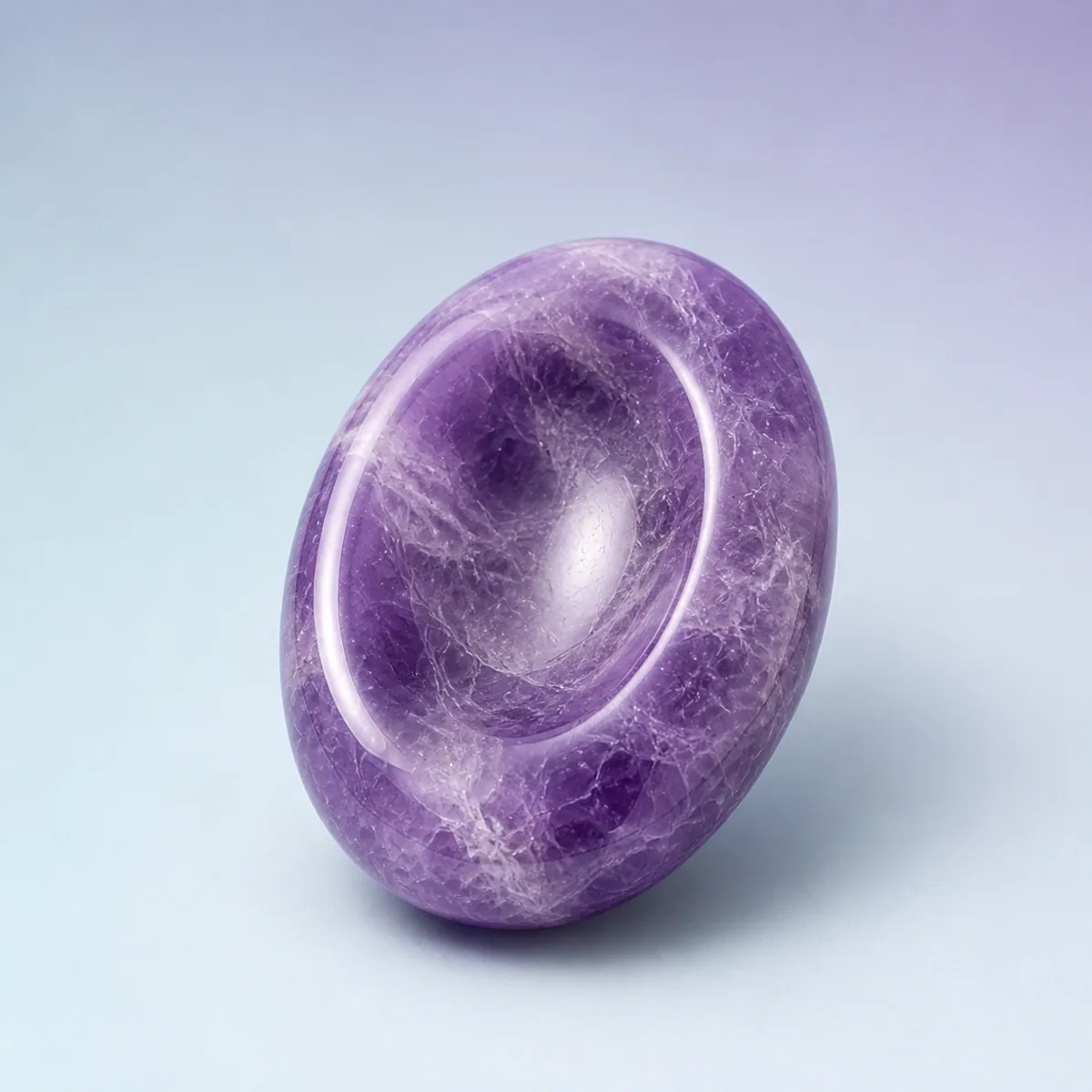
- The Calm Worry Stone ($9.49) is the quietest of the bunch. Your thumb finds its worn hollow without looking and slides back and forth, a slow, silent motion you can do in a pocket while you name what you feel.
- The Calm Orb Water-Bead Squeeze Ball ($9.99) is packed with water-gel beads that bulge between your fingers through a soft mesh, so there is a lot to notice and describe in a single squeeze.
- The Jelly Blob Transparent Gel Fidget ($14.99) is cool, smooth, and slowly oozes back into shape, which quietly serves both the see step and the feel step at once.
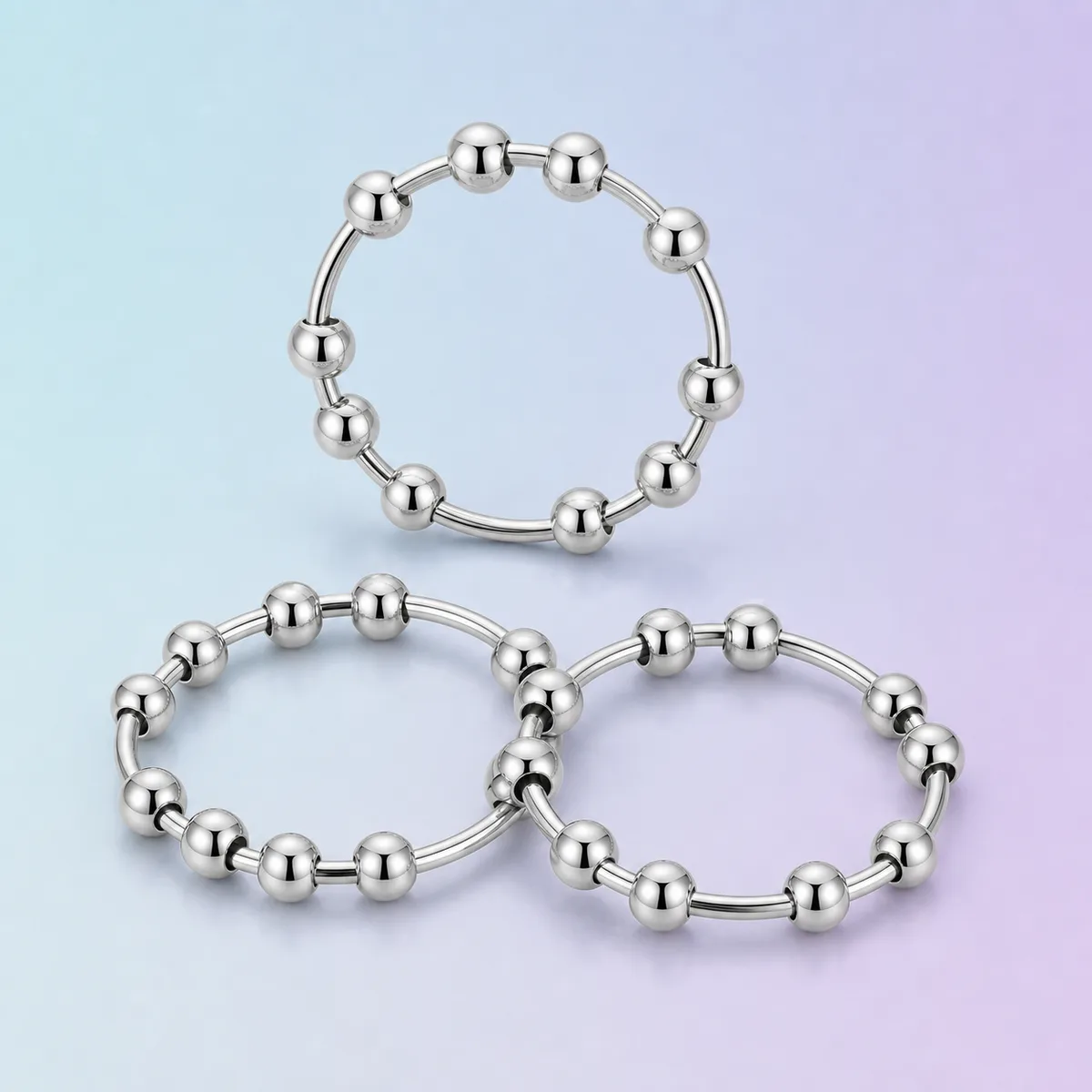
- The Quiet Spinner Sensory Ring Set (3-Pack) ($16.99) is wearable, so it is already on your hand when a hard moment arrives. You roll the beads around a slim steel hoop with your thumb. One honest note: it is very quiet rather than fully silent, with a faint metal sound when the beads touch.
Here is the honest framing that matters most. The toy is a helper for the technique, not a treatment on its own. It makes one step of an exercise easier and more vivid. It does not do the grounding for you, and it is not a substitute for care when you need it. Used that way, though, a good texture in the hand can make 5-4-3-2-1 feel a little more real and a little easier to reach for.
Which fidget toys work best as a grounding anchor?
The best grounding fidgets have a clear, distinct texture you can put into words: smooth and weighted, beaded, cool and gooey, or sliding metal. Variety helps here, because naming exactly what you feel is part of the exercise.
| If you want the feel step to be… | Reach for… | What your hand notices |
|---|---|---|
| Smooth, weighted, and silent | Calm Worry Stone | Cool-then-warm stone and a thumb-worn hollow |
| Squeezable and full of movement | Calm Orb Water-Bead Squeeze Ball | Beads bulging through a soft mesh net |
| Cool, slow, and a little hypnotic | Jelly Blob Transparent Gel Fidget | Gel oozing and reshaping in your palm |
| Discreet and always on hand | Quiet Spinner Sensory Ring Set (3-Pack) | Beads rolling around a slim steel hoop |
If your anxious moments tend to happen in public, at work, on a commute, in a waiting room, lean toward the discreet options. The Calm Worry Stone looks like nothing at all in a closed hand, and the Quiet Spinner Sensory Ring Set wears like plain jewelry, so you can ground yourself without anyone noticing. The best one is simply the texture your hands reach for and can describe most easily.
When should you get more support for anxiety?
Grounding is a tool for the moment, not a treatment for the condition, so reach out for real support when anxiety is frequent, intense, or getting in the way of your life. If worry regularly disrupts your sleep, work, or relationships, please talk to a doctor or therapist.
We say this plainly because it is the honest part. 5-4-3-2-1 and a fidget in your palm are wonderful for taking the edge off a hard moment. They are not built to treat an anxiety disorder, panic disorder, or trauma, and they should sit beside professional care, never in place of it. Consider reaching out if you notice:
- Anxiety most days for weeks or longer
- Panic attacks, or avoiding places and situations you used to manage
- Worry that interferes with sleep, eating, work, or your relationships
- A sense that it is becoming too much to carry on your own
Organizations like the Anxiety and Depression Association of America, the American Psychological Association, the NHS, and the National Alliance on Mental Illness offer guidance on anxiety and how to find support. And if you are in crisis or thinking about harming yourself, please contact your local emergency services now, or in the US call or text 988 to reach the Suicide and Crisis Lifeline. Reaching out is a strong, ordinary thing to do. A grounding exercise and a calm texture in your hand can help you through a rough few minutes, calm in the palm of your hand, while the deeper support comes from people trained to help.
Sources & further reading
We reference trusted organizations by name. This article is informational and not a substitute for professional medical advice.
- Anxiety and Depression Association of America: Offers resources on anxiety, coping skills, and finding professional treatment.
- American Psychological Association: Publishes accessible guidance on anxiety, stress, and evidence-based psychological care.
- NHS: Provides public guidance on anxiety, grounding and breathing techniques, and when to seek help.
- National Alliance on Mental Illness (NAMI): A mental-health nonprofit offering education and a helpline that connects people to support.
- 988 Suicide & Crisis Lifeline: Free, confidential crisis support in the US by call or text to 988 for anyone in emotional distress.
Frequently asked questions
What is the 5-4-3-2-1 grounding technique in simple terms?
It is a short exercise that uses your five senses to bring you back to the present. You slowly name 5 things you can see, 4 you can feel, 3 you can hear, 2 you can smell, and 1 you can taste. Moving through each sense gives your mind something concrete to do, which can loosen the grip of anxious thoughts. It takes a minute or two and needs nothing but your attention.
Why does naming your senses help with anxiety?
Anxiety tends to pull your attention into the future, into what-ifs and racing thoughts. Naming real, present-moment details interrupts that pull and anchors you in the here and now, where the feared thing usually is not happening. It does not erase the anxiety, but it can turn the volume down enough to catch your breath. Grounding is a coping skill, not a cure.
Where does a fidget toy fit into 5-4-3-2-1?
A tactile fidget toy fits the 'things you can feel' step. When you are somewhere with little to touch, a textured object gives your hands a reliable anchor: the thumb-hollow of a worry stone, the beads of a squeeze ball, the cool slump of a gel blob. It makes the touch part of the exercise richer and easier to return to. The toy is a helper for the technique, not a treatment in itself.
Do I need a fidget toy to do grounding?
Not at all. 5-4-3-2-1 works with nothing but your senses and your surroundings, which is part of why it is so useful; you always have it with you. A fidget toy is simply an optional anchor for the touch step, handy for people who find a consistent texture more grounding than whatever happens to be nearby. Use one if it helps, skip it if it does not.
Can grounding techniques replace therapy or medication?
No. Grounding is a helpful coping skill for hard moments, but it is not a treatment for an anxiety disorder and it cannot replace professional care. If anxiety is frequent, intense, or interfering with your daily life, please reach out to a doctor or therapist. Organizations like the Anxiety and Depression Association of America and the American Psychological Association can point you toward support.